Top OpenClaw Tools for AI Content Humanization
OpenClaw's skill ecosystem includes several purpose-built tools for detecting and removing AI writing patterns from agent-generated content. This guide compares the top ClawHub humanization skills, from statistical analysis engines to lightweight rewrite prompts, so you can pick the right one for your content pipeline.


Why Agent-Generated Content Needs Humanization
AI agents produce text that reads like AI wrote it. Uniform sentence lengths, recycled transition phrases, and vocabulary choices that no human would make (words like "delve," "tapestry," and "leverage") all signal machine authorship. Search engines are getting better at detecting these patterns, and readers notice them even when they can't articulate what feels off.
Standalone SaaS humanization tools exist, but they sit outside the content pipeline. You generate text in one tool, copy it to another for humanization, then paste the result back. For teams running automated content workflows through OpenClaw, that manual step defeats the purpose of automation.
OpenClaw skills solve this by running humanization inside the agent itself. The skill loads as an instruction set, analyzes text during generation or as a post-processing step, and rewrites flagged patterns before the content ever leaves the pipeline. No API calls to external services, no copy-paste loops, no additional subscription fees.
ClawHub, OpenClaw's public skill registry, listed over 44,000 community-built skills as of April 2026, with monthly installations growing from 4.2 million in January to 22.1 million in April. The humanization category is one of the fastest-growing segments, driven by content teams that need to publish at scale without triggering AI detection tools.
Related guides
- Best n8n Tools for AI Agents: Top 10 Nodes for 2026n8n changed AI automation with its visual workflow builder. We rank the best nodes and integrations for building...
- Best Tools for CrewAI Agents: Top Picks for 2026CrewAI agents need good tools to be useful. The framework handles coordination, but external integrations let agents...
- Top OpenClaw Tools for AI Data Extraction from Screenshots and Visual ContentAgent Browser passed 58,600 installs on Composio in early 2026, signaling that developers need tools for data locked...
- 7 OpenClaw Tools That Automate Employee Onboarding ContentGartner projects that 40% of enterprise applications will embed task-specific AI agents by the end of 2026, up from...
- Top OpenClaw Tools for AI Press Release and Media Content Creation91% of PR professionals use generative AI for writing, but most rely on standalone generators that handle drafting and...
- 8 Best Free OpenClaw Tools for AI Content Creation and EditingThe cheapest-image ClawHub skill generates visuals at $0.0036 each, roughly 30x less than premium alternatives in the...
More on this subject: OpenClaw Tools (101 guides)
How OpenClaw Humanization Skills Work
OpenClaw humanization skills fall into two broad categories: pattern-based detectors and statistical analyzers. Most mature skills combine both approaches.
Pattern-based detection scans text for known AI writing markers. These include specific vocabulary (tier-1 giveaways like "delve" and "tapestry," tier-2 suspicious clusters like "paradigm" and "holistic," and tier-3 context-dependent terms that only flag at high density), structural patterns (uniform sentence length, formulaic transitions like "Furthermore" and "Moreover"), and content patterns (significance inflation, vague attributions like "experts say," and promotional language).
Statistical analysis measures properties of the text itself. The key metrics include burstiness (how much sentence length varies, since humans write in bursts of short and long sentences while AI maintains metronomic regularity), type-token ratio (vocabulary diversity across the text), trigram repetition (how often three-word sequences recur), and readability consistency (whether the grade level stays unnaturally stable).
A composite score typically blends both approaches. The brandonwise/humanizer skill, for example, weights pattern detection at 70% and statistical uniformity at 30% to produce a final 0-100 score.
Once a skill identifies problems, it either reports them (detect mode) or rewrites the flagged passages (rewrite mode). Some skills offer both, letting you audit first and fix selectively.

Top OpenClaw Humanization Skills Compared
Each skill takes a different approach to the same problem. The sections below break down what makes each one worth considering.


Store and review humanized content in one workspace
Persistent workspaces with Intelligence Mode for semantic search across your content library once enabled, MCP-ready for your OpenClaw pipeline.
Detailed Skill Profiles
1. brandonwise/humanizer
The most technically complete humanization skill on ClawHub. It scans text using 29 pattern detectors and 500+ AI vocabulary terms organized into three severity tiers, then combines those findings with statistical analysis of burstiness, type-token ratio, trigram repetition, sentence length variation, and Flesch-Kincaid readability.
The scoring architecture produces a composite 0-100 rating that blends pattern detection (70% weight) with uniformity analysis (30% weight). Pattern scoring uses density-based detection: weighted hits per 100 words on a logarithmic curve, plus bonuses for breadth (unique patterns found) and category diversity.
It works as both an OpenClaw skill and a standalone CLI tool with five commands: score for a quick AI-likelihood rating, analyze for full pattern detection with matches, humanize for actionable suggestions with auto-fix, scan for repository-wide analysis with regression detection, and compare for before/after draft tracking.
Built with zero external dependencies on Node.js 18+, backed by 136 tests. Based on Wikipedia's "Signs of AI writing" guide and Copyleaks stylistic fingerprint research.
Best for: Teams that want quantitative scoring alongside fixes, or pipelines that need regression detection across content batches.
2. blader/humanizer
With 18,600+ GitHub stars, this is the most popular humanizer by adoption. It detects the same 29 patterns from Wikipedia's AI writing guide but takes a different approach to fixing them: a two-pass rewrite system where the first pass rewrites flagged patterns, then a second pass asks "what still makes this obviously AI-generated?" to catch patterns that survived the initial edit.
The standout feature is voice calibration. You paste two or three paragraphs of your own writing before running the skill, and it matches your sentence rhythm, word choices, and stylistic patterns rather than producing generic "humanized" output. This makes it particularly useful for writers who have a distinct voice they want preserved.
Works with both Claude Code and OpenCode. Available as version 2.5.1 with 1,800+ forks.
Best for: Individual writers who want their personal voice preserved, or editorial teams with established style guides.
3. conorbronsdon/avoid-ai-writing
A portable skill that works across Claude Code, OpenClaw, Hermes, and any agentskills.io-compatible agent. It detects 36 pattern categories (the broadest coverage on this list) using a 109-entry word replacement table organized into three severity tiers.
Two operating modes make it flexible: rewrite mode flags AI patterns and rewrites the text with a built-in second pass, while detect mode identifies patterns without modification. Detect mode is useful when patterns might be intentional, when auditing content you don't want altered, or when you just need a quick scan.
The structured audit output shows identified issues, proposed rewrites, a summary of changes, and results from the second-pass audit. Pattern categories span content (significance inflation, vague attributions), language (copula avoidance, synonym cycling, template phrases), structure (uniform sentence length, formulaic transitions), communication (chatbot artifacts, generic conclusions), and meta-patterns (over-polishing, rhythm uniformity).
Best for: Multi-agent teams that need one skill working across different agent frameworks without maintaining separate configurations.
4. moltbro/humanize-ai-text
Focused specifically on passing AI detection tools like GPTZero, Turnitin, and Originality.ai. While other skills on this list aim for natural-sounding text as a general goal, moltbro's skill explicitly targets the scoring algorithms these detectors use.
It scans for AI vocabulary, puffery (excessive praise and marketing language), chatbot artifacts, and common filler phrases. The approach is more aggressive about rewriting: rather than preserving structure and only swapping problematic words, it restructures sentences to break the statistical patterns that detection tools measure.
Available on ClawHub with batch processing support, so you can run it across a content library rather than one file at a time.
Best for: Content teams publishing at scale who need to pass specific AI detection thresholds before publication.
5. biostartechnology/humanizer
A community favorite with 27,200+ ClawHub downloads. Based on the same Wikipedia "Signs of AI writing" source as the brandonwise and blader variants, but streamlined to focus on pattern detection without the statistical analysis layer.
It detects and fixes inflated symbolism, promotional language, superficial analyses using "-ing" constructions, vague attributions, em dash overuse, rule-of-three patterns, AI vocabulary words, negative parallelisms, and excessive conjunctive phrases. The narrower scope means faster execution and simpler output.
Best for: Quick cleanup jobs where you want pattern removal without a full statistical audit.
6. 1kalin/afrexai-humanizer
Takes a content-type-aware approach to humanization. Rather than applying the same rules universally, it adjusts its rewriting strategy based on what you're editing: technical documentation gets precision-first treatment with analogies for clarity, social media content gets casual rewrites where sentence fragments and personality take priority over polish.
Focuses heavily on corporate jargon removal ("leverage," "utilize," "facilitate," "streamline," "synergize," "actionable insights") and hedging phrases ("It's worth noting that..."). Also monitors sentence starts for repetitive patterns and enforces length variation.
Best for: Teams producing different content types (docs, social posts, marketing copy) who want context-sensitive humanization rather than one-size-fits-all rules.
Fitting Humanization Into an Automated Content Pipeline
The real value of OpenClaw humanization skills shows up when you wire them into automated workflows rather than running them manually. A typical content pipeline might generate drafts with one agent, humanize them with a second, and store the results for human review.
The storage and handoff layer matters here. When an agent generates and humanizes content, those files need to persist somewhere accessible to human editors. Local filesystems work for single-machine setups, but break down when agents run on different machines or when you need audit trails showing what changed between the raw draft and the humanized version.
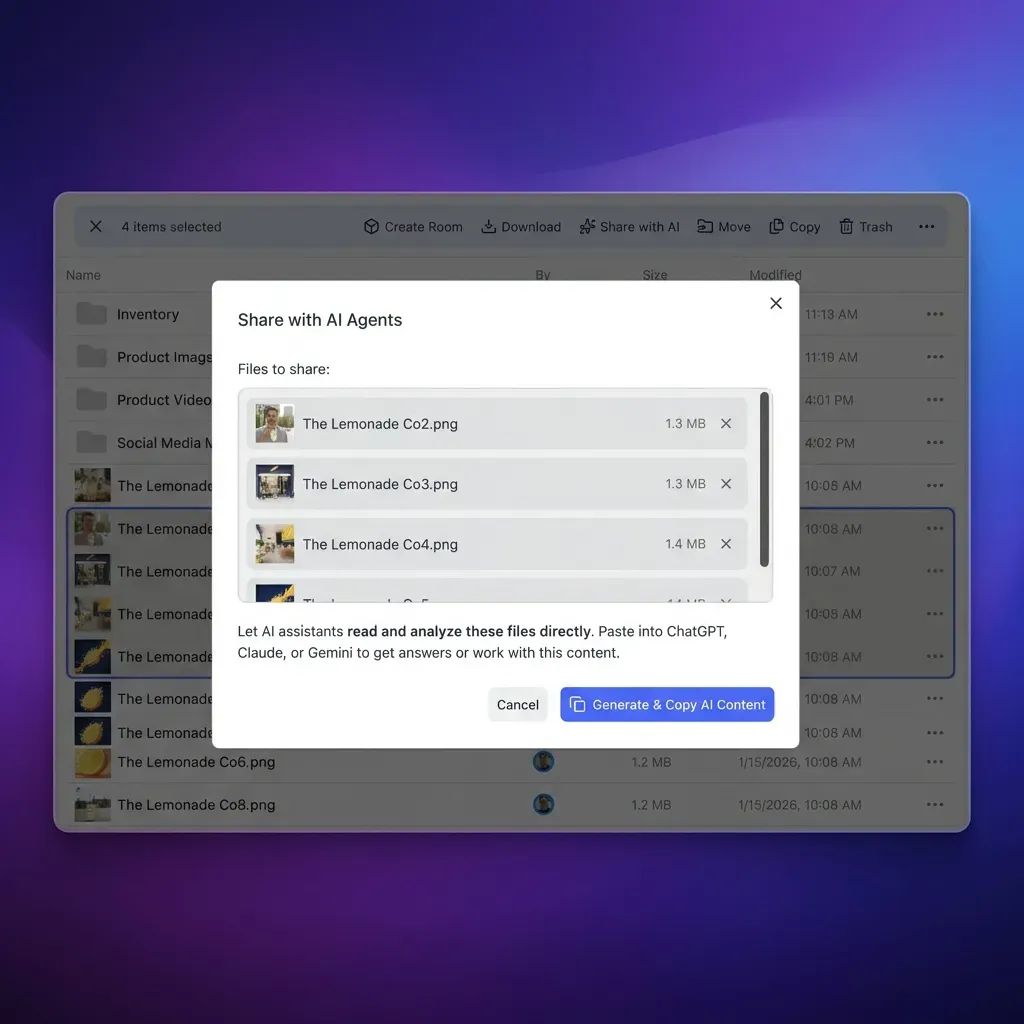
Fastio provides persistent workspaces for this kind of pipeline. Your OpenClaw agent writes humanized content to a Fastio workspace using the MCP server, where uploaded files are auto-indexed for semantic search once Intelligence is enabled. Human editors access the same workspace through the web UI to leave comments and compare drafts. The audit log tracks every version, so you can compare the original AI draft against the humanized output.
Fastio offers a 14-day Business Trial, card required; see /pricing/. For content teams running humanization across batches of articles, advisory file locks let agents coordinate writes while version history and granular permissions prevent data loss. Ownership transfer lets you hand the workspace to a client or stakeholder while retaining admin access.
Other storage options work too. S3 or Google Cloud Storage handle raw file persistence if you don't need the collaboration layer. Git repositories work well for version tracking, though they lack the semantic search and built-in AI chat that intelligent workspaces provide.
Choosing the Right Humanization Skill
Your choice depends on three factors: pipeline complexity, content volume, and how much you care about preserving a specific writing voice.
For quantitative scoring and regression tracking, brandonwise/humanizer gives you the most data. The composite scoring system tells you exactly how "AI-sounding" a piece is, and the scan command catches regressions across your content library over time. If you're optimizing a pipeline and need metrics to measure improvement, start here.
For voice preservation, blader/humanizer is the clear choice. The voice calibration feature means your humanized content sounds like you, not like a generic rewrite. The 18,600+ GitHub stars reflect how well this resonates with individual writers and editorial teams.
For multi-agent portability, conorbronsdon/avoid-ai-writing covers the broadest set of agent frameworks with a single skill file. If you run OpenClaw alongside Claude Code or Hermes, you avoid maintaining separate humanization configurations.
For detection tool compliance, moltbro/humanize-ai-text targets specific detectors by name. If your workflow has a hard gate (content must score below a threshold on GPTZero or Turnitin before publication), this skill is built for that use case.
For speed over depth, biostartechnology/humanizer strips out the statistical layer and focuses on pattern matching. Faster execution, simpler output, and 27,200+ ClawHub downloads prove it works well enough for most cleanup jobs.
For mixed content types, 1kalin/afrexai-humanizer adjusts its approach based on whether you're editing documentation, social posts, or marketing copy. Content-type awareness prevents the skill from making your technical docs sound casual or your social posts sound formal.
You can also stack skills. Run brandonwise/humanizer first for scoring and statistical analysis, then apply blader/humanizer with voice calibration for the final rewrite. The first skill tells you what's wrong, the second skill fixes it in your voice.
Sources
References used to verify factual claims in this guide.
-
The brandonwise/humanizer skill uses 29 pattern detectors and 500+ AI vocabulary terms across 3 tiers
-
ClawHub monthly skill installations grew from 4.2M in January to 22.1M in April 2026 ClawHub listed over 44,000 community-built skills as of April 2026
-
blader/humanizer reached 18,600+ GitHub stars
-
conorbronsdon/avoid-ai-writing detects 36 pattern categories with a 109-entry word replacement table
-
biostartechnology/humanizer has 27,200+ ClawHub downloads
Frequently Asked Questions
What OpenClaw skills remove AI writing patterns?
The most popular options are brandonwise/humanizer (29 pattern detectors with statistical analysis), blader/humanizer (two-pass rewriting with voice calibration), and conorbronsdon/avoid-ai-writing (36 pattern categories across multiple agent frameworks). All are available on ClawHub and open source under MIT licenses.
How does the OpenClaw humanizer skill detect AI-generated text?
The brandonwise/humanizer skill combines two approaches. Pattern detection scans for 500+ AI vocabulary terms across three severity tiers and 29 writing patterns. Statistical analysis measures burstiness (sentence length variation), type-token ratio (vocabulary diversity), trigram repetition, and Flesch-Kincaid readability consistency. A composite score blends pattern results (70%) with uniformity results (30%) into a 0-100 rating.
Can OpenClaw automatically humanize content before publishing?
Yes. OpenClaw skills run as instruction sets inside the agent, so humanization happens as part of the content generation pipeline. You can configure a skill like brandonwise/humanizer or avoid-ai-writing to process text after generation and before output, with no manual copy-paste step. For batch workflows, the scan command can process entire content directories.
Which OpenClaw humanizer skill has the most pattern detectors?
conorbronsdon/avoid-ai-writing detects 36 pattern categories, the broadest coverage among current ClawHub humanization skills. It covers content patterns (significance inflation, vague attributions), language patterns (copula avoidance, synonym cycling), structure patterns (uniform sentence length), communication patterns (chatbot artifacts), and meta-patterns (over-polishing, rhythm uniformity).
Can I use the same humanizer skill across different AI agents?
conorbronsdon/avoid-ai-writing is designed as a portable skill compatible with Claude Code, OpenClaw, Hermes, and any agentskills.io-compatible agent. It uses a single SKILL.md file with compatible frontmatter for each platform, so you maintain one configuration across your agent fleet.
Related Resources

Store and review humanized content in one workspace
Persistent workspaces with Intelligence Mode for semantic search across your content library once enabled, MCP-ready for your OpenClaw pipeline.