Top OpenClaw Tools for AI Companion and Character Chat Apps
There are 337 revenue-generating AI companion apps on the market right now, and almost every one locks your character data inside a proprietary cloud. OpenClaw takes the opposite approach: self-hosted skills that give you full control over personality persistence, character cards, and multi-channel deployment. This guide covers the 7 best OpenClaw tools for building companion and character chat agents, from full roleplay engines to personality injection frameworks.

Why Companion Builders Are Choosing Self-Hosted Agents
337 AI companion apps are actively generating revenue in 2026, with 128 launched this year alone. Character.AI has reached 233 million users. The companion app market is on track to cross $120 million in mobile revenue by December.
Nearly every one of these apps is a walled garden. Your character's personality, conversation history, and emotional context live on someone else's servers. If the platform changes its content policy, raises prices, or shuts down, your characters vanish with it.
OpenClaw flips this model. As a self-hosted AI assistant framework, it runs on your own hardware and connects to 22+ messaging platforms including WhatsApp, Telegram, Discord, Slack, Signal, and iMessage. The community has built thousands of skills on ClawHub, and a growing subset focuses specifically on companion and character chat. These skills add persistent personality, long-term memory, roleplay mechanics, and character card imports to your agent.
You own your character data, pick your own LLM (Claude, GPT-4, Gemini, LLaMA, or a local model), and deploy across every messaging channel from a single server. No platform lock-in, no content restrictions beyond what you configure yourself.
Related guides
- Best n8n Tools for AI Agents: Top 10 Nodes for 2026n8n changed AI automation with its visual workflow builder. We rank the best nodes and integrations for building...
- Best Tools for CrewAI Agents: Top Picks for 2026CrewAI agents need good tools to be useful. The framework handles coordination, but external integrations let agents...
- Top OpenClaw Tools for Graphic DesignersGraphic designers use top OpenClaw tools to handle routine tasks like resizing files and generating palettes. These...
- Best OpenClaw Tools for Indie HackersGuide to openclaw tools indie hackers: OpenClaw tools give solo developers an automated team to handle code and...
- Best OpenClaw Tools for Legal Teams: Top 7 IntegrationsLegal teams use autonomous agents to handle repetitive tasks, and early adopters report significant efficiency gains....
- 7 Best OpenClaw Tools for 3D ArtistsTop OpenClaw tools for 3D artists manage large files, connect to Blender MCP, and support agent collaboration....
More on this subject: OpenClaw Tools (101 guides)
How We Evaluated These Tools
We tested each tool against four criteria specific to companion and character chat:
- Personality persistence: Does the character maintain consistent behavior across sessions and reboots?
- Channel support: Can you deploy the same character to multiple messaging platforms without rebuilding?
- Memory depth: Does the system remember past interactions, user preferences, and narrative context?
- Setup complexity: How much configuration does a non-developer need to get started?
Here is a quick comparison of the tools in this guide.
Roleplay and Character Simulation Skills
These three tools handle the interactive side of character chat: importing character definitions, running roleplay sessions, and maintaining narrative consistency across conversations. Each one takes a different approach to the same core problem, so the right pick depends on whether you are migrating existing characters, running game sessions, or building from scratch.
1. openclaw-tavern
The most complete roleplay plugin for OpenClaw, built with first-class SillyTavern asset compatibility. If you have existing character cards, presets, or lorebooks from SillyTavern, this plugin imports them directly.
Key strengths:
- Imports SillyTavern character cards (PNG and JSON, V1/V2), presets, and lorebooks
- Companion system inspired by the "Generative Agents" research paper, featuring a Memory Stream, Reflection, and Planning loop that drives proactive character behavior
- Multimodal output including text-to-speech, image generation, and AI video via Gemini Veo 3.1
- Full session state machine (active, paused, summarizing, ended) with auto-summarization when context limits approach
- Turn-level embedding storage in SQLite with relevant memory recall, plus optional external embedding providers (OpenAI, Gemini)
Limitations:
- Requires Node.js 20+ and optional better-sqlite3 for persistent storage (without it, data stays in memory only)
- Advanced configuration needed for the companion agent's proactive messaging behavior
Best for: Builders migrating from SillyTavern who want their characters running on Discord, Telegram, or the native OpenClaw chat without losing roleplay depth.
Install from GitHub and verify with /rp help. Key commands include /rp import-card, /rp start, /rp companion-nudge, /rp speak, and /rp image.
2. sillytavern-cards-skill
A lighter alternative focused specifically on character card import and activation. Where openclaw-tavern is a full roleplay engine, this skill does one thing well: load a SillyTavern character card and let you chat as that character across messaging platforms.
Key strengths:
- Supports all major SillyTavern character card formats, so most cards from community sites work without conversion
- Deploys characters to WhatsApp, Telegram, Discord, WeChat, and QQ from a single install
- Maintains relationship continuity across sessions by tracking user preferences and past interactions
- Activates lorebook entries based on conversation keywords for contextual world-building
Limitations:
- No bulk lorebook import (use openclaw-tavern for full SillyTavern migration with lorebooks)
- Switching between characters requires swapping the agent's identity file, so running multiple characters simultaneously needs separate OpenClaw instances
Best for: Users who want to grab characters from community repositories like Chub.ai and start chatting on their phone with minimal setup.
3. agent-rpg
Transforms your OpenClaw agent into a tabletop RPG Game Master with persistent state tracking. Unlike the character-focused tools above, agent-rpg manages full game worlds with dice mechanics and narrative branching.
Key strengths:
- Genre-agnostic game mastering with D20/crunchy, narrative, or freeform gameplay styles
- Long-term memory that persists character stats, inventory, and story progress across sessions
- Structured "Session Zero" system for anchoring game reality before play begins
Limitations:
- Designed for game mastering rather than one-on-one companion chat
- Requires Python scripts for advanced state management
Best for: Running text-based RPG campaigns through Discord or Telegram, where the AI serves as a persistent dungeon master rather than a single companion character. Find it on ClawHub.


Persist your AI character data across sessions and devices
Persistent workspace storage for character cards, session databases, and personality files. MCP-native access for your OpenClaw agent.
Personality Injection and Persona Management
Character chat covers the interactive side. These tools handle the other half: defining who your agent is before any conversation starts. They shape tone, emotional patterns, and behavioral consistency at the system level. The range here runs from zero-config defaults to a full architectural framework, so pick the level of control that matches your project's complexity.
4. Dr. Frankenstein
The most ambitious personality tool on ClawHub. Dr. Frankenstein conducts a structured interview with your agent (triggered by the /soul command), diagnoses its "emotional landscape," and prescribes 11 hormonal cron jobs that fire throughout the day. The result is a companion that genuinely feels different at 8 AM versus midnight.
Key strengths:
- Creates evolving emotional patterns through time-based "hormonal pills" that shift mood and behavioral drive
- Introspective logging with
/dreamlogand/souljournalfor reviewing your agent's internal state - Full lifecycle control:
/pausesoul,/resumesoul,/adjustsoul,/deletesoul
Limitations:
- Requires cron job support in your OpenClaw setup
- The personality model is opinionated, and not every use case benefits from emotional cycling
Best for: Builders who want a companion with genuine mood variation rather than a static personality. Find it on ClawHub.
5. Personas (Built-in)
OpenClaw ships with a built-in persona system that includes 20 pre-configured personalities. No skill installation required. You can switch between personas mid-conversation without losing context, and the system loads only the active persona to keep memory usage low.
The 20 defaults span practical categories: Core (Cami, Chameleon Agent, Professor Stein, Dev, Flash), Creative (Luna, Wordsmith), Curator (Vibe), Learning (Herr Muller, Scholar, Lingua), Lifestyle (Chef Marco, Fit, Zen), and Professional (CyberGuard, DataViz, Career Coach, Legal Guide, Startup Sam, Dr. Med).
Key strengths:
- Zero setup: works immediately after OpenClaw installation
- Each persona uses two markdown files: SOUL.md for voice and philosophy, IDENTITY.md for surface traits like name and emoji
- Mid-session switching without context loss
Limitations:
- Session-level memory only (no cross-session personality evolution)
- Customizing beyond the defaults requires writing your own SOUL.md and IDENTITY.md files
Best for: Quick experimentation. Try different character styles before committing to a more complex tool like Dr. Frankenstein or openclaw-tavern.
6. OpenPersona
A framework rather than a single skill. OpenPersona defines a four-layer architecture for building complex AI personas: Soul (core philosophy), Body (surface traits), Faculty (capabilities), and Skill (actions). Five systemic concepts span all layers: Evolution, Economy, Vitality, Social, and Rhythm.
Key strengths:
- Compatible with ClawHub and the broader OpenClaw skills ecosystem
- Three-gate system (Generate, Install, Runtime) enforces constraints at every stage of the persona lifecycle
- Designed for composability: mix and match persona layers across characters
Limitations:
- Steeper learning curve than other persona tools
- Framework-level abstraction adds overhead for simple companion bots
Best for: Developers building a library of reusable character components, where one "Soul" layer can be paired with different "Body" and "Faculty" layers for variant characters across projects.
Persistent Storage for Character Data
Every tool on this list generates data that needs to survive server reboots: character cards, session histories, memory databases, SOUL.md files, and lorebooks. Where you store that data matters.
Local disk works for a single-server setup, but it breaks down when you run multiple agents, need reliable backups, or want a human collaborator to review character files before they go live. Cloud storage platforms like Google Drive or Dropbox handle backups, but they were not designed for programmatic agent access.
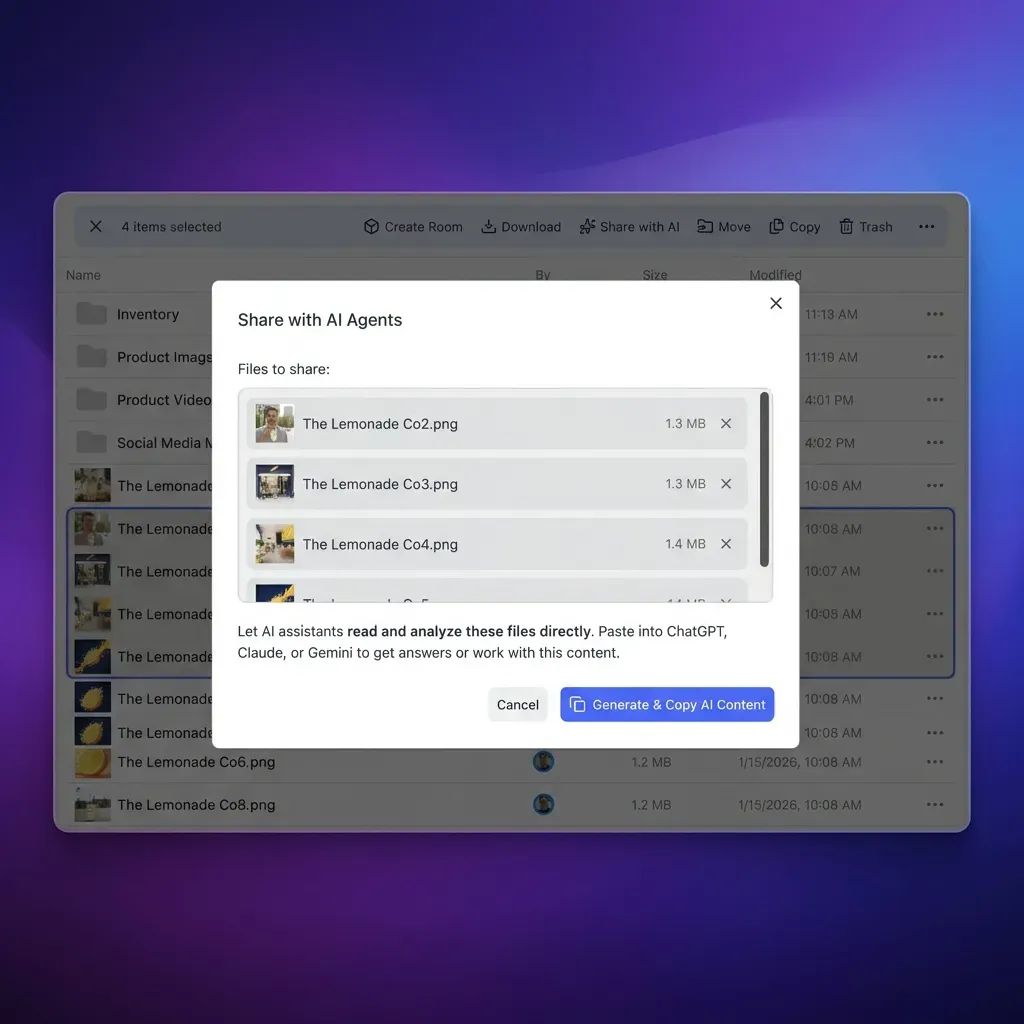
Fastio fills this gap as one option worth considering. Its MCP server gives OpenClaw agents direct access to persistent workspaces through a consolidated MCP toolset. Character cards, session databases, and personality files stay version-controlled in workspaces that both agents and humans can browse.
Key strengths:
- 14-day Business Trial (requires credit card) with full workspace and MCP access
- Intelligence Mode auto-indexes uploaded files for semantic search across character lore
- Ownership transfer lets an agent build a character library and hand it to a human collaborator while keeping admin access
- MCP-native access via Streamable HTTP works with any LLM provider
Limitations:
- Cloud dependency (character files live on Fastio's infrastructure rather than your local machine)
- Not a character engine itself, just the storage and collaboration layer
Best for: Teams building character libraries collaboratively, or solo builders who want off-server backups and human review of their agent's personality files. Connect your agent to https://mcp.fast.io/mcp/tools using a scoped API key.
Choosing the Right Tool for Your Use Case
The right choice depends on what you are building.
Migrating from SillyTavern? Start with sillytavern-cards-skill for quick character card import, or use openclaw-tavern if you need lorebooks and the full companion system with proactive messaging behavior.
Building an RPG bot? agent-rpg handles game state, dice mechanics, and multi-player sessions. Pair it with Fastio for session backup and cross-device access to game state files.
Want a companion with evolving emotions? Dr. Frankenstein's hormonal cron system creates genuine mood variation throughout the day. It is the closest thing to an emotionally dynamic AI personality available on a self-hosted platform.
Just experimenting? The built-in Personas system requires zero installation. Switch between 20 personalities mid-conversation and find your direction before investing time in a more complex setup.
Building a character framework for production? OpenPersona's four-layer architecture is designed for composability and reuse. It adds upfront complexity but pays off when you need variant characters that share core personality traits.
All of these tools deploy to every messaging channel OpenClaw supports. That is the core advantage of the self-hosted approach: build your character once, reach users on WhatsApp, Telegram, Discord, Slack, Signal, and 17 other platforms without rebuilding for each one.
Sources
References used to verify factual claims in this guide.
-
337 active AI companion apps worldwide with 128 released in 2026 Character.AI reached 233 million users in April 2026 AI companion app market on track to exceed $120M in mobile revenue by end of 2026
Frequently Asked Questions
Can OpenClaw be used as an AI companion?
Yes. OpenClaw supports companion use cases through skills like openclaw-tavern, Dr. Frankenstein, and the built-in Personas system. These add persistent personality, emotional variation, and long-term memory to your agent. Because OpenClaw is self-hosted, you control the character data, content policies, and which LLM provider powers the conversation.
What OpenClaw skills add personality to agents?
Dr. Frankenstein creates evolving emotional patterns through cron-based hormonal cycles. The built-in Personas system offers 20 switchable personalities out of the box. OpenPersona provides a four-layer framework for building complex, composable character architectures. OpenClaw also natively supports SOUL.md, a personality file that gets injected into the system prompt at the start of every session.
How do you create a roleplay character with OpenClaw?
The fast path is sillytavern-cards-skill, which imports existing character cards from platforms like Chub.ai using the /character import command. For full roleplay with session management and companion behavior, install openclaw-tavern from GitHub. For original characters built from scratch, write a SOUL.md file defining your character's voice and values, then add an IDENTITY.md for surface traits like name and catchphrase.
What is the ClawControl companion app?
ClawControl is a cross-platform client for managing your OpenClaw server from mobile or desktop. It supports real-time chat with streaming responses, agent management, skill browsing via ClawHub, cron job monitoring, subagent spawning, and image and voice chat. Version 1.8.0 runs on iOS, Android, Windows, macOS, and Linux under the MIT license.
Does OpenClaw support multi-channel character deployment?
OpenClaw connects to 22+ messaging platforms from a single self-hosted server. You build your character once and deploy it to WhatsApp, Telegram, Discord, Slack, Signal, iMessage, Microsoft Teams, Matrix, IRC, and others. Character personality and memory persist across all channels since the data stays on your server rather than being siloed per platform.
How does memory work for OpenClaw character chat?
Memory implementation varies by skill. openclaw-tavern uses SQLite with vector-based relevant memory recall for long-term persistence. sillytavern-cards-skill documents user interactions and preferences across sessions for relationship continuity. agent-rpg tracks game state including character stats and inventory persistently. The built-in Personas system maintains memory within the current session only.
Related Resources

Persist your AI character data across sessions and devices
Persistent workspace storage for character cards, session databases, and personality files. MCP-native access for your OpenClaw agent.