How to Add Persistent File Storage to Relevance AI Agents
Relevance AI is a great no-code platform for building agent workflows. But its built-in storage has limits. You get a 100MB cap per file, and free plans only allow 10MB of total storage. If your agents process video, large datasets, or need long-term memory, you need external storage. This guide shows you how to add Fastio to your setup. You'll get generous, persistent cloud storage so your workflows don't hit capacity walls.

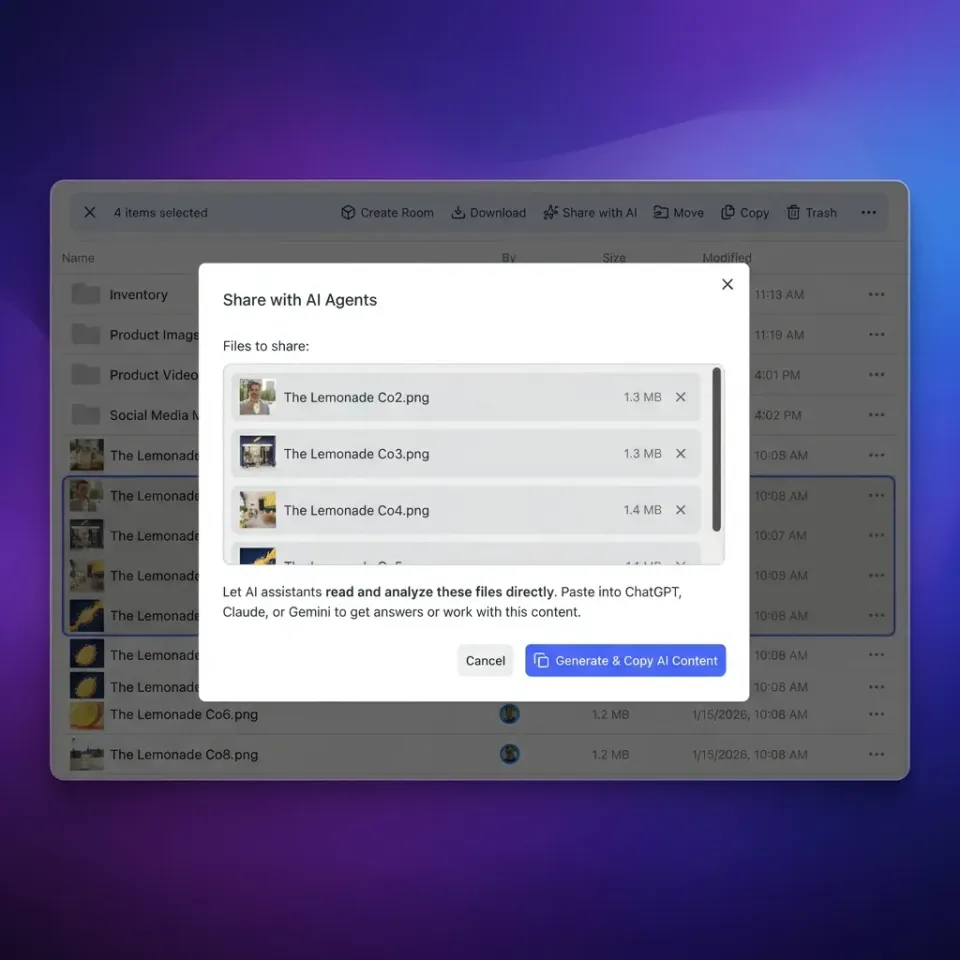
Understanding Relevance AI's Storage Limits
Every Relevance AI plan has "knowledge storage" limits. These control how much data your agents can remember. Individual file uploads top out at 100MB. CSV files stop at 50,000 rows. This works for small text files, but it blocks larger AI tools. The total storage is tight on lower tiers:
- Free Plan: 10MB total knowledge storage
- Pro Plan: 100MB total
- Team Plan: 1GB total
These limits are fine for text agents. But they slow down work with media files, large archives, or big document sets. If you build an agent to analyze hour-long audio calls or high-res PDFs, you will hit that 100MB limit fast. The 10MB free tier limit fills up with just a few documents. You shouldn't have to upgrade or delete data just to keep working. Production agents need storage that scales separately from the agent platform. There is also the problem of "knowledge fragmentation." Data stored inside Relevance AI is set up for vector search (RAG). That's great for retrieval, but bad for keeping files long-term. An external storage partner lets you keep the original files safe while only sending what you need to the agent.
Helpful references: Fastio Workspaces, Fastio Collaboration, and Fastio AI.

Related guides
- How to Add Persistent File Storage to Dify AI AgentsDify AI file storage connects the Dify open-source LLM platform to persistent cloud storage. This lets agents read,...
- How to Migrate AI Agent File Storage: The Complete GuideAgent file storage migration moves AI agent data, outputs, and workspaces between storage systems without disrupting...
- AI Automation Storage API: Persistent Storage for Autonomous AgentsAn AI automation storage API provides programmatic access to persistent file storage that autonomous agents can use to...
- How to Implement Tool Calling with Persistent File State for AI AgentsAI agents that call tools across multiple LLM invocations need durable file state to avoid losing context, repeating...
- How to Add Persistent File Storage to Discord AI BotsDiscord bots are growing into capable AI agents that generate images, write code, and process documents. But they often...
- How to Add Cloud File Storage to AI Slack BotsSlack bots are great until they need to handle files. Workspace storage limits and ephemeral chat history make it hard...
More on this subject: Agent Memory and Storage (261 guides)
Why Agents Need Persistent External Storage
Capacity isn't the only issue. Data persistence matters too. Built-in agent storage is often temporary or locked to one agent. External storage acts as a "shared brain" that lasts across sessions. Humans and other tools can access it too.
State Persistence: Agents need to save their work. Generated reports, processed videos, or action logs should live in a permanent spot, not a temp folder. Without this, an agent loses progress if a task stops or a session times out. External storage saves every step of a workflow.
Human Collaboration: Humans can't easily check files inside an agent's internal database. With external storage, the agent saves files to a folder that syncs to your desktop or a web portal. This makes the "human-in-the-loop" process work better. You can check the agent's output in real-time.
Multi-Agent Access: Complex jobs often use multiple agents. One scrapes data, another analyzes it, a third formats the report. A shared file system is the hand-off point. Agent A writes a file, Agent B reads it. This "file-based" method is often simpler and stronger than passing huge data chunks through API calls.
Security: Using a dedicated storage provider like Fastio gives you more control. You manage permissions, track logs, and handle sensitive docs according to your own rules, not the default platform settings.


Give Your AI Agents Persistent Storage
Stop worrying about the 100MB limit. Connect persistent, secure cloud storage to your agents today with our 14-day Business Trial.
How to Connect Fastio to Relevance AI
Fastio offers a dedicated storage layer for AI agents with a 14-day Business Trial (card required; see /pricing/). It uses standard protocols and offers a remote MCP (Model Context Protocol) server, so it fits right into agent platforms.
Step 1: Create a Fastio Workspace Sign up for the Business Trial to create your workspace. This is your secure spot to read and write files. You'll get an API key and workspace access.
Step 2: Use the API Tool Step
Add an API step in your Relevance AI tool builder. Fastio has a standard REST API. Configure your agent to send PUT requests to upload, GET requests to download, and DELETE requests to clean up. Use POST requests for things like file conversions or share links. Your Relevance AI agents will treat files like local assets.
Step 3: Implement the MCP Server (Advanced)
For more power, connect to Fastio's remote MCP server over Streamable HTTP at https://mcp.fast.io/mcp/tools. This gives your agent a consolidated MCP toolset for file operations. It can list directories, move files, and manage permissions using natural language. The agent can understand the file system and organize data on its own. This helps with large directory structures or recursive file tasks.
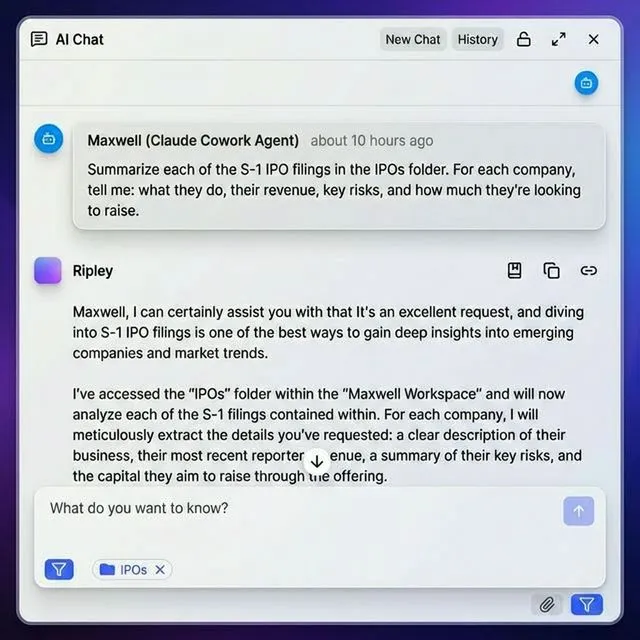
Workflow Example: Automated Document Processing
Here is a workflow where an agent watches a folder for invoices, pulls data, and saves a summary. 1. Check: The agent lists the files in a Fastio "Invoices/New" folder. It filters by file type or date to find the right documents. 2. Process: It downloads the PDF, sends it to an LLM for extraction, and formats the data. Since the file is in Fastio, the agent can just grab what it needs or pass a link to another tool. 3. Archive: The agent moves the PDF to "Invoices/Processed/2026" and saves the JSON data to "Data/Extractions". This creates a clear record that humans can read. 4. Review: An automated alert or activity event alerts a human via email. The note includes a link to the file in Fastio, so the reviewer can check the work with one click. This setup keeps your Relevance AI knowledge base clean. It saves money and speeds up search. You also get a complete record of every document processed. If Relevance AI goes down, your data stays safe in your workspace. Separating your agent's "brain" from its "memory" builds a stronger system.
Sources
References used to verify factual claims in this guide.
-
Relevance AI free plans allow only 10MB of total knowledge storage. Relevance AI Pro Plan 100MB total knowledge storage. Relevance AI Team Plan 1GB total knowledge storage. The 10MB free tier limit fills up with just a few documents.
-
Individual file uploads top out at 100MB in Relevance AI. CSV files limited to 50,000 rows in Relevance AI. CSV files stop at 50,000 rows. build an agent to analyze hour-long audio calls or high-res PDFs hit that 100MB limit fast For CSV files, there is also a limit of 50,000 rows.
-
Fastio provides persistent cloud storage for AI agents. Fastio MCP server provides a consolidated toolset for agent file operations.
-
Integration steps: Step 1 Create Fastio Workspace, Step 2 API Tool, Step 3 MCP Server. Document processing workflow: 1 Check Invoices folder, 2 Process PDF, 3 Archive Invoices Processed 2026, 4 Review alert.
Frequently Asked Questions
What is the file size limit for Relevance AI?
Relevance AI limits individual file uploads to 100MB. For CSV files, there is also a limit of 50,000 rows. Total knowledge storage limits vary by plan, starting at just 10MB for the free tier.
How do I store files permanently for Relevance AI agents?
The best method is to use external cloud storage like Fastio. By connecting your agent to Fastio via API or MCP, you can offload files to a persistent cloud storage workspace that doesn't count against your Relevance AI limits.
Can Relevance AI agents access files in Google Drive or Dropbox?
Yes, but often indirectly. Fastio supports URL import, allowing your agent to pull files from Google Drive, Dropbox, or Box into its working directory using a simple command, bypassing local download/upload steps.
Related Resources

Give Your AI Agents Persistent Storage
Stop worrying about the 100MB limit. Connect persistent, secure cloud storage to your agents today with our 14-day Business Trial.