How to Add Cloud File Storage to AI Slack Bots
Slack bots are great until they need to handle files. Workspace storage limits and ephemeral chat history make it hard for agents to store reports or process large documents. This guide shows you how to give your Slack bot persistent cloud storage using Fastio, so it can save and share files reliably.

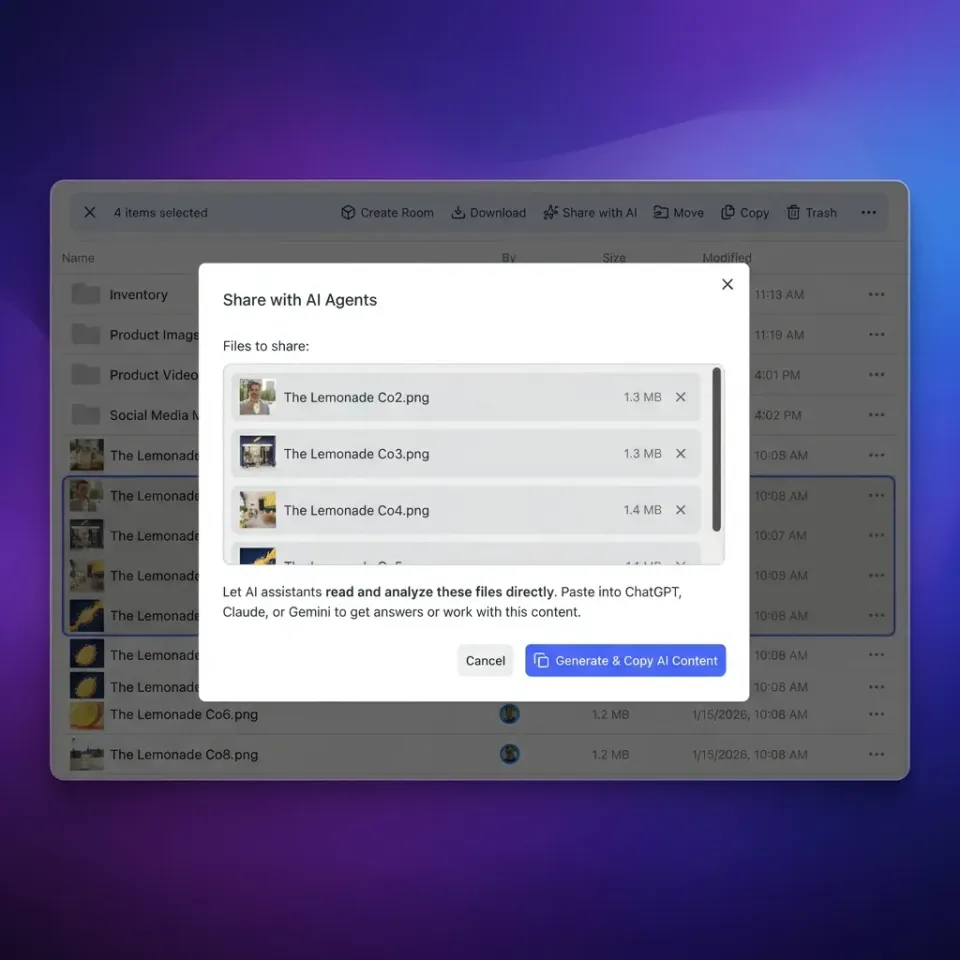
What to check before scaling ai agent slack bot file storage
Slack is great for chat, but hard for files. Bots hit API limits fast, and storage isn't built for the files AI agents make. Slack says itself: the platform is for talking, not storing databases. Paid plans limit files to 1GB. Free ones are tighter. Worse, files belong to the chat. If you need a report later or want to build a knowledge base, Slack's file system fights you. When free tiers purge old files, your bot's memory breaks. Links die.
The main issues:
- Workspace Quotas: Workspaces have caps (e.g., 5GB for Pro). An agent making images or spreadsheets fills that fast.
- Persistence: Finding files from old chats or other channels is a pain. Agents forget files they shared elsewhere.
- Permissions: A bot sharing a file in a private channel might not see it later in a DM.
- Cost: Upgrading Slack just for storage is pricey. It's cheaper to keep chat on a basic tier and put big files in dedicated cloud storage.
- Temporary: Slack is for "now." Agents need long-term memory. A 500MB video upload gets buried in chat in minutes. Finding it later takes too much scrolling.
Helpful references: Fastio Workspaces, Fastio Collaboration, and Fastio AI.

Related guides
- How to Add File Storage to OpenAI Agents SDK ProjectsThe OpenAI Agents SDK gives you tools, handoffs, and guardrails for building multi-agent systems, but it has no...
- How to Add Persistent File Storage to Discord AI BotsDiscord bots are growing into capable AI agents that generate images, write code, and process documents. But they often...
- How to Add Persistent File Storage to Dify AI AgentsDify AI file storage connects the Dify open-source LLM platform to persistent cloud storage. This lets agents read,...
- How to Add Persistent File Storage to Relevance AI AgentsRelevance AI is a great no-code platform for building agent workflows. But its built-in storage has limits. You get a...
- Best File Storage for Multi-Agent SystemsFile storage for multi-agent systems gives AI agents a shared file layer with concurrent access controls. Agents can...
- How to Handle File Storage in n8n AI Agent Workflowsn8n AI agents need persistent storage to save files between workflow runs.
More on this subject: Agent Memory and Storage (261 guides)
Architecture: The AI-First Storage Pattern
For a production bot, separate chat from storage. Give your agent its own cloud drive. This keeps the chat interface fast and the data safe.
The Workflow:
- User Request: Someone asks for a "monthly sales report" or "project summary."
- Agent Processing: The agent pulls data, thinks, and builds the file (PDF, CSV, ZIP).
- External Storage: Instead of uploading to Slack, the agent saves to Fastio via API. This happens in the background.
- Smart Sharing: The agent makes a secure link. You can set it to public, password-only, or company-domain only.
- Slack Response: The bot posts the link. This keeps your Slack workspace light. Files are safe no matter what Slack's retention policy does. You can share files way bigger than Slack allows. Plus, you get tracking. You can see who opened the file and when, which Slack's native uploads don't tell you.


Give Your AI Agents Persistent Storage
Stop worrying about storage limits. Connect your agent to Fastio's cloud storage and start building more powerful automations.
Top Use Cases for Slack Bot Cloud Storage
Giving your Slack bot a persistent brain opens up a wide range of possibilities for automation. Here are some of the most common ways developers are using Fastio to enhance their Slack agents.
1. Automated Reporting and Data Analysis If your team uses Slack for operations, an agent can generate daily or weekly reports from your CRM or financial software. By saving these to persistent storage, you create a searchable archive of your company's performance that doesn't clutter up the chat history. Team members can go back months to find a specific report without needing to scroll through endless messages.
2. Media Asset Management For creative teams, Slack is often used for feedback. An AI agent can take a prompt in Slack, generate an image or a short video, and save the high-resolution original to the cloud. The bot shares a small preview in Slack and provides a link to the full-quality asset. This prevents your Slack workspace from becoming a dumping ground for large media files while ensuring that the high-quality versions are always available for the final project.
3. Code Review and Documentation Development teams can use Slack bots to summarize code changes or generate documentation from a repository. The bot can create a comprehensive documentation site or a PDF summary and host it on Fastio. This makes it easy for the whole team to access the latest technical specs directly from the chat where they are already discussing the project.
4. Legal and Compliance Archiving In industries where every communication must be logged, an agent can automatically move every file shared in a specific Slack channel to a secure, permission-controlled folder in the cloud. This provides an audit trail that is independent of Slack, which is critical for compliance with internal policies or external regulations.
Security and Access Control for Agent Files
Security is a major concern when using AI to handle files. You don't want your bot accidentally sharing sensitive company data with the wrong people. Fastio provides several layers of protection to ensure your agent's files remain secure.
Domain-Restricted Sharing One of the most effective ways to secure bot-generated files is to restrict access to a specific email domain. When your agent creates a share link, it can specify that only users with an "@yourcompany.com" email address can view the file. This ensures that even if a link is accidentally posted in a public channel or forwarded to an outsider, your data remains protected.
Expiring Links Not every file needs to live forever. For temporary data like a one-time password or a draft document, your agent can set the share link to expire after a certain number of hours or days. Once the link expires, the file is no longer accessible, reducing the risk of old data being discovered later.
Password Protection For sensitive files, your agent can generate a random password and provide it to the user in a separate Slack thread or direct message. This adds an extra layer of authentication that is independent of the link itself.
Audit Logs and Tracking Every action taken by your agent, from uploading a file to creating a share link, is recorded in a detailed audit log. This allows you to monitor your bot's behavior and ensure it is following your security protocols. If something looks wrong, you can quickly see which agent was responsible and what files it accessed.

How to Implement Persistent Storage for Your Bot
Setting this up is straightforward. Here is how to move from a basic Slack bot to a fully integrated solution with Fastio.
Step 1: Get Your Storage Start a 14-day Business Trial (card required; see /pricing/) with plans starting at 250 GB. It provides persistent workspaces, perfect for prototyping or full production.
Step 2: Connect via MCP or API If your agent uses the Model Context Protocol (MCP), you can connect to Fastio's MCP server immediately. This gives your agent a consolidated MCP toolset for uploading files, reading them, and creating share links. If you are building a custom Node.js or Python bot using the Slack Bolt SDK, just use standard HTTP requests. Fastio supports streaming, so your agent doesn't need to save the file to its local disk before uploading. It can stream data directly from the generation process to the cloud, saving time and memory.
Step 3: Handle File Uploads from Slack
When a user uploads a file to the bot, your agent can use the URL Import feature from Fastio. Instead of downloading the file to your server and then re-uploading it, you pass the file's URL to the Fastio API (POST /current/web_upload/), and the platform pulls the file from that address. For a protected file such as a Slack upload, add the token to the URL as an access_token query parameter; the server sends it as an Authorization: Bearer header. This saves significant bandwidth for your agent, which is important for serverless deployments like AWS Lambda where memory and execution time are strictly limited.
Step 4: Verify and Notify Once the upload is complete, your agent can verify the file integrity. Fastio returns a content hash and its algorithm (such as MD5) for every file, allowing your bot to confirm that the transfer was successful. After verification, your bot can post a formatted message in Slack with the file name, size, and a secure download link.
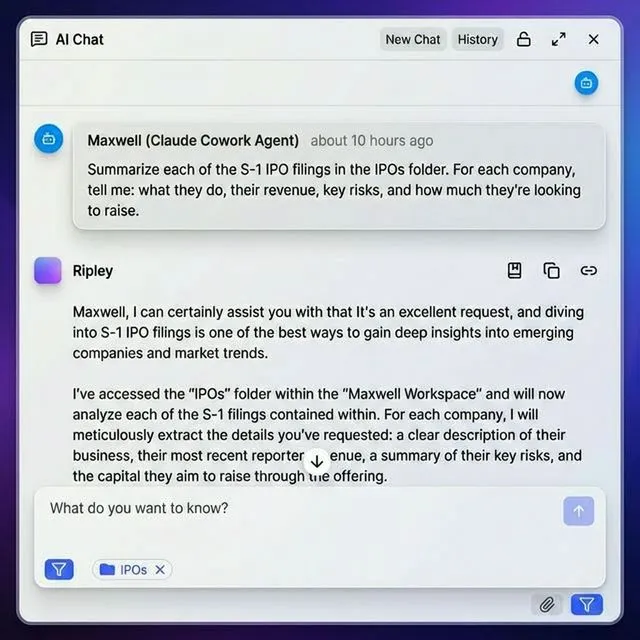
Why Not Just Use S3 or Google Drive?
Many developers default to AWS S3 or Google Drive for bot storage, but these come with trade-offs. S3 requires complex IAM roles, bucket policies, and a credit card to even start. Google Drive's API is notoriously slow for programmatic access and has strict rate limits that can throttle an active bot. Fastio is built specifically for agents and high-frequency file operations. It provides a 14-day Business Trial (card required; see /pricing/) with plans starting at 250 GB, making it an ideal choice for teams that need turnkey agent infrastructure. The system also handles the creation of shareable links automatically, which is a separate and often frustrating step when using S3.
Advanced Features for Slack Agents
Once you have persistent storage, you can do much more than just share files. You can turn your Slack bot into a central hub for your team's knowledge.
Intelligence Mode & RAG Fastio's Intelligence Mode is a powerful tool for Slack bots. Once Intelligence is enabled for the workspace, it indexes text files like PDFs, Word documents, and code files in your workspace. Your Slack bot can then use this index to answer user questions with citations. This is a built-in Retrieval-Augmented Generation (RAG) system that stays in sync with your files. You don't need to manage a separate vector database or handle complex embedding pipelines. When a user asks a question in Slack, the bot queries the Fastio index, finds the relevant text, and provides a sourced answer.
Multi-Agent Collaboration In many modern workflows, you might run multiple specialized bots. For example, you could have a "Researcher" bot that gathers data and a "Writer" bot that creates a report. These agents can use a shared Fastio workspace as a common file system. The Researcher saves raw data files into a specific folder, and the Writer picks them up to draft content. Because the storage is persistent, the agents can work asynchronously without losing track of their progress. Advisory file locks help agents coordinate their writes, and automatic version history keeps earlier versions if an overwrite happens.
Human-Agent Handoff and Review One of the biggest benefits of using a dedicated storage provider is transparency. Because Fastio has a clean web interface, human team members can log in and browse the files the agents are creating. If a bot generates a client-facing report, a human can review it in the Fastio workspace before giving the bot permission to post the final link in a Slack channel. You can even transfer the entire workspace to a client or another team, ensuring they have a professional, branded portal for their deliverables. Connecting AI-generated files to a storage system that humans can easily navigate makes your whole agentic workflow more reliable and easier to audit.

Sources
References used to verify factual claims in this guide.
-
Slack file uploads are limited to 1 GB per file on paid plans Paid plans limit files to 1GB Slack's native API limits file uploads to 1GB on paid plans
-
Slack Pro workspaces have a 5 GB total storage limit A 500MB video upload gets buried in chat in minutes
-
Fastio offers generous storage tier for AI agents and developers Fastio plans provide 250 GB to 25 TB of storage
-
Fastio workspaces provide persistent storage for generated documents
Frequently Asked Questions
Can a Slack bot save files directly to the cloud?
Yes. By connecting to a provider like Fastio, your bot can stream data to persistent storage instead of hitting Slack's workspace limits. This approach ensures your files remain accessible even if the Slack message history is purged.
What is the file size limit for Slack bots?
Slack's native API usually limits file uploads to 1GB on paid plans. By using Fastio, your bot can share files of up to 100 GB each on the Enterprise plan (25 GB on Starter, 50 GB on Business) through a share link, keeping them out of Slack's workspace quota.
How do I secure files shared by my AI agent in Slack?
You can use domain-restricted links, password protection, or expiring links to secure agent-generated files. This ensures that sensitive content is only accessible to authorized team members, even if the Slack link is shared externally.
How does a Slack bot handle incoming files from users?
The best way is to use a URL Import feature. Your bot receives the Slack file URL and passes it to your cloud storage provider, which pulls the file directly. This saves your bot's memory and bandwidth during the transfer.
Can multiple Slack bots share the same file storage?
Yes. Multiple agents can connect to a shared workspace in Fastio, using it as a central repository for data. This allows one bot to generate a file and another bot to read or process it later.
Related Resources

Give Your AI Agents Persistent Storage
Stop worrying about storage limits. Connect your agent to Fastio's cloud storage and start building more powerful automations.