How to Add Persistent File Storage to Discord AI Bots
Discord bots are growing into capable AI agents that generate images, write code, and process documents. But they often hit a wall with Discord's 25MB file limit and temporary attachment links. This guide shows how to give your Discord bot persistent cloud storage to manage files, host generated assets, and work with users effectively.

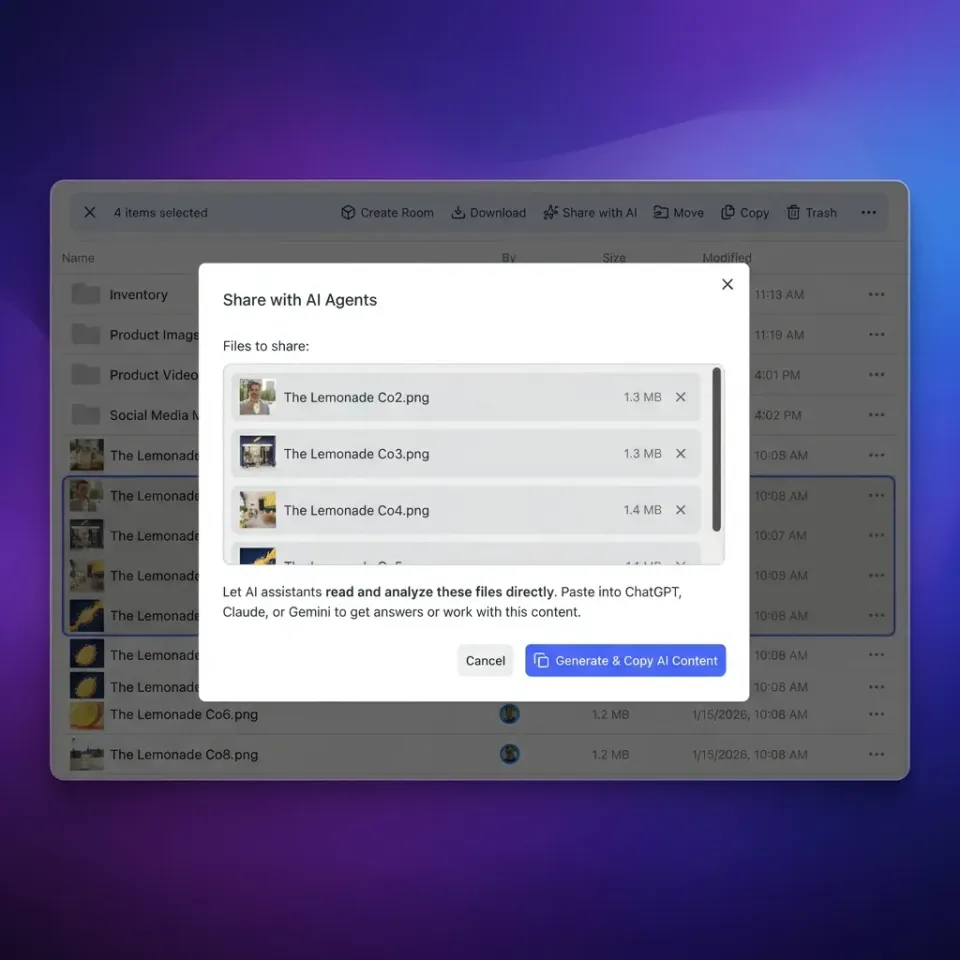
Why Discord Bots Need External File Storage
If you are building a modern Discord bot, especially one powered by LLMs like GPT-4 or Claude, you have likely hit the platform's storage ceiling. Discord is a chat app, not a file host. Its limits cause problems for AI agents that need to generate, modify, or analyze files.
The Problem:
- Strict File Size Limits: Free servers cap uploads at 25MB. Even with Nitro, you only get 500MB. This makes high-res video processing or large dataset analysis impossible.
- Temporary Links: Attachment URLs in Discord expire. In late 2023, Discord announced that file links would expire after 24 hours to prevent hotlinking. You cannot rely on
cdn.discordapp.comlinks for long-term storage. If your bot references an image generated last week, that link will likely be dead (403 Forbidden). - No Directory Structure: Discord channels are linear streams. There is no way to organize files into folders, manage versions, or search content programmatically. You can't ask your bot to "list all PDFs from the marketing project" because that concept doesn't exist in Discord.
- Data Privacy Risks: Uploading sensitive user files (like financial documents or codebases) to a public Discord channel is risky. Once uploaded, anyone with access to that channel can download them. To build a capable agent, you need a "hard drive" that lives outside of Discord but is accessible instantly via API. This storage layer allows your bot to keep state, organize assets, and serve content reliably.

Related guides
- How to Add Cloud File Storage to AI Slack BotsSlack bots are great until they need to handle files. Workspace storage limits and ephemeral chat history make it hard...
- How to Add Persistent File Storage to Dify AI AgentsDify AI file storage connects the Dify open-source LLM platform to persistent cloud storage. This lets agents read,...
- How to Add Persistent File Storage to Relevance AI AgentsRelevance AI is a great no-code platform for building agent workflows. But its built-in storage has limits. You get a...
- How to Add File Storage to OpenAI Agents SDK ProjectsThe OpenAI Agents SDK gives you tools, handoffs, and guardrails for building multi-agent systems, but it has no...
- How to Add File Storage to SmolagentsSmolagents is a fast way to build AI agents, but it lacks persistent storage by default. This guide shows you how to...
- Best File Storage for Multi-Agent SystemsFile storage for multi-agent systems gives AI agents a shared file layer with concurrent access controls. Agents can...
More on this subject: Agent Memory and Storage (261 guides)
Storage Options for Discord AI Agents
When picking a storage backend for your bot, you generally have three options. The right choice depends on whether you need simple data persistence or full file management.
1. Database Storage (SQL/NoSQL)
Best for: Text configurations, user XP, conversation history.
Databases like PostgreSQL or MongoDB work well for structured data. They are great for remembering which user has premium status or storing the last 10 messages for context. But they are bad for binary files. Storing images or PDFs as BLOBs (Binary Large Objects) in a database hurts performance. It bloats your backups, slows down queries, and makes it hard to share those files with users (you have to build a web server just to serve the image out of the DB).
2. Object Storage (S3, Google Cloud Storage)
Best for: Raw file dumps, backups, massive scale.
AWS S3 is the standard for raw storage. It is cheap ($0.023/GB) and scalable. However, it lacks a user interface. If your bot generates an image and you want to see it, you need to build a separate dashboard or generate signed URLs. Integrating S3 requires managing IAM roles, access keys, and complex SDKs (boto3). It is powerful but often too complex for bot projects that just need a place to put files.
3. Agent-First Cloud Storage (Fastio)
Best for: Active file management, sharing, and human-agent collaboration.
Fastio offers a hybrid approach: programmable cloud storage that works like a standard filesystem but delivers files globally. For AI agents, a workspace is where they read and write files over REST (https://api.fast.io/current/) or MCP (https://mcp.fast.io/mcp/tools), then create Send, Receive, or Exchange shares and durable fileshares so Discord users open a branded portal instead of a dead attachment link. Ripley, the built-in RAG agent, can answer questions about those files.
Comparison:
Implementation Guide: Connecting Storage to Your Bot
Adding storage to your bot doesn't mean rewriting your entire codebase. You can integrate Fastio using simple API calls or the Model Context Protocol (MCP). Below are examples for a Python-based Discord bot.
Prerequisite: Get Your API Key
- Sign up at Fastio/storage-for-agents.
- Create a new workspace. Workspace IDs are 19-digit numeric strings.
- Go to Settings > Devices & Agents > API Keys and generate a key, or create one with
POST /current/user/auth/key/. Authenticated calls useAuthorization: Bearer {api_key}againsthttps://api.fast.io/current/. Keep the trailing slashes.
Scenario 1: Saving Generated Images (Python)
This example shows a bot that generates an image (e.g., via Stable Diffusion), saves it to Fastio with a small-file upload, and replies in Discord. A successful small upload returns HTTP 201: {"result":true,"id":"<upload_id>","new_file_id":"<node_id>"}. Same-name upload into the same folder overwrites in place and keeps the old content as a recoverable version. The node_id stays stable.
import discord
import requests
from io import BytesIO

FASTIO_API_KEY = "your_key"
FASTIO_WORKSPACE_ID = "1234567890123456789"

async def save_image_permanently(image_data: bytes, filename: str):
    url = "https://api.fast.io/current/upload/"
    headers = {"Authorization": f"Bearer {FASTIO_API_KEY}"}
    files = {"chunk": (filename, image_data, "image/png")}
    data = {
        "name": filename,
        "size": str(len(image_data)),
        "action": "create",
        "instance_id": FASTIO_WORKSPACE_ID,
        "folder_id": "root",
    }

response = requests.post(url, headers=headers, files=files, data=data)

if response.status_code == 201:
        return response.json()["new_file_id"]
    return None

@bot.command()
async def generate(ctx, prompt: str):
    await ctx.send(f"Generating image for: {prompt}...")

### [Mock] Call your AI image generator
    img_bytes = generate_ai_image(prompt)
    filename = f"{ctx.author.name}_{ctx.message.id}.png"

### Save to persistent storage
    node_id = await save_image_permanently(img_bytes, filename)

if node_id:
        file = discord.File(BytesIO(img_bytes), filename=filename)
        await ctx.send(f"Saved `{filename}` as node {node_id}.", file=file)
    else:
        await ctx.send("Failed to save image.")
To hand the user a durable single-file link, follow the upload with POST /current/workspace/{workspace_id}/create/fileshare/. For a branded folder they can browse, create a Send, Receive, or Exchange share with POST /current/workspace/{workspace_id}/create/share/. Pull bytes back later with GET /current/workspace/{workspace_id}/storage/{node_id}/read/.
Scenario 2: The MCP Approach (Advanced Agents)
If you are building an autonomous agent using LangChain or an OpenAI Assistant, you shouldn't hardcode API calls. Instead, give the agent tools to manage files itself. Fastio provides an official MCP Server at https://mcp.fast.io/mcp/tools (send your API key as a Bearer header when the agent runs headless). Named mode tools include upload, storage, find, ai, share, fileshare, and event; actions that change data go to the matching _manage tool.
Agent Capabilities with MCP:
storage(list,search,details): "Check the logs folder for errors."ai_manage(ask): Ripley returns a cited, read-only answer from the workspace (requiresprofile_type).upload_manage(stream-upload,web-import,create-session,chunk,finalize): "Save this python script."find: unified search across a workspace or share.
A tools/call looks like this:
{"jsonrpc":"2.0","id":1,"method":"tools/call",
 "params":{"name":"upload_manage","arguments":{"action":"web-import","url":"https://example.com/report.pdf",
 "profile_type":"workspace","profile_id":"1234567890123456789"}}}
This allows your bot to list a folder, search file contents, ask Ripley about a brief, and store a new summary, without you writing a custom handler for each step.
Advanced Use Cases for Storage-Enabled Bots
Once your bot has persistent storage, you can do things that were previously impossible.
1. The AI Art Portfolio Bot
Instead of just posting a generated image to the chat where it scrolls away, your bot saves every creation to Fastio / [User_Name] / [Date]. It then sends the user a link to an auto-generated gallery folder. The user gets a permanent portfolio of their creations, not just a temporary chat log. Because Fastio has a web UI, users can log in to view their gallery.
2. The Code Assistant Agent A user asks the bot to "refactor this project." The user uploads a ZIP file. The bot unzips it into a private Fastio workspace, reads the code, performs the refactor, runs tests, and saves the new files. It then sends a link to the updated project folder. You can't do this with Discord's 25MB limit and lack of file structure.
3. The Research & Archival Bot
Community managers use bots to archive important conversations or shared resources. With persistent storage, your bot can compile weekly summaries, save shared PDFs to a "Knowledge Base" folder, and maintain an organized library of community assets. Since Fastio supports full-text search (GET /current/workspace/{workspace_id}/storage/search/ with search_in=content), you can even add a command like !search [keyword] that searches the contents of stored PDFs and text files. Ripley can answer the same library through the MCP ai_manage tool (ask).
4. Large File Delivery (The "Bypass" Pattern) Sometimes users need to send files to the bot that exceed Discord's limit (e.g., a 2GB video for analysis).
- Step 1: User commands
!upload video.mp4. - Step 2: Bot creates a Receive share with
POST /current/workspace/{workspace_id}/create/share/. - Step 3: Bot DMs the user the branded Receive portal.
- Step 4: User uploads in the browser, into the bot's workspace. Guest upload on a Receive share uses
POST /current/share/{share_id}/auth/guest/. - Step 5: The bot confirms the file with
GET /current/activity/poll/{entityId}?wait=95&lastactivity={timestamp}orGET /current/events/search/. This pattern completely bypasses Discord's server limits, allowing your bot to handle HD video, raw datasets, or 3D models.
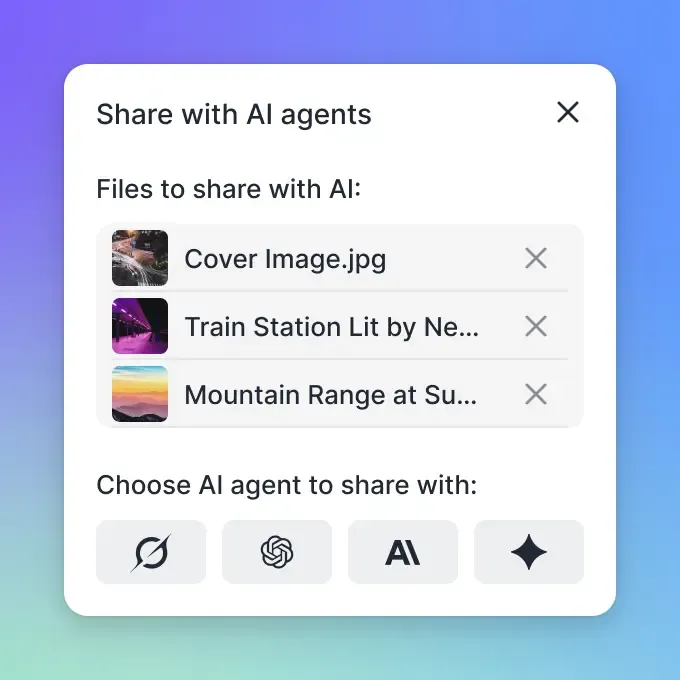


Give Your AI Agents Persistent Storage
Stop worrying about Discord's file limits. Give your bot a Fastio workspace with REST uploads, MCP tools, and branded shares.
Security and Permissions
When giving a bot access to external storage, security comes first. You don't want one user accessing another user's generated files.
Isolation Strategies:
- Folder-Based Isolation: Create a root folder for each guild (server) or user with
POST /current/workspace/{workspace_id}/storage/{parent_id}/createfolder/. e.g.,/guilds/{guild_id}/users/{user_id}/. - Branded shares: When sharing files in public channels, create a Send, Receive, or Exchange share, or a durable fileshare, so you control the portal instead of posting a raw attachment.
- Workspace Separation: For enterprise bots, create a separate Fastio Workspace for each major client. This ensures that even if a bug occurs, data cannot leak between clients.
Handling User Data:
Always update your bot's Privacy Policy to inform users that files are stored on an external cloud provider. Fastio provides audit logs (GET /current/events/search/), so you can track exactly when your bot accessed or modified a file, which is important for debugging and compliance.
Cost Analysis: Is it Worth It?
Running a bot with heavy file usage can get expensive on traditional clouds. * AWS S3: Storage is cheap, but egress (bandwidth) is expensive ($0.09/GB). If your bot generates a viral image that gets viewed 10,000 times, your bandwidth bill will go up fast. * Discord Nitro: $9.99/month/user. It increases the upload limit to 500MB but doesn't solve the persistence or API access problems. * Fastio: Workspace storage on flat plans (250 GB to 25 TB by plan) with MCP and REST under /current/. Your bot uploads once, then creates Send, Receive, or Exchange shares (or a durable fileshare) so users open a branded portal instead of paying Discord Nitro for every member. For most Discord bots, a Fastio workspace is enough to persist files, search them, and share results without building an S3 dashboard.
Sources
References used to verify factual claims in this guide.
-
Discord's 25MB file limit and temporary attachment links Free servers cap uploads at 25MB Discord's 25MB limit and lack of file structure bypass the 25MB upload limit on Discord
-
Even with Nitro, you only get 500MB Discord Nitro $9 upload limit to 500MB paying for Nitro which only goes to 500MB Discord Nitro increases the file upload limit to 500MB Discord Nitro costs $9.99 per month
-
Discord announced that file links would expire after 24 hours In late 2023 Discord announced that file links expire after 24 hours to prevent hotlinking Discord bot image links generated last week become dead with 403 Forbidden errors
-
storing the last 10 messages for context
-
AWS S3 cheap $0.023/GB AWS S3 egress bandwidth expensive $0.09/GB AWS S3 storage costs $0.023 per GB AWS S3 egress bandwidth is $0.09 per GB AWS S3 provides cheap and scalable storage at $0.023 per GB bot generates viral image that gets viewed 10000 times bandwidth bill goes up fast
-
Small file upload is POST https://api.fast.io/current/upload/ with multipart fields name, size, chunk, action=create, instance_id, and folder_id. A successful small upload returns HTTP 201 with result, id, and new_file_id. Bot creates a Receive share with POST /current/workspace/{workspace_id}/create/share/, or a durable single-file link with POST /current/workspace/{workspace_id}/create/fileshare/. Guest upload on a Receive share uses POST /current/share/{share_id}/auth/guest/. API keys are created in Settings > Devices & Agents > API Keys, or via POST /current/user/auth/key/. Authenticated calls use Authorization Bearer against https://api.fast.io/current/. Confirm new files with GET /current/events/search/ or GET /current/activity/poll/{entityId}?wait=95&lastactivity={timestamp}. Agent-facing Fastio integrations should use the MCP server at https://mcp.fast.io/mcp/tools, with a Bearer header for headless connections. Named mode tools include upload, storage, find, and ai. Workspace IDs are 19-digit numeric strings. workspace and org are singular in paths. Same-name upload into the same folder overwrites in place and keeps the old content as a recoverable version. The node_id is stable. MCP upload actions include web-import, stream-upload, create-session, chunk, finalize, batch, limits, and blob-info. Storage actions include list, search, move, copy, delete, details, version-list, and version-restore. Folder listing is GET /current/workspace/{workspace_id}/storage/{parent_id}/list/. Content search is GET /current/workspace/{workspace_id}/storage/search/ with search_in=content.
-
large files like a 2GB video for analysis
-
Step 1: User commands !upload video.mp4 Step 4: User uploads in the browser into the bot's workspace
-
Fastio supports files up to 100 GB on the Enterprise plan Bot handles large files like 2GB video for analysis viewed 10000 times
-
Databases suitable for storing last 10 messages or user premium status
-
modern Discord bots powered by LLMs like GPT-4 hit platform storage ceiling
Frequently Asked Questions
Can Discord bots store files permanently?
Yes, but not on Discord itself. Discord attachment links are not designed for permanent hosting. To store files permanently, your bot should upload them to an external cloud storage provider like Fastio, AWS S3, or Google Cloud Storage, and save the reference link.
How do I bypass the 25MB upload limit on Discord?
You cannot increase the native Discord limit without paying for Nitro (which only goes to 500MB). The solution is to have your bot upload files to an external service like Fastio, which accepts files up to 100 GB on the Enterprise plan, and then share the download link in the Discord chat.
Is Fastio free for Discord bots?
Create a Fastio account, open a workspace, and generate an API key in Settings > Devices & Agents > API Keys, or with POST /current/user/auth/key/. Your bot then uploads with POST https://api.fast.io/current/upload/ and can share files through Send, Receive, or Exchange shares, or a durable fileshare. For agent-style bots, connect MCP at https://mcp.fast.io/mcp/tools with your API key in a Bearer header.
Can I use Fastio with discord.py?
Yes. Fastio has a REST API under https://api.fast.io/current/ that works with any language, including Python. Use the standard `requests` or `aiohttp` libraries to POST multipart uploads to /current/upload/ (fields name, size, chunk, action=create, instance_id, folder_id) and to GET /current/workspace/{workspace_id}/storage/{node_id}/read/ when you need the bytes back.
How secure is external storage for bots?
It is generally more secure than Discord attachments because you control the access. On Discord, anyone with the link can view the file. With Fastio, keep files in private folders, isolate clients in separate workspaces, share through Send, Receive, or Exchange portals, and review the audit log with GET /current/events/search/.
Related Resources

Give Your AI Agents Persistent Storage
Stop worrying about Discord's file limits. Give your bot a Fastio workspace with REST uploads, MCP tools, and branded shares.