OpenClaw Workflows: How to Build and Manage Multi-Step Automations
Gartner predicts 40% of enterprise apps will embed task-specific AI agents by end of 2026, up from under 5% in 2025. OpenClaw workflows turn that ambition into practice by chaining skills, shell commands, API calls, and browser actions into repeatable, auditable sequences. This guide covers the three workflow layers (cron jobs, Lobster pipelines, and ClawFlows definitions), walks through approval gates and error handling, and shows how to persist workflow output in shared workspaces.


Why Workflow Orchestration Matters for OpenClaw
Gartner predicts 40% of enterprise applications will feature task-specific AI agents by the end of 2026, up from less than 5% in 2025. That projection tracks with a real shift: teams are moving from one-off prompts to structured, repeatable agent pipelines that run with minimal supervision. OpenClaw sits at the center of this shift as an open-source, self-hosted AI gateway that connects LLMs to real-world tools.
The problem with ad-hoc agent usage is reproducibility. Ask an agent to "check PRs, summarize blockers, and post to Slack" ten times, and you get ten slightly different sequences. Some steps get skipped. Error handling is inconsistent. There is no audit trail showing what ran and what did not.
OpenClaw workflows solve this by separating the what (natural language intent) from the how (deterministic step execution). You define the sequence once, and the agent executes it the same way every time, with built-in checkpoints where humans can review before side effects like sending emails or merging code.
Three layers handle different complexity levels. Cron jobs cover simple scheduled tasks. Lobster pipelines handle multi-step sequences with approval gates and error recovery. ClawFlows sits on top, letting you define workflows in YAML and share them as reusable templates.

Related guides
- How to Build End-to-End Clay Automation Workflows for Outbound OutreachClay automation workflows allow revenue teams to schedule tables and automatically execute data enrichment cascades....
- How to Build Claude Cowork WorkflowsAgentic workflows handle repetitive data processing, but setting them up requires structure. Learn how to build Claude...
- Best OpenClaw Workflows for AI Workflow Automation Builder ToolsClawHub's curated index lists 529 skills across its Browser & Automation and Productivity & Tasks categories, yet most...
- Top OpenClaw Workflows for AI Print-on-Demand Product Design AutomationThe print-on-demand market hit $12.96 billion in 2025, growing at a 24.81% CAGR, yet most sellers still create designs...
- 7 Best OpenClaw Workflows for AI File Format ConversionClawHub lists over 100 document-conversion skills, but most teams still convert files by hand. This guide ranks the...
- 7 Best OpenClaw Workflows for AI Research Assistant AutomationThe OpenClaw skills registry includes 345 curated search-and-research skills, but most users still run them one at a...
More on this subject: OpenClaw Workflows and Integrations (69 guides)
OpenClaw Workflow Layers Explained
OpenClaw organizes automation into three distinct layers, each suited to different levels of complexity.
Cron Jobs
The simplest automation layer. You schedule a task to run at a fixed interval using standard cron expressions. OpenClaw supports two execution modes:
- Isolated mode launches each run independently with no memory of previous executions. Failures stay contained. The OpenClaw docs recommend this mode for most use cases because it is resilient and easy to reason about.
- Main session mode runs tasks within a persistent agent session, preserving state across executions. This is useful when a workflow needs to remember what happened yesterday, but a failure can affect other scheduled tasks sharing the session.
Stagger scheduled workflows by a few minutes to avoid burst-limit collisions. Five workflows at 8:00, 8:02, 8:05, 8:08, and 8:10 will perform better than five workflows all firing at 8:00.
Lobster Pipelines
Lobster is OpenClaw's embedded workflow runtime for multi-step tool sequences. It runs inside the gateway, executing steps as a single deterministic operation. Workflows are defined with these core elements:
- Steps with unique IDs and dependency chains, where each step can consume output from prior steps
- Approval gates that pause execution for human review before side-effecting actions
- Conditional logic that routes execution based on prior approval decisions
- Timeout and size controls to prevent runaway processes
Lobster supports parallel execution for independent steps and tracks progress through persistent state that survives interruptions. The same input always produces the same sequence of steps.
ClawFlows
ClawFlows is a community-driven skill that adds a structured YAML definition layer on top of the OpenClaw runtime. Instead of writing pipelines by hand, you describe what you want to automate and ClawFlows generates or reads the workflow definition. It supports four trigger types: schedule (cron), automation hooks (external HTTP calls), event (from other skills), and manual (on-demand).
Choosing the Right Layer
Use cron jobs for single recurring tasks like a daily PR readiness check. Use Lobster when you need multi-step pipelines with approval gates, such as a deploy workflow that requires human sign-off before pushing to production. Use ClawFlows when you want shareable, template-based workflows that other team members can install and customize.
How to Build Your First OpenClaw Workflow
Start with a concrete problem. Say your team needs a daily digest that checks open GitHub PRs, summarizes blockers, and posts a report to Slack. Here is how that breaks down across the workflow layers.
Step 1: Define the Trigger
Decide when and how the workflow starts. For a daily digest, a cron trigger running in isolated mode at 8:00 AM keeps each execution self-contained. For a deployment gate, a manual trigger or automation hooks from your CI system makes more sense.
Step 2: Chain Skills and Actions
OpenClaw connects to 50+ services including GitHub, Gmail, Slack, and Telegram. Each integration is a skill that exposes specific actions. Your PR digest workflow chains three skills in sequence: read open PRs from GitHub, summarize findings using the LLM, and post the result to Slack.
The key difference from traditional automation tools is that the chaining logic uses natural language instructions rather than rigid if-then rules. You describe what each step should accomplish, and the agent handles the execution details while following the deterministic sequence you defined.
Step 3: Add Approval Gates
For workflows with side effects (sending emails, merging code, deploying to production), add approval gates before those steps. An approval step halts execution and presents a human-readable summary showing what the workflow is about to do. The reviewer approves or denies, and the workflow resumes or cancels accordingly.
Approval gates also support SLA enforcement. You can set auto-approval after a defined period or escalation to a different reviewer if nobody responds within a deadline.
Step 4: Set Scheduling
For recurring workflows, pair your Lobster pipeline with a cron trigger. The cron job launches the workflow, Lobster handles the multi-step execution, and Task Flow tracks progress across runs. This separation of concerns means each layer does one thing well.
Step 5: Configure Output Storage
Workflow outputs need to land somewhere persistent and shareable. Local storage disappears when sessions end. Email attachments hit size limits (Gmail caps at 25 MB). A shared workspace gives every workflow run a durable home where outputs are versioned, searchable, and transferable.
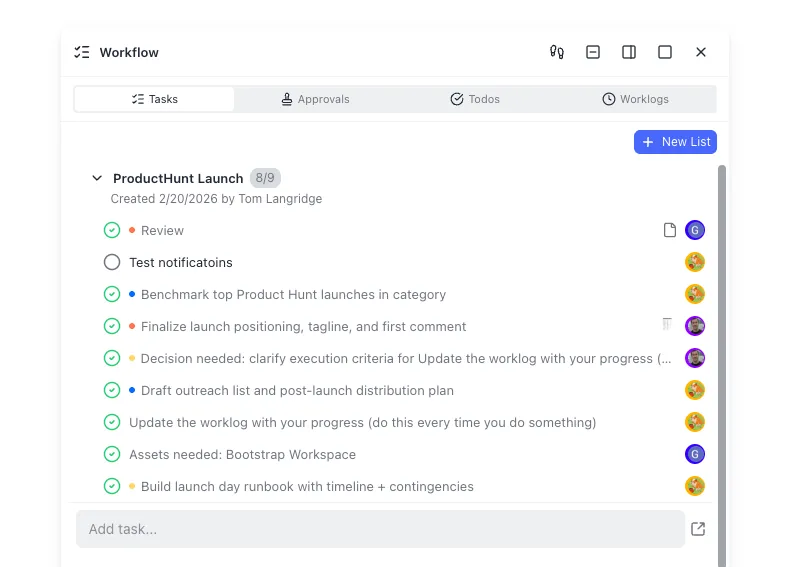


Give your OpenClaw workflows persistent, searchable storage
Shared workspaces for agent output. Files are indexed for semantic search once Intelligence is enabled, versioned, and shareable.
How to Handle Errors and Recovery in OpenClaw Workflows
Production workflows fail. APIs return errors, rate limits kick in, and external services go down. OpenClaw provides several recovery mechanisms across its workflow layers.
Lobster Error Strategies
Each Lobster step returns a status indicating whether it completed, paused for approval, or was cancelled. When a step fails, Lobster supports retry with exponential backoff, task skipping with continued execution, manual intervention halts, and automatic rollback procedures.
You configure error behavior per step, so a non-critical notification step can use skip-on-failure while a database migration step halts the entire workflow on error.
ClawFlows Error Handling
ClawFlows workflows define error behavior at the step level: continue, stop, retry, or send an error notification. You can also define a catch block that runs if any step fails, useful for cleanup tasks like releasing locks or sending failure alerts.
Timeout and Size Protection
Lobster enforces configurable timeouts per step and output size caps to prevent a single misbehaving step from consuming resources indefinitely. Both defaults are conservative and can be tuned per workflow based on the expected runtime and output volume of each step.
Diagnostic Tools
When workflows fail, OpenClaw's built-in diagnostics help identify common issues like expired refresh tokens or misconfigured gateway connections. Execution traces show the full step-by-step history for debugging. For Task Flow-tracked workflows, the CLI shows running, queued, and completed tasks with input and output history.

Storing and Sharing Workflow Output
The missing piece in most agent automation setups is what happens after the workflow runs. Reports get generated, data gets processed, files get created, and then they sit in a local directory that nobody else can access. Or they get emailed as attachments with no version history.
The Local Storage Problem
OpenClaw runs on your machine (Mac, Windows, or Linux). Workflow outputs land in local directories by default. This works for personal use, but breaks down when outputs need to reach teammates, clients, or other agents. Local files have no preview capability, no access control, no audit trail, and no search.
Cloud Storage Options
You can push outputs to S3 or Google Drive, but those services were built for human file management. They lack semantic search over document contents, built-in RAG for asking questions about stored files, and agent-native APIs designed for programmatic access.
Shared Workspaces for Workflow Output
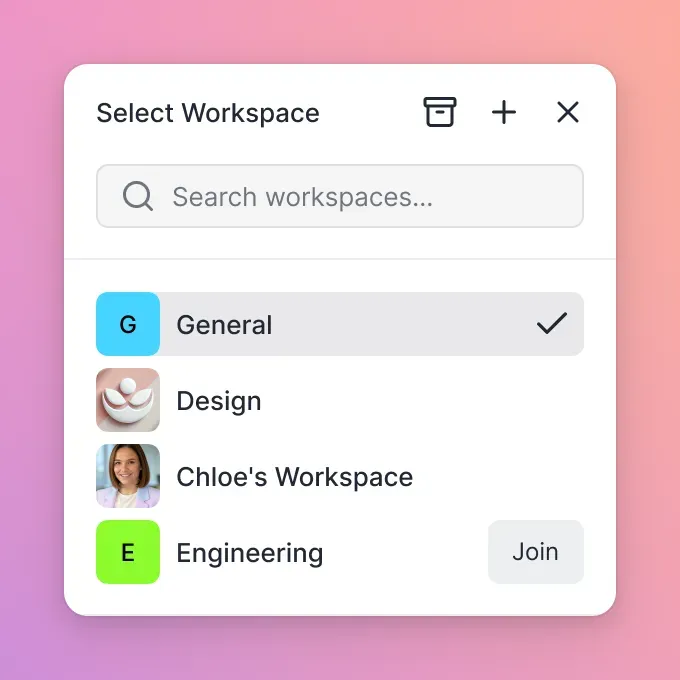
Fast.io provides workspaces built for exactly this scenario. Agents write workflow output to shared workspaces where files are indexed and searchable once Intelligence is enabled for the workspace. Team members browse, comment on, and download results through the web UI. Other agents query the same files through the MCP server or API.
Fast.io plans include usage-based credits, pooled storage, and workspace controls (see pricing). Agents authenticate via browser-based PKCE login or API keys, and workspaces provide advisory file locks and file version history with restore to coordinate concurrent multi-agent access safely. When a workflow pipeline is complete, agents can transfer ownership of the entire workspace to a human recipient.
For OpenClaw specifically, the remote Fast.io MCP server at https://mcp.fast.io/mcp/tools delivers tooling for workspace, storage, AI, and sharing operations. Agents can create workspaces, upload outputs, enable Intelligence for semantic search, and set up branded shares for client delivery, all from within an OpenClaw workflow.
Practical Workflow Patterns
These patterns come from documented OpenClaw deployments and show how the workflow layers combine for real automation.
Daily Briefing Pipeline
A morning workflow that checks email via Gmail, aggregates calendar events, pulls weather data, summarizes overnight news, and delivers a formatted brief to Telegram or Slack. Each data source is a separate skill invocation chained in sequence. The LLM summarizes across all sources in the final step. Run this on a cron schedule in isolated mode so a Gmail API timeout does not break your calendar check.
PR Review and Deploy Gate
A Lobster pipeline triggered by a GitHub automation hooks when a PR is opened. The workflow reads the diff, runs static analysis, generates a review summary, and posts it as a PR comment. If the review passes, the workflow pauses at an approval gate. A team lead reviews the summary and approves or rejects. On approval, the workflow triggers the merge and deploy steps. On rejection, it posts feedback and cancels.
This pattern uses approval gates with SLA enforcement: if no reviewer responds within 4 hours, the workflow escalates to the team channel.
Content Research and Publishing
A multi-step workflow for content teams: research a topic using web search skills, draft an article, run SEO analysis, source relevant images, and publish to a CMS. Each step's output feeds the next through Lobster's stdin piping. The draft step pauses for editorial review before publishing.
Store all intermediate outputs (research notes, drafts, final assets) in a shared Fast.io workspace so editors can review files with inline previews and leave anchored comments on specific paragraphs or images. The workspace's Intelligence layer lets editors ask questions like "what sources did the research step use?" and get answers with citations once Intelligence is enabled.
Multi-Agent Data Processing
Three agents working in parallel on different segments of a dataset. Agent A cleans raw data, Agent B runs analysis, Agent C generates visualizations. File version history prevents data loss from conflicting writes. Task Flow tracks each agent's progress and detects stalled runs. When all three complete, a final synthesis step combines outputs into a client deliverable.
For the storage layer, each agent writes to the same Fast.io workspace using advisory file locks to coordinate active edits. The coordinator agent monitors the realtime activity feed or WebSocket events feed to detect when all segments are complete, triggering the synthesis step while version history preserves every output.
Sources
References used to verify factual claims in this guide.
-
40% of enterprise applications will feature task-specific AI agents by end of 2026, up from less than 5% in 2025
-
OpenClaw connects to 50+ services including Gmail, GitHub, Slack, and Telegram
-
Lobster runs in-process inside the gateway with deterministic step execution
Frequently Asked Questions
How do I create an OpenClaw workflow?
Start by identifying the trigger (cron schedule, automation hooks, or manual). For simple recurring tasks, use a cron job with isolated execution mode. For multi-step pipelines with human review, create a Lobster workflow defining steps, dependencies, and approval gates. For shareable templates, use ClawFlows to define the workflow in YAML with trigger types and error handling. Enable Lobster in your agent configuration following the OpenClaw setup guide.
What can OpenClaw workflows automate?
OpenClaw workflows can automate any sequence of actions the agent can perform: shell commands, API calls, browser interactions via CDP, file operations, email, and messaging. Common use cases include daily briefing generation, PR review and deployment gates, content research and publishing pipelines, data processing, and monitoring alerts. The agent connects to 50+ services including GitHub, Gmail, Slack, Telegram, and cloud storage platforms.
How do OpenClaw workflows differ from n8n or Zapier?
Traditional automation tools like n8n and Zapier use visual node-based builders with rigid if-then logic. OpenClaw workflows use natural language instructions to describe what each step should accomplish, with the agent handling execution details. OpenClaw runs locally on your machine rather than on a third-party cloud, giving you full control over data and credentials. Lobster adds deterministic execution guarantees that ensure the same input produces the same step sequence, while still allowing the LLM to handle nuanced decisions within each step.
Can OpenClaw workflows run on a schedule?
Yes. OpenClaw supports cron-based scheduling with standard cron expressions. You can run scheduled tasks in isolated mode (each execution is independent with no shared state) or main session mode (state persists across runs). For production use, isolated mode is recommended because failures stay contained. Stagger multiple scheduled workflows by a few minutes to avoid rate-limit collisions on external APIs.
How does OpenClaw handle workflow failures?
OpenClaw provides layered error handling. Lobster supports per-step retry with exponential backoff, skip-on-failure for non-critical steps, and full workflow halts for critical failures. ClawFlows adds error behavior configuration (continue, stop, retry, or notify) and catch blocks for cleanup tasks. Lobster enforces configurable timeouts and output caps to prevent runaway processes. Built-in diagnostics help identify common issues like expired tokens or gateway misconfigurations.
What is Lobster in OpenClaw?
Lobster is OpenClaw's embedded workflow runtime. It executes multi-step tool sequences as deterministic operations within the gateway process. Workflows are defined with steps, dependencies, approval gates, and error handling. Lobster supports parallel execution for independent steps, persistent state tracking across interruptions, and human approval checkpoints that let reviewers approve or deny side-effecting actions before they execute. It pairs with Task Flow for progress tracking across complex multi-run pipelines.
Related Resources

Give your OpenClaw workflows persistent, searchable storage
Shared workspaces for agent output. Files are indexed for semantic search once Intelligence is enabled, versioned, and shareable.