How to Build Claude Cowork Workflows
Agentic workflows handle repetitive data processing, but setting them up requires structure. Learn how to build Claude Cowork workflows so your AI agents can hand off intermediate files. A shared workspace reduces context-switching for agents and helps development teams scale operations.


What to check before scaling how to build claude cowork workflows
Claude Cowork workflows are structured sequences where autonomous agents collaborate, edit, and pass context through shared files. Organizations moving past basic prompts are finding value in agentic automation. When you give an agent access to local environments or shared cloud workspaces, teams can automate multi-step processes that used to require manual work.
These workflows handle repetitive data processing, like pulling details from invoices or generating weekly reports. Instead of prompting an AI model for every step, a well-designed setup lets the agent read instructions from a central document. It executes a series of actions and drops the final results into a designated folder.
The success of these workflows depends on their structure. Shared workspaces reduce context-switching overhead for agents. This lets them focus on the immediate task instead of searching across different data sources. Built correctly, this environment lets agents and humans collaborate directly.
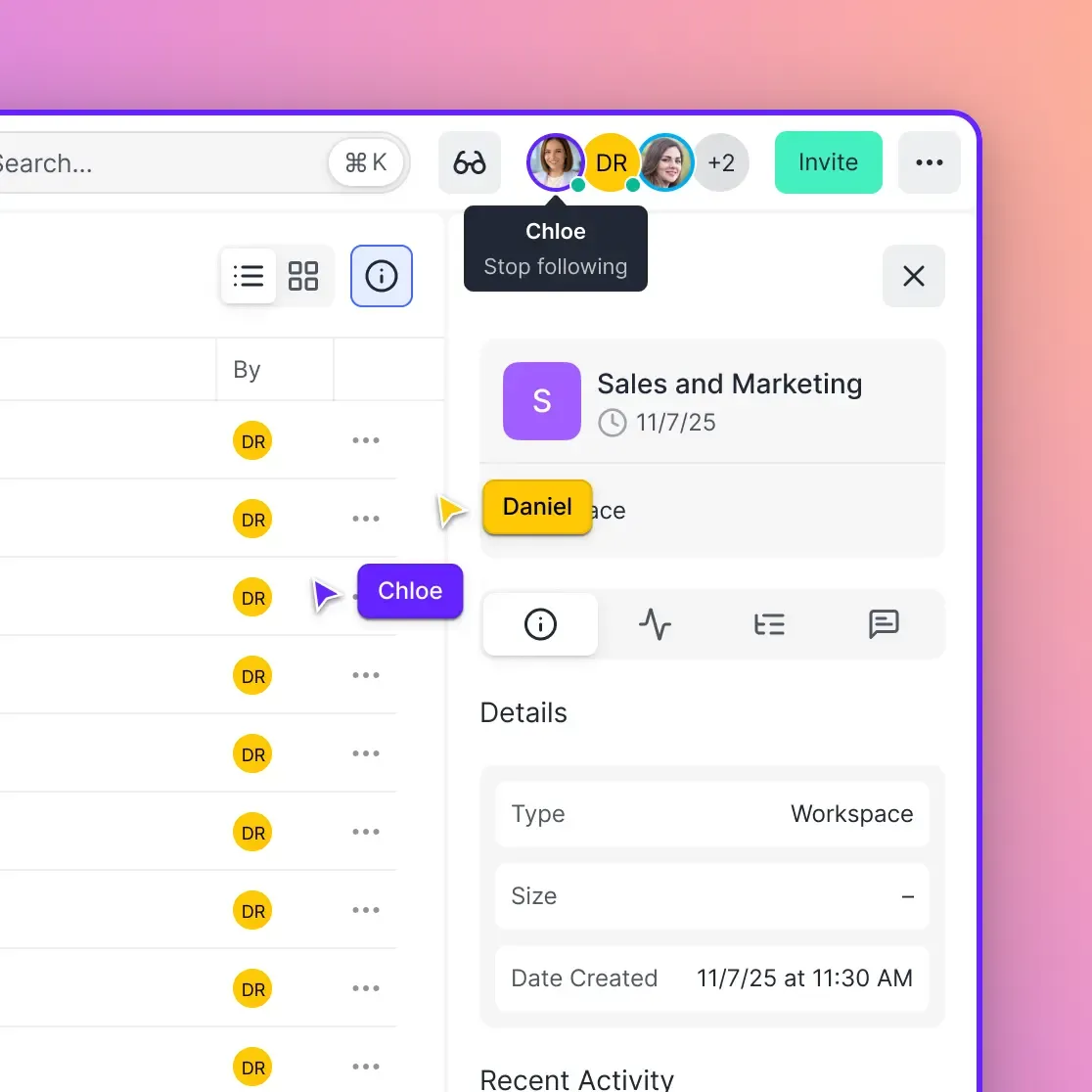
Fastio provides the infrastructure for these setups. Instead of treating storage as a basic drive, Fastio acts as an intelligent workspace. Files uploaded to a project are automatically indexed once Intelligence is enabled for the workspace. They become available to agents through a consolidated MCP toolset. This intelligence layer ensures your Claude agents don't just store files. They understand the semantic meaning of the contents to run complex workflows.
Helpful references: Fastio Workspaces, Fastio Collaboration, and Fastio AI.
Related guides
- How to Build the Top 10 OpenClaw Workflows for AI AutomationOpenClaw workflows combine multiple AI agents and MCP servers to automate multi-step business processes. From managing...
- How to Build Multi-Agent Workflows in OpenClawOpenClaw multi-agent workflows let multiple agents coordinate on tasks like data processing or report generation....
- Claude Cowork vs Claude Code: Which One Should You Use?Claude Code now accounts for roughly 4% of all public GitHub commits, and Claude Cowork went generally available in...
- How to Build Claude Cowork Client Portals for AI AutomationA Claude Cowork client portal gives agencies a branded staging area for their autonomous agents. The agents securely...
- How to Build Claude Cowork Persistent StoragePersistent storage in Claude Cowork lets files, outputs, and states survive between agent sessions and deployments....
- How to Use Claude Cowork SafelyClaude Cowork is a research preview that brings agentic capabilities to Claude Desktop, letting Claude read, write, and...
More on this subject: Claude and Claude Code (278 guides)
The Architecture of Agentic Workflows
Building Claude Cowork workflows starts with understanding the architecture of agentic systems. Unlike a simple chat, an agentic workflow is a stateful process. The agent needs to maintain context over time, track its progress against instructions, and recover from errors without failing.
The shared workspace sits at the center of this architecture. It holds your guidelines, raw data, and intermediate files. For multi-agent workflows, the workspace acts as the coordination layer. One agent might gather research, another handles drafting, and a third does the final formatting.
Without centralized memory, agents face high context-switching overhead. They have to pull data from different interfaces and re-process information, which wastes compute resources. A shared workspace provides a single source of truth to prevent this.
Fastio supports this architecture with its native Intelligence Mode. When enabled, the workspace automatically indexes all files for built-in RAG. You don't need to configure a separate vector DB or manage embedding pipelines. Agents can connect directly to Fastio's remote MCP server at https://mcp.fast.io/mcp/tools.
Five Steps to Design a Multi-Agent Workflow
A workflow with multiple collaborating agents requires planning. Here are five steps to build a multi-agent workflow using Claude.
Step 1: Set up the shared workspace and access permissions Start by establishing the environment. Create a dedicated Fastio workspace for the project to serve as the shared memory for your agents. Configure the access controls so agents have permission to read, write, and modify files. The 14-day Business Trial provides full access for testing development and production workflows.
Step 2: Write the instructions
Agents need clear guidelines. Create a primary instruction file like claude.md at the root of your workspace. This document outlines the workflow goal, defines agent roles, and specifies the formatting requirements for outputs.
Step 3: Configure agent tools Agents need tools to interact with their environment. Fastio provides a consolidated MCP toolset via Streamable HTTP. Equip your Claude agents with tools for reading file metadata, updating documents, or querying the built-in index.
Step 4: Map the file handoffs Define how agents will pass information to one another. Instead of relying on memory state, agents should write their intermediate outputs to specific files in the workspace. The next agent in the sequence reads this file to start its work.
Step 5: Add triggers and event feeds To make the workflow run on its own, set up triggers. Use the WebSocket events feed or poll the realtime activity feed to notify agents when files change. For example, when a research agent finishes its findings, an event notification triggers the drafting agent to start. This event-driven approach keeps agents synchronized.
Examples of Agent File Handoffs
System design often lacks examples of agents handing off intermediate files. Here is how this works in practice within a Fastio workspace.
Example 1: A Content Generation Pipeline Consider a workflow that generates weekly industry reports using three agents: a Researcher, a Writer, and an Editor.
A human uploads a list of topics to topics.txt. An event notification triggers the Researcher agent to read this file. It gathers information and writes the findings to raw_research.md.
This handoff creates an audit trail. If the final report has errors, a human can review raw_research.md to see if the mistake happened during research or writing.
The Writer agent then reads raw_research.md and generates a draft saved as draft_report.md. The Editor agent reviews this draft against the guidelines in claude.md, makes corrections, and outputs final_report.pdf. Fastio's advisory file locks, granular permissions, and automatic version history coordinate agent work during this process, allowing an agent to lock a file before writing and release it when finished.
Example 2: A Data Processing Pipeline In a workflow processing client invoices, the first agent monitors an incoming folder. When a document arrives, it extracts the text and structured data into a JSON file in the processed folder.
A second agent reads this JSON file and cross-references the data with an internal database. If the data matches, the agent moves the file to the approved folder. If it fails validation, it moves the file to a flagged folder and pings a human operator.
In both cases, the shared workspace acts as the state machine. Agents don't need to maintain internal states. They read the file system, perform their action, and update the files. This pattern scales as you add more steps.
Addressing Common Workflow Challenges
Developers run into specific challenges when building Claude Cowork workflows. Planning for these issues helps maintain a stable production environment.
Managing context limits is a common issue. If an agent tries to process a whole project history at once, it exceeds its memory limit. Fastio's built-in RAG features handle this. Instead of loading every document into the prompt, the agent searches the workspace index through the MCP server, with Intelligence Mode enabled on the workspace. It pulls only the relevant paragraphs for its current task, which reduces token usage.
Workflows often need human review before running actions like sending client emails. Fastio supports this through shared workspaces and collaborative notes. An agent can pause its work, write a summary of proposed actions to a collaborative note, and wait. A human reviews the document in the Fastio interface. After review, the agent resumes the workflow.
Development teams also deal with client handoffs. Transferring control of a custom workflow can take time. Fastio handles this with ownership transfer. A developer builds the workspaces and transfers full ownership to the client, while keeping administrative access for maintenance.


Give Your AI Agents Persistent Storage
Give your Claude agents a shared workspace. Start with generous storage and a consolidated MCP toolset during the 14-day Business Trial. Built for how build claude cowork workflows workflows.
Scaling Your Claude Agent Workflows
Moving a local workflow into production requires infrastructure. As workflows grow, you need persistent environments rather than simple local scripts.
Fastio supports this scaling process. If a workflow relies on external files, agents can use the URL Import feature. They pull files directly from Google Drive, OneDrive, Box, or Dropbox via OAuth, avoiding local download bottlenecks.
As you deploy agents across projects, the shared workspace keeps your files centralized. Agents and humans use the exact same workspaces and intelligence layer. Humans use the web interface, and agents use the multiple MCP tools.
Building workflows on a shared workspace helps your agents run consistently. It removes data silos, manages file handoffs, and creates an environment where AI agents and humans work together.
Sources
Frequently Asked Questions
How do I automate tasks with Claude agents?
Automate tasks by setting up a workflow in a shared workspace. Write instructions in a central file like claude.md, give your agents MCP tools, and define a sequence of file handoffs.
What is an agentic workflow?
An agentic workflow is a process where AI agents complete multi-step tasks. Unlike chatbots, these agents plan actions, use tools to interact with environments, read files, and collaborate with other agents.
How do agents hand off files during a workflow?
Agents write their intermediate outputs to a shared workspace. One agent completes a task and saves the result to a file. An activity event alerts the next agent, which reads that file to start the next phase.
Why are shared workspaces important for AI agents?
Shared workspaces provide a single source of truth for agents. They reduce context-switching, manage file handoffs, create an audit trail, and let humans and AI collaborate in the same environment.
Can Claude agents access external platforms directly?
Yes, agents can access external platforms using the right tools. With Fastio's URL Import feature, agents pull files from providers like Google Drive or Dropbox without local file handling.
Related Resources

Give Your AI Agents Persistent Storage
Give your Claude agents a shared workspace. Start with generous storage and a consolidated MCP toolset during the 14-day Business Trial. Built for how build claude cowork workflows workflows.