How to Automate Stripe Payments with an OpenClaw Agent
SaaS companies lose 0.5 to 1% of monthly recurring revenue to failed payments that customers never intended to trigger. This guide covers how to connect an OpenClaw agent to Stripe using a ClawHub skill or Composio MCP, configure restricted API keys, set up monitoring for failed charges, disputes, and subscription changes, and route alerts to Slack, Telegram, or WhatsApp. You also get a workflow for storing receipts and revenue reports in Fastio so the data is searchable and ready for handoff.

Why Automate Stripe Monitoring with an Agent
SaaS companies lose between 0.5% and 1% of monthly recurring revenue to failed payments that customers never intended to cancel, according to SaaS Ultra's 2026 churn benchmarks. Across the industry, that adds up to roughly $1.3 billion in recoverable revenue each year. Expired credit cards alone cause 42% of those failures. The gap between "payment failed" and "someone notices" is where money disappears.
Stripe provides automation hooks events, health alerts, and Smart Retries to handle some of this automatically. But the monitoring side, knowing what happened and telling the right person, still falls on your team. Most companies check a dashboard manually, or rely on email notifications that get buried alongside everything else.
An OpenClaw agent closes that gap. OpenClaw is an open-source personal AI agent that runs on your own infrastructure and connects to messaging platforms like Slack, Telegram, WhatsApp, and Discord. You give it access to Stripe's API with a restricted key, define what events matter, and the agent delivers structured alerts to whichever channel your team actually watches. No polling a dashboard. No writing a custom automation hooks server from scratch.
The agent can go beyond simple notifications. It can compile daily revenue summaries, flag subscription cancellations with customer context, track dispute response deadlines, and log everything to a persistent workspace where humans can review the data later. The rest of this guide walks through the setup.

Related guides
- How to Automate Perplexity Personal Computer with ZapierPerplexity Personal Computer gives you an always-on AI research agent that runs continuously on your behalf. Zapier...
- How to Automate Web Scraping With Hermes Agent's Scrapling SkillHermes Agent's Scrapling skill gives your AI agent three distinct scraping strategies, from fast HTTP fetching for...
- How to Automate Email Workflows with OpenClaw AgentsOpenClaw agents can monitor inboxes, classify messages, extract data from attachments, and route actions through...
- How to Automate Grafana Dashboards with an OpenClaw AgentGrafana Lens is an open-source OpenClaw plugin with 18 composable tools that turn natural language into PromQL queries,...
- How to Automate OpenClaw Workflows with Zapier MCPOpenClaw agents are good at reasoning, but they need a way to act on that reasoning across your existing tools. Zapier...
- How to Automate Airtable with OpenClawOpenClaw can read, write, and manage Airtable records through natural language commands, replacing manual Zapier and...
More on this subject: OpenClaw Setup and Guides (199 guides)
How to Connect OpenClaw to Stripe
There are two main paths for giving your OpenClaw agent access to Stripe: installing a ClawHub skill that wraps the Stripe API, or connecting through Composio's managed MCP server. Both work. The right choice depends on how much control you want over the API calls versus how much setup you want to skip.
Path 1: ClawHub Skill
The ClawHub skills repository includes a stripe-integration-expert skill that wraps common Stripe API operations into a structured interface for OpenClaw. The skill handles payment queries, customer lookups, and subscription status checks. Community guides from SFAI Labs and Dench cover extending this foundation with custom monitoring logic. Because skills are workspace files, you can review which API operations the agent has access.
Path 2: Composio MCP
Composio offers a managed MCP integration that handles Stripe authentication and exposes Stripe tools directly to OpenClaw. Rather than configuring API keys yourself, Composio manages OAuth tokens and token refresh on your behalf. The agent gets access to a broad set of Stripe actions covering payments, customers, subscriptions, invoices, and refunds.
The advantage is faster setup with less configuration. The tradeoff is that API calls route through Composio's infrastructure rather than going directly from your machine to Stripe.
Which to Choose
Use the ClawHub skill path if you want full control over exactly which Stripe endpoints the agent touches, or if your security policy requires direct API communication. Use Composio if you want to get running in minutes and prefer managed authentication. Both approaches support the monitoring workflows described in the next sections.



Give Your Payment Alerts a Persistent Home
Store Stripe reports, revenue summaries, and dispute evidence in a workspace your whole team can search, with remote MCP access for your OpenClaw agent.
Setting Up Restricted API Keys for Agent Access
Giving an AI agent your full Stripe secret key is a bad idea. A restricted API key limits the agent to exactly the permissions it needs. If the agent's instructions get manipulated or a workspace file leaks, the blast radius stays small.
Stripe's Dashboard lets you create restricted keys scoped to specific resources and permission levels. For a monitoring agent, read-only access to charges, customers, disputes, invoices, subscriptions, and events is enough. Leave write permissions disabled unless the agent specifically needs to retry payments or update records. Each additional permission increases your attack surface, so add them deliberately.
Store the key in an environment variable rather than in workspace files, skill definitions, or agent instructions. Both the ClawHub skill path and Composio handle credential loading without exposing keys in plain text.
Stripe's own documentation recommends restricted keys for any third-party or automated integration. Even if you trust the agent today, a scoped key protects you when instructions change, new skills get added, or a teammate modifies the workspace.
Test everything in Stripe's test mode before connecting to live payment data. Stripe provides tools to simulate specific events (failed payments, disputes, subscription changes) so you can verify each alert path without waiting for real failures.
Configuring Payment Monitoring and Alerts
Once the agent has API access, you need to define what it watches and how it reports. OpenClaw agents follow markdown instructions, so monitoring rules are defined in your workspace files rather than in code.
What to monitor:
- Failed charges: The most common revenue leak. The agent queries recent charges filtered by status, identifies failures, and reports the customer name, amount, failure reason (card declined, insufficient funds, expired card), and how many retry attempts remain
- Disputes and chargebacks: These have response deadlines. A dispute opened on Monday might need evidence submitted by Friday. The agent flags new disputes with the deadline and amount at risk
- Subscription cancellations: Distinguish between voluntary cancellations (customer chose to leave) and involuntary ones (payment method failed). The agent can pull the cancellation reason from the subscription object
- Revenue summaries: Daily or weekly totals for gross revenue, refunds, net revenue, and MRR changes. Useful for founders and finance teams who want a morning briefing without opening a dashboard
Delivering alerts through messaging channels:
OpenClaw's gateway connects to 20+ messaging platforms. Configure the agent to send alerts through whichever channel your team uses. Slack is common for team-wide revenue alerts. Telegram works well for founders who want personal notifications on their phone. You can route different alert types to different channels: failed charges to a #payments-alerts Slack channel, dispute deadlines to the finance team's group, and daily summaries as a DM to the founder.
Setting up frequency:
For time-sensitive events like disputes and large failed charges, the agent should check frequently or use automation hooks-triggered monitoring. For revenue summaries, a daily or weekly schedule keeps things manageable without notification fatigue. The SFAI Labs guide describes configuring heartbeat schedules: a 9 AM daily revenue report and a Monday morning weekly churn report, for example.
automation hooks-driven vs. polling:
The agent can either poll the Stripe API on a schedule (simpler to set up) or listen for automation hooks events (faster, but requires a publicly accessible endpoint). For most small teams, polling every 15 to 30 minutes catches issues fast enough. If you need real-time alerts, the ClawJolt approach uses trigger automation that forwards Stripe automation hooks events to the agent without requiring you to run your own automation hooks server.
Storing Receipts and Reports in a Persistent Workspace
Payment alerts are useful in the moment, but they lose value if nobody can find them a week later. When your accountant asks "what happened with that disputed charge in April?" or a customer claims they were charged twice, you need a searchable record.
Local file storage works for personal use but breaks down quickly for teams. Files on one person's machine are invisible to everyone else. Cloud drives like Google Drive or Dropbox store files but do not index them for the kind of search you need, finding every failed charge from a specific customer across six months of reports.
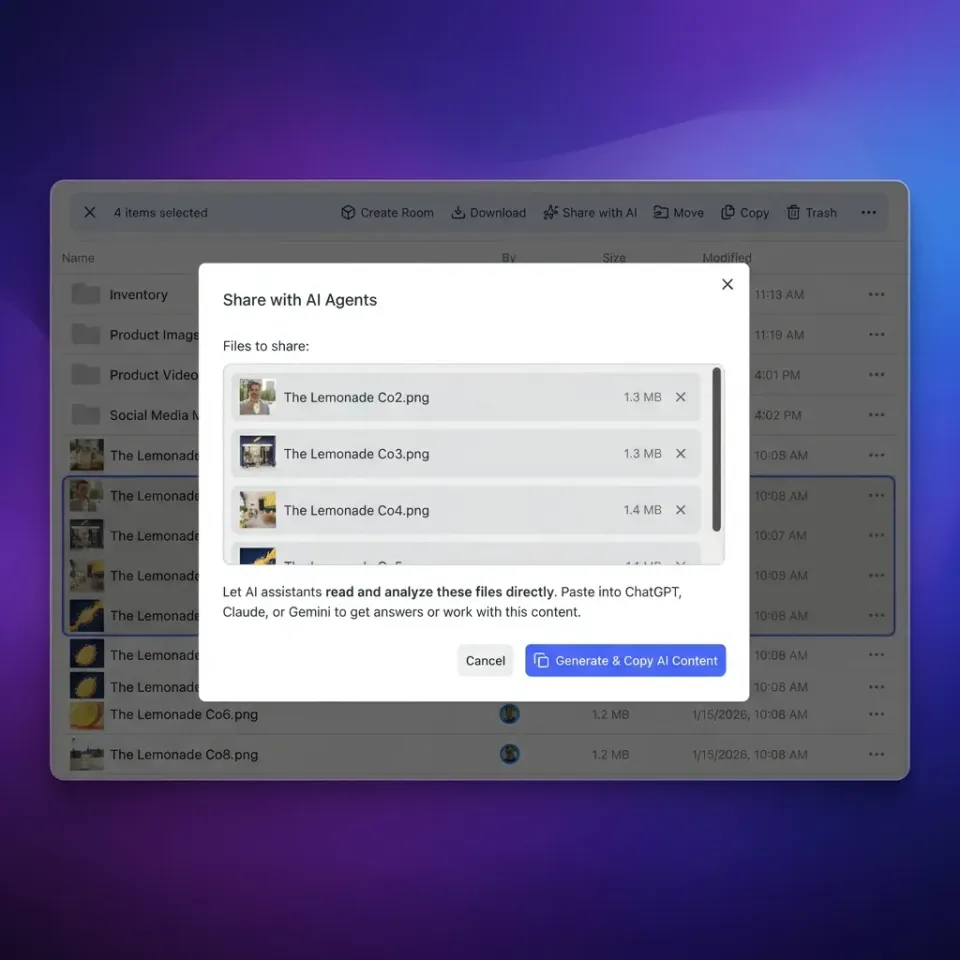
Fastio workspaces handle this by combining file storage with built-in intelligence. Upload a revenue report or export a batch of receipts, and once Intelligence Mode is enabled on the workspace, the files are automatically indexed for semantic search. Your team can ask questions like "show me all disputes from Q1" or "what was our refund total in March" and get answers with citations pointing to the specific files. No separate vector database, no embedding pipeline to maintain.
Setting up the workflow:
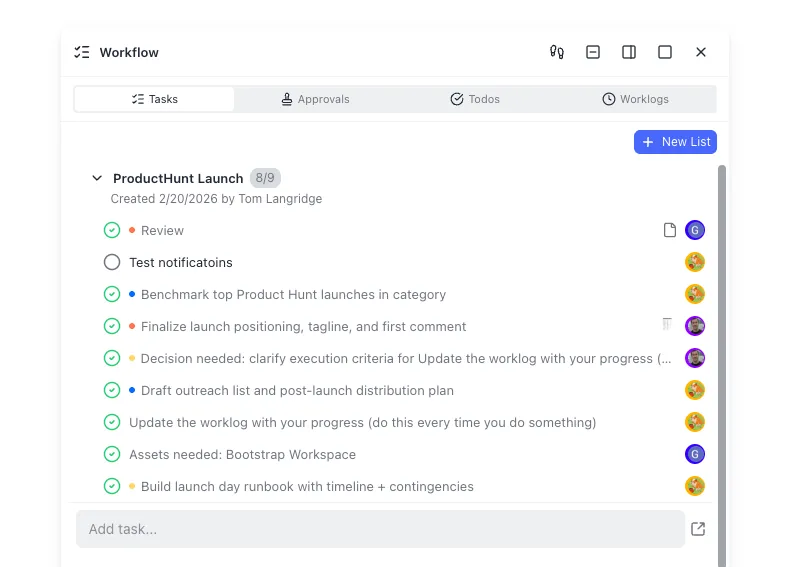
Your OpenClaw agent generates a report (daily revenue summary, weekly churn analysis, or a dispute response document), saves it locally, and uploads it to a Fastio workspace through the Fastio MCP server. The workspace becomes the team's single source of truth for payment data. The agent writes, the humans read and act.
Other storage options include S3 buckets (cheap but no search), Google Drive (familiar but limited programmatic access), and self-hosted solutions like Nextcloud. The tradeoff is always between setup effort and capability. Fastio provides a 14-day Business Trial and paid plans starting at $9.99/month, covering small to mid-size SaaS operations.
Ownership transfer is where this becomes useful for agencies and consultants. An agent can build and populate a workspace with a client's payment reports, then transfer the entire organization to the client. The agent keeps admin access for ongoing monitoring while the client owns and controls the data. This pattern works well for bookkeepers or fractional CFOs who manage Stripe accounts for multiple clients.
Metadata Views add another layer. Fastio's document data extraction feature can turn uploaded invoices and receipts into a sortable, filterable spreadsheet. Define columns like "customer name," "amount," "date," and "status" in plain English, and the system extracts structured data from each document. No OCR templates, no manual tagging.
Security Practices and Common Pitfalls
Connecting an AI agent to your payment infrastructure requires more caution than a typical integration. Here are the practices that matter most, drawn from Stripe's documentation and community experience with OpenClaw deployments.
Never use your full Stripe secret key. This is worth repeating. The restricted key approach described earlier is not optional. A full secret key lets the agent create charges, delete customers, and modify your account settings. Even if your agent instructions say "only read data," a prompt injection attack or a misconfigured skill could cause unintended writes.
Validate automation hooks signatures. If you use automation hooks-driven monitoring, always verify the Stripe signature header using HMAC-SHA256 before processing any event. Without signature validation, anyone who discovers your automation hooks URL can send fake events that trigger your agent's alert logic.
Handle idempotency. Stripe may deliver the same automation hooks event more than once. Your agent or its middleware should track event IDs and skip duplicates. Without this, a single failed charge could generate five identical Slack alerts.
Audit API access regularly. Check your Stripe Dashboard's API request logs to verify the agent is only calling the endpoints you expect. If you see unexpected requests, investigate before assuming the agent is operating correctly.
Keep credentials out of workspace files. Environment variables loaded from .env are the standard approach. If you use Composio, credentials are managed on their platform, but you should still review which scopes you granted and revoke access if you stop using the integration.
Start with test mode. Every workflow in this guide should work identically in Stripe's test environment. Run the agent against test data for at least a few days before connecting it to live payment data. Stripe's CLI can simulate specific event types (stripe trigger invoice.payment_failed), so you can verify each alert path without waiting for real failures.
Common pitfalls:
- Setting up monitoring but never testing the alert delivery path. Confirm that messages actually arrive in your Slack channel or Telegram chat before relying on the agent for production monitoring
- Granting write permissions "just in case" and forgetting to revoke them later
- Running the agent on a machine that sleeps or loses network connectivity. If you are running OpenClaw on a laptop, the agent stops monitoring when the laptop lid closes. A dedicated server, even a small VPS, is more reliable for payment monitoring that needs to run around the clock
Sources
References used to verify factual claims in this guide.
-
SaaS companies lose 0.5 to 1% of MRR monthly to failed payments Involuntary churn generates approximately $1.3 billion in recoverable SaaS revenue annually Expired credit cards cause 42% of all payment failures
-
Stripe processes more than 500 million API requests daily
-
ClawHub stripe-integration-expert skill available in the official skills repo
-
Composio MCP provides auth-managed Stripe access for OpenClaw with 400+ tools
Frequently Asked Questions
How do I connect OpenClaw to Stripe?
You have two main options. First, install a Stripe skill from ClawHub or build a custom monitoring skill in your OpenClaw workspace that calls the Stripe API using a restricted key stored as an environment variable. Second, use Composio's managed MCP server, which handles authentication and exposes Stripe tools directly to the agent. Both approaches work with OpenClaw's messaging gateway to deliver alerts through Slack, Telegram, WhatsApp, or other channels.
Can an AI agent process payments?
An AI agent can read payment data, monitor for failures, and trigger alerts. Whether it should process payments (create charges, issue refunds) depends on your risk tolerance and the permissions you grant. For monitoring, read-only access is enough and much safer. If you need the agent to take action on payments, use restricted API keys scoped to the specific operations required and test thoroughly in Stripe's test environment before going live.
How do I monitor Stripe payments with an AI agent?
Configure the agent to query Stripe's API for recent charges, subscriptions, and disputes on a schedule, or set up automation hooks forwarding to push events to the agent in real time. The agent parses the response, identifies issues (failed charges, new disputes, cancellations), formats an alert with customer context and amounts, and sends it through your preferred messaging channel. Daily or weekly revenue summaries can run on a schedule, while critical alerts like disputes benefit from near-real-time delivery.
Is it safe to give an AI agent Stripe API access?
Yes, if you follow the principle of least privilege. Create a restricted API key with only the specific read permissions the agent needs. Never use your full secret key. Store credentials in environment variables, not in workspace files. Validate automation hooks signatures, handle event idempotency, and audit the agent's API logs regularly. Start in Stripe's test mode and verify all alert paths before connecting to live data.
What payment events should an OpenClaw agent monitor?
At minimum, monitor failed charges (the biggest source of involuntary churn), disputes (which have response deadlines), and subscription cancellations. Beyond alerts, compile daily revenue summaries covering gross revenue, refunds, and MRR changes. Expired credit cards cause 42% of payment failures, so tracking card expiration dates and notifying customers proactively can prevent failures before they happen.
How do I store Stripe reports from an OpenClaw agent?
The agent generates reports locally and can upload them to a cloud workspace for team access. Fastio workspaces with Intelligence Mode automatically index uploaded files for semantic search, so your team can query payment history by asking natural language questions. Other options include S3 buckets for raw storage or Google Drive for familiar file sharing, though neither provides built-in search across document contents.
Related Resources

Give Your Payment Alerts a Persistent Home
Store Stripe reports, revenue summaries, and dispute evidence in a workspace your whole team can search, with remote MCP access for your OpenClaw agent.