How to Build a Raspberry Pi Thin Client with OpenClaw Remote Desktop Agent
A Raspberry Pi running RDP or VNC software makes a capable thin client for under $100, replacing commercial hardware that costs three to five times more. Adding an OpenClaw agent on the same device turns a passive remote desktop terminal into a managed endpoint that monitors session health, reconnects dropped connections, and routes session logs to your team.

Why a Raspberry Pi Makes a Good Thin Client
A thin client is a lightweight computing device that relies on a remote server for processing, using the local device primarily for display and input. The Raspberry Pi fits this role well because it draws minimal power, costs a fraction of commercial alternatives, and runs standard Linux software.
Commercial thin clients from vendors like Dell (Wyse), HP, and IGEL typically start at $300 and go well above $500 for current models. The Raspberry Pi 5 with 4GB of RAM, enough for any thin client workload, currently sells for around $75. Even with a case, power supply, and microSD card, total hardware cost stays under $120. The Pi 500, a keyboard-integrated Pi 5 variant, ships for $90 and works as an all-in-one thin client terminal. Power consumption sits between 8 and 15 watts compared to 60 to 100 watts for a typical x86 thin client, which adds up across dozens of endpoints.
The Raspberry Pi Foundation markets the Pi directly for thin client deployments. Merton Council in London replaced aging desktop PCs with Raspberry Pi thin clients and reported saving over £100,000. Cambridge University and the French city of Évreux run similar deployments.
Several thin client operating systems target the Pi specifically. WTware provides a turnkey RDP boot image. Stratodesk NoTouch (now owned by IGEL) supports enterprise management across mixed Pi and x86 fleets. For more control, standard Raspberry Pi OS with an RDP or VNC client works without additional licensing costs.
The missing piece in most Pi thin client setups is management. Commercial thin clients ship with centralized administration tools for session monitoring, policy enforcement, and health checks. A bare Pi running Remmina or xfreerdp has none of that. This is where adding an OpenClaw agent changes the equation.
Related guides
- How to Build Claude Cowork Client Portals for AI AutomationA Claude Cowork client portal gives agencies a branded staging area for their autonomous agents. The agents securely...
- Claude Code Remote MCP: Connecting Cloud Storage to Terminal AgentsA Claude Code remote MCP configuration connects Anthropic terminal-based agent to cloud-hosted MCP servers using HTTP...
- How to Set Up VNC Remote Desktop Access on Raspberry Pi with OpenClawRaspberry Pi OS Bookworm replaced X11 with Wayland, which broke the preinstalled RealVNC server that most Pi owners...
- How to Build a PiKVM Remote Server Agent with OpenClaw on Raspberry PiPiKVM gives you BIOS-level remote access to any server from a browser. Adding an OpenClaw agent on a second Raspberry...
- How to Build a Personal AI Agent Desktop with Raspberry Pi 5 and OpenClawRaspberry Pi raised the Pi 5 8GB board from $80 to $90 in late 2025, driven by LPDDR4 memory costs from datacenter AI...
- How to Build a Portable Pen Testing Rig with OpenClaw and Kali Linux on Raspberry PiA portable Kali Linux rig with an OpenClaw agent on a Raspberry Pi turns manual pen testing into an orchestrated...
More on this subject: OpenClaw on Raspberry Pi (192 guides)
Remote Desktop Protocols and Client Software
Before configuring the agent layer, you need the remote desktop foundation working. The Pi supports every major remote access protocol, and the right choice depends on what you are connecting.
RDP (Remote Desktop Protocol)
RDP is the standard for connecting to Windows desktops and servers. On Raspberry Pi OS, the two main RDP clients are Remmina and xfreerdp.
Remmina provides a graphical interface for managing multiple saved connections. It supports RDP, VNC, SSH, and several other protocols through a single application. For users who need to switch between multiple remote servers throughout the day, Remmina's connection manager saves time.
xfreerdp is the command-line FreeRDP client. It offers more granular control over connection parameters and performs well on Pi hardware. For kiosk-style thin client deployments where the Pi boots directly into a single RDP session, xfreerdp launched from a startup script is the lighter option.
VNC (Virtual Network Computing)
VNC connects to Linux desktops, macOS screens, and any system running a VNC server. RealVNC is bundled with Raspberry Pi OS. TigerVNC and TightVNC are open-source alternatives with better compression for slower networks.
VNC works well for connecting to other Linux machines or macOS systems where RDP is not available. The tradeoff is that VNC transmits raw pixel data and lacks the protocol-level optimizations that RDP uses for font rendering and display caching, so it feels less responsive over high-latency links.
Citrix and VMware
For enterprise VDI environments, the Pi supports both Citrix Workspace App and VMware Horizon Client. Stratodesk NoTouch bundles these clients with centralized management. If your organization runs Citrix or VMware infrastructure, these purpose-built clients deliver better performance than generic RDP or VNC because they use proprietary display protocols optimized for virtual desktops.
xtc (Open-Source Thin Client Manager)
xtc is an open-source thin client management system that supports RDP, VNC, SSH, X2Go, and XDMCP on the Pi. It uses standard client software under the hood (xfreerdp, vncviewer, x2go) and adds a configuration layer on top for managing connection profiles and auto-login sequences.
How to Configure Kiosk-Mode Remote Desktop on a Pi
A thin client that boots to a desktop and waits for someone to click an RDP shortcut is not a thin client. A proper deployment boots directly into the remote session with no local desktop visible.
Base OS setup
Start with Raspberry Pi OS Lite (64-bit), the minimal image without a desktop environment. This saves resources and reduces the attack surface. Install only the display server and remote desktop client you need.
For an RDP kiosk connecting to a Windows server, the minimal stack is: an X11 display server, a window manager (Openbox is lightweight and common for kiosk setups), and xfreerdp. The Pi boots to an X session that immediately launches xfreerdp in full-screen mode, connected to the target server. The user sees only the remote Windows desktop.
Auto-reconnect limitations
Most thin client guides stop here, and for good reason: the basic setup works. But it breaks the moment something goes wrong. If the network drops for 30 seconds, xfreerdp exits. If the remote server reboots for a Windows Update, the session disconnects. If the RDP gateway certificate changes, the client refuses to connect.
You can write a bash loop that restarts xfreerdp when it exits. That handles the simple case of a clean disconnect. It does not handle certificate errors, authentication failures, network interface flapping, or a remote server that is up but not accepting new sessions because it hit its connection limit.
Where traditional scripting falls short
The reconnection problem looks simple but has many edge cases. A script can detect that xfreerdp exited, but it cannot tell you why. Exit code 1 might mean the server refused the connection, the network is down, the credentials expired, or the server is overloaded. A blind retry loop hammers the server with failed connection attempts, fills logs with noise, and never escalates to a human. It also cannot make judgment calls: should the user be routed to a backup server? Is the network outage temporary or does it need attention?
These are decisions that benefit from reasoning, not just conditional logic.



Centralize Thin Client Logs in One Searchable Workspace
Upload session logs, error reports, and diagnostic data from your Pi fleet to a shared workspace with built-in AI search once Intelligence is enabled.
Adding OpenClaw for Session Management and Monitoring
OpenClaw is an open-source AI agent framework that runs on Raspberry Pi hardware. It orchestrates tasks through cloud-hosted LLMs (Claude, GPT-4, Gemini, or local models via Ollama) while keeping local resource usage low. The Pi handles scheduling, shell command execution, and HTTP requests. The reasoning happens in the cloud or on a local model server.
OpenClaw supports both Pi 4 and Pi 5, with the Pi 5 recommended for faster response times. Minimum requirements from the official documentation: 1GB RAM, 64-bit OS, and 500MB free disk space. It runs as a daemon process and persists across reboots.
The key capability for thin client management is shell command execution. OpenClaw can run any shell command on the host system, which means it can start and stop remote desktop clients, check process status, read log files, test network connectivity, and interact with system services. Combined with LLM reasoning, this turns basic shell automation into intelligent session management.
Session health monitoring
The agent monitors the remote desktop process and the underlying network. It periodically checks whether the RDP or VNC client process is running, whether the network interface has an IP address, and whether the target server responds to connection probes. When everything is healthy, the agent logs the check silently and moves on.
When the agent detects a disconnected session, it gathers context before acting. It checks the process exit status, tests network reachability to the server, and verifies that the Pi's network interface is up. This diagnostic information goes to the LLM for assessment. Instead of blindly restarting the client, the agent reasons about the failure. A network timeout suggests waiting and retrying. A certificate error suggests alerting an administrator. A server that is reachable but refusing connections suggests trying a backup server or notifying the help desk.
Intelligent reconnection
After diagnosing the issue, the agent takes the appropriate action. For transient network failures, it waits for connectivity to return and then restarts the session. For server-side problems, it can route the user to an alternative server if one is configured. For persistent failures, it escalates to a human with a clear description of what happened and what it tried.
The agent can also handle scheduled disruptions. If the remote server reboots for maintenance during off-hours, the agent detects the disconnection, recognizes that it falls within a known maintenance window, and waits for the server to come back online rather than flooding the ops channel with false alarms.
Multi-endpoint coordination
In deployments with multiple Pi thin clients, each running its own OpenClaw agent, the agents operate independently but can report to the same central workspace. An administrator sees the health status of every endpoint without SSH-ing into each Pi individually. If a server goes down and 30 thin clients disconnect simultaneously, the agents all report the same root cause rather than generating 30 independent alerts about 30 individual session failures.
Logging Session Data and Handing Off to Your Team
A thin client fleet generates useful operational data: session uptime, disconnection frequency, reconnection times, server load patterns, and error categories. Without centralized logging, this data lives scattered across individual Pi devices where nobody looks at it.
Local logging
The OpenClaw agent logs every health check, disconnection event, reconnection attempt, and escalation decision to the local filesystem. Each log entry includes a timestamp, the check result, any diagnostic information gathered, the action taken, and the outcome. During normal operations, these logs confirm that the fleet is working. During incidents, they become a timeline of what happened and when.
Store logs on a USB SSD rather than the microSD card. SD cards wear out faster under continuous write loads, and replacing a failed SD card on a thin client in a conference room is exactly the kind of maintenance you are trying to avoid.
Cloud workspace for team visibility
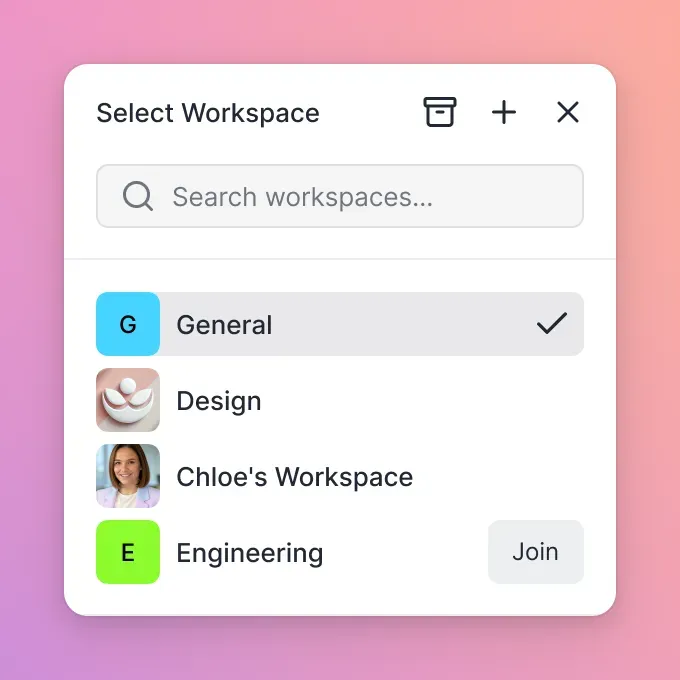
For team access, push logs and session reports to a cloud workspace. Fastio provides shared workspaces with paid plans starting at $9.99/mo and a 14-day Business Trial at pricing, which covers a substantial thin client deployment. The agent uploads session logs, error reports, and diagnostic snapshots to a shared workspace accessible through the Fastio MCP server or the web interface.
You could also use S3, a NAS, or a self-hosted tool like Nextcloud. The advantage of an intelligent workspace is that it combines storage with searchability. Once Intelligence Mode is enabled on the workspace, your IT team can ask questions like "which endpoints disconnected more than three times this week" through natural language search instead of writing grep commands against log files pulled from 50 different Pi devices.
Alert routing and escalation
Not every disconnection needs a human response. A transient network blip that resolves in seconds gets logged but not escalated. A session that fails to reconnect after three attempts gets posted to the team's monitoring channel. A pattern of repeated failures across multiple endpoints gets flagged as a potential infrastructure issue.
The agent's alert messages include context that helps the responder act quickly. Instead of "Thin client desk-14 disconnected," the alert reads "Thin client desk-14 lost RDP session to server win-vdi-03 at 14:22. Network is reachable, server is responding to pings but refusing RDP connections. Connection limit may be reached. Session logs uploaded to the incident workspace."
Ownership transfer
When the agent captures diagnostic data that needs human review, clean handoff matters. Upload the relevant logs and session history to a shared Fastio workspace, and the IT admin who picks up the ticket opens a single link with full context. The admin can also query the workspace through the Fastio MCP server from their own AI tools, making it easy to correlate data across multiple endpoints and incidents.
Sources
References used to verify factual claims in this guide.
-
Merton Council saved over £100,000 by deploying Raspberry Pi thin clients to replace aging desktop PCs
-
OpenClaw minimum requirements for Raspberry Pi are 1GB RAM, 64-bit OS, 500MB free disk space, with Pi 4 and Pi 5 as supported platforms
-
The Raspberry Pi 5 consumes 8 to 15 watts in typical thin client operation compared to 60 to 100 watts for a standard x86 PC it might replace
-
The Pi 500 keyboard-integrated Raspberry Pi 5 computer retails for $90
-
The thin client market is projected to reach $1.52 billion in 2026 revenue, with Dell Wyse, HP, NComputing, Centerm, and IGEL holding about 70% market share
Frequently Asked Questions
Can a Raspberry Pi be used as a thin client?
Yes. The Raspberry Pi supports RDP, VNC, Citrix, and VMware Horizon protocols through standard Linux clients. Organizations like Merton Council and Cambridge University run production thin client deployments on Pi hardware. The Pi Foundation markets the device for thin client use cases, and dedicated thin client operating systems like WTware and Stratodesk NoTouch provide turnkey images for the Pi.
How do I set up remote desktop on Raspberry Pi?
Install Raspberry Pi OS (64-bit), then add an RDP client like Remmina or xfreerdp for connecting to Windows machines, or a VNC client for Linux and macOS. Remmina offers a graphical connection manager for juggling multiple servers. xfreerdp is lighter and better suited for kiosk deployments where the Pi boots directly into a single full-screen session. For enterprise VDI, Citrix Workspace App and VMware Horizon Client are also available on Pi OS.
What is the cheapest thin client solution?
A Raspberry Pi 5 with 2GB of RAM, a case, power supply, and microSD card costs under $100 total. The Pi 500 (keyboard-integrated Pi 5) ships for $90. Both run the same remote desktop software as commercial thin clients from Dell, HP, or IGEL that start at $300 and go above $500 for current models. Power consumption is also lower at 8 to 15 watts versus 60 to 100 watts, which reduces ongoing costs across a fleet.
Can an AI agent manage remote desktop sessions?
An AI agent like OpenClaw can monitor remote desktop client processes, detect session disconnections, diagnose the cause by checking network connectivity and server status, and take corrective action like reconnecting or routing to a backup server. The agent uses shell command execution to interact with RDP and VNC clients, and LLM reasoning to decide what action to take rather than following rigid retry scripts. This is not a built-in feature of any thin client OS today, but OpenClaw's ability to run shell commands and reason about their output makes it possible to build this workflow.
What remote desktop protocol should I use on Raspberry Pi?
Use RDP (via xfreerdp or Remmina) for connecting to Windows desktops and servers. Use VNC for Linux and macOS systems where RDP is not available. For enterprise Citrix or VMware environments, use the vendor-specific clients. RDP generally feels more responsive than VNC because it uses protocol-level optimizations for font rendering and display caching rather than transmitting raw pixel data.
Does OpenClaw run on Raspberry Pi?
Yes. OpenClaw officially supports Raspberry Pi 4 and Pi 5 running 64-bit Raspberry Pi OS. Minimum requirements are 1GB RAM and 500MB free disk space. The Pi 5 with 4GB or 8GB RAM is recommended for best performance. OpenClaw runs as a daemon process, persists across reboots, and connects to cloud LLM providers (Claude, GPT-4, Gemini) or local models through Ollama. Installation instructions are at docs.openclaw.ai/install/raspberry-pi.
Related Resources

Centralize Thin Client Logs in One Searchable Workspace
Upload session logs, error reports, and diagnostic data from your Pi fleet to a shared workspace with built-in AI search once Intelligence is enabled.