How to Program a Raspberry Pi with OpenClaw as Your AI Coding Assistant
Raspberry Pi shipped 7.6 million units in FY2025, yet most programming guides still walk you through every line by hand. OpenClaw turns a Pi 5 into an AI-assisted development station where you describe what you want built, the agent writes and runs the code, and you iterate from there. This guide covers setting up Python, C, and Node.js on your Pi, then wiring in OpenClaw so the agent handles boilerplate while you focus on the logic that matters.

Why an AI Coding Assistant Changes Raspberry Pi Programming
Raspberry Pi Holdings reported 7.6 million units shipped in FY2025, a 9% jump over the previous year, with revenue climbing 25% to $323 million. The Pi 5's Cortex-A76 cores run at 2.4 GHz and deliver roughly 2.4 times the single-core performance of the Pi 4. That is more than enough compute to host an AI coding agent locally.
But processing power alone does not solve the biggest friction point in Raspberry Pi programming: the knowledge gap between "I want to build this" and "here is the code that does it." Whether you are setting up a GPIO-driven sensor rig, writing a Flask web server, or prototyping a computer vision pipeline, the actual coding still requires knowing which libraries to import, how to configure hardware interfaces, and where the inevitable bugs hide.
OpenClaw addresses that gap directly. It is an open-source AI agent framework that runs on the Pi as a persistent service. You describe what you want in plain English, and the agent generates code, executes it, reads error output, and iterates until the program works. The Pi does not run the language model itself. It acts as a gateway, forwarding prompts to a cloud LLM like Claude or GPT-4 and executing whatever code comes back. That relay architecture keeps local resource usage low enough that a Pi 4 with 4 GB handles the workload comfortably.
The practical effect is that programming the Pi shifts from "write every line, debug every line" to "describe the goal, review the output, adjust the direction." You still need to understand what the code does. You still own the architecture decisions. But the tedious parts, the boilerplate, the library lookups, the syntax errors, those get handled by the agent.

Related guides
- Base44 vs GitHub Copilot: Vibe Coding vs Pair ProgrammingAn analysis of the differences between Base44 and GitHub Copilot, comparing vibe coding with editor autocomplete. While...
- Cline vs Codeium: Autonomous Coding Agent vs In-Editor AssistantChoosing between Cline and Codeium comes down to execution autonomy versus in-editor code completion. Cline operates as...
- How to Connect OpenClaw to Home Assistant on Raspberry PiThe OpenClaw Home Assistant integration uses the ha-mcp skill to give AI agents natural language control over smart...
- How to Set Up a Raspberry Pi 500 Desktop AI Assistant with OpenClawThe Raspberry Pi 500 puts a full desktop computer inside a keyboard, making it a natural fit for an always-on AI...
- Best Raspberry Pi Projects for OpenClaw AI AgentsRaspberry Pi OpenClaw projects turn affordable single-board computers into always-on AI agents for home automation,...
- How to Build a Portable Pen Testing Rig with OpenClaw and Kali Linux on Raspberry PiA portable Kali Linux rig with an OpenClaw agent on a Raspberry Pi turns manual pen testing into an orchestrated...
More on this subject: OpenClaw on Raspberry Pi (192 guides)
Raspberry Pi Programming Languages and When to Use Each
Three programming languages dominate Raspberry Pi development, and each fills a distinct role. Choosing the right one depends on what you are building, not personal preference.
Python is the default. It ships pre-installed on Raspberry Pi OS alongside the Thonny IDE, and the ecosystem of Pi-specific libraries is unmatched. The RPi.GPIO and gpiozero libraries handle hardware pin control. The picamera2 library drives the camera modules. Libraries like Adafruit CircuitPython provide sensor drivers for I2C, SPI, and UART devices. If your project reads sensors, controls motors, runs a web dashboard, or processes data, Python is the path of least resistance. Most Raspberry Pi tutorials and community examples assume Python, which means debugging help is a search away.
C and C++ matter when Python is too slow. Real-time motor control, audio signal processing, bare-metal GPIO toggling at microsecond intervals: these tasks hit Python's interpreter overhead hard. The Pi 5's Cortex-A76 cores and GCC's ARM64 optimizations make compiled C code significantly faster for compute-bound loops. The WiringPi library (community-maintained fork for Pi 5) and the pigpio library provide direct hardware access. If your project needs deterministic timing or processes large data buffers in tight loops, C gives you that control.
Node.js handles network-facing applications well. The Pi 5 runs Node.js 20.x natively on ARM64. If you are building a REST API, a WebSocket server, a real-time dashboard, or an IoT gateway that shuttles data between sensors and a cloud backend, Node.js gives you non-blocking I/O and a rich npm ecosystem. Libraries like onoff provide GPIO access from JavaScript, and frameworks like Express or Fastify spin up HTTP servers in a few lines.
Here is a practical comparison:
- Sensor data logging: Python. Libraries exist for nearly every sensor sold.
- Real-time motor control: C. Deterministic timing matters.
- IoT gateway or API server: Node.js. Async I/O handles concurrent connections.
- Machine learning inference: Python with TensorFlow Lite. The Pi 5's ARM dot-product instructions accelerate inference.
- Hardware prototyping: Python with gpiozero. Fastest path from idea to blinking LED.
- Game or media server: C++ for performance-sensitive parts, Python for orchestration.
OpenClaw can generate code in all three languages. When you describe a project, the agent picks the appropriate language based on what you are building, or you can specify one explicitly.
Setting Up Your Raspberry Pi Development Environment
A solid development environment eliminates the most common friction points before you write a single line of code. Here is the setup that works for Python, C, and Node.js development on a Pi 5.
Operating system. Flash Raspberry Pi OS (64-bit) using the Raspberry Pi Imager. The desktop version includes Thonny and a terminal. If you prefer working entirely over SSH, the Lite version saves RAM by skipping the graphical environment. Either way, start with a system update:
sudo apt update && sudo apt upgrade -y
Python environment. Python 3 ships with the OS. Install the hardware libraries you will actually use:
sudo apt install python3-pip python3-venv
pip3 install gpiozero RPi.GPIO adafruit-circuitpython-bme280
Use virtual environments for project isolation. Raspberry Pi OS enforces this by default on recent releases, so python3 -m venv myproject before installing project-specific packages.
C toolchain. GCC comes pre-installed. For hardware projects, add the pigpio library:
sudo apt install pigpio python3-pigpio
sudo systemctl enable pigpiod
Node.js. The Pi 5's ARM64 architecture runs official Node.js builds. Install Node.js 20 LTS via NodeSource:
curl -fsSL https://deb.nodesource.com/setup_20.x | sudo -E bash -
sudo apt install -y nodejs
Verify with node --version and npm --version.
Editor and SSH. VS Code with the Remote SSH extension lets you edit files on the Pi from your laptop with full IntelliSense. Alternatively, nano or vim work fine for quick edits directly on the Pi. Enable SSH through raspi-config if it is not already active.
Git. Version control matters even for hobby projects. Git ships with the OS. Initialize a repo in your project directory and commit early. If you are storing project files for long-term access or sharing them with collaborators, a workspace platform like Fast.io gives you versioned cloud storage that both you and AI agents can access through the same interface.
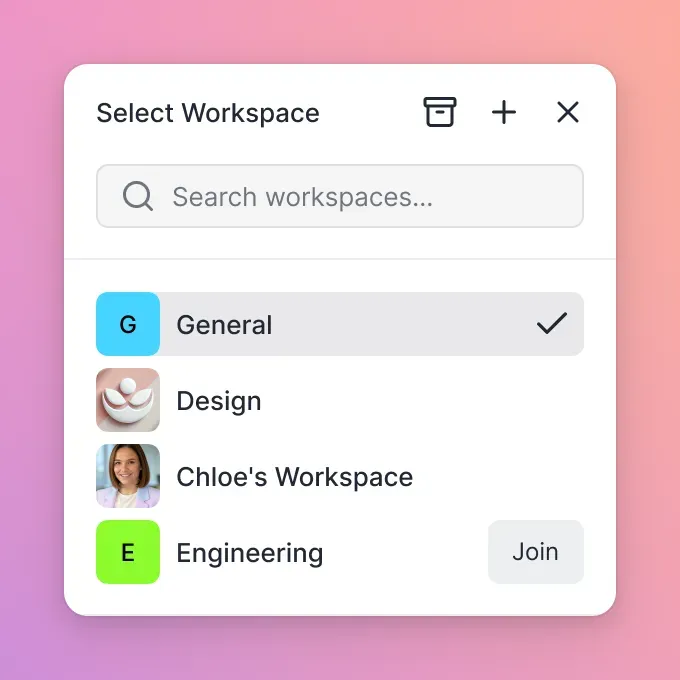


Store and share your Raspberry Pi project files from anywhere
Structured workspace with built-in AI search across code, data logs, and documentation. MCP server access lets OpenClaw read and write files programmatically.
Installing OpenClaw as Your AI Coding Assistant on Raspberry Pi
OpenClaw runs on the Pi as a background service that accepts natural language instructions and translates them into executable code. The official documentation at getclawdbot.org confirms support for both Pi 5 and Pi 4, with 8 GB RAM recommended for the best experience. A Pi 4 with 4 GB works for basic tasks.
The installation uses a one-line script that handles dependencies, service configuration, and systemd setup:
curl -fsSL https://openclaw.ai/install.sh | bash
After the installer finishes, an onboarding wizard walks you through provider selection. You pick which cloud LLM handles the heavy lifting: Anthropic Claude, OpenAI GPT-4, or another supported provider. Claude is the recommended default for coding tasks because of its strong performance on code generation benchmarks.
The wizard also configures communication channels. You can interact with OpenClaw through a terminal interface directly on the Pi, through a local web panel accessible from any device on your network, or through messaging platforms like Telegram, Discord, or Slack. For programming work, the terminal interface gives you the most direct feedback loop.
What OpenClaw actually does on the Pi. The Pi does not run the language model. It acts as an orchestration gateway: it receives your natural language prompt, forwards it to the cloud LLM, receives generated code, and executes it locally with full shell access. That means the agent can create files, run scripts, install packages, read hardware sensors, and report results. Power consumption stays around 5 watts, and the monthly electricity cost for running a Pi 5 around the clock is under a dollar at typical US rates.
Storage and project management. OpenClaw generates files as it works: scripts, data logs, configuration files, output artifacts. For projects that grow beyond a single Pi session, syncing those files to a cloud workspace keeps everything versioned and accessible. Fast.io provides cloud workspaces with MCP server access, which means your OpenClaw agent can read from and write to cloud workspaces programmatically. That is useful when you want to hand off a working project from the Pi to a team, or when you need the agent to pull reference files from a shared workspace.
A note on security. Running an AI agent with shell access on your Pi carries real risk. The Adafruit documentation calls this out directly: prompt injection or adversarial input could trigger unintended commands. Keep your Pi on a private network, avoid exposing the agent interface to the public internet, and review generated code before running it in sensitive contexts.
AI-Assisted Raspberry Pi Coding Workflows
The real value of OpenClaw on a Raspberry Pi shows up in specific coding workflows where the agent eliminates hours of library research and debugging. Here are the patterns that work well.
Sensor integration from scratch. You connect a new sensor to your Pi's GPIO pins or I2C bus and describe what you want: "Read temperature and humidity from the DHT22 sensor on GPIO pin 4, log readings every 60 seconds to a CSV file." The agent identifies the correct library (Adafruit_DHT or adafruit-circuitpython-dht), writes the Python script, handles the data format, and adds error handling for missed reads. When the sensor returns garbage data because the pull-up resistor is missing, the agent can diagnose the symptom from the error output and suggest the hardware fix.
Iterative prototyping. Start with a rough description: "Build a web dashboard that shows live CPU temperature and memory usage." The agent generates a Flask app with a simple HTML template. You review it, ask for changes: "Add a chart that updates every 5 seconds using WebSocket instead of polling." The agent refactors the code accordingly. Each iteration takes seconds instead of the 20 minutes you would spend searching Stack Overflow and adapting examples.
Debugging assistance. Paste an error traceback into the OpenClaw prompt. The agent reads the error, identifies the root cause, and either fixes the code directly or explains what went wrong. This works especially well for cryptic hardware errors like I2C address conflicts, SPI bus timing issues, or permission errors on GPIO device files.
Cross-language projects. Some Pi projects need multiple languages. A C program handles real-time data acquisition while a Python script processes and visualizes the results. OpenClaw can generate both pieces, write the inter-process communication layer (a named pipe, a shared file, or a socket), and test the full pipeline end to end.
Learning by doing. If you are new to Raspberry Pi programming, OpenClaw works as an interactive tutor. Ask it to "write a Python script that blinks an LED on GPIO 17 and explain each line." The agent generates annotated code. You run it, see the LED blink, then ask follow-up questions: "Now make it blink in Morse code for SOS." Each iteration teaches a new concept through working code rather than abstract documentation.
Where OpenClaw does not help: hardware design decisions (which sensor to buy, how to wire a circuit), performance optimization at the assembly level, and real-time systems where the cloud API latency of the LLM call is unacceptable. For those tasks, you still need domain expertise and local tooling.
Managing Raspberry Pi Project Files with Fast.io
Raspberry Pi projects generate a surprising number of files. Scripts, configuration files, sensor data logs, trained model weights, documentation notes. On a single Pi with an SD card, those files live in one place with no backup and no easy way to share them.
Local storage options work for small projects. An NVMe SSD connected via the Pi 5's M.2 HAT gives you 3 to 5 times faster read/write speeds than a micro SD card, and it is more reliable for write-heavy workloads like data logging. But local storage does not solve the collaboration problem. If you want a teammate to review your code, if you are running multiple Pis and need them to share configuration, or if you want to archive project snapshots, you need cloud storage.
Google Drive and Dropbox work, but they are designed for documents, not development artifacts. You end up manually uploading files, losing track of which version is current, and fighting sync conflicts when scripts change frequently.
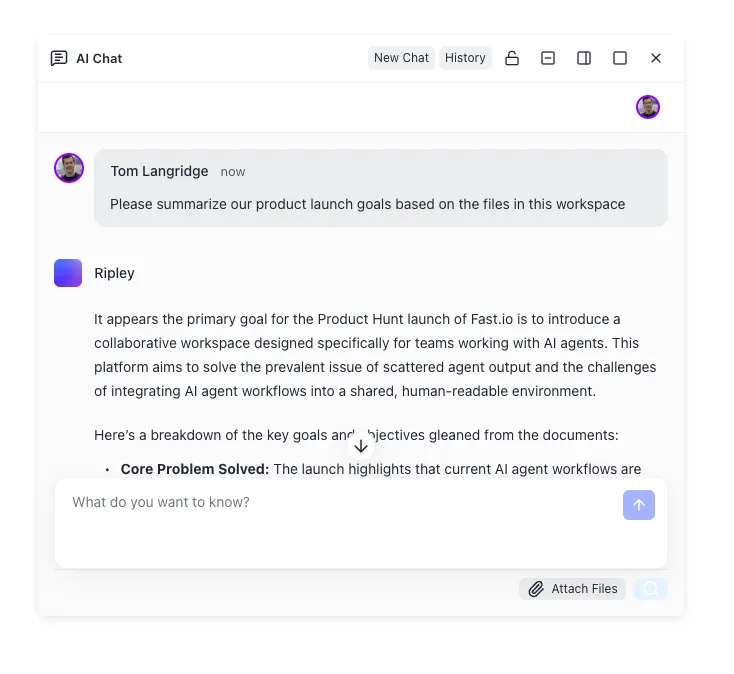
Fast.io is built for this kind of workflow. Once Intelligence is enabled on the workspace, uploaded files are automatically indexed for semantic search. That means you can ask questions about your own project files: "Which script reads from the BME680 sensor?" or "What configuration did I use for the MQTT broker?" The built-in RAG chat returns answers with citations pointing to specific files.
The Fast.io MCP server connects directly to OpenClaw. Your agent can read files from a workspace, write output to it, and trigger file operations programmatically. The practical workflow looks like this: OpenClaw generates a script on the Pi, tests it, and if it passes, uploads it to a Fast.io workspace where you or your team can review it. Plans start at Starter ($9.99/month for 250 GB and 100,000 credits) alongside a 14-day Business Trial to evaluate agent storage workflows.
For projects that involve handoffs, such as building a prototype on your Pi and then transferring it to a client or a production team, Fast.io's ownership transfer lets an agent account build the workspace and then hand control to a human. The agent keeps admin access for future maintenance, but the human owns the project going forward.
Sources
References used to verify factual claims in this guide.
-
7.6 million units shipped in FY2025, revenue climbing 25% to $323 million
-
OpenClaw runs on Pi 5 and Pi 4 with Node.js 20.x, 8GB RAM recommended
-
OpenClaw installation and shell access capabilities on Raspberry Pi
-
OpenClaw development environment setup and systemd configuration on Pi
-
Pi 5 Cortex-A76 cores at 2.4 GHz, ARM64 architecture
Frequently Asked Questions
What is the best programming language for Raspberry Pi?
Python is the most widely used language for Raspberry Pi programming. It ships pre-installed on Raspberry Pi OS, and the ecosystem of hardware-specific libraries (gpiozero, RPi.GPIO, picamera2, Adafruit CircuitPython) covers nearly every sensor and peripheral sold for the Pi. For performance-critical tasks like real-time motor control, C gives you deterministic timing. For network-facing applications and IoT gateways, Node.js handles concurrent connections well with non-blocking I/O.
Can you code on a Raspberry Pi?
Yes. A Raspberry Pi 5 with 8 GB RAM is a capable development machine. It runs a full Linux desktop with code editors, compilers, and interpreters for Python, C, C++, Node.js, Java, Rust, and Go. The Pi 5's 2.4 GHz Cortex-A76 cores handle compilation, testing, and running applications. You can code directly on the Pi using Thonny, VS Code (via Remote SSH from a laptop), or any terminal-based editor.
Is Raspberry Pi good for learning programming?
Raspberry Pi is one of the best platforms for learning programming because it combines software development with physical computing. You can write a Python script and immediately see a real LED blink or a motor spin. That feedback loop between code and physical result makes abstract concepts concrete. Adding an AI coding assistant like OpenClaw lowers the entry barrier further by letting beginners describe what they want in plain English and learn from the generated code.
How do I start programming on Raspberry Pi?
Flash Raspberry Pi OS (64-bit) onto a micro SD card using the Raspberry Pi Imager. Boot the Pi, open a terminal, and run sudo apt update to ensure your system is current. Python 3 is pre-installed, so you can start immediately by creating a file with nano hello.py, writing print("Hello, Pi"), and running it with python3 hello.py. From there, install gpiozero for hardware projects or Flask for web apps. If you want AI assistance, install OpenClaw to get a coding agent that generates and runs code from natural language prompts.
Does OpenClaw run the AI model locally on the Raspberry Pi?
No. OpenClaw uses the Pi as an orchestration gateway. It receives your natural language prompt, forwards it to a cloud LLM (Claude, GPT-4, or another provider you configure during setup), and then executes the generated code locally on the Pi. This design keeps memory and CPU usage low. A Pi 4 with 4 GB RAM handles the gateway workload without issues, while the cloud provider handles the compute-intensive language model inference.
What hardware do I need to run OpenClaw on a Raspberry Pi?
The recommended setup is a Raspberry Pi 5 with 8 GB RAM, an official 5V 5A USB-C power supply, and either a micro SD card (32 GB minimum) or an NVMe SSD via the M.2 HAT for better performance. A Pi 4 with 4 GB works for basic tasks. You also need a stable internet connection since OpenClaw forwards prompts to a cloud LLM. Active cooling is recommended if the Pi will run around the clock.
Related Resources

Store and share your Raspberry Pi project files from anywhere
Structured workspace with built-in AI search across code, data logs, and documentation. MCP server access lets OpenClaw read and write files programmatically.