How to Set Up a Raspberry Pi 500 Desktop AI Assistant with OpenClaw
The Raspberry Pi 500 puts a full desktop computer inside a keyboard, making it a natural fit for an always-on AI assistant you can see working. This guide walks through setting up OpenClaw on the Pi 500 with a connected monitor, configuring the desktop dashboard for real-time agent monitoring, and enabling auto-start so the agent is ready whenever the Pi powers on.

Why the Pi 500 Fits an Always-On Desktop Agent
The Raspberry Pi 500 is a quad-core Cortex-A76 computer built into a keyboard. Plug in a monitor, a mouse, and power, and you have a complete desktop machine that draws between 5 and 9 watts under typical load. For an always-on AI agent, that power envelope means the Pi 500 can sit on your desk running around the clock without any meaningful impact on your electricity bill.
Most OpenClaw guides for Raspberry Pi assume a headless setup: flash Pi OS Lite, SSH in, run the daemon in the background. That approach works for server-style deployments, but it hides what the agent is doing behind a terminal session on another machine. With the Pi 500 connected to a monitor, you see the agent's web dashboard in real time, watch it execute browser automation tasks, and interact using the keyboard that's already part of the device.
The Pi 500 uses the same BCM2712 system-on-chip as the Raspberry Pi 5, which OpenClaw rates as its best-supported platform. Eight gigabytes of LPDDR4X RAM and an integrated aluminum heatsink give the Pi 500 enough thermal and memory headroom to run OpenClaw's Node.js daemon alongside a full desktop environment, Chromium, and concurrent tool-execution threads without throttling.
OpenClaw doesn't run language models on the Pi. It calls cloud APIs (Anthropic Claude, OpenAI GPT, Google Gemini, DeepSeek) for reasoning and handles orchestration, tool calls, and channel management locally. The Pi 500's CPU budget goes toward browser control, file operations, and message routing rather than inference. With production support guaranteed through January 2034, you're building on hardware with a decade of availability ahead of it.
Related guides
- How to Set Up MCP in Claude DesktopClaude Desktop MCP enables the local Claude app to interact with external tools and data sources via the Model Context...
- How to Set Up Devin AI Desktop App with Persistent WorkspacesCoordinating local files and cloud agent fleets often leads to overwrites and lost context. This guide explains how to...
- How to Set Up VNC Remote Desktop Access on Raspberry Pi with OpenClawRaspberry Pi OS Bookworm replaced X11 with Wayland, which broke the preinstalled RealVNC server that most Pi owners...
- How to Set Up OpenClaw on a Raspberry Pi 400 as a Dedicated AI AgentThe Raspberry Pi 400 is a keyboard-integrated computer with a quad-core Cortex-A72 and 4GB of RAM, available for $70....
- How to Set Up Offline Speech Recognition on Raspberry Pi for OpenClaw Voice AgentsWhisper Tiny transcribes speech in 2-3 seconds on a Raspberry Pi 5, making fully offline voice agents practical on $80...
- How to Connect OpenClaw to Home Assistant on Raspberry PiThe OpenClaw Home Assistant integration uses the ha-mcp skill to give AI agents natural language control over smart...
More on this subject: OpenClaw on Raspberry Pi (192 guides)
Hardware Setup and OS Installation
Unbox the Pi 500 and connect the following:
- A monitor via one of the two micro HDMI ports (each supports up to 4K at 60Hz)
- A USB mouse to the USB 2.0 port on the back
- Power through the USB-C connector
- An Ethernet cable for the most reliable connection, or configure WiFi during OS setup
The Pi 500 ships with a 32GB microSD card. For a fresh install, open the Raspberry Pi Imager on another computer and select "Raspberry Pi OS (64-bit)" as the operating system. Use the full desktop version, not Lite. The Lite variant strips the graphical environment, which defeats the purpose of a desktop agent deployment.
Before flashing, click the settings gear in the Imager and configure:
- A hostname (e.g.,
agent-desk) - Username and password
- WiFi credentials if not using Ethernet
- SSH access enabled for remote sessions when you're away from the desk
Flash the image to the microSD card, insert it into the Pi 500, and power on. The first boot takes a minute or two while the filesystem expands. Once the desktop appears, open a terminal and update everything:
sudo apt update && sudo apt upgrade -y
Install the build tools that OpenClaw's Node.js dependencies require:
sudo apt install -y git curl build-essential
Keep the default GPU memory allocation (76MB) since the desktop compositor needs it for display rendering. Chromium ships pre-installed on the full desktop image, so no separate browser setup is required for automation tasks.
One performance note: the Pi 500 boots from a microSD card, and SD cards handle small random writes more slowly than solid-state drives. OpenClaw writes frequently to its SQLite state database. If you notice lag over weeks of continuous use, connect a USB 3.0 SSD and flash the OS directly to it using the Raspberry Pi Imager. The Pi 500 supports USB boot natively.
How to Install OpenClaw on the Pi 500
OpenClaw requires Node.js 24 or later. Install it from the NodeSource repository:
curl -fsSL https://deb.nodesource.com/setup_24.x | sudo -E bash -
sudo apt install -y nodejs
Verify both tools are available:
node --version
npm --version
With Node.js ready, run the official OpenClaw installer:
curl -fsSL https://openclaw.ai/install.sh | bash
The installer downloads the latest release and sets up the base directory structure. Next, run the onboarding wizard to configure your agent:
openclaw onboard --install-daemon
Onboarding walks through three decisions:
AI provider: Pick one and enter your API key. Claude, GPT-4, Gemini, and DeepSeek are all supported. You can switch or add providers later.
Messaging channels: Choose how you'll communicate with the agent. Telegram and Discord are the most common for personal agents. The setup wizard provides step-by-step instructions for each channel's API token.
Daemon installation: The wizard configures a systemd service that keeps OpenClaw running in the background and restarts it after crashes or reboots.
OpenClaw stores configuration and workspace files in ~/.openclaw/. Inside the workspace directory, you'll find the agent's operating instructions (AGENTS.md), personality configuration (SOUL.md), available tools (TOOLS.md), and persistent memory. Edit these files directly to customize how the agent behaves.
Use a cloud API provider rather than attempting local models. The Pi 500's Cortex-A76 cores handle general orchestration well, but even small language models would saturate them and leave nothing for the desktop environment and browser automation. Cloud APIs keep the Pi responsive by offloading inference entirely.
After onboarding finishes, confirm the daemon is active:
sudo systemctl status openclaw
A green "active (running)" status means the agent is live. The systemd service handles automatic restarts if the process exits unexpectedly.
How to Configure Auto-Start and the Desktop Dashboard
A desktop agent should be ready when you sit down at the keyboard. Two pieces make this happen: the OpenClaw daemon (already configured by the installer) and desktop auto-login so the Pi boots straight into the graphical environment without waiting for credentials.
Open Raspberry Pi Configuration from the application menu (Preferences > Raspberry Pi Configuration). On the System tab, set Boot to "To Desktop" and enable Auto Login. The Pi 500 will now boot directly to the desktop without a login prompt.
OpenClaw runs a web dashboard that shows agent activity in real time. Open Chromium and navigate to http://localhost:18789/. The dashboard displays active tasks, incoming channel messages, tool execution logs, and overall agent health. On a desktop deployment, this window becomes your primary view into the agent's work.
To launch the dashboard automatically on boot, create an autostart entry. First, make sure the autostart directory exists:
mkdir -p ~/.config/autostart
Then create a file called openclaw-dashboard.desktop inside it with these contents:
[Desktop Entry]
Type=Application
Name=OpenClaw Dashboard
Exec=chromium-browser --start-fullscreen http://localhost:18789/
X-GNOME-Autostart-enabled=true
On the next reboot, Chromium opens the dashboard in fullscreen as soon as the desktop loads. The OpenClaw daemon starts before the desktop session (systemd launches it earlier in the boot sequence), so the dashboard connects immediately.
This is the core difference from a headless deployment. Instead of SSHing into a remote Pi to check logs, you glance at the monitor on your desk. The agent's current task, recent messages, and any errors are visible without opening a terminal. When something goes wrong with a workflow, you see it happen rather than discovering it hours later in a log file.



Persist your Pi 500 agent's output in one shared workspace
Persistent storage with automatic file indexing once enabled. Fastio workspaces connect to any agent through the MCP server.
Messaging Channels and Dual-Monitor Layouts
OpenClaw supports over 20 messaging platforms, but for a desktop agent the most practical pairing is Telegram and Discord. Both give you mobile access to the agent when you step away from the desk, while the on-screen dashboard handles local monitoring.
Setting up Telegram as a channel means creating a bot through Telegram's @BotFather, copying the token, and entering it during OpenClaw onboarding or editing the channel configuration afterward. Messages you send to the bot reach your Pi 500 agent, and responses come back to the Telegram chat. You can ask the agent to start a research task from your phone and watch the dashboard update on the monitor when you return to your desk.
The Pi 500's two micro HDMI ports support independent displays at up to 4K each. A practical layout for agent work: dedicate one monitor to the OpenClaw dashboard in fullscreen, and use the other for a terminal and file manager where you can see the agent's file operations as they happen.
Browser automation benefits the most from the desktop model. OpenClaw can drive Chromium directly on the Pi 500, opening pages, filling forms, capturing screenshots, and extracting data. On a headless Pi, this runs invisibly through a virtual framebuffer. On a desktop Pi 500, you see the browser window move through each step. During development and testing, this visibility cuts debugging time because you spot exactly where an automation script stalls or clicks the wrong element.
For workflows that don't need visual monitoring, the agent runs identically to a headless deployment. The dashboard and desktop environment are optional layers on top. The systemd daemon keeps working even if you disconnect the monitor entirely, so you can start with desktop mode for setup and debugging, then move the Pi 500 to a shelf once everything is stable.
Persisting Agent Output Beyond the SD Card
An always-on agent accumulates files: research documents, downloaded datasets, processed reports, automation logs. Keeping everything on the Pi 500's microSD card works for short-term use, but SD cards have limited write endurance and no built-in backup or sharing capability.
Local options include mounting a USB SSD for more durable storage or scheduling rsync jobs to an external drive. Cloud sync through rclone can push files to S3, Google Drive, or Dropbox on a schedule. Each approach adds durability but requires separate configuration and doesn't address the problem of sharing agent output with other people.
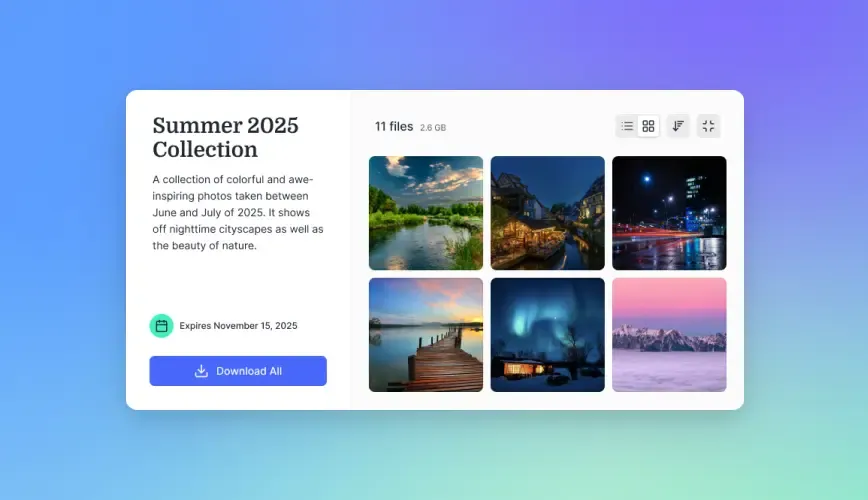
Fastio offers a workspace approach designed for agent output. Set up a workspace and point your agent's output directory at it. Once Intelligence is enabled for the workspace, uploaded files are indexed, which makes the agent's output searchable by meaning rather than just filename.
The Fastio MCP server provides a standardized interface for agent-to-workspace operations: uploading files, creating branded share links, querying indexed documents, and transferring workspace ownership to collaborators. If your Pi 500 agent produces a research report overnight, you can share it with a single link the next morning or hand the entire workspace to a teammate.
Ownership transfer closes the loop on the desktop agent workflow. The Pi 500 runs the agent, the agent creates deliverables, and when the work is done, you transfer it to the recipient through Fastio. The agent keeps admin access for future updates while the recipient gets full control of their copy.
For a single Pi 500 agent generating daily output, Fastio offers a 14-day Business Trial (card required), and paid plans include seats plus usage-based credits for AI work. The pricing page covers full details for personal and small-team workflows.
Sources
References used to verify factual claims in this guide.
-
8GB LPDDR4X RAM, quad-core 64-bit Arm Cortex-A76 CPU, production guaranteed through January 2034
-
Pi 5 rated as best-supported platform for OpenClaw
-
Pi under typical OpenClaw load draws 5 to 9 watts, under $9 per year in electricity
-
Integrated one-piece aluminum heatsink for sustained thermal performance
Frequently Asked Questions
Can the Raspberry Pi 500 run OpenClaw?
Yes. The Pi 500 uses the same BCM2712 system-on-chip as the Raspberry Pi 5, which OpenClaw rates as its best-supported hardware. With 8GB of RAM and a 64-bit Arm Cortex-A76 processor, it meets all of OpenClaw's requirements. Install 64-bit Raspberry Pi OS, then follow the standard installation steps.
What is the difference between Raspberry Pi 500 and Raspberry Pi 5?
The Pi 500 packages the same processor and 8GB of RAM as the Pi 5 into a keyboard enclosure. It includes an integrated aluminum heatsink for better sustained thermal performance and eliminates the need for a separate case and cooler. The tradeoff is one fewer USB 2.0 port (used internally for the keyboard) and no PCIe expansion slot. For a desktop agent, the all-in-one form factor reduces cable clutter and setup time.
How much RAM does OpenClaw need on Raspberry Pi?
OpenClaw's minimum requirement is 1GB, but 4GB is the practical floor for reliable operation. The Pi 500's 8GB provides comfortable headroom for the OpenClaw daemon, a full desktop environment, Chromium for dashboard access, and browser automation tasks running simultaneously. You won't need to configure swap space on the 8GB model.
Is Raspberry Pi 500 good for AI projects?
The Pi 500 is well-suited for AI agent orchestration, where the Pi coordinates tool calls and sends requests to cloud providers for reasoning. It is not designed for running large language models locally. OpenClaw fits this pattern perfectly: the Pi handles scheduling, messaging, file operations, and browser control while cloud APIs like Claude, GPT, and Gemini handle generation.
Does OpenClaw run language models locally on the Pi 500?
OpenClaw can connect to locally hosted models through tools like Ollama, but this is not recommended on Raspberry Pi hardware. Even small models consume all available CPU and leave no resources for orchestration. The recommended setup uses cloud API providers like Anthropic, OpenAI, or Google, which keeps the Pi 500 responsive and dedicated to coordination work.
How much does it cost to run a Pi 500 agent around the clock?
The Pi 500 draws roughly 5 to 9 watts under typical OpenClaw load. At average US electricity rates, that comes to roughly $5 to $10 per year for continuous 24/7 operation. The primary ongoing cost is cloud API usage for whichever AI provider you choose, which varies based on how many tasks the agent processes daily.
Related Resources

Persist your Pi 500 agent's output in one shared workspace
Persistent storage with automatic file indexing once enabled. Fastio workspaces connect to any agent through the MCP server.