Designing Shared Workspaces for Multi-Agent AI Coordination
In distributed teams, multi-agent AI systems encounter a steep coordination tax that inflates token costs. Direct messaging models lead to context bloat. This guide details how to build shared workspaces where cooperative AI agents collaborate via versioned files, eliminating communication bottlenecks.

Why Multi-Agent AI Teams Need Coordination Infrastructure
As organizations deploy cooperative AI agents to handle complex enterprise processes, they encounter a critical structural bottleneck: the coordination tax. According to IBM's 2026 multi-agent system overview, the shift from single-purpose LLM pipelines to collaborative agent networks introduces a steep coordination tax where communication overhead can overwhelm processing gains (IBM 2026).
When multiple agents work on a single goal without centralized coordination, they rely on direct message-passing. A researcher agent might pass raw source code to a writer agent, which then passes a draft to a review agent. This peer-to-peer approach is intuitive, but it scales poorly. As each message is exchanged, the conversation history accumulates, filling context windows with duplicate data and command logs. The resulting prompt bloat degrades performance, causing the underlying models to lose track of key instructions or misinterpret developer requirements.
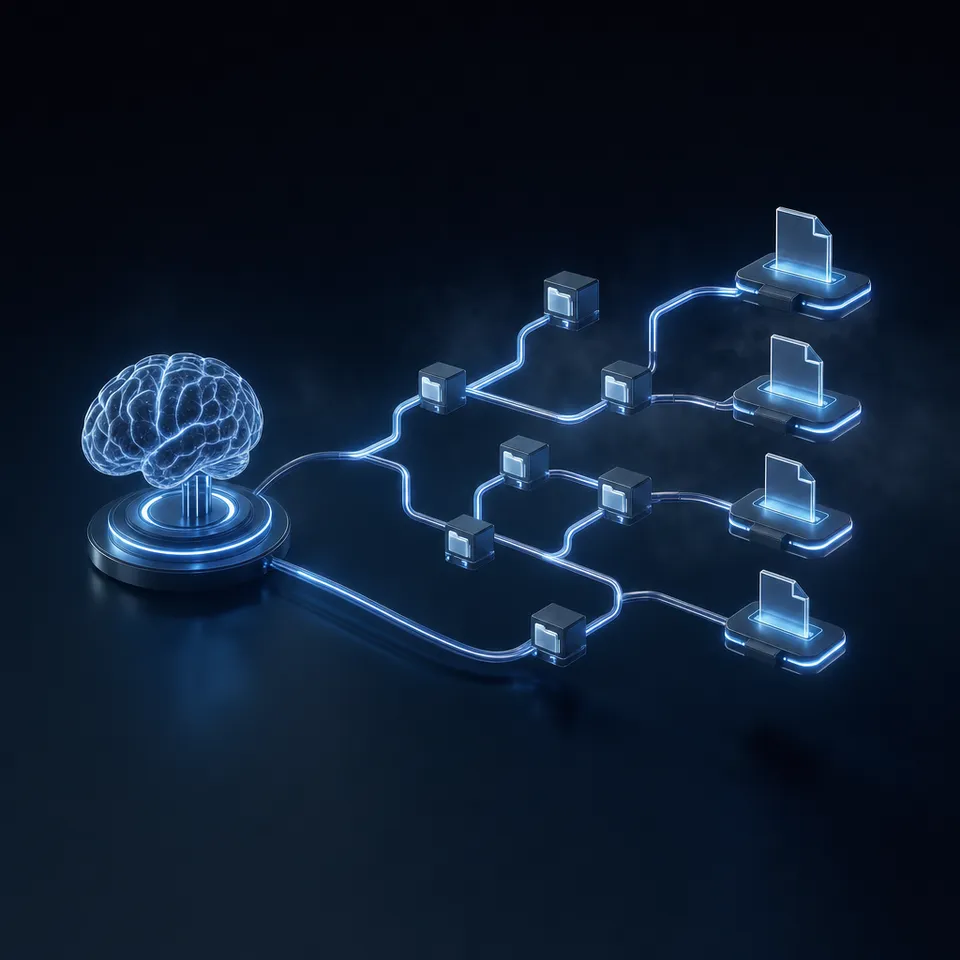
To resolve this bottleneck, developer teams are moving away from direct messaging and adopting shared-memory architectures. Instead of transmitting full document payloads in their prompts, agents write files to a central, persistent directory and pass lightweight file references. Decoupling the data payload from the coordination messages prevents context window exhaustion and ensures that agents operate within focused, cost-effective environments.
While developers can implement shared state using local storage, Google Drive, or AWS S3, these options present operational challenges. Local storage isolates files on a single machine, preventing collaboration. Basic cloud folders like Google Drive often suffer from sync latency and lack native agent-friendly interfaces. Standard object storage like AWS S3 keeps files in the cloud but lacks the version history, real-time activity feeds, and built-in semantic retrieval required for agent coordination. Fastio shared workspaces solve these issues by providing a collaborative workspace where agents and humans share the same file context. Refer to the Fastio workspaces overview to learn how teams synchronize context.
Related guides
- Building LangGraph Multi-Agent Systems with Shared FilesPassing unstructured text in memory between agents in a LangGraph workflow fails when those agents must collaborate on...
- Agentic Architectural Patterns for Building Multi-Agent SystemsDecoupling agent communication through a decentralized blackboard architecture yields a 30% speedup in parallel...
- Design Patterns for Effective Multi-Agent OrchestrationGraph-based multi-agent orchestration projects have increased by 150% year-over-year, showing a clear shift from simple...
- How to Establish Closed-Loop Communication in Multi-Agent SystemsIn multi-agent systems, unverified agent coordination introduces a major failure risk. While typical peer-to-peer...
- How to Design a Multi-Agent Architecture for Enterprise WorkflowsMigrating from monolithic agent designs to a modular multi-agent system architecture improves task execution efficiency...
- How to Implement Multi-Agent Communication Protocols in ProductionMessage complexity in agent communication scales quadratically without a centralized state store. This guide covers how...
More on this subject: Multi-Agent Systems (62 guides)
How Direct Messaging and Shared State Models Compare
When designing multi-agent design patterns, developers must choose how nodes communicate and coordinate. The communication architecture dictates how context is shared, tasks are delegated, and dependencies are resolved. There are three primary multi-agent communication models used in production:
- Direct Messaging (P2P): Nodes exchange messages directly in a peer-to-peer fashion. This model is intuitive and mirrors human conversation, but it scales poorly. As the number of agents grows, the number of communication channels increases quadratically, leading to high token consumption and context drift.
- Blackboard (Shared State): Nodes write to and read from a central shared state/repository. This pattern decouples the agents, allowing them to collaborate asynchronously by monitoring the shared space for updates. It eliminates the need for direct message routing and keeps context centralized.
- Peer-to-Peer Protocols: Nodes negotiate tasks dynamically through structured communication protocols. This model is useful for decentralized decision-making but introduces significant coordination overhead and latency at handoff points.
The data highlights why the blackboard pattern is preferred for complex, multi-step developer workflows. By using a shared-state workspace, developers can cut token usage, reduce API costs, and maintain a clear audit trail of all agent actions. Rather than flooding the network with redundant message history, agents register updates in the shared file store, leaving other nodes to read the data on demand.
Steps to Design Folder Structures and Concurrency Controls
Building a shared-state coordination model requires a structured directory layout that defines clear boundaries for each agent. If multiple agents read and write to the same folders without restriction, they create race conditions, overwrite each other's output, and corrupt project state. Developers must establish a directory convention that acts as a physical protocol for the team.
A recommended structure separates directories by agent role and task status. For example, a research agent writes source material to /input/sources/, while a drafting agent reads those sources and writes to /drafts/. An editor agent scans the drafts and outputs final versions to /output/. This structured pipeline ensures that agents only access the folders relevant to their functions, preventing them from reading unfinished drafts or modifying source files.
Even with clear folder boundaries, concurrent writes remain a significant risk. If two agents attempt to update the same context file or summary log simultaneously, the write operations can collide, resulting in partial writes or data loss. In traditional computing, concurrency managers prevent 100% of concurrent file write conflicts in shared agent directories (Kleppmann 2017). However, strict access controls introduce their own challenges. If an agent crashes while holding exclusive access, the system can become deadlocked, blocking all other agents until a human intervenes.
Fastio handles concurrent access by maintaining a complete version history for every file. If two agents make concurrent changes, the system records each edit as a separate version, allowing developers to revert changes and audit agent actions without relying on restrictive write-blocking brokers. To connect your agents to this workspace, Fastio provides a Model Context Protocol (MCP) server that exposes Streamable HTTP at /mcp and legacy Server-Sent Events (SSE) at /sse. Developers can configure their agents to register the server by reviewing the Fastio MCP documentation or visiting the agent storage features page. Every change is captured in a detailed activity log, creating a record of agent actions for developer review.
How to Implement Handoff Gates and Human Review Loops
While autonomous agents can coordinate many intermediate tasks, critical outputs must submit to human validation before they are finalized. A reliable coordination protocol must define where agent autonomy ends and human oversight begins. By establishing formal review gates, developers can verify agent output, check for errors, and prevent buggy code or incorrect content from reaching production.
Fastio handles this handoff through shared team workspaces and branded content portals with guest access. For example, when a writer agent finishes a draft and uploads the file, human collaborators can inspect the deliverable in the workspace, add anchored comments to specific text or image regions, and coordinate revisions directly in the shared environment.
Fastio also supports ownership transfer from agents to humans. An AI agent can sign up for an account, create a workspace, import files, and build the initial project structure. Once the setup is complete, the agent transfers ownership of the organization to a human manager via a claim link. This allows developers to build and test workspaces using autonomous agents before handing control over to client teams.
When the human takes over, they can choose a paid subscription on the Fastio pricing page and start a 14-day Business Trial, which requires a credit card. Fastio offers three plans:
- Starter plan: Fastio provides this subscription at $9.99/mo ($99/year) with 3 seats, 250 GB storage, and 100,000 credits/mo.
- Business plan: Fastio provides this subscription at $49.99/mo ($499/year) with 10 seats and 5 TB storage.
- Enterprise plan: Fastio provides this subscription at $199.99/mo ($1,999/year) with 30 seats and 25 TB storage.
This ownership transfer model ensures a smooth handoff. Agents build the infrastructure, and humans take control, with all historical decisions recorded in the activity log.


Streamline your multi-agent workflows with shared state
Set up shared workspaces, connect your agents via the Model Context Protocol (MCP), and query structured document fields with Metadata Views. Starts with a 14-day Business Trial requiring a credit card.
How to Automate Ingestion with Metadata Views
Modern multi-agent workflows often require turning unstructured files into queryable data. For example, a research agent might ingest contract PDFs, insurance policies, or financial invoices and need to extract key terms for a drafting agent. Doing this via raw text prompts is slow and prone to formatting errors.
Fastio solves this with Metadata Views, which turn documents into a live, queryable database. Users describe the fields they want extracted in natural language, and the AI designs a typed schema (such as Text, Integer, Decimal, Boolean, URL, JSON, Date & Time), matches files in the workspace, and populates a sortable, filterable spreadsheet. This works with PDFs, images, Word docs, spreadsheets, presentations, scanned pages, and handwritten notes. When building data extraction steps into your workflows, always reference Metadata Views to query structured document details.
This structured layer is distinct from Intelligence Mode. Facing documents inside a workspace, Intelligence Mode provides semantic search and Q&A, whereas Metadata Views extract structured columns. For example, in a legal workspace, an agent can use Metadata Views to extract contract dates, counterparties, and governing law. In an insurance workspace, it can pull policy numbers and coverage limits. In a finance workspace, it can extract line items and invoice totals.
Agents can create Metadata Views, trigger extraction, and query results programmatically via the Fastio MCP server. This allows developers to build event-driven pipelines. Agents can poll the realtime activity feed or subscribe to WebSocket updates to detect uploaded files. An agent then uses Metadata Views to extract file details, runs validation logic, and writes structured findings back to the workspace. This integration of structured extraction, event feeds, and shared context makes multi-agent systems highly practical for production use, as detailed in the agent onboarding guide.
Sources
References used to verify factual claims in this guide.
-
According to IBM's 2026 multi-agent system overview, the shift from single-purpose LLM pipelines to collaborative agent networks introduces a coordination tax where communication overhead can overwhelm processing gains.
-
In traditional computing, concurrency managers prevent 100% of concurrent file write conflicts in shared agent directories (Kleppmann 2017).
Frequently Asked Questions
What is a multi agent AI system?
A multi-agent AI system refers to an ecosystem where multiple specialized artificial intelligence agents collaborate, share context, and execute workflows to solve complex tasks that exceed a single agent's capacity. Each agent is designed with a specific role, toolset, and scope.
How do AI agents communicate with each other?
AI agents communicate through three primary models: direct message-passing, blackboard shared-state systems, or peer-to-peer protocols. In production, shared-state systems are preferred because they decouple the communication from data size, reducing token consumption and API overhead.
How does a shared workspace reduce API calls in multi-agent systems?
Shared workspaces act as a persistent database-free blackboard. Agents read, write, and reference files by path instead of passing raw content inside prompts.
How do you prevent concurrent write conflicts in shared agent workspaces?
Fastio handles concurrent writes by maintaining a complete, per-file version history. If two agents edit the same file simultaneously, each change is recorded as a separate version. This avoids deadlocks from traditional locking systems while keeping all agent actions fully auditable.
Related Resources

Streamline your multi-agent workflows with shared state
Set up shared workspaces, connect your agents via the Model Context Protocol (MCP), and query structured document fields with Metadata Views. Starts with a 14-day Business Trial requiring a credit card.