Manus AI Agent: Capabilities and How It Works
Manus is an autonomous general AI agent that plans, executes, and returns finished work inside a sandbox computer. This guide covers the sandbox loop, real deliverables, the credits model, and how teams keep outputs after a run ends.


What the Manus AI agent actually is
Manus AI is an autonomous general AI agent that plans, executes, and delivers finished work in a sandboxed computer environment instead of only answering chat prompts. Official Manus documentation describes it as a virtual colleague with its own computer: internet access, a persistent file system during work, the ability to install software and create custom tools, and delivery of complete work products from start to finish.
The product homepage brands Manus as Hands On AI and an action engine for tasks that go beyond answers: create slides, build websites, design, run research, and operate a browser. Apple's App Store listing for Manus positions it as an AI agent and automation product for web development, slides, and research, with asynchronous cloud execution so work can continue after you close the app.
Core capability surface, grounded in official product pages and docs:
- Sandbox computer: A virtual environment where the agent browses, writes files, installs tools, and holds context across long jobs
- Research: Deep single-topic work plus Wide Research for large multi-item lists handled by parallel sub-agents
- Browser work: Cloud browser paths and Browser Operator for tasks that need your local session and real network identity
- Slides and decks: Full decks with structure, design, content, and notes rather than outline-only drafts
- Web apps and sites: Site and app-style builds positioned as first-class product paths on the homepage
- Design and media: Image generation, design view, and related creative tools on the product site
If you remember one distinction: chat assistants optimize for replies. The Manus agent optimizes for finished artifacts produced on a computer you do not provision yourself.
Related guides
- Devin AI Agent: How the Autonomous Engineer WorksCognition's Nubank case study reports an 8x engineering-time efficiency gain and over 20x cost savings when Devin...
- Claude Computer Use: How It Works and How to Set It UpClaude computer use lets Claude see your screen, control the mouse, and type text to automate tasks across any desktop...
- What Is Manus AI? A Clear Beginner OverviewU.S. search demand for "what is manus ai" sits near 1,900 monthly queries with keyword difficulty 20 and about $7.16...
- Manus AI Review: Strengths, Limits, and Best FitManus AI is worth evaluating as a goal-to-deliverable agent, not as a chat app. This review scores its sandbox...
- Is Manus AI Free? Free Plan, Credits, and LimitsManus AI is free to start on a limited-credit Free plan, but heavier autonomous agent work usually needs paid Pro or...
- Manus AI vs Question AI: Choosing the Best AI for Academic ResearchIn 2025, overall adoption of artificial intelligence tools among researchers jumped from 57% in 2024 to 84% in 2025,...
More on this subject: Manus (52 guides)
How Manus plans and executes inside the sandbox
Official welcome docs draw a hard line between supervised AI tools and Manus. Traditional tools need constant guidance. You steer step by step, then stitch results yourself. Manus is designed to operate in a complete sandbox: a virtual computer with internet access, a file system that persists for the duration of the work, and room to install software or create custom tools. That architecture is why Manus can hold context across long tasks and return production-ready artifacts instead of a single reply.
A typical autonomous run looks like this:
- You state a goal with a checkable success condition ("research five competitors and deliver a comparison table with pricing, features, and sources").
- Manus decomposes the goal into steps and begins executing inside the sandbox.
- It browses, writes intermediate files, runs tools, and iterates without you approving every micro-step the way a pure coding agent might.
- It returns a finished package: spreadsheet, report, site export, deck, or multi-file folder.
The App Store listing emphasizes the same loop in consumer language: autonomous task decomposition into a to-do list, step-by-step execution, asynchronous cloud work, and the ability to stop, edit, or redirect a task while it is running. You are still the owner of the goal and the reviewer of the output. You are not the runtime for every click.
Why the sandbox matters
A sandbox is not a gimmick. It is the difference between "suggest what I should do" and "do the work on a machine." With a file system, Manus can accumulate research notes, CSV tables, code, images, and deck assets as real files. With internet access, it can gather current sources instead of only recalling training data. With installable tools, it can adapt the environment to the job rather than pretending every task fits a single chat completion.
That also explains failure modes teams should plan for. Long jobs consume more credits because they burn more compute and tool steps. Vague goals invite wandering. Ambiguous success criteria produce polished but unusable deliverables. The fix is operational, not mystical: write outcomes with format, audience, constraints, and acceptance checks, then review intermediate results on multi-phase work before more credits burn.
Wide Research and parallel sub-agents
When the job is "do the same deep work on many items," Manus product pages describe Wide Research as parallel multi-agent orchestration. A main agent breaks the request into independent sub-tasks. Each sub-agent gets its own VM, tools, internet access, and a fresh context window. Sub-agents do not talk to each other; the main agent synthesizes results into a report, table, or dataset.
Product examples include analyzing large product catalogs, researching hundreds of researchers or accounts, competitive intelligence spreadsheets, and batch creative generation. Wide Research fits scale and independent items. A single deep analysis or tightly sequential workflow still fits regular agent mode better. Parallel agents are not free: more concurrent work means more credit burn, so start with a modest list before you scale to hundreds of items.

What Manus can produce and when to use Chat mode instead
Most competitor pages stop at "it can do research and build websites." Operators need a sharper map of deliverables and cost-aware modes.
Deliverable types that match official product paths
- Research packs: Source-backed reports, comparison tables, and multi-item datasets from Wide Research style runs
- Slide decks: Boardroom-oriented decks with structure, visuals, and speaker notes, as positioned on the App Store and product site
- Websites and app builds: Site drafts and app-style projects with hosting and editing flows referenced across Manus product pages
- Spreadsheets and analysis: Financial modeling, CSV or Excel analysis, charts, and dashboards as called out in the App Store listing
- Design and media: Images and design-canvas style work, plus related media generation tools on manus.im
- Browser automation: Multi-step navigation, form fills, data extraction, and authenticated site work via Browser Operator or cloud browser features
Browser Operator versus pure sandbox browsing
Browser Operator is a Chrome extension path that runs tasks in your local browser context. Manus product pages claim this uses your authentic IP and active sessions so security checks that reject anonymous cloud browsers are more likely to pass. The tradeoff is access scope: the agent can act inside sessions you already have open, which is powerful for CRM pages, premium data sources, and logged-in workflows, and also requires clear permission boundaries and human oversight.
Pure sandbox browsing keeps work inside Manus's virtual computer. That is often cleaner for public-web research and deliverable creation where you do not need private logins. Use Browser Operator when the bottleneck is authenticated access. Use the sandbox when the bottleneck is producing files from open sources without exposing personal sessions.
Chat mode versus full agent mode
Plans documentation is explicit: simple questions do not need the full autonomous agent. Chat mode is the recommended path for quick queries so you do not burn agent credits on work a short answer can cover. Full agent runs make sense when success is a multi-step deliverable, when tools and a file system are required, or when the job would otherwise take a human several hours of research and assembly.
Practical rule of thumb:
- Use Chat mode for definitions, short lookups, and single-turn drafting
- Use agent mode for research packs, decks, sites, multi-file folders, and multi-site browser jobs
- Use Wide Research when the work is many independent items with the same schema
- Stop and rewrite the prompt when intermediate output drifts, rather than letting a bad plan spend the rest of the credit balance



Keep Manus agent outputs in one shared workspace
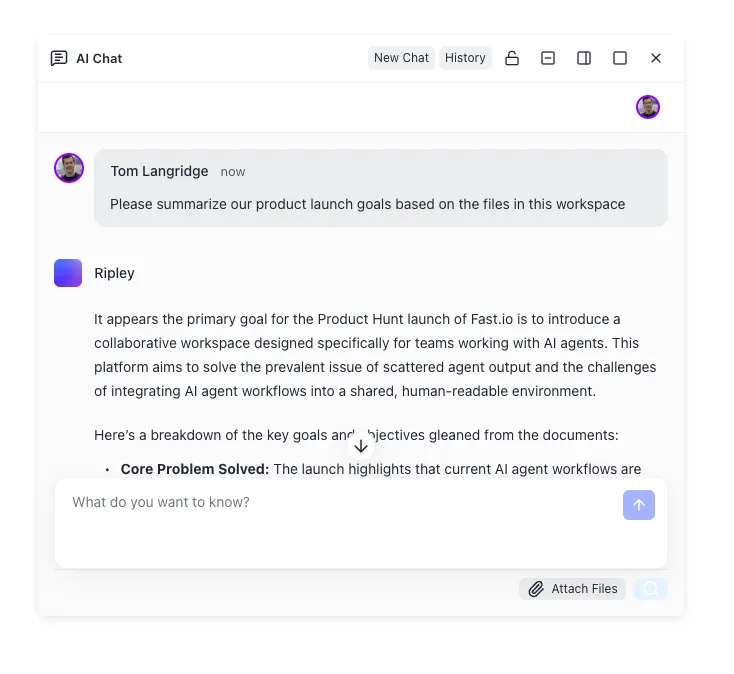
Store research packs, decks, and site exports where people and agents can both reach them. Fast.io adds version history, Intelligence Mode search, MCP access, and ownership transfer, and monthly plans start with a trial of up to 14 days (credit card required).
Credits, plans, and how to keep runs economical
Manus runs on a credit-based system. Official plans docs state that credits are consumed based on the complexity of the task and the resources a job needs. That is the operational truth under the demo videos: autonomy is metered.
Free, Pro, and Team
- Free plan: Limited monthly credits, access to core capabilities, aimed at individuals exploring Manus
- Pro plan: Larger monthly credit allocation, full access to capabilities, priority support, aimed at professionals, freelancers, and small teams
- Team plan: Shared team credit pool, collaboration features, admin controls, priority support, aimed at growing teams and organizations
Docs also point higher-volume needs to sales contact paths. Exact consumer dollar prices move with promotions, so check the live pricing page before you budget. Treat Free as a measurement lab: run real tasks, watch the dashboard, then decide whether Pro or Team matches your monthly burn.
How credits behave
Plan credits refill at the start of each billing cycle. Purchased add-on credits never expire. Unused plan credits do not roll over. When balance is low, the product notifies you; work does not silently continue without credits. Team and enterprise-style plans support shared pools so multiple people draw from one balance.
The dashboard is the control surface: current balance, usage history, spending insights by task type, and pre-task estimates when available. Review similar past tasks before you start a large Wide Research job.
Credit hygiene that matches official guidance
Official optimizing tips map cleanly to real workflows:
- Be specific. "Research AI" wastes steps. "Research the top five AI trends in healthcare for 2026 and create a summary report with sources" finishes cleaner and cheaper.
- Match mode to cost. Chat for short questions. Agent for deliverables.
- Batch related work that is truly one deliverable instead of spawning many tiny tasks with repeated overhead.
- Review intermediate results on multi-phase jobs before authorizing the expensive synthesis step.
Credit burn is also a product-fit signal. If every useful output drains the monthly allotment after one website build, either scope smaller, switch modes, or accept that paid plans are part of the cost of production autonomy. Separate that from Fast.io later in this article: Manus meters agent runtime; a workspace product meters storage, bandwidth, and AI indexing for the files that remain after Manus finishes.

Where finished Manus files go after the sandbox
Autonomy creates a second problem that most Manus coverage skips: finished files still need a durable home humans can review, version, and share. Manus projects and knowledge bases help with recurring instructions inside the product. The sandbox file system supports work while a job is running. Teams still outgrow a single agent session when several people must comment, compare versions, or hand work to a client.
Common storage choices for agent outputs, in the order many teams try them:
- Local downloads: Fine for one person. Breaks when a teammate needs the same deck, when laptops differ, or when you need a clear history of which version shipped.
- Amazon S3 or similar object storage: Durable and cheap at scale, but weak for human review unless you build a front end, permissions model, and search layer.
- Google Drive, Dropbox, or OneDrive: Familiar sharing for people. Weaker as an agent-native control plane for semantic search, ownership transfer, and API-first workspace operations.
- Shared intelligent workspaces: Built so agents and humans share the same files, with version history and search that does not require a separate vector database project.
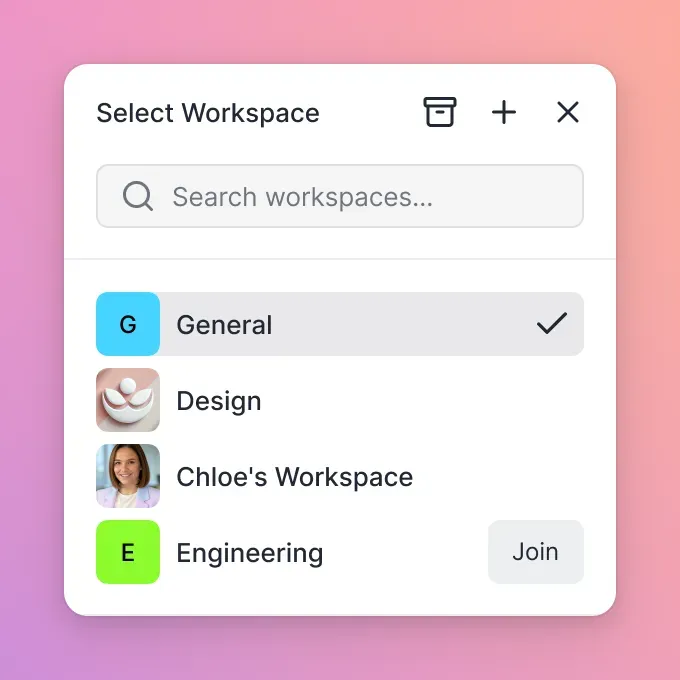
Fast.io sits in that last group. It is not a built-in Manus feature and should not be described as one. It is a cloud workspace platform for agentic teams where people use the UI and agents use the Fast.io API or MCP server. Fast.io exposes Streamable HTTP at /mcp and legacy SSE at /sse; see storage for agents and the MCP skill docs for current access details. Enable Intelligence Mode on a workspace to auto-index files for hybrid search (full-text, semantic, and metadata-value search) and RAG-style questions with citations. Per-file version history keeps concurrent agent writes reviewable. Ownership transfer lets an agent build structure and hand the org to a human while retaining admin. Branded Send, Receive, and Exchange shares help when a client needs a clean delivery surface without full workspace access.
A practical handoff pattern for Manus work:
- Run the Manus task with a clear deliverable format (PDF report, slide deck, site export, CSV table).
- Download or export the artifacts from the Manus session.
- Upload into a shared workspace folder named for the client or project.
- Turn on Intelligence if reviewers will ask questions across many source files.
- Use Metadata Views when you need structured fields (dates, counterparties, totals, status) as a live table rather than only prose summaries. Intelligence Mode helps with search and summarization; Metadata Views is the structured extraction layer.
- Share a branded link or transfer ownership when a human owner should take over.
Alternatives remain valid. Keep raw archives in S3. Keep design collaboration in the tools designers already use. Use Fast.io when the bottleneck is "agent finished, team still cannot find, search, or hand off the files." Fast.io plans are Starter $9.99/mo, Business $49.99/mo, and Enterprise $199.99/mo; monthly plans start with a trial of up to 14 days (credit card required), and annual plans have no trial. See pricing for current package details.
A practical evaluation week for the Manus agent
A clean evaluation path beats dumping every capability into day one.
Day one, stay on Free credits. Run one Chat-mode question and one small autonomous task, such as a one-page brief with sources. Open the dashboard and note how credits moved. Day two, rewrite a vague goal into format, audience, constraints, and success criteria, then re-run a similar task and compare quality against credit use. Day three, try one research-style job and one creation job (slides or a simple site draft) so you know which deliverable type your real work needs.
Midweek, if the work is recurring, create a Project with a master instruction and a small knowledge base (brand voice, product sheet, prior report), then run a task that should inherit that context. If colleagues will share usage, evaluate Team shared credits instead of multiplying individual Free accounts. When multi-item research is your core job, try a modest Wide Research-style request on a limited list so you feel parallelization without emptying the Free allotment.
Close the week by exporting the best artifacts into durable storage your team already trusts, or into a Fast.io workspace if you want MCP-ready access, version history, and ownership transfer. Keep Manus focused on generation. Keep the shared workspace focused on review, search, and handoff.
Manus is a weak fit when you only need inline IDE completion, when the task needs human judgment every few seconds, or when you cannot export into a place your client process accepts. It is a strong fit when you can describe success without micromanaging tools, you repeatedly produce research packs or decks, you want sandbox compute without provisioning machines, and you have a path so agent output becomes team output.
The Manus AI agent explained well is not "AI that does everything." It is a credit-metered general agent with a sandbox computer, Free exploration room, paid depth for real volume, and a hard requirement that teams decide where finished files live after the run. Once that model is clear, launch hype stops mattering and you can evaluate the product against your actual tasks.
Sources
References used to verify factual claims in this guide.
-
Manus AI is an autonomous general AI agent designed to complete tasks and deliver results, operating in a sandbox with internet access, a file system, and the ability to install software
-
Manus offers Free, Pro, and Team plans on a credit-based system with limited monthly credits on Free, larger allocations on Pro, and shared team pools on Team Plan credits reset monthly while purchased add-on credits never expire; credits are consumed based on task complexity
-
The App Store lists Manus as an AI agent and automation app for web development, slides, and research with asynchronous cloud execution
-
The official Manus site brands the product as Hands On AI and an action engine for slides, websites, design, research, and browser operation
-
Wide Research deploys independent sub-agents in parallel with fresh context per item and synthesizes results into reports or datasets
-
Manus Browser Operator runs tasks in the user's local browser context using active sessions and authentic network identity
-
Manus launched in invitation-only beta on March 6, 2025 and was developed by Butterfly Effect; the name means hand in Latin
Frequently Asked Questions
What is the Manus AI agent?
Manus AI is an autonomous general AI agent that plans, executes, and delivers finished work products inside a sandboxed virtual computer with internet access and a working file system. Official docs position it as a virtual colleague that completes multi-step jobs end to end, not only a chatbot that answers questions.
How is Manus different from ChatGPT?
Chat assistants primarily answer and draft in conversation. Manus is marketed as an action engine with its own sandbox computer: browsing, files, installable tools, and delivery of complete artifacts such as decks, sites, and research packages. Manus also publishes a Chat mode for cheaper simple queries so you do not spend full agent credits on short answers.
What can Manus AI agent do?
Verified product paths include research reports and large multi-item Wide Research tables, slide decks, websites and app-style builds, spreadsheet analysis, design and media generation, and browser-driven automation including Browser Operator for local-session tasks. Exact feature availability depends on plan and product updates, so check manus.im docs for current coverage.
How do Manus credits work?
Credits meter usage by task complexity and resource use. Free users get a limited monthly allotment; Pro users get a larger monthly allotment; Team users share a pool. Plan credits reset each billing cycle. Purchased add-on credits do not expire. The dashboard shows balance, history, and which tasks burn the most.
Does Manus keep working if I close the app?
The App Store listing describes asynchronous cloud execution: you can close the app while Manus continues the task and notifies you when it is complete. You can still stop, edit, or redirect a running task. Long autonomous runs still consume credits while they work.
What is Manus Wide Research?
Wide Research is Manus's parallel multi-agent research mode. A main agent splits a multi-item request, each sub-agent works on one item with a fresh context and its own tools, and the main agent synthesizes a report or dataset. It fits large independent lists better than stuffing dozens of items into one chat context window.
Where should teams store files Manus produces?
Download or export finished artifacts into storage your team can review. Local disks and consumer drives work for solo use. Object storage like S3 works for archives. Shared intelligent workspaces such as Fast.io add version history, hybrid search with Intelligence Mode, MCP access for agents, and ownership transfer when a human must take over. Fast.io is a separate product, not a built-in Manus feature.
Is Manus free to use?
Manus offers a Free plan with limited monthly credits for exploring core capabilities. Paid Pro and Team plans add larger or shared credit pools and collaboration features. Free is enough to learn the product and measure real credit burn, not to run heavy production workloads indefinitely without paid credits.
Related Resources

Keep Manus agent outputs in one shared workspace
Store research packs, decks, and site exports where people and agents can both reach them. Fast.io adds version history, Intelligence Mode search, MCP access, and ownership transfer, and monthly plans start with a trial of up to 14 days (credit card required).