What Is Manus AI? A Clear Beginner Overview
U.S. search demand for "what is manus ai" sits near 1,900 monthly queries with keyword difficulty 20 and about $7.16 CPC, which means people want a definition they can act on, not launch-day recaps. Manus AI is an autonomous general agent that plans and finishes work inside a sandbox computer, metered through Free, Pro, and Team credits. This overview covers what it produces, how plans work, who built it, and how teams keep outputs after a run ends.


Manus AI in one clear definition
U.S. search volume for "what is manus ai" is about 1,900 queries per month, with keyword difficulty 20 and CPC near $7.16 according to DataForSEO keyword metrics refreshed in July 2026. That combination (informational phrasing with commercial CPC) is why most launch recaps fall short: people are deciding whether to spend credits, not only reading product news.
Manus AI is a hands-on AI agent platform that turns goals into finished outputs such as research reports, websites, and slide decks using an autonomous sandbox computer. Official Manus documentation describes it as an autonomous general AI agent designed to complete tasks and deliver results. Unlike a chatbot that mainly answers questions, Manus is positioned as a virtual colleague with its own computer: it plans work, executes steps, and returns a complete work product.
The product site brands this as "Hands On AI" and an action engine that goes beyond answers to execute tasks. The practical meaning is simple. You describe an outcome. Manus works toward that outcome inside a controlled environment, then hands back files, pages, decks, or research packages you can open and use.
Who it is for
Manus fits people who want end-to-end delivery rather than stepwise coaching:
- Operators and freelancers who need research packs, decks, or site drafts without babysitting every step
- Small teams that want a shared credit pool and admin controls on the Team plan
- Builders who will later wire Manus into APIs, MCP connectors, or scheduled runs
- Anyone evaluating general agents after trying chat tools that stop at suggestions
What outputs it produces
Homepage and docs surface concrete product paths rather than abstract "productivity":
- Research reports and large multi-item research tables (including Wide Research for many parallel items)
- Professional websites and app-style builds with hosting and editing flows in the product docs
- Slide decks with research, layout, visuals, and speaker notes
- Design and multimedia work (images, design view, related creative tools)
- Browser-driven work through cloud browser and browser-operator style features
If you only keep one sentence: Manus AI meaning is "agent with a computer," not "chat with better prose." The rest of this guide is Manus AI explained through plans, credits, origins, and the handoff problem that appears after the sandbox finishes a job.
Related guides
- 5 OpenClaw Raspberry Pi Projects for Your First AI AgentRaspberry Pi 5 prices climbed 40% in early 2026 due to DRAM shortages, yet a 4GB board still costs $85 and draws under...
- What Can You Do with a Raspberry Pi and OpenClaw in 2026This guide organizes ten practical Raspberry Pi uses into six categories, from networking and home automation to...
- Manus AI Agent: Capabilities and How It WorksManus is an autonomous general AI agent that plans, executes, and returns finished work inside a sandbox computer. This...
- Is Manus AI Free? Free Plan, Credits, and LimitsManus AI is free to start on a limited-credit Free plan, but heavier autonomous agent work usually needs paid Pro or...
- Manus AI Pricing and Credit Consumption GuideManus AI pricing operates on a credit-based billing system across Free, Pro, and Team tiers, complemented by a...
- Manus AI vs Question AI: Choosing the Best AI for Academic ResearchIn 2025, overall adoption of artificial intelligence tools among researchers jumped from 57% in 2024 to 84% in 2025,...
More on this subject: Manus (52 guides)
How Manus works inside its sandbox
Official welcome docs draw a hard line between supervised AI tools and Manus. Traditional tools need constant guidance. You steer step by step, then stitch results yourself. Manus is designed to operate in a complete sandbox environment: a virtual computer with internet access, a file system that persists during the work, and the ability to install software and create custom tools. That setup is why Manus can hold context across long tasks and return production-ready artifacts instead of a single reply.
A typical run looks like this:
- You state a goal with enough structure that success is checkable ("research five competitors and deliver a comparison table with pricing, features, and sources").
- Manus plans the work and begins executing inside the sandbox.
- It browses, writes files, runs tools, and iterates without you approving every micro-step the way a pure coding agent might.
- It returns a finished package: spreadsheet, report, site, deck, or multi-file folder.
That loop is Manus AI overview in operational form. Autonomy is the product claim. Your job shifts from typing prompts forever to specifying outcomes, reviewing intermediate work when the task is complex, and deciding what to keep after delivery.
Wide Research, Projects, and credit-aware modes
When the job is "do the same deep work on many items," Manus docs describe Wide Research as a parallel multi-agent pattern. The system can decompose the request, assign independent agents with fresh context per item, then synthesize results into a table, report, or dataset. Docs show examples such as researching large researcher lists, comparing many products, or batch-processing similar creative assets. Wide Research fits scale and independent items. A single deep analysis or tightly sequential work still fits regular agent mode better.
Manus Projects give you a reusable workspace with a master instruction and a knowledge base of files. New tasks inside a project inherit that configuration so you stop re-uploading the same briefs. Docs note that projects and tasks are private by default, and that inviting someone to a project shares instructions and knowledge base access without automatically exposing every task. Instruction updates apply on the next message in a current task; file updates apply to new tasks.
Plans docs advise matching mode to task cost. Full autonomous runs consume more credits because they are longer and more tool-heavy. Chat mode is the suggested path for simple questions so you do not burn agent credits on work a short answer can cover. Batching related work into one well-scoped request can also reduce overhead compared with many tiny tasks. Specificity is a cost control: a vague "research AI" request invites wandering, while a request that names the industry, the item count, and the output format keeps the agent on a finishable path.

Free, Pro, and Team plans and how credits actually work
Manus AI is free to explore in a limited way, but it is not unlimited free labor. Official plans documentation frames Manus on a credit-based system. Credits are consumed based on task complexity and the resources a job needs. That framing is the gap many explainers skip when they only restate launch demos.
Plan ladder from official docs
Free plan: Limited monthly credits, access to core capabilities, aimed at individual users exploring Manus AI
- Pro plan: Larger monthly credit allocation, full access to capabilities, priority support, aimed at professionals, freelancers, and small teams
- Team plan: Shared team credit pool, collaboration features, admin controls, priority support, aimed at growing teams and organizations
Docs also reference enterprise-style contact paths for higher needs. Exact dollar prices on consumer pages change with promotions, so check the live pricing page before you budget. Treat Free as a sandbox for learning the product shape. Treat Pro when recurring work would otherwise stop mid-month. Treat Team when multiple people must draw from one pool and need admin structure.
How credits behave
Credits are not a flat "one message equals one credit" token. Complex, multi-tool tasks cost more. Plan credits refill on the billing cycle. Purchased add-on credits do not expire, while unused plan credits do not roll over. Running out of credits does not secretly keep working: you get notified, then you buy add-ons or upgrade if you want to continue. Team pools can be shared across members. The dashboard is the place to watch balance, history, and which task types burn the most.
Practical credit hygiene that matches official guidance: prefer Chat mode for short factual questions, write outcome-shaped prompts, review intermediate outputs on long multi-phase jobs, combine related work into one request when it is truly one deliverable, and use Free credits to map real consumption before you commit to Pro or Team.
Is Manus AI free?
Yes, as a Free plan with limited monthly credits for exploration. No, if you mean unlimited production use. Free is enough to learn the interface, run a few real tasks, and measure whether outputs justify paid credits. It is not a permanent substitute for Pro or Team if you depend on Manus weekly. Separate that answer from Fast.io pricing later in this article: Manus meters agent runtime with free exploration credits; Fast.io is a paid workspace product whose monthly plans start with a trial of up to 14 days (credit card required).



Keep Manus deliverables in one shared workspace
Store research packs, decks, and site exports where people and agents can both reach them. Fast.io adds version history, Intelligence Mode search, MCP access, and ownership transfer. Monthly plans start with a trial of up to 14 days.
Who made Manus AI and what the name means
People also ask who made Manus AI because the product moved quickly from invite-only launch into mainstream awareness. Public company history summarized on Wikipedia credits Butterfly Effect Pte. Ltd. and founder Xiao Hong, with co-founder Ji Yichao associated with the Manus product line. The name Manus is Latin for "hand," and reporting ties the brand to MIT's motto "Mens et Manus" (mind and hand). That etymology matches the product thesis: models supply the mind; Manus is marketed as the hands that act.
Manus launched in invitation-only beta on March 6, 2025. Early demos emphasized autonomous completion of multi-step work rather than single-turn chat, which is still the official differentiation in the welcome docs. As of this article's review date, the official Manus website presents the product under Meta branding, including a site banner that Manus is part of Meta and a copyright line for Meta. Ownership headlines have been noisy in the press. For product decisions, treat the live site and official docs as the source of truth for what the service is today.
What matters for a beginner is the product identity that docs keep repeating: Manus is a general agent with a computer, not a single-purpose coding bot and not a pure search chat. Its center of gravity is broader task completion (research, slides, websites, browser work) rather than only repository edits. Chat assistants optimize answers. Coding agents optimize repo edits. Manus optimizes finished deliverables from a sandbox computer you do not have to provision yourself. That is the Manus AI meaning in market terms.
Where Manus outputs go after the sandbox
Autonomy creates a second problem that launch posts rarely cover: finished files still need a durable home humans can review, version, and share. Manus projects keep instructions and knowledge bases for recurring tasks, and the sandbox file system supports work while a job is running. Teams still outgrow a single agent session when several people must comment, compare versions, or hand work to a client.
Common storage choices for agent outputs, in the order many teams try them:
- Local downloads: Simple for one person. Fails when a teammate needs the same deck, when laptops differ, or when you need an audit trail of which version shipped.
- Amazon S3 or similar object storage: Durable and cheap at scale, but weak for human review unless you build a front end, permissions model, and search layer.
- Google Drive, Dropbox, or OneDrive: Familiar sharing for people. Weaker as an agent-native control plane for semantic search, ownership transfer, and API-first workspace operations.
- Shared intelligent workspaces: Built for agents and humans on the same files, with version history and search that does not require a separate vector database project.
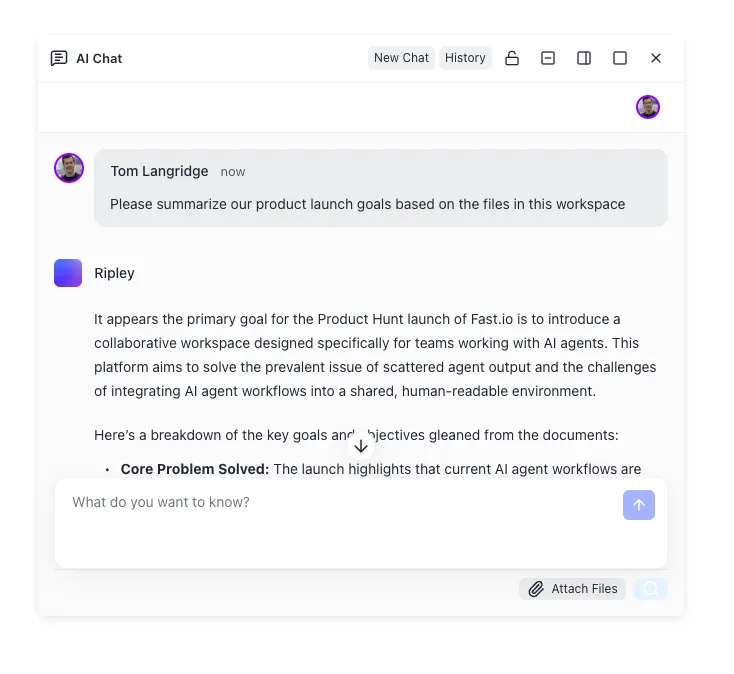
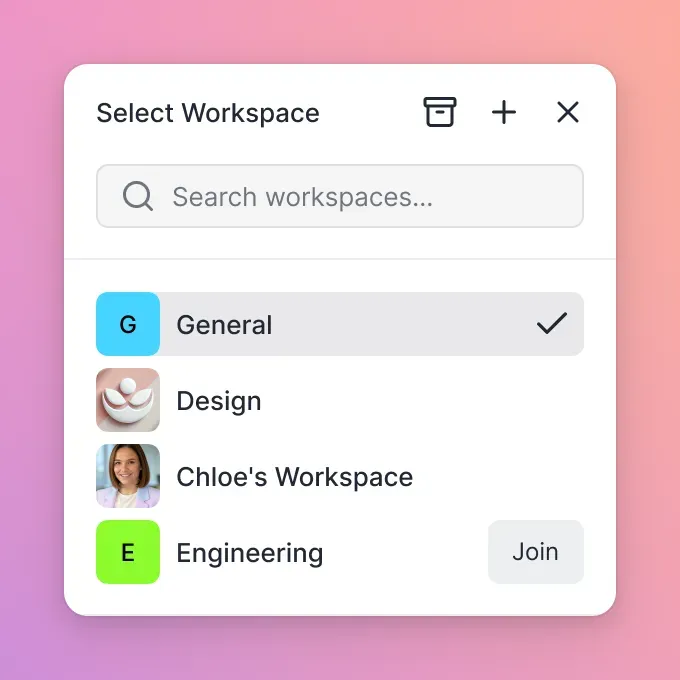
Fast.io sits in that last group. It is not a built-in Manus feature and should not be described as one. It is a cloud workspace platform for agentic teams where people use the UI and agents use the Fast.io API or MCP server. Fast.io exposes Streamable HTTP at /mcp and legacy SSE at /sse; see storage for agents for current MCP access. Enable Intelligence Mode on a workspace to auto-index files for hybrid search (full-text, semantic, and metadata-value search) and RAG-style questions with citations. Per-file version history keeps concurrent agent writes reviewable. Ownership transfer lets an agent build structure and hand the org to a human while retaining admin. Branded Send, Receive, and Exchange shares help when a client needs a clean delivery surface without full workspace access.
A practical handoff pattern for Manus work:
- Run the Manus task with a clear deliverable format (PDF report, slide deck, site export, CSV table).
- Download or export the artifacts from the Manus session.
- Upload into a shared workspace folder named for the client or project.
- Turn on Intelligence if reviewers will ask questions across many source files.
- Use Metadata Views when you need structured fields (dates, counterparties, totals) as a live table rather than only prose summaries.
- Share a branded link or transfer ownership when a human owner should take over.
Alternatives remain valid. Keep raw archives in S3. Keep design collaboration in the tools designers already use. Use Fast.io when the bottleneck is "agent finished, team still cannot find, search, or hand off the files." Pricing for Fast.io orgs is Starter $9.99/mo, Business $49.99/mo, and Enterprise $199.99/mo; monthly plans start with a trial of up to 14 days that requires a credit card, and annual plans have no trial. See pricing for the current package details.
A practical first week with Manus
A clean beginner path beats dumping every capability into day one.
Start on Free with one short Chat-mode question and one small autonomous task, such as a one-page brief with sources. Check the dashboard so you see how credits move. Next, rewrite a vague goal into format, audience, constraints, and success criteria, then re-run a similar task and compare quality against credit use. On a third session, try one research-style job and one creation job (slides or a simple site draft) so you know which deliverable type your real work needs.
If the work is recurring, create a Project with a master instruction and a small knowledge base (brand voice, product sheet, prior report), then run a task that should inherit that context. If colleagues will share usage, evaluate Team shared credits instead of multiplying individual Free accounts. When multi-item research is your core job, try a modest Wide Research-style request on a limited list so you feel parallelization without emptying the Free allotment.
Close the week by exporting the best artifacts into durable storage your team already trusts, or into a Fast.io workspace if you want MCP-ready access, version history, and ownership transfer. Keep Manus focused on generation. Keep the shared workspace focused on review, search, and handoff.
Manus is a weak fit when you only need inline IDE completion, when the task needs human judgment every few seconds, or when you cannot export into a place your client process accepts. It is a strong fit when you can describe success without micromanaging tools, you repeatedly produce research packs or decks, you want sandbox compute without provisioning machines, and you have a path so agent output becomes team output.
Manus AI explained well is not "AI that does everything." It is a credit-metered general agent with a sandbox computer, Free exploration room, paid depth for real volume, and a hard requirement that teams decide where finished files live after the run. Once that mental model is clear, you can ignore most recycled launch coverage and evaluate the product against your actual tasks.
Sources
References used to verify factual claims in this guide.
-
U.S. monthly search volume for "what is manus ai" is about 1,900 with keyword difficulty 20 and CPC about $7.16
-
Manus AI is an autonomous general AI agent designed to complete tasks and deliver results, operating in a sandbox with internet access, a file system, and the ability to install software
-
Manus offers Free, Pro, and Team plans on a credit-based system with limited monthly credits on Free, larger allocations on Pro, and shared team pools on Team Plan credits reset monthly while purchased add-on credits never expire; credits are consumed based on task complexity
-
Manus launched in invitation-only beta on March 6, 2025 and was developed by Butterfly Effect with the name taken from Latin for hand
-
The official Manus site brands the product as Hands On AI and an action engine that executes tasks beyond answers As of July 2026 the official Manus website presents the product under Meta branding
-
Wide Research deploys many independent agents in parallel for multi-item tasks and has been tested up to 250 items in product docs
-
Manus Projects provide persistent workspaces with master instructions and knowledge bases applied to new tasks
Frequently Asked Questions
What is Manus AI used for?
Manus AI is used to complete multi-step work end to end inside a sandbox computer: research reports and large multi-item research tables, websites and app-style builds, slide decks, design and multimedia tasks, and browser-driven automation. Official docs position it as a general agent that plans, executes, and delivers finished work products rather than only answering chat questions.
Is Manus AI free?
Manus offers a Free plan with limited monthly credits for exploration of core capabilities. Paid Pro and Team plans add larger or shared credit pools and collaboration features. Plan credits reset each billing cycle; purchased add-on credits do not expire. Free is enough to learn the product, not to run heavy production workloads indefinitely.
Who made Manus AI?
Manus was developed by Butterfly Effect, associated with founder Xiao Hong and co-founder Ji Yichao on the Manus product. The name comes from the Latin word for hand. As of July 2026, the official Manus website presents the product under Meta branding. For current product behavior, rely on manus.im docs and the live site.
How is Manus AI different from ChatGPT?
Chat assistants primarily answer and draft in conversation. Manus is marketed as an action engine with its own sandbox computer: internet access, a working file system during tasks, software installation, and delivery of complete artifacts such as decks, sites, and research packages. Manus also publishes a Chat mode for cheap simple queries so you do not spend full agent credits on short answers.
What does Manus AI mean?
Manus means hand in Latin, and the product brand pairs that idea with AI that acts. Official materials describe Manus as hands-on AI and an autonomous general agent. In practice, Manus AI meaning is an agent that turns a goal into finished files using a virtual computer, not only a model that returns text.
How do Manus credits work?
Credits meter usage. More complex tasks consume more credits. Free users get a limited monthly allotment; Pro users get a larger monthly allotment; Team users share a pool. Plan credits refill on the billing cycle. Add-on credits can be purchased and do not expire. The dashboard shows balance, history, and which tasks burn the most.
Where should teams store files Manus produces?
Download or export finished artifacts into storage your team can review. Local disks and consumer drives work for solo use. Object storage like S3 works for archives. Shared intelligent workspaces such as Fast.io add version history, hybrid search with Intelligence Mode, MCP access for agents, and ownership transfer when a human must take over. Fast.io is a separate product, not a built-in Manus feature.
Does Manus support APIs and MCP?
Manus documentation lists a Manus API for programmatic agent access, MCP connectors, and custom MCP server paths for integrating external tools. Check the current open.manus.ai and manus.im docs before you build production integrations.
Related Resources

Keep Manus deliverables in one shared workspace
Store research packs, decks, and site exports where people and agents can both reach them. Fast.io adds version history, Intelligence Mode search, MCP access, and ownership transfer. Monthly plans start with a trial of up to 14 days.