Devin AI Agent: How the Autonomous Engineer Works
Cognition's Nubank case study reports an 8x engineering-time efficiency gain and over 20x cost savings when Devin handled a multi-million-line ETL migration. A Devin AI agent is not a autocomplete copilot. It is an autonomous software engineer that takes multi-step coding tasks in a session environment and returns tested changes for human review. This guide separates the agent loop, supervision model, and file handoff from generic coding assistants.

What the Devin AI agent is (and is not)
Cognition's public Nubank case study reports an 8x engineering time efficiency gain and over 20x cost savings when engineers delegated a multi-million-line ETL migration to Devin instead of spreading the same refactor across a thousand-person manual effort. Official Devin use-case docs state that customers who use Devin effectively often see 6-12x efficiency gains on the right class of work. Those numbers explain the commercial interest in the phrase "devin ai agent," and they also set a high bar: autonomy only pays off when tasks are scoped, verifiable, and supervised.
A Devin AI agent is Cognition's autonomous software engineer. Per Cognition's product docs, Devin can write, run, and test code. It plans multi-step work inside a session, uses shell, IDE, and desktop browser tools in that environment, and aims to return changes that a human can review as a pull request or equivalent handoff. Cognition's rule of thumb is blunt: if a human engineer can finish a task in about three hours, Devin can usually handle it. Harder work needs clearer prompts, smaller slices, or more human steering.
That definition separates Devin from generic coding copilots. A copilot suggests the next line or block while you drive the editor. A Devin agent owns a task for minutes or hours: it researches the repo, edits files, runs commands, checks its own work, and loops until success criteria look met. You supervise. You do not babysit every keystroke.
Surfaces you will actually use
Official docs and the product site describe Devin across a few surfaces, not one chat box:
- Cloud sessions in the web app, where most autonomous work and parallel agent fleets run
- Devin CLI for local terminal workflows, with handoff to a cloud session when the task outgrows local context
- Desktop / IDE-adjacent surfaces for interactive coding and team tooling around the same agent product line
- API access so orgs can create sessions, send messages, and automate orchestration
Treat those as product surfaces, not free-floating "AI powers." Each still ends with artifacts: diffs, logs, screenshots, docs, patches, and PRs. Someone has to review and keep what matters.
What Devin is strong at
Cognition's intro and use-case docs emphasize work that is large enough to hurt, yet decomposable into repeatable units:
- Code migrations and framework upgrades (language, framework, monorepo to submodule, flag cleanup)
- Parallel backlog work: tickets, bug repros, unit tests, documentation refresh
- Customer-facing engineering support: integrations, demos, internal tools, unfamiliar APIs
- Continuous hygiene: PR review assistance, QA passes, scheduled chores
The product is weakest when success criteria are vague, verification is subjective, or the task needs deep product judgment that nobody wrote down. Autonomy does not replace architecture decisions. It multiplies clear ones.
Related guides
- Manus AI Agent: Capabilities and How It WorksManus is an autonomous general AI agent that plans, executes, and returns finished work inside a sandbox computer. This...
- Best Hermes Agent Alternatives for Autonomous AI in 2026Nous Research Hermes Agent is an open-source autonomous AI agent with self-improving skills and persistent memory, but...
- Inside Devin AI: The Architecture and Engine Behind Cognition's Autonomous EngineerCognition Devin AI combines a cloud-based reasoning model with a secure, containerized Devbox environment equipped with...
- Hermes Agent vs Devin AI: Autonomous Agent or Coding EngineerHermes Agent and Devin AI solve different problems despite both carrying the "autonomous agent" label. Hermes is a...
- How to Manage Files Generated by Devin AIDevin AI generates dozens to hundreds of files per session, but its workspace resets between runs. This guide covers...
- How to Try Devin AI for FreeA Devin AI free trial is Free at $0 per month with limited agent usage, not a short coupon clock. Pro starts at $20 per...
More on this subject: Devin (103 guides)
The five-step Devin agent loop
Competing pages often blur Devin into "AI that writes code." The useful mental model is a closed loop that looks more like a junior engineer with a laptop than like a completion model.
1. Brief
You (or a ticket system, chat thread, or API call) give Devin a task with completion criteria. Official guidance is clear: write explicit success conditions, attach examples, and prefer work that can be checked with tests, CI, or a browser flow. "Improve auth" is a bad brief. "Add refresh-token rotation matching the pattern in src/auth/session.ts, with unit tests and green CI" is a workable one.
For harder work, Cognition recommends scoping first with research-oriented exploration, then starting implementation only after the approach is sharp enough to verify.
2. Plan
Devin forms a plan against the indexed repo and any team knowledge you have approved. Interactive planning matters here. On complex tasks, refine the plan before implementation burns a long session. Parallel capacity only helps if each subtask has its own clear brief. A thousand vague sessions are still waste.
3. Implement
Inside the session, Devin uses developer tools the docs call out explicitly:
- Shell for installs, builds, tests, and logs
- IDE for multi-file edits in an embedded editor environment
- Desktop / interactive browser for UI checks, docs browsing, auth steps, and visual proof
You can watch progress, inspect command history, and open the IDE while Devin works. That is the core difference from a chat window that only returns a code block.
4. Test
Devin is expected to run and test its own changes: unit tests, local app boots, browser checks, screenshots, or CI signals depending on the task. Cognition's best-practice docs stress objective verification. If you cannot say how you will know the task is done, do not expect the agent to invent a reliable definition of done.
5. PR and handoff
Successful sessions typically end with a pull request, a reviewed patch set, or another handoff artifact. Devin can pick up review feedback and CI failures when review automation is enabled. Humans still own merge judgment, security review, and product acceptance.
Brief -> Plan -> Implement -> Test -> PR / human handoff
           ^                           |
           |________ redirect if needed_|
The loop is not fire-and-forget. Official session tooling is built around intervention: stop early when the trajectory is wrong, take over the IDE, fix an environment issue, then resume with a note about what you changed. Teams that treat Devin like a black box get expensive thrash. Teams that treat it like a supervised agent get draft PRs waiting in the morning.
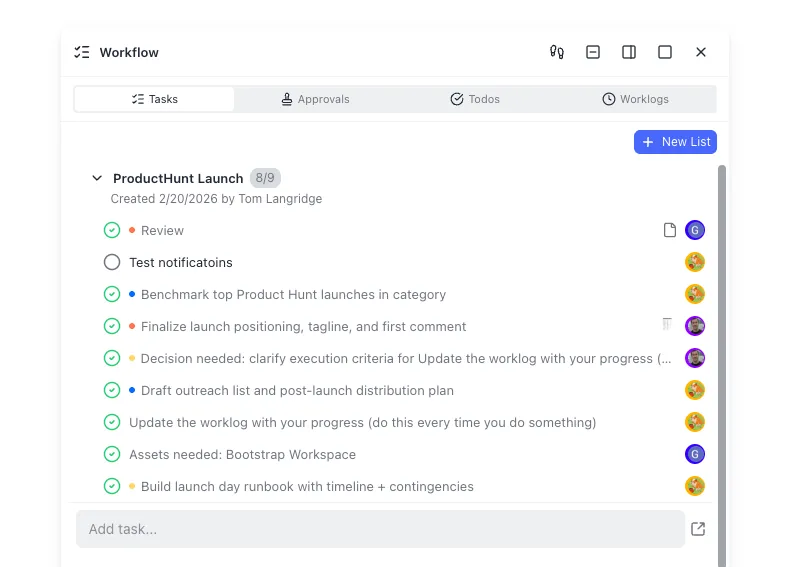


Keep Devin session artifacts in one shared workspace
Park migration notes, QA proof, and delivery packs where agents and humans can both reach them through the Fast.io MCP server and UI, with version history and search included. Monthly plans start with a 14-day trial (credit card required).
How teams supervise Devin sessions
"Is Devin an autonomous coding agent?" Yes, in product terms. Autonomy here means multi-step agency inside a bounded environment, not unsupervised production deploys. Cognition's own interface design assumes humans follow and can take over the session.
What you can see during a session
Session tools give you a live audit trail of agent behavior:
- Progress steps that group shell, edits, and browser activity
- Full command history with output previews
- Real-time code edits in the embedded IDE
- Desktop browser interaction for visual QA and auth flows humans must complete
Best practices from the session-tools guide are operational, not philosophical: intervene early, pause before you edit so you do not race the agent, and tell Devin what you changed when you resume.
Parallelism and fleet work
Enterprise value shows up when a migration or modernization can be sliced. Cognition's Nubank story and use-case library both emphasize the same pattern: invest once in teaching the pattern, then run many independent Devin sessions on similar subtasks while humans manage review queues. Use-case docs call out parallel tasks, clear instructions, and verification methods as the three traits of a good enterprise project.
That is also why Devin is a poor fit for "one giant ticket that requires continuous product negotiation." Autonomy likes isolation. Ambiguous product work likes conversation.
Knowledge, playbooks, and memory across sessions
Docs describe knowledge and related org-level guidance so Devin can pick up tribal rules ("when working in the backend repo…") instead of relearning them every time. Treat knowledge like onboarding notes for a new hire: specific, approved, and updated when process changes. Stale knowledge produces confident wrong work.
MCP and external tools
Devin can be extended with Model Context Protocol servers so a session can reach monitoring tools, databases, design sources, and other systems your engineers already use. That is Devin's own extensibility surface. It does not replace your team's durable file store, permissions model, or client delivery process. It expands what one session can touch while it is alive.
A practical supervision checklist
Before you scale session volume, answer these in writing:
- What is the exact success signal (tests green, screenshot match, CI pass, metric change)?
- Who reviews the PR, and within what SLA?
- Which secrets and environments may the agent touch?
- What happens to non-code artifacts (logs, repro notes, diagrams, sample data)?
- When do we kill a session instead of feeding it more prompts?
If you cannot answer item 4, agent output will still scatter across laptops, ticket comments, and temporary session state.
Where agent output goes after the PR
Devin sessions are excellent at producing change. They are not a long-term system of record for every file a team needs after the merge. Session state is optimized for getting to a reviewable result. Org memory lives in git, issue trackers, wikis, object stores, and shared workspaces.
Common places teams park agent artifacts today
Most engineering orgs already have options:
- Git host alone for source and PR discussion
- Object storage (S3 or similar) for bulk dumps and CI artifacts
- Drive-style folders for specs, customer decks, and design exports
- Local disks and zip handoffs when someone needs a package "right now"
Those work until agents raise volume. Then the failure mode is familiar: a session produces a migration report, three screenshots, a SQL dump sample, and a draft runbook, while the PR only carries the code. Two weeks later nobody can find the non-code proof that justified the merge.
What a durable handoff layer should do
For agentic teams, the storage layer needs properties that commodity folders only half deliver:
- Shared org-owned workspaces humans and agents can both use
- Per-file version history when several agents or people rewrite the same package
- Granular permissions so external reviewers see only the delivery set
- Search that works by meaning, not only by filename
- A clean path from agent-built structure to human ownership
Local folders and raw buckets can store bytes. They rarely give agents and humans the same intelligence layer.
How Fast.io fits around Devin (without claiming a built-in integration)
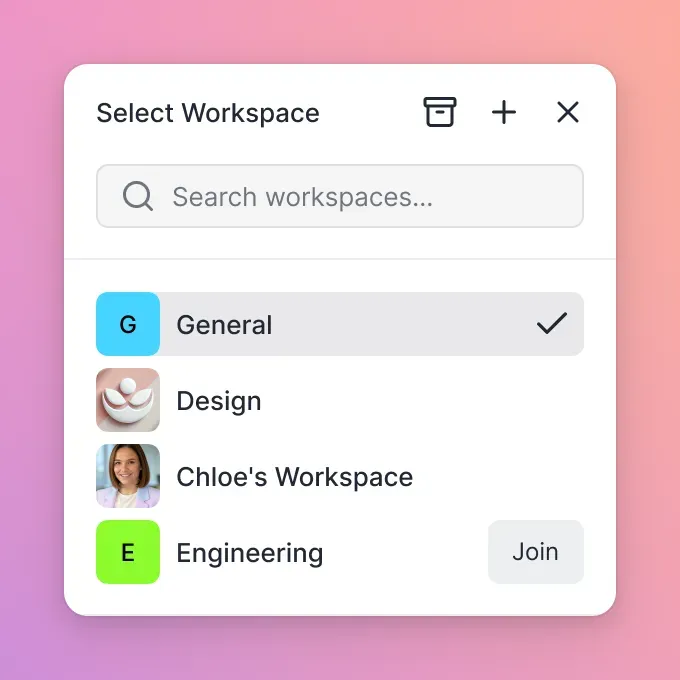
Fast.io is not a Devin feature. It is a workspace platform you can put beside any coding agent workflow. A practical pattern looks like this:
- Devin (or your human) finishes a session and opens a PR.
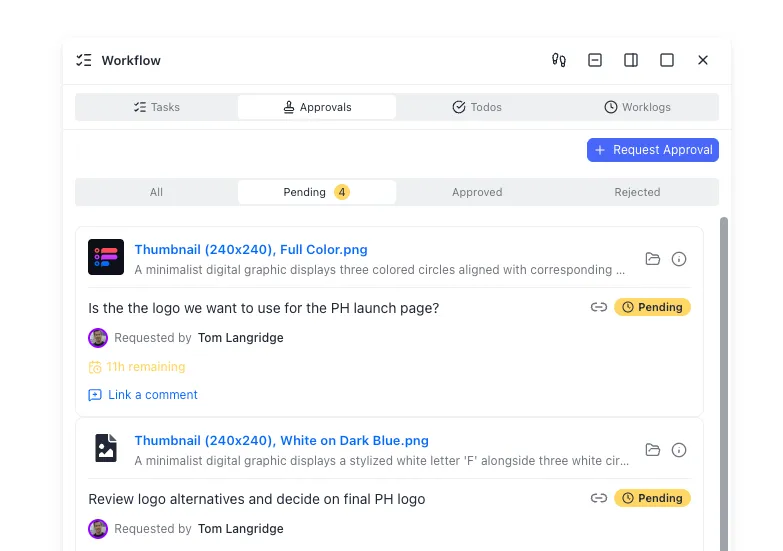
- Non-code artifacts (migration notes, QA recordings, customer-facing summaries, data samples) land in a Fast.io workspace dedicated to that project.
- Intelligence Mode indexes those files so teammates can ask citation-backed questions instead of hunting folders.
- Branded Send/Receive/Exchange shares deliver packages to reviewers or clients with expiry and per-recipient access when needed.
- Ownership transfer covers the case where an agent stood up the workspace structure and a human should own the org going forward.
Agents can talk to Fast.io through the official MCP server over Streamable HTTP at /mcp (legacy SSE at /sse). Humans use the UI against the same workspaces. That split matters: Devin remains the autonomous engineer for code execution; Fast.io remains the shared intelligence workspace for files that outlive a session.
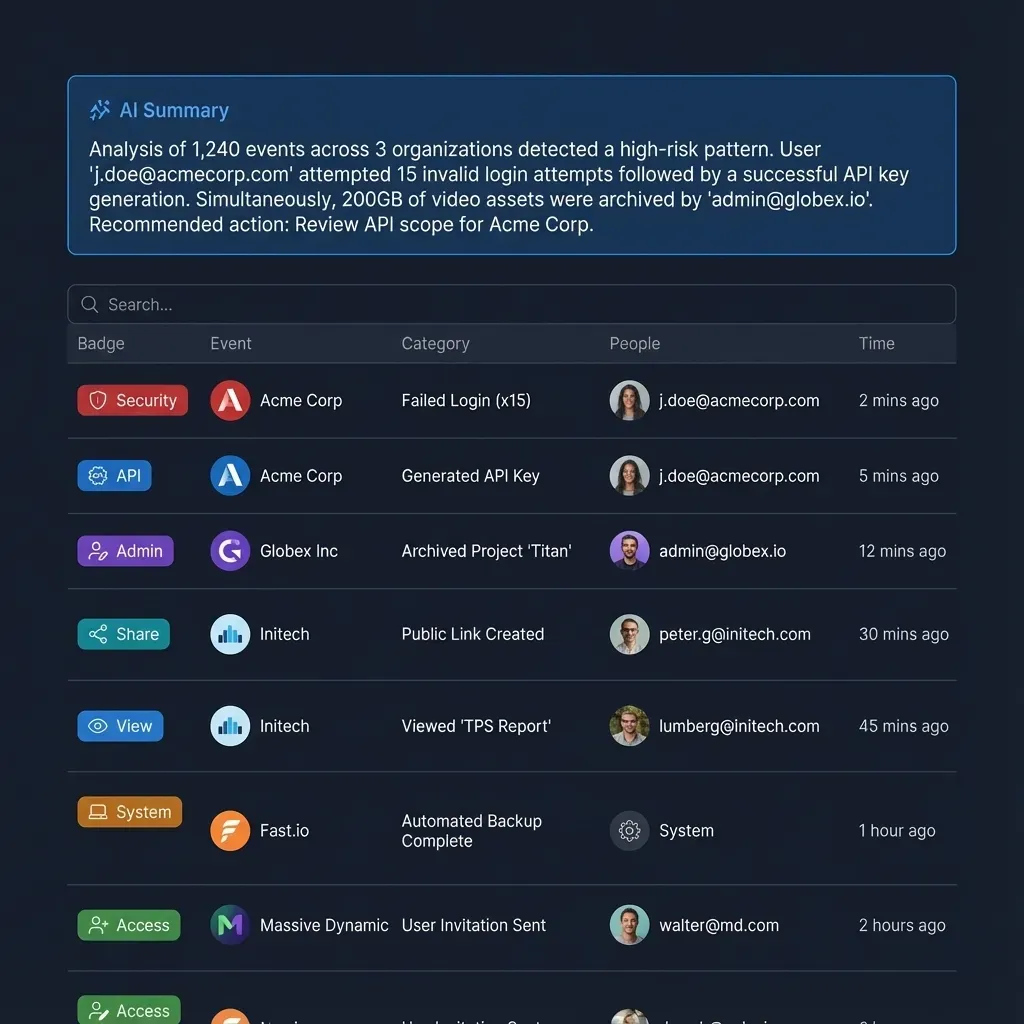
For structured document sets that arrive with agent work (contracts, invoices, scan packs, customer PDFs), Metadata Views turn described fields into a live table you can sort and filter. That is separate from Intelligence Mode, which targets search, summarization, and RAG chat over file content.
Plans start at Starter ($9.99/mo), Business ($49.99/mo), and Enterprise ($199.99/mo). Monthly plans start with a trial of up to 14 days (credit card required); annual plans have no trial. Real workspace work runs on a paid org subscription after the trial. Details live on pricing and the agent-focused overview at storage for agents.
A concrete handoff example
Suppose Devin finishes a JavaScript-to-TypeScript slice and opens a PR. Alongside the PR, your team still needs:
- The prompt and constraints you used (so the next slice is consistent)
- Failing and passing test logs that are too noisy for the PR body
- A short migration note for on-call
- Screenshots if UI surfaces changed
Git keeps the code. A Fast.io project workspace keeps the evidence pack, versioned and searchable. When a second Devin session starts on the next package, humans can point it at the living notes instead of rediscovering edge cases in chat history.
Putting Devin to work without confusing it for a copilot
If you are evaluating a Devin coding agent for your org, start with one high-volume, low-ambiguity stream of work. Cognition's gallery is full of the right shape: language upgrades, repetitive refactors, backlog tickets with acceptance tests, documentation that already has a template. Avoid first pilots that require political consensus or unwritten product taste.
A starter operating model
- Pick a pattern, not a moonshot. One migration style or one bug class is enough.
- Write the brief template once: inputs, out of scope, tests, definition of done.
- Index repos and attach knowledge the agent should not have to relearn.
- Run a few supervised sessions with humans watching progress tabs, not a silent batch of fifty.
- Measure review cost, not only "PRs opened." Time-to-merge and rework rate matter more than session count.
- Park non-code artifacts in a shared workspace from day one so success is reproducible.
- Only then scale parallelism. Fleet mode multiplies good process and bad process equally.
When to stay with a copilot instead
Keep inline assistants for work that is still human-led: exploratory design, one-file tweaks, pair-programming style refactors, and anything where the feedback loop is "watch me type." Devin's commercial case is strongest when the unit of work is a task with a finish line, not a continuous conversation in the editor.
Where Fast.io sits in that stack
Think of three layers:
- Execution: Devin sessions, CLI, PR automation
- Source of truth for code: your git host and CI
- Shared workspace for people + agents: files, permissions, search, delivery, and ownership handoff
Fast.io aims at the third layer. Connect agents through MCP, keep humans in the same workspaces, and use AI features when the artifact set needs retrieval, not only storage. Agent onboarding context is also published at fast.io/llms.txt.
Devin changes who does the first draft of engineering labor. It does not remove the need for review loops, durable evidence, or a place where agent output becomes team output. The teams that get the multi-x gains Cognition advertises are the ones who design that surrounding system on purpose.
Sources
References used to verify factual claims in this guide.
-
Nubank reported an 8x engineering time efficiency gain and over 20x cost savings using Devin on a large ETL migration
-
Customers achieve 6-12x efficiency gains when leveraging Devin effectively
-
Devin is an autonomous AI software engineer that can write, run and test code; rule of thumb is tasks a human can do in about three hours
-
Devin sessions expose Shell, IDE, and Desktop/browser tools with human takeover and progress monitoring
-
Best practices include clear success criteria, parallel sessions, self-testing in a full desktop environment, CLI with cloud handoff, and MCP extensions
-
Cognition operates Devin as the first autonomous software engineer and positions it to plan, write, test, and ship production code
Frequently Asked Questions
What is the Devin AI agent?
A Devin AI agent is Cognition's autonomous software engineer. It takes multi-step coding tasks, works inside a session environment with shell, IDE, and desktop browser tools, and returns tested changes for human review, often as a pull request. It is built for task ownership, not just line-level autocomplete.
How does Devin AI work as an agent?
Devin follows an agent loop: brief, plan, implement, test, then PR or handoff. Inside a session it can run commands, edit across files, browse docs or local UIs, and iterate against verification signals such as tests or CI. Humans can watch progress, take over the IDE, and resume with new instructions.
Is Devin an autonomous coding agent?
Yes. Cognition markets Devin as an autonomous AI software engineer that can write, run, and test code with limited human intervention. Autonomy is still bounded: teams supervise sessions, review PRs, and set success criteria. It is not a substitute for merge authority or production ownership.
How do teams supervise Devin sessions?
Teams monitor progress steps, shell history, IDE diffs, and desktop browser activity. Official guidance is to intervene early when the trajectory is wrong, pause before manual edits, and tell Devin what changed when work resumes. Review automation and human PR review close the loop before merge.
What kinds of work should you give Devin first?
Start with decomposable, verifiable work: migrations, framework upgrades, backlog tickets with tests, bug repros, documentation, and other repetitive engineering tasks. Cognition's docs note Devin is a strong fit for tasks a human could finish in roughly three hours, and for larger projects that can be sliced into parallel sessions.
Where should Devin's non-code artifacts live?
Code belongs in git. Notes, logs, screenshots, sample data, and delivery packs need a durable shared workspace with permissions and version history. Some teams use S3 or Drive folders. Fast.io is one option when agents and humans need the same searchable workspace, MCP access, and ownership handoff after the session ends.
Does Fast.io replace Devin?
No. Devin is the autonomous engineer for planning and implementing code changes. Fast.io is a separate intelligent workspace for files, shares, search, and agent-to-human ownership transfer. Use them together when session output must become team-owned project memory.
Related Resources

Keep Devin session artifacts in one shared workspace
Park migration notes, QA proof, and delivery packs where agents and humans can both reach them through the Fast.io MCP server and UI, with version history and search included. Monthly plans start with a 14-day trial (credit card required).