Manus AI Review: Strengths, Limits, and Best Fit
Manus AI is worth evaluating as a goal-to-deliverable agent, not as a chat app. This review scores its sandbox execution, browser work, slides and research outputs, credit model, and the handoff gap most write-ups skip. Paid tiers scale concurrent and scheduled tasks, while a free plan exists with limited credits. The best fit is clear research and multi-step production work when you also plan where finished files live after the agent stops.


What a Manus AI review should measure
Paid Manus plans on the public pricing page list 4,000, 8,000, or 40,000 monthly credits, each with 20 concurrent tasks and 20 scheduled tasks, while a free plan exists with limited credits [Manus Pricing]. That credit envelope is the real review axis. A Manus AI review should judge how well the agent turns goals into finished deliverables, not only chat quality.
Buyers are not looking for a feature tour. They want to know whether Manus is worth the credits, who should use it, and where it fails once work leaves the sandbox.
Official docs describe Manus as an autonomous general AI agent that completes tasks and delivers results. Unlike chatbots that stop at an answer, Manus plans and executes work inside a full sandbox: a virtual computer with internet access, a persistent file system for the task, and the ability to install software and create tools [Manus Docs Welcome]. The product homepage positions it as an action engine for slides, websites, design, research, browser operation, and related production work [Manus Homepage]. Manus is also now part of Meta, which raises visibility but does not change the evaluation standard: finished outputs, cost predictability, and team handoff.
Score Manus the same way you would score a junior contractor. Did the brief get completed end to end? How much supervision did it need? How many credits did weak prompts burn? Where do the files live after the run? Chat fluency is secondary if the deck, site, research pack, or export is incomplete.
Related guides
- Claude Code Review: How to Use /code-review and UltrareviewClaude Code ships a built-in /code-review command that scans diffs for correctness bugs and improvement opportunities...
- How to Use Devin AI for Automated Code ReviewImplementing a Devin AI code review workflow allows engineering teams to automate pull request verification by running...
- What Is Manus AI? A Clear Beginner OverviewU.S. search demand for "what is manus ai" sits near 1,900 monthly queries with keyword difficulty 20 and about $7.16...
- Manus AI Agent: Capabilities and How It WorksManus is an autonomous general AI agent that plans, executes, and returns finished work inside a sandbox computer. This...
- Is Manus AI Free? Free Plan, Credits, and LimitsManus AI is free to start on a limited-credit Free plan, but heavier autonomous agent work usually needs paid Pro or...
- Manus AI Context Window: Token Limits, Subagent Memory, and Task PersistenceThe Manus AI context window functions as an active working memory buffer of `128k` to `200k` tokens, but autonomous...
More on this subject: Manus (53 guides)
Capabilities that matter in real work
Manus is strongest when the task has a clear end state: a spreadsheet, a slide deck, a draft site, a research brief, or a multi-step browser workflow. Official product surfaces cover web app creation, AI design, slides, image and music generation, Wide Research, Mail Manus, and Browser Operator [Manus Homepage]. The useful question is not whether the menu looks full. It is which of those surfaces actually save time on work you already do.
Sandbox execution
The sandbox is the core product promise. Manus can work with less step-by-step babysitting than a pure chat model because it has its own computer context: network access, files, and tool installation [Manus Docs Welcome]. That design fits long tasks that need intermediate files, code, or browser steps. It also creates the main operational risk later in this review: deliverables that only live in the agent environment until you export them.
Browser Operator
Manus Browser Operator connects Manus to your local browser session through an extension. Tasks can run with your real IP and logged-in tabs, which helps with authenticated sites and stricter access checks that pure cloud browsers struggle with [Manus Browser Operator]. Official copy frames this as autonomous multi-step browsing: navigate, click, extract, and complete workflows across sites you already use. For operators, the practical gain is less context switching. The practical caution is permission scope. You are letting an agent act inside trusted sessions, so keep high-risk accounts, production admin consoles, and financial systems on a short leash.
Research, slides, and production assets
Wide Research is marketed for larger parallel research jobs. Slides, websites, and design tools target production artifacts rather than pure Q&A. Those surfaces are a good fit for competitive maps, weekly brief packs, client decks, and early website scaffolds. Treat them as first drafts with a review gate. Design polish and product-quality UI still need human judgment, especially when brand standards matter.
API and automation
The Manus API (v2) is built for programmatic task creation, multi-turn follow-ups, projects with shared instructions, file attachments, webhooks on completion or input needed, skills, and custom agents [Manus API Docs]. Base URL traffic goes to https://api.manus.ai. That surface matters for developers who want Manus inside a pipeline instead of only in a chat UI. A simple mental model looks like this:
create task -> agent runs in sandbox -> webhook on complete
            -> download artifacts -> store outside Manus
If you skip the last step, you optimize for demo speed and lose operational memory.
Manus AI pros and cons
This section sums up Manus AI's strengths, limits, best-for, and not-for. Use it as a snapshot before you commit credits.
Pros
- Goal-oriented execution in a full sandbox with internet, files, and tool install support [Manus Docs Welcome]
- Production surfaces beyond chat: slides, websites, design tools, research modes, and browser operation [Manus Homepage]
- Browser Operator can use trusted local sessions for authenticated workflows [Manus Browser Operator]
- Free plan for limited exploration, with paid plans that raise monthly credits and support 20 concurrent and 20 scheduled tasks [Manus Pricing] [Manus Docs Plans]
- API for tasks, projects, files, webhooks, skills, and agents if you need automation [Manus API Docs]
- Credit dashboard guidance for balance, history, estimates, and low-balance alerts [Manus Docs Plans]
Cons
- Credit burn is task-complexity based and can be hard to forecast before a long run finishes [Manus Docs Plans]
- Plan credits reset monthly; only purchased add-on credits are described as non-expiring [Manus Docs Plans]
- Complex multi-phase work still benefits from reviewing intermediate results, which adds supervision time [Manus Docs Plans]
- Deliverable quality varies by task type; research packs and structured exports usually beat polished product UI on first pass
- Team collaboration and durable shared storage are not the same problem as agent execution. After the agent finishes, files still need a place people can review, permission, and version
Best for
- Solo operators and small teams who need research packs, decks, site scaffolds, or browser-assisted busywork
- Developers who can call the API, capture webhooks, and export artifacts into their own systems
- Recurring work that fits scheduled tasks once the prompt and acceptance criteria are stable
Not for
- Teams that need predictable per-task cost accounting before every run
- Workflows where the finished asset must live in a shared, permissioned workspace with auditability from day one
- Highly brand-sensitive design work that cannot tolerate a rough first UI pass
- Anyone treating Manus as a replacement for human review on customer-facing deliverables
The content gap in many reviews is simple. They score the agent demo and ignore credit burn, output handoff, and the moment a shared workspace becomes mandatory. Those three points usually decide whether Manus is worth it for real operations.



Keep Manus outputs in one shared workspace
Export finished Manus files into a Fast.io workspace with version history, Intelligence Mode search, and MCP access for the next agent or teammate. Start with a 14-day free trial.
How Manus AI credits and pricing actually work
Manus runs on credits. Official plan docs state that consumption depends on task complexity, that Free is for limited monthly credits, Pro targets regular professional use, and Team adds shared credit pools plus collaboration controls [Manus Docs Plans]. The public pricing page currently highlights paid monthly credit packs at 4,000, 8,000, and 40,000 credits, each with 300 daily refresh credits, 20 concurrent tasks, and 20 scheduled tasks [Manus Pricing]. Higher tiers also market heavier research, websites, slides, and Wide Research capacity.
That model is flexible and easy to misunderstand. Plan credits reset each billing cycle. Purchased add-on credits are described as never expiring. If you run out mid-month, you buy add-ons or upgrade [Manus Docs Plans]. Official optimization advice is practical: write specific prompts, use lighter chat modes for simple questions, batch related work, and review intermediate outputs before burning another phase [Manus Docs Plans].
How to estimate worth in one week
Run a controlled evaluation instead of a free-form demo day.
- Pick three tasks you already do weekly: one research pack, one production artifact (slides or a short site), one browser workflow.
- Write acceptance criteria before you start. Example: "10-row competitor table with pricing sources, 8-slide summary, export as PDF and CSV."
- Log credits before and after each task from the dashboard.
- Score supervision minutes separately from agent runtime. If you spend more time correcting than you would have spent doing the work, the task is not a good fit yet.
- Export every accepted artifact to a durable location the same day.
Manus is worth it when the average accepted deliverable costs less in credits plus supervision than your current process, and when the output needs only light editing. It is not worth it if your jobs are vague, highly visual brand work, or depend on files that only live inside temporary agent context.
Credit burn patterns to watch
Vague prompts waste credits. "Research AI" is the official example of a less efficient request; a narrow brief with format and count constraints is more efficient [Manus Docs Plans]. Multi-phase tasks that continue after a bad intermediate result also burn budget. Treat each major phase as a checkpoint. If the research skeleton is wrong, stop before you generate the deck.
Concurrent and scheduled capacity matter once you move past experiments. Paid plans advertising 20 concurrent and 20 scheduled tasks are aimed at operators who want parallel work and recurring automations [Manus Pricing]. Capacity without artifact discipline still fails. A scheduled Monday research run is only useful if the output lands where the team already works.
Why output handoff matters after Manus finishes
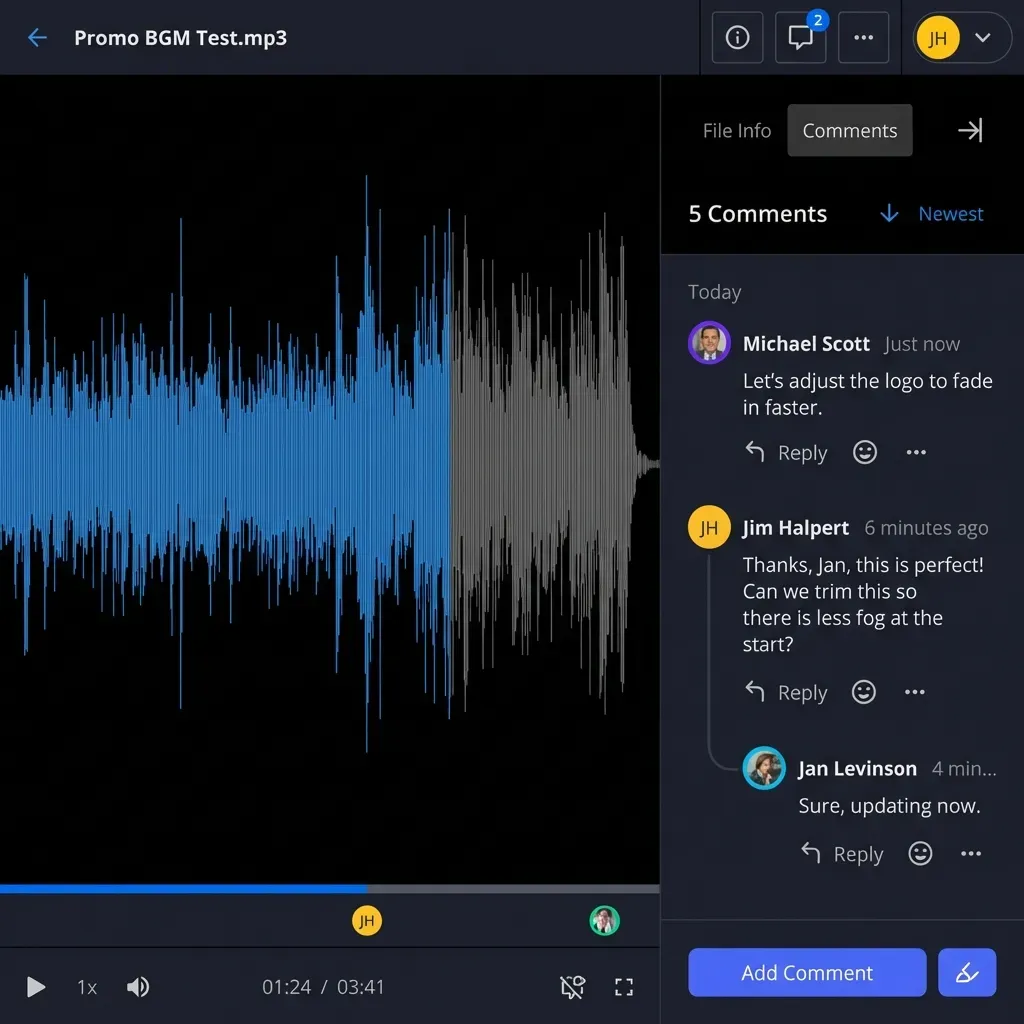
Most Manus AI reviews stop when the agent marks a task complete. Operations start there. The sandbox is built so Manus can work independently with files and tools [Manus Docs Welcome]. That is excellent for execution. It is incomplete for team delivery. Someone still has to review, share, revise, and retain the artifact.
Local disk is the simplest first landing zone: download the PDF, deck, zip, or CSV and drop it in a project folder. It works for one person and fails when a client, editor, or second agent needs the same source of truth. Object storage such as Amazon S3 is durable and cheap for bulk archives, but it is awkward for non-technical reviewers and needs extra work for search and permissions. Google Drive or Dropbox shared folders are familiar for human collaboration, yet high-frequency agent write loops can feel clumsy, and neither is designed as an agent-native workspace with built-in semantic indexing.
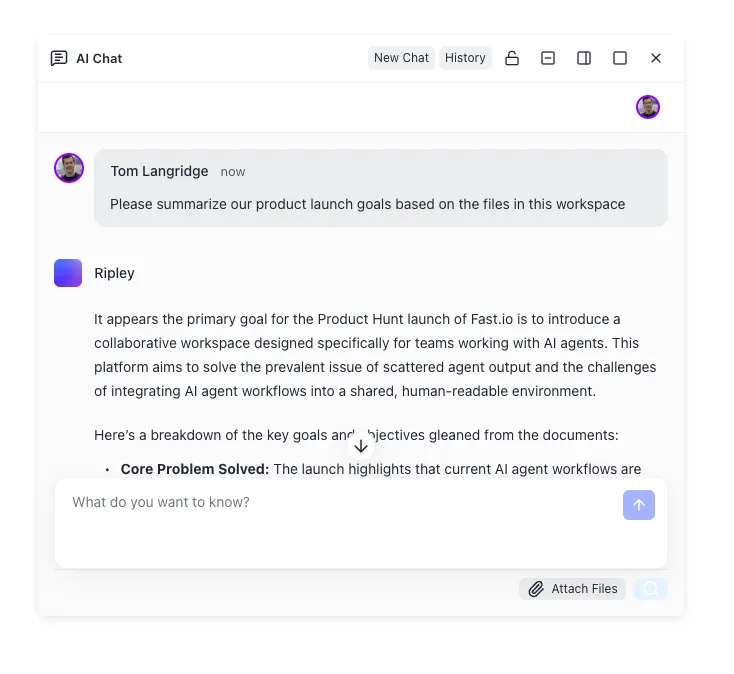
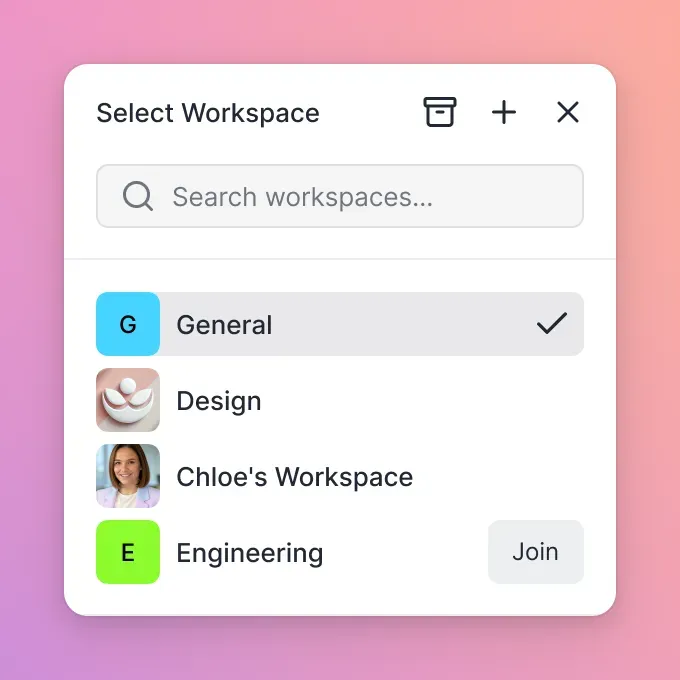
This is where a shared intelligent workspace becomes useful. Fast.io is one option for the layer after Manus: org-owned workspaces where people and agents share the same files, permissions, and version history. Enable Intelligence Mode so finished reports and decks are indexed for semantic search and citation-backed chat. For structured follow-on work, Metadata Views can turn document sets into a sortable field table without hand-built OCR templates. Agents can talk to Fast.io through a consolidated MCP toolset over Streamable HTTP at /mcp and legacy SSE at /sse. See the agent storage and MCP guide for setup details.
A practical handoff pattern looks like this:
- Manus completes the task and produces files in its environment.
- Export accepted artifacts immediately (API download, manual download, or webhook-triggered transfer).
- Land them in a durable store your team already uses, or in a Fast.io workspace for shared review.
- Assign human review with clear owners for accuracy, brand, and customer impact.
- Only then distribute via branded share, portal, or internal link.
Ownership transfer on Fast.io supports agent-built org setup handed to a human for billing and admin, while the agent can retain admin access. Plans are Starter at $9.99/mo, Business at $49.99/mo, and Enterprise at $199.99/mo, each starting with a 14-day free trial that requires a credit card [Fast.io Pricing]. Treat Fast.io as the coordination layer for agent output, not as a built-in Manus feature.
If your Manus jobs are personal experiments, local folders may be enough. If multiple people depend on the files, or if another agent will reuse them next week, plan the handoff before you spend credits on the run.
Final verdict: who should use Manus AI
Manus AI is a credible autonomous agent for people who care about finished work products. Official positioning as an action engine with a real sandbox, browser operator, production tools, credit plans, and an API is consistent across first-party pages [Manus Homepage] [Manus Docs Welcome] [Manus API Docs]. The honest limits are credit unpredictability on complex tasks, variable polish on design-heavy outputs, and the need for an explicit export path into shared storage.
Choose Manus if you can write tight briefs, accept intermediate review, and measure success by accepted deliverables per credit. Skip it, or keep it on free-tier experiments, if you need fixed per-task pricing, brand-perfect first drafts, or team workflows that begin and end in a governed shared drive without extra export steps.
A practical stack for many teams is Manus for generation, then a durable workspace for memory and collaboration. Use Drive, Dropbox, S3, or Fast.io based on who needs access next. When agents and humans share the same files, Intelligence Mode, version history, and MCP access matter more than another chat window. That combination is usually what makes Manus worth keeping after the first impressive demo.
Sources
References used to verify factual claims in this guide.
-
Paid Manus plans on the public pricing page list 4,000, 8,000, or 40,000 monthly credits, each with 20 concurrent tasks and 20 scheduled tasks, while a free plan exists with limited credits. Paid pricing tiers advertise 300 daily refresh credits alongside monthly credit packs and concurrent or scheduled task capacity.
-
Manus operates in a complete sandbox environment with internet access, a persistent file system, and the ability to install software and create custom tools. Manus AI is described as an autonomous general AI agent designed to complete tasks and deliver results rather than only answer questions.
-
Official Free, Pro, and Team plans use a credit system where consumption depends on task complexity; plan credits reset monthly and add-on credits never expire.
-
Manus Browser Operator runs in the user's browser context using local sessions and authentic local network identity for multi-step web tasks.
-
The Manus API v2 supports tasks, projects, files, webhooks, skills, and agents at https://api.manus.ai.
-
Manus product surfaces include slides, websites, design tools, Wide Research, Mail Manus, Browser Operator, and related production features.
-
Fast.io plans are Starter $9.99/mo, Business $49.99/mo, and Enterprise $199.99/mo, each with a 14-day free trial that requires a credit card.
Frequently Asked Questions
Is Manus AI worth it?
Manus AI is worth it when you can define clear deliverables, track credit use per task, and export accepted files the same day. It is less attractive if your work is vague, highly brand-sensitive on first draft, or depends on predictable unit costs before every run. Start with the free limited-credit plan, run three real weekly tasks, and only upgrade if accepted output plus supervision time beats your current process.
What are the pros and cons of Manus AI?
Pros include sandbox execution with internet and files, production tools such as slides and research modes, Browser Operator for authenticated local sessions, free and paid credit plans with concurrent and scheduled task capacity, and an API for automation. Cons include credit burn that depends on task complexity, monthly plan credit resets, supervision needed on multi-phase work, uneven polish on design-heavy outputs, and the need for a separate handoff plan into shared storage after the agent finishes.
Who should use Manus AI?
Solo operators, researchers, freelancers, and small teams who need research packs, decks, site scaffolds, or browser-assisted multi-step work are the best fit. Developers who can use the Manus API and webhooks also benefit. Teams that need fixed per-task budgets, strict brand design quality on first pass, or durable shared file governance without an export step should look elsewhere or pair Manus with a dedicated workspace.
Does Manus AI have a free plan?
Yes. Official plan docs describe a Free plan with limited monthly credits for individuals exploring core capabilities. Paid Pro and Team plans raise credits and add capacity for regular professional or collaborative use. Check manus.im/pricing for current monthly credit packs and concurrent or scheduled task limits.
How do Manus AI credits work?
Credits are consumed based on task complexity. Plan credits refill on the monthly billing cycle, while purchased add-on credits are described as never expiring. The dashboard can show balance, usage history, estimates, and low-balance alerts. Specific prompts, lighter modes for simple questions, batching related work, and intermediate reviews help control burn.
Where should Manus AI outputs go after a task completes?
Export accepted artifacts immediately. Local folders work for solo use. Amazon S3 suits bulk archives. Google Drive or Dropbox work for simple human sharing. For agent-plus-human teams that need version history, semantic search, and MCP access, a workspace such as Fast.io is a stronger long-term landing zone than leaving files only in the agent environment.
Related Resources

Keep Manus outputs in one shared workspace
Export finished Manus files into a Fast.io workspace with version history, Intelligence Mode search, and MCP access for the next agent or teammate. Start with a 14-day free trial.