InVideo AI Review 2026: 7 Features We Tested and What They Cost
InVideo AI crossed $70M in annual recurring revenue within 18 months of its AI pivot, but rapid growth doesn't guarantee quality output. We tested Agent One's text-to-video generation, voice cloning, and semantic editing across 30+ prompts to see whether it delivers for batch content production, then compared it head-to-head against CapCut and Canva Video.


What InVideo AI Actually Delivers in 2026
InVideo AI hit $70M in annual recurring revenue by mid-2025, growing from near-stagnant revenue to one of the highest-grossing AI video platforms in under 18 months. The company reports 50 million users across 190+ countries, with roughly 8 million videos generated per month. That traction tells you the market wants text-to-video tools. It doesn't tell you whether the output is good enough for your use case.
The platform's latest release, Agent One, positions InVideo as more than a template-based video editor. It's an autonomous video agent: type a text prompt, and the system writes a script, selects stock footage from 16 million clips, generates a voiceover, adds subtitles and music, and delivers an edited video. The pitch is that you skip the entire production workflow.
We tested Agent One across 30+ prompts spanning explainer videos, product demos, social media shorts, and educational content. The results were mixed in ways that most reviews don't cover. Simple prompts for social content delivered surprisingly watchable results in under five minutes. Complex prompts for brand-specific content exposed real limitations in consistency, accuracy, and creative control.
This review covers seven specific features, breaks down real pricing (including the credit trap reviewers keep flagging), and compares InVideo AI against CapCut and Canva Video for three production scenarios: one-off social clips, batch content programs, and brand-consistent series.
Related guides
- Best AI Music Generators in 2026: 10 Tools Tested and ComparedAI music generators have matured past the novelty stage. Tools like Suno, Udio, and AIVA now produce tracks that pass...
- 10 Best AI Tools for Content Creators in 202685% of marketers now use AI for content creation, up from 61% in 2023, yet most still limit AI to a single workflow...
- Best Free AI Video Generators in 2026: What You Actually Get for $0Free AI video generators have improved dramatically in 2026, but "free" means wildly different things depending on the...
- 8 Best AI Image Generators in 2026, Tested and ComparedAI image generators improved drastically between 2025 and 2026, with text rendering going from broken to...
- Best AI Photo Enhancers in 2026: 8 Tools Tested and ComparedVSCO's 2026 Photographers + AI report found that 83% of photographers use AI in their workflow, but only 48% have tried...
- Best AI Voice Generators in 2026: 10 Tools Tested for Creators and DevelopersAI voice generators have split into two camps: studio tools for content creators who need polished narration, and...
More on this subject: AI Content and Media Generation (46 guides)
7 InVideo AI Features Ranked by Use Case
Each feature below gets a use-case rating based on practical output quality, not marketing claims.
1. Text-to-Video Generation
The core feature. Type a prompt like "Create a 2-minute explainer about remote work productivity tips" and Agent One handles scripting, footage selection, voiceover, subtitles, and music. The system accesses OpenAI's Sora 2, Google's Veo 3.1, and Kling 3.0 for generative clips alongside traditional stock footage.
Best for: Social media content creators who need volume over polish.
Weak for: Brand videos requiring specific visual guidelines or product shots.
Rating: 7/10 for social content, 4/10 for brand content.
2. Edit-by-Command (Semantic Editing)
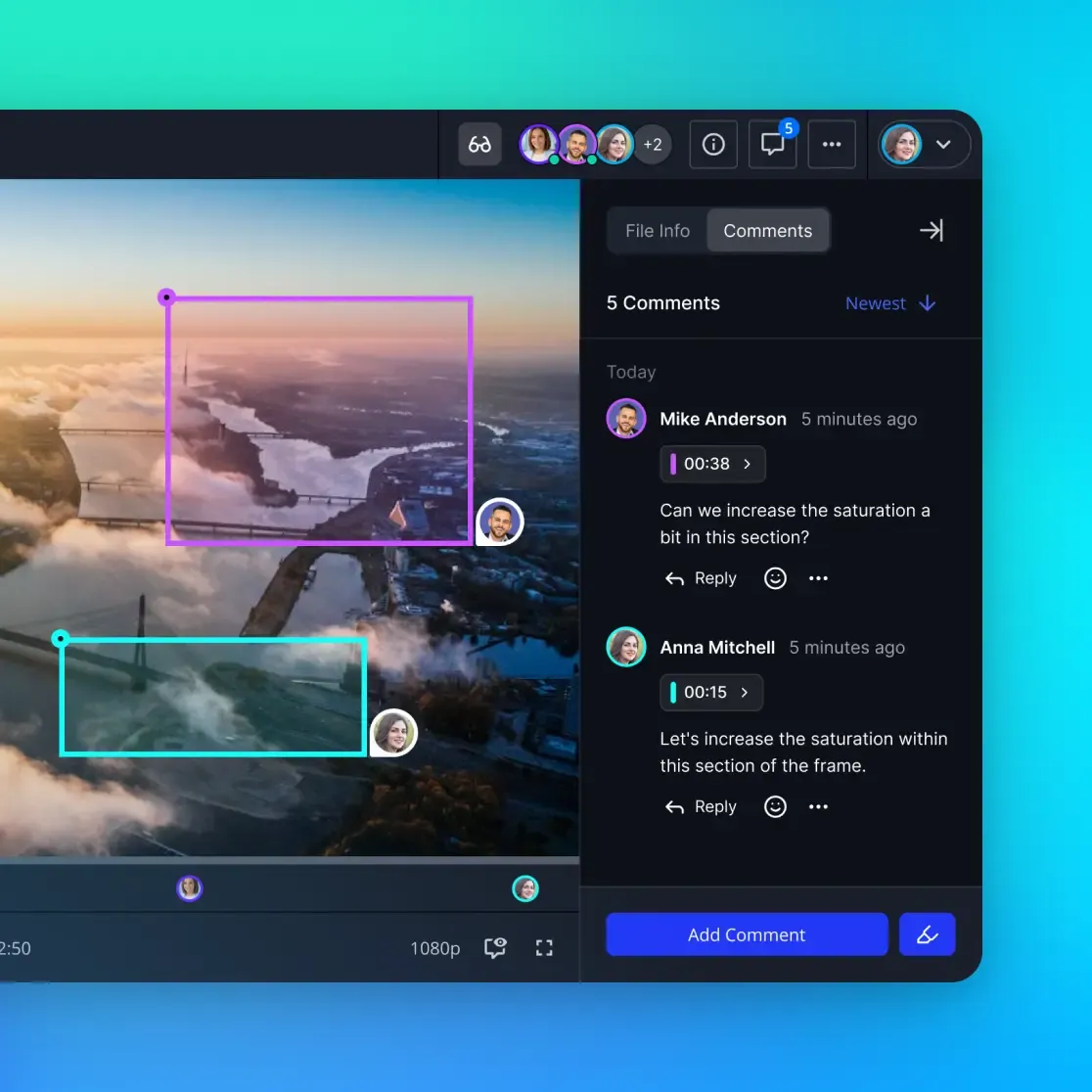
Instead of dragging timeline elements, you type instructions like "Make the intro faster" or "Switch to a warmer color palette." The AI interprets your intent and adjusts pacing, transitions, music, and grading accordingly. This is the feature that most reduces the learning curve compared to traditional editors.
Best for: Non-editors who want to refine output without learning timeline tools.
Weak for: Precise edits where you need frame-level control.
Rating: 8/10 for quick iterations, 3/10 for precision work.
3. Voice Cloning
Upload a 30-second audio sample and InVideo creates a synthetic voice clone. Plus plans include 2 clones, Max plans include 5. The cloned voice can narrate any future video, which is useful for building a consistent channel identity without recording every script.
Best for: YouTubers and course creators who want consistent narration across videos.
Weak for: Content requiring emotional range or conversational delivery.
Rating: 7/10 for consistency, 5/10 for naturalness.
4. AI Avatar Presenters
InVideo's 2026 avatars include 40 facial micro-expressions and natural breathing patterns. They're visually convincing in short clips, though longer segments can trigger uncanny valley effects. Useful for talking-head content where you don't want to appear on camera.
Best for: Internal training videos, product walkthroughs, social ads.
Weak for: Long-form content or scenarios requiring genuine emotion.
Rating: 7/10 for short-form, 4/10 for long-form.
5. Stock Media Library (16M+ Assets)
Access to premium clips from iStock, Storyblocks, and Shutterstock. The AI automatically matches footage to your script context, which works well for generic topics (office scenes, nature, cityscapes) but struggles with niche subjects.
Best for: General explainer and educational content.
Weak for: Industry-specific content (medical, legal, construction) where generic stock looks out of place.
Rating: 8/10 for general topics, 4/10 for niche industries.
6. Multi-Language Support (50+ Languages)
Auto-translation for voiceover and subtitles across 50+ languages. This is where InVideo pulls ahead of CapCut and Canva for teams creating content across markets. You generate one video in English, then produce localized versions with translated voiceover and subtitles.
Best for: Marketing teams serving multiple geographies.
Weak for: Languages with complex grammar where AI translation introduces errors.
Rating: 8/10 for common languages, 5/10 for less-supported languages.
7. VFX House (Post-Production Tools)
The newest addition. Relight modifies scene lighting after generation. Prop Swap replaces objects in footage. AI Colorist applies film-grade color grading. These tools add a post-production layer that most AI video platforms lack entirely.
Best for: Creators who want polished output without After Effects.
Weak for: Professional VFX work (the tools are AI-assisted, not professional-grade).
Rating: 6/10 overall. Useful additions, but still early.
InVideo AI Pricing: The Credit Math You Need to Do First
InVideo AI's pricing looks straightforward until you calculate what your actual production volume costs. Here are the three main tiers.
Free Plan ($0/month)
- 10 AI generation minutes per week
- Watermarked exports at 720p
- No commercial usage rights
- 4 exports per week
The free plan works for evaluating quality before committing money. It does not work for any commercial purpose. The watermark sits in the lower right corner, stays visible throughout the entire video, and cannot be removed.
Plus Plan ($25/month, billed annually)
- 50 AI generation minutes per month
- 80 iStock credits
- 2 voice clones
- Watermark-free exports
- Commercial usage rights
At 50 minutes per month, you can produce roughly 10 five-minute videos or 25 two-minute shorts. That's enough for a single social media channel posting 2-3 times per week if your videos are short.
Max Plan ($60/month, billed annually)
- 200 AI generation minutes per month
- 320 iStock credits
- 5 voice clones
- Priority rendering
- All Plus features
The critical detail: unused AI minutes do not roll over. If you pay for 200 minutes in June and only use 80, those 120 minutes disappear. Multiple reviewers call this the "credit trap" because it punishes inconsistent production schedules. Teams that produce in bursts will overpay during slow months and run short during busy ones.
For high-volume producers, the per-video cost matters more than the sticker price. At $60/month for 200 minutes, each minute of AI generation costs $0.30. A five-minute video costs roughly $1.50 in generation time, plus any premium stock credits used.
How InVideo AI Compares to CapCut and Canva Video
The three tools serve different production workflows. Here's how they compare across the scenarios most reviews skip.
For one-off social clips: CapCut wins. It's free, mobile-native, built for TikTok and Reels, and exports at 1080p without watermarks. The AI features (auto-captions, trend templates, background removal) are integrated into the same editing workflow. Pro plan is $7.99/month if you need more. InVideo is overkill for quick social edits.
For batch content production: InVideo AI leads. The text-to-video pipeline handles the entire workflow from script to final export. If you're producing 20+ videos per month for a YouTube channel or content marketing program, InVideo's automation saves real time compared to editing each video manually in CapCut. The trade-off is less creative control per video.
For brand-consistent series: Canva Video has an edge. Canva's Brand-Sync AI automatically applies your brand colors, fonts, and tone to generated videos. If you're a marketing team producing videos that need to match your existing brand guidelines across presentations, social posts, and video content, Canva's ecosystem integration is hard to beat. InVideo's persistent project memory helps with consistency across videos within a single project, but it doesn't pull brand assets from your design system the way Canva does.
Pricing comparison:
- CapCut: Free with watermark-free 1080p exports. Pro at $7.99/month.
- Canva Video: Free tier with 5 minutes of AI video/month. Pro at $13/month (includes full Canva suite).
- InVideo AI: Free with watermarks. Plus at $25/month, Max at $60/month.
InVideo is the most expensive option on a per-month basis, but it's also the only one built specifically for end-to-end AI video generation. CapCut and Canva are editors with AI features added on top. InVideo is an AI generator with editing features wrapped around it. The right choice depends on which direction you're approaching from.
What to Watch Out For Before Subscribing
Trustpilot reviews for InVideo AI skew negative, with recurring complaints that match our testing experience.
Output accuracy on complex prompts. When you ask for something specific (a product demo walkthrough, a how-to with particular steps), the AI often mismatches footage to script or ignores key details from your prompt. Simple prompts work well. Detailed prompts frequently require 3-4 rounds of edit-by-command corrections to get close to what you wanted.
Rendering times. Depending on video length and server load, generation can take 10-30 minutes. For batch production, this adds up. You can queue multiple videos, but you can't preview output until rendering completes, which means wasted credits on videos that miss the mark.
Refund friction. Multiple Trustpilot reviewers report difficulty getting refunds when the tool didn't meet expectations. InVideo offers a 7-day money-back policy, but reviewers describe support responses focused on policy technicalities rather than resolving the core issue.
No local asset integration. You can't upload your own b-roll footage, product photos, or brand assets and have the AI incorporate them into generated videos. You're limited to InVideo's stock library and AI-generated visuals. For any brand that has existing visual assets, this gap matters.
The free plan is a demo, not a product. Ten minutes per week with watermarks and no commercial rights is enough to test quality, but not enough to produce anything usable. CapCut offers a genuinely functional free tier by comparison.
Is InVideo AI Worth It in 2026?
InVideo AI is worth it if your use case aligns with its strengths and you can absorb the pricing model.
Worth it for: Solo content creators running YouTube channels, faceless video channels, or social media accounts who need volume and are willing to trade creative control for speed. The text-to-video pipeline saves hours per video compared to manual editing. Multi-language support makes it uniquely valuable for creators targeting multiple markets from a single content base.
Not worth it for: Brands that need visual consistency, product-specific footage, or tight creative control. Marketing teams with existing brand assets will find the lack of custom asset integration frustrating. Anyone with an inconsistent production schedule will waste money on credits that expire at the end of each billing cycle.
The verdict: InVideo AI is the strongest pure text-to-video generator available in 2026. Agent One's semantic editing and persistent project memory represent real advances over the template-based tools it replaces. But "best at text-to-video" doesn't mean "best video tool." CapCut is better for manual editing with AI assists. Canva is better for brand-integrated content. InVideo occupies a specific niche: high-volume, prompt-driven video production where speed matters more than pixel-perfect control.
If you're evaluating it, start with the free plan. Test it with prompts that represent your actual production needs, not demo-quality requests. The gap between simple prompts and real production prompts is where most users discover whether the tool works for them.
Sources
References used to verify factual claims in this guide.
-
InVideo AI crossed $70M in annual recurring revenue within 18 months 50 million users across 190+ countries, roughly 8 million videos per month
-
16 million premium stock video clips and images from iStock, Storyblocks, and Shutterstock
-
Agent One integrates Sora 2, Veo 3.1, Kling 3.0, and 200+ models
-
Plus plan at $25/month with 50 AI minutes, Max at $60/month with 200 AI minutes
-
CapCut Pro at $7.99/month with watermark-free exports
Frequently Asked Questions
Is InVideo AI free?
InVideo AI has a permanent free plan, but it's limited to 10 AI generation minutes per week with watermarked exports at 720p and no commercial usage rights. You can test video quality and the editing interface without paying, but you can't use free-plan videos for any business purpose. Removing watermarks requires the Plus plan at $25/month.
Can InVideo AI make YouTube videos?
Yes. InVideo AI generates complete YouTube videos from text prompts, including scripts, stock footage, voiceover, subtitles, and background music. The Plus and Max plans include commercial rights and watermark-free exports suitable for YouTube. Voice cloning lets you maintain consistent narration across videos without recording each script.
Is InVideo better than CapCut?
They serve different workflows. InVideo AI is better for fully automated text-to-video generation where you want a complete video from a single prompt. CapCut is better for hands-on editing with AI-assisted features like auto-captions and templates. CapCut is also cheaper (free with usable features, $7.99/month for Pro) and stronger for TikTok and Reels content specifically.
How much does InVideo AI cost?
InVideo AI offers three main tiers in 2026. Plus costs $25/month with 50 AI minutes, 80 stock credits, and 2 voice clones. Max costs $60/month with 200 AI minutes, 320 stock credits, and 5 voice clones. Annual billing saves roughly 20%. Unused AI minutes do not roll over between billing cycles.
Can you remove the InVideo watermark?
The watermark on free-plan exports cannot be removed. It appears in the lower right corner and stays visible throughout the video. Upgrading to Plus ($25/month) or Max ($60/month) removes the watermark and grants commercial usage rights.
Does InVideo AI support multiple languages?
InVideo AI supports 50+ languages for voiceover and subtitles, including auto-translation. You can generate a video in English and produce localized versions with translated narration and captions. Translation quality is strong for widely spoken languages but less reliable for languages with complex grammar or smaller training datasets.
What AI models does InVideo use?
InVideo AI's Agent One platform integrates OpenAI's Sora 2, Google's Veo 3.1, and Kling 3.0 for generative video clips. It also accesses 200+ image, video, audio, and music models including Seedance 2.0 and ElevenLabs for voice synthesis.