10 Best AI Tools for Content Creators in 2026
85% of marketers now use AI for content creation, up from 61% in 2023, yet most still limit AI to a single workflow stage. This guide covers 10 tools organized by creation phase, from research through distribution, so you can build a complete AI-assisted pipeline instead of patching one gap.


How We Picked These 10 Tools
85% of marketers now use AI for content creation, up from 61% in 2023, according to Hootsuite's annual survey. That adoption curve is steep, but the productivity gains are uneven. Content teams that apply AI across every creation stage report 62% faster production cycles, while those using AI only for writing see modest improvements at best.
Most roundups list tools alphabetically with no workflow context, which makes it hard to figure out where each one fits. We organized this guide by creation stage: research and writing, visual design, video and audio production, and asset management. You pick the stage that takes you the most time, find the right tool, and build from there.
We evaluated each tool against five criteria: AI capability depth, output quality, ease of use for non-technical creators, pricing accessibility, and how cleanly it fits into a specific workflow stage.
Quick reference:
- Perplexity AI - Research and fact-checking - Free / Pro $20/month
- ChatGPT - Writing, scripting, brainstorming - Free / Plus $20/month
- Jasper - Brand-voice marketing copy - From $39/month
- Midjourney - AI image generation - From $10/month
- Canva - Design and templates - Free / Pro $13/month
- Runway - AI video generation and VFX - Free / from $15/month
- Descript - Video and podcast editing - Free / from $24/month
- Opus Clip - Short-form video repurposing - Free / from $15/month
- ElevenLabs - AI voice and audio - Free / from $5/month
- Fastio - Asset management and AI workspace - From $9.99/mo, storage included plus credits for AI work

Related guides
- Best AI Music Generators in 2026: 10 Tools Tested and ComparedAI music generators have matured past the novelty stage. Tools like Suno, Udio, and AIVA now produce tracks that pass...
- InVideo AI Review 2026: 7 Features We Tested and What They CostInVideo AI crossed $70M in annual recurring revenue within 18 months of its AI pivot, but rapid growth doesn't...
- Best Free AI Video Generators in 2026: What You Actually Get for $0Free AI video generators have improved dramatically in 2026, but "free" means wildly different things depending on the...
- Best AI Voice Generators in 2026: 10 Tools Tested for Creators and DevelopersAI voice generators have split into two camps: studio tools for content creators who need polished narration, and...
- Best AI Voice Changers in 2026: 10 Tools for Real-Time and Post-ProductionRoughly 9,900 people search for 'ai voice changer' every month in the US, yet most comparison articles lump real-time...
- Best AI Tools for Script Writing in 2026The screenwriting software market is growing at 14.4% annually, driven by AI tools built for specific script formats...
More on this subject: AI Content and Media Generation (46 guides)
Research and Writing Tools
Every piece of content starts with research and a first draft. These three tools handle the front end of the pipeline, from gathering verified facts to producing polished copy.
1. Perplexity AI
Perplexity is a conversational search engine that synthesizes answers from multiple web sources and provides inline citations. Instead of scanning ten browser tabs to verify a claim, you get a sourced summary you can fact-check in seconds.
Key strengths:
- Answers include footnoted citations you can verify, which cuts research time - Pro Search reasons through conflicting sources rather than just summarizing the first result it finds
- Follow-up questions build on previous context, so deep research feels like a conversation rather than a series of disconnected queries
Limitations:
- Trial limits Pro Search to about 5 queries per day
- Answers can overweight a single source, so cross-referencing still matters for critical claims
Best for: Bloggers, journalists, and any creator who needs verified facts before writing.
Pricing: Free tier available. Pro $20/month or $200/year.
2. ChatGPT
ChatGPT remains the most flexible writing assistant for content creators. It handles brainstorming, outlining, drafting, rewriting, and repurposing across formats. The GPT-4o model maintains tone consistency across long drafts and adapts to different content types without switching tools.
Key strengths:
- Covers everything from YouTube scripts to email newsletters to social captions in one interface
- Custom GPTs let you build reusable workflows for recurring content types like weekly newsletters or product descriptions
- Image generation and voice mode make it a multi-format companion, not just a text generator
Limitations:
- Outputs can feel generic without detailed prompting and brand context
- Training data cutoffs affect time-sensitive content accuracy
Best for: YouTubers, podcasters, and solo creators who need one tool across content types.
Pricing: Free tier available. Plus $20/month. Pro $200/month.
3. Jasper
Jasper focuses on marketing content with brand voice controls. You feed it your style guide, tone preferences, and product details, and it generates copy that sounds like your brand rather than generic AI output. Over 50 templates cover common marketing formats from social posts to long-form articles.
Key strengths:
- Brand Voice feature trains the model on your existing content to match tone and terminology
- Templates for common marketing formats reduce setup time for recurring campaigns
- works alongside Grammarly and Google Docs for editing inside your existing workflow
Limitations:
- Starting at $39/month, it's the most expensive writing tool on this list
- Better suited for marketing teams than individual creators on a tight budget
Best for: Marketing teams and brand managers who produce high-volume, on-brand content.
Pricing: Creator plan from $39/month. Business plans available with custom pricing.
Visual Content and Design Tools
Thumbnails, social graphics, blog headers, and brand visuals. These two tools cover the spectrum from AI-generated art to template-based design.
4. Midjourney
Midjourney generates high-quality images from text prompts. The V8.1 model, released April 30, 2026, produces images with better small-detail retention and supports HD 2K output. For creators who need original visuals rather than stock photos, Midjourney produces results that look professionally shot or illustrated.
Key strengths:
- Image quality consistently outperforms other generators for both photorealistic and artistic styles
- V8.1 supports Raw mode for editorial-quality photography looks
- Standard plan ($30/month) includes unlimited Relax Mode generations for high-volume needs
Limitations:
- Runs through Discord, which adds friction compared to browser-based tools
- No built-in editing tools for text overlays, layouts, or branded templates
Best for: Creators who need original hero images, thumbnails, and social visuals that stand out from stock photography.
Pricing: Basic $10/month. Standard $30/month. Pro $60/month. 20% discount on annual billing.
5. Canva
Canva is the most accessible design platform for creators who aren't professional designers. Magic Design generates entire layouts from a text prompt, and built-in AI handles background removal, image generation, and template suggestions.
Key strengths:
- Thousands of templates for social media posts, presentations, and marketing materials
- AI features are built into the editor rather than bolted on: background removal, text-to-image, and layout generation all work inline
- Browser-based with real-time collaboration, so teams can work on the same design simultaneously
Limitations:
- AI-generated images are noticeably lower quality than Midjourney or DALL-E 3
- Advanced design work still requires dedicated tools like Figma or Adobe Illustrator
Best for: Solo creators and small teams who need polished designs from templates without learning professional design software.
Pricing: Free plan available. Pro $13/month per person. Teams $10/month per person (minimum 3).
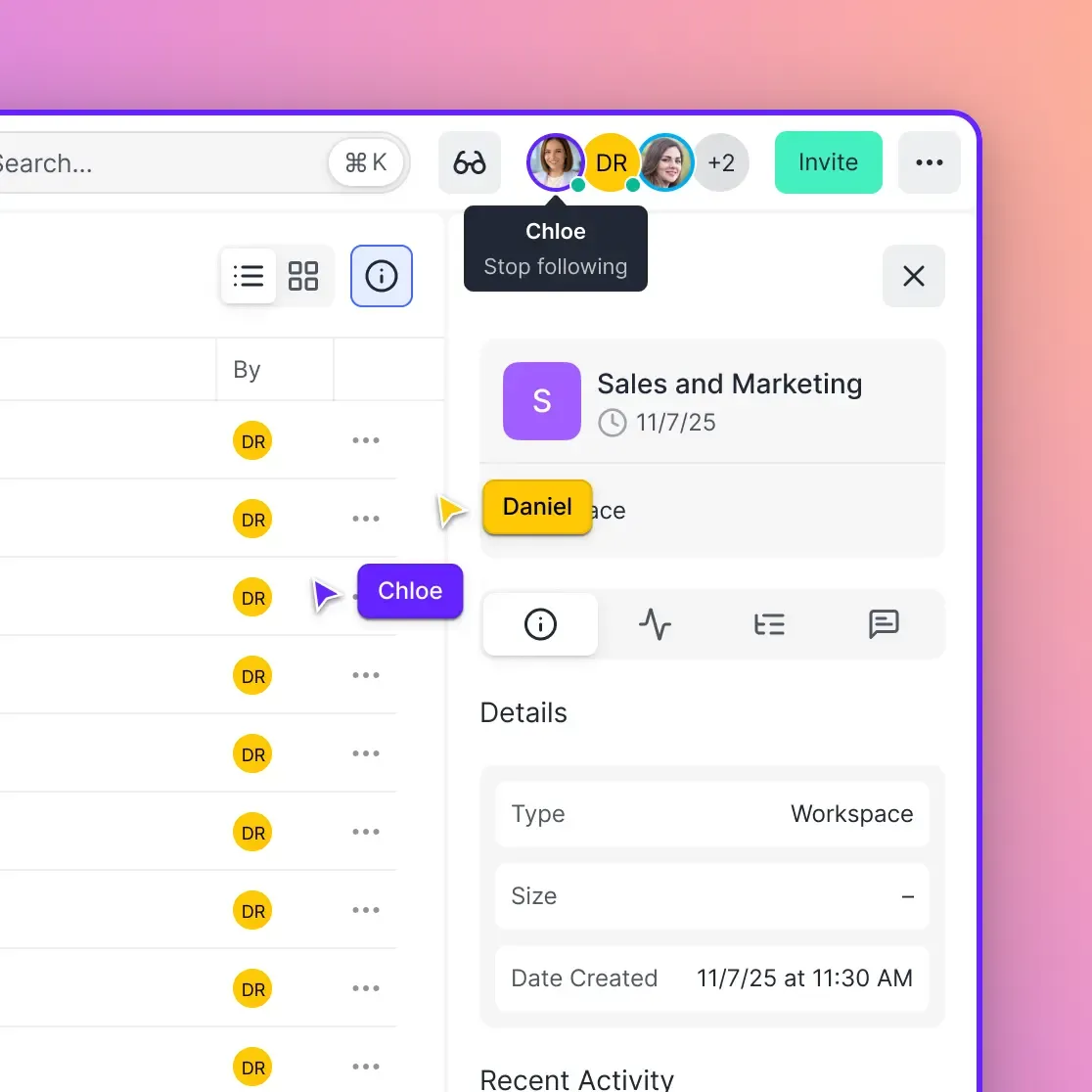


Organize your content assets in one searchable workspace
Cloud workspaces with AI-powered search once Intelligence is enabled for your content library.
Video and Audio Production Tools
Video and audio production is where AI saves the most time. Automated editing, clip extraction, voice generation, and text-to-video have compressed hours of post-production into minutes.
6. Runway
Runway's Gen-4 Turbo model generates video clips from text prompts or reference images, and the Aleph editor handles video-to-video transformations like relighting, object insertion, and camera angle changes. In 2026, Runway functions as a multi-model marketplace: one subscription gives you access to Runway's own models alongside Google Veo, Kling, Seedance, FLUX, and Seedream.
Key strengths:
- Text-to-video and image-to-video generation at up to 4K resolution with character consistency across scenes
- Multi-model access lets you pick the best generator for each shot without paying for separate subscriptions
- Browser-based with real-time collaboration and no software installation required
Limitations:
- Credits expire monthly and don't roll over, so unused capacity is wasted
- At 25 credits per second of Gen-4.5 video, the Standard plan (625 credits) produces only about 25 seconds of top-tier output per month
Best for: YouTubers and marketers who need AI-generated B-roll, intros, or visual effects without a full production team.
Pricing: Free (125 one-time credits). Standard $15/month. Pro $35/month. Unlimited $188/month.
7. Descript
Descript turns video and audio editing into word processing. It transcribes your media, and you edit the transcript to cut the footage. Delete a sentence from the text, and the corresponding video or audio disappears. Studio Sound 4.0 handles audio cleanup automatically, and Overdub 3.0 lets you clone your voice to fix mistakes without re-recording.
Key strengths:
- Transcript-based editing cuts talking-head and podcast editing time by an estimated 60-70% compared to timeline scrubbing
- One-click filler word removal strips every "um," "uh," and "like" across an entire project
- Voice cloning generates corrections in your own voice from just 3 minutes of training audio
Limitations:
- Not designed for complex multi-track compositions or motion graphics work
- AI features work best with clear speech and limited background noise
Best for: Podcasters, YouTubers, and anyone editing interview or talking-head footage.
Pricing: Free plan available. Hobbyist $24/month. Creator $35/month. Business $65/month.
8. Opus Clip
Opus Clip takes long-form video and automatically identifies the most engaging moments, clips them, adds captions, and formats them for vertical platforms. AI virality scoring ranks which clips are most likely to perform well on TikTok, YouTube Shorts, and Instagram Reels.
Key strengths:
- AI identifies clip-worthy moments and ranks them by predicted engagement
- Automatic captioning and vertical reframing handle the tedious parts of repurposing
- Pro plan includes multi-platform auto-posting to YouTube, TikTok, and Instagram
Limitations:
- Output quality depends on the source video having clear, engaging speech
- Free plan includes watermarks and limited caption style options
Best for: Podcasters and long-form YouTubers repurposing content for short-form platforms.
Pricing: Free (60 credits/month). Starter $15/month. Pro $29/month.
9. ElevenLabs
ElevenLabs generates realistic AI voices from text. You can use pre-built voices or clone your own for narration, voiceovers, and podcast production. The platform supports 29 languages and offers emotional tone controls including whisper, excitement, and conversational delivery.
Key strengths:
- Voice quality is the closest to natural human speech among current AI voice generators
- Voice cloning creates a usable replica of your voice for consistent narration across episodes
- Multi-language support lets creators localize content without hiring voice actors for each language
Limitations:
- Free plan lacks commercial licensing, so monetized content requires at least the $5/month Starter plan
- Long-form narration can drift in pacing and emphasis over extended passages
Best for: Podcasters, audiobook creators, and YouTubers who need professional voiceovers.
Pricing: Free tier. Starter $5/month. Creator $22/month (about 100 minutes of TTS). Pro $99/month.
What to Look for in Asset Management Tools
Producing content is half the job. The other half is organizing finished assets, sharing them with collaborators or clients, and keeping track of what's been published where.
Most creators default to Google Drive or Dropbox for file storage. These work for basic storage, but they weren't designed for content workflows. You end up with scattered share links, no contextual search across files, and manual organization that scales poorly as your library grows.
S3 and similar object storage services solve the cost problem for large media libraries but add technical complexity that most creators don't want to manage.
10. Fastio
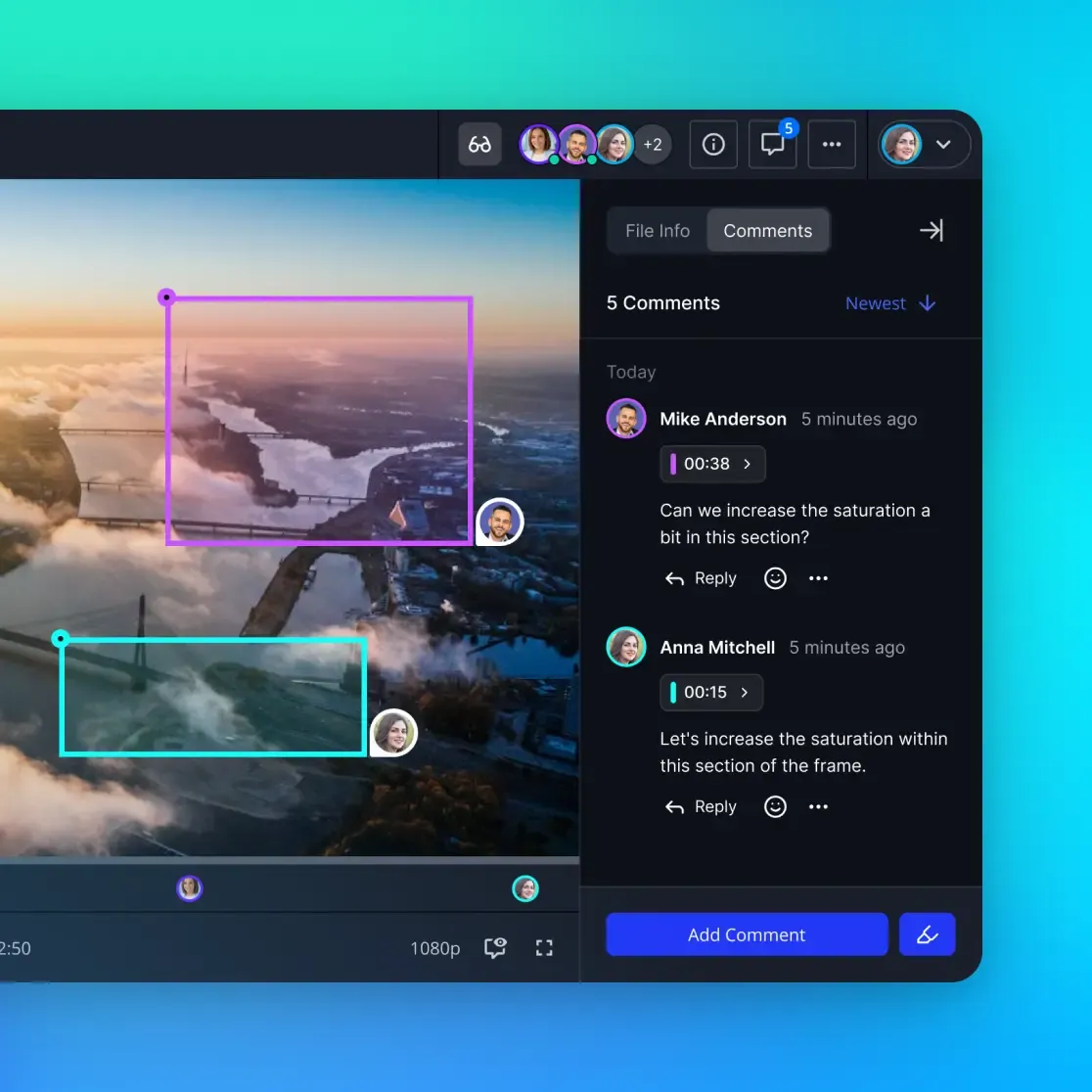
Fastio is a workspace platform where files are automatically indexed for AI search and chat once Intelligence is enabled. Upload a batch of videos, scripts, and graphics, and you can ask the workspace questions about your own content library. It also supports branded share links for client delivery, file versioning, and granular permissions down to the folder level.
For creators working with AI agents or automation tools, Fastio exposes an MCP server that lets agents read, write, and organize files in the same workspaces humans use. An agent can generate content, upload it, and a human reviews and distributes it from the same place.
Key strengths:
- Once Intelligence is enabled, uploaded files are auto-indexed for semantic search and AI chat with citations
- Branded shares (Send, Receive, Exchange) give clients a polished delivery experience
- Every plan includes seats, storage (250 GB to 25 TB by plan), workspaces, and a monthly credit allowance for AI work
Limitations:
- No built-in editing tools for images, video, or text. It's a workspace and delivery platform, not an editor.
- Smaller third-party integration ecosystem than Google Drive or Dropbox
Best for: Creators and agencies who need organized asset delivery, AI-powered file search, and client-facing share links.
Pricing: Starter is $9.99 per month ($99 per year) with 3 seats, 250 GB, and 100,000 credits. Business is $49.99 per month ($499 per year) with 10 seats, 5 TB, and 600,000 credits. Storage and seats come with the plan, while credits meter AI work. Overage is $10 per 100,000 credits. Monthly plans start with a Business Trial of up to 14 days (credit card required); annual plans have no trial.
How to Build a Complete AI Content Stack
The right combination depends on what kind of content you produce and where you spend the most time.
If you're a YouTuber: ChatGPT for scripting, Midjourney or Canva for thumbnails, Descript for editing, Opus Clip for pulling Shorts from long-form uploads. Four tools covering the full cycle from idea to distribution.
If you're a podcaster: ChatGPT for show prep and episode outlines, Descript for editing and transcript cleanup, ElevenLabs if you need intro/outro voiceovers or want to produce localized versions, Opus Clip for highlight clips.
If you're a blogger or writer: Perplexity for research and fact-checking, ChatGPT or Jasper for drafting, Canva for feature images and social graphics.
If you run a content agency: Jasper for on-brand copy at scale, Canva for client-ready designs, Fastio for organizing deliverables and sharing them through branded portals. The AI-powered search across workspaces means you can find any asset by describing what you need rather than remembering which folder it lives in.
The biggest productivity gain doesn't come from any single tool. It comes from covering every stage of your workflow instead of forcing one AI to do everything. Start with the stage where you lose the most hours and expand from there.
Sources
References used to verify factual claims in this guide.
-
85% of marketers now use AI for content creation, up from 61% in 2023
-
Creator economy valued at $234.65 billion in 2026
-
Content teams report 62% faster content production with AI assistance
-
Gen-4.5 video costs 25 credits per second on Runway
-
Midjourney V8.1 released April 30, 2026 with HD 2K support
Frequently Asked Questions
What AI tools do content creators use most?
The most widely adopted categories are AI writing assistants like ChatGPT and Jasper, design tools like Canva and Midjourney, and video editors like Descript and Opus Clip. According to Hootsuite, 85% of marketers now use at least one AI tool in their content workflow. Most creators combine 2-4 tools to cover different stages of production rather than relying on a single platform.
What is the best AI tool for creating content?
No single tool covers every content type. ChatGPT is the most flexible for writing and brainstorming across formats. Midjourney produces the highest-quality AI-generated images. Descript is the fast way to edit spoken-word video and podcast audio. The best approach is picking one tool per workflow stage rather than expecting any single platform to handle everything.
Can AI replace content creators?
AI handles production tasks like drafting, editing, and formatting faster than humans, but it doesn't replace creative direction, personal experience, or audience understanding. Creators who use AI as a production accelerator are outperforming those who either ignore these tools or hand off creative decisions entirely. The role is shifting from execution toward direction and curation.
What AI tools are best for YouTube?
YouTube creators benefit most from ChatGPT for scriptwriting, Midjourney or Canva for thumbnails, Descript for editing spoken-word footage, and Opus Clip for turning long videos into Shorts. ElevenLabs adds professional voiceovers without recording. For organizing raw footage, final cuts, and thumbnails, Fastio provides searchable workspaces with branded share links for client delivery.
How much do AI content creation tools cost?
Most tools offer free tiers with limited usage. Paid plans typically start between $5 and $20 per month for individual creators. A full toolkit covering research, writing, design, and video editing runs roughly $50-100 per month total, which is less than hiring freelancers or buying traditional software suites. Canva, ChatGPT, Descript, and ElevenLabs all offer usable free plans. Fastio plans start at $9.99 a month for Starter, with a 14-day Business Trial that requires a credit card.
Related Resources

Organize your content assets in one searchable workspace
Cloud workspaces with AI-powered search once Intelligence is enabled for your content library.