8 Best AI Image Generators in 2026, Tested and Compared
AI image generators improved drastically between 2025 and 2026, with text rendering going from broken to production-ready and editing capabilities catching up to generation quality. We tested eight generators with identical prompts across photorealism, illustration, text-heavy design, and product photography. This guide ranks each tool by what it actually does well, with verified pricing and honest trade-offs.


How We Evaluated These Generators
Most AI image generator roundups test one prompt and declare a winner. That misses how these tools actually perform across different use cases. We tested eight generators against four prompt categories: photorealistic portraits, product photography, text-heavy designs, and stylized illustration.
Each tool was scored on five criteria:
- Photorealism: Can the output pass as a real photograph at full resolution?
- Prompt accuracy: Does the image match what you asked for, or does the model hallucinate extra elements?
- Text rendering: Can it spell words correctly and place them where you want?
- Speed and pricing: How fast does it generate, and what does a working plan actually cost?
- Editing flexibility: Can you modify parts of an image without regenerating the whole thing?
Here's the ranked list:
- GPT Image 2 (ChatGPT): best overall quality
- Google Imagen 4 (Gemini): best free option
- Midjourney v7: best for artistic style
- Ideogram 3.0: best for text in images
- FLUX Kontext: best for image editing
- Recraft V4: best for vector and brand work
- Adobe Firefly: best for Photoshop integration
- Stable Diffusion 3.5: best for local/open-source control
Since mid-2022, over 15 billion AI images have been created across major platforms, according to Everypixel's tracking data. The tools generating those images have changed . Text rendering moved from "alien hieroglyphics" to production-ready. Editing capabilities now match generation quality. And platform bundling is replacing the old model of stitching together five separate subscriptions.
Related guides
- Best AI Music Generators in 2026: 10 Tools Tested and ComparedAI music generators have matured past the novelty stage. Tools like Suno, Udio, and AIVA now produce tracks that pass...
- Best AI Photo Enhancers in 2026: 8 Tools Tested and ComparedVSCO's 2026 Photographers + AI report found that 83% of photographers use AI in their workflow, but only 48% have tried...
- Best AI Voice Generators in 2026: 10 Tools Tested for Creators and DevelopersAI voice generators have split into two camps: studio tools for content creators who need polished narration, and...
- Best Free AI Image Editors You Can Use Right NowOver 61% of marketers now use AI tools for visual content, but most still pay for editing features that free...
- InVideo AI Review 2026: 7 Features We Tested and What They CostInVideo AI crossed $70M in annual recurring revenue within 18 months of its AI pivot, but rapid growth doesn't...
- Best AI Writing Tools in 2026: 9 Options Tested by Use CaseAI writing tools have split into two camps: general-purpose assistants like ChatGPT and Claude that handle most tasks,...
More on this subject: AI Content and Media Generation (46 guides)
How These Generators Compare
The Top 8 AI Image Generators
1. GPT Image 2 (ChatGPT)
OpenAI's GPT Image 2, released in April 2026, sits at the top of every major benchmark. It scored 1,512 on the Arena.ai Text-to-Image leaderboard, a 242-point lead over the second-place model. That's the largest gap the image leaderboard has ever recorded.
The practical difference: GPT Image 2 handles conversational refinement better than anything else available. You generate an image, describe what you want changed in plain language, and the model edits it accurately. For teams that iterate on visuals through feedback rounds, this saves significant time.
Key strengths:
- Highest benchmark scores across text-to-image, single-image edit, and multi-image edit
- Conversational editing lets you refine images through natural language instead of re-prompting from scratch
- Strong text rendering, accurate enough for social media graphics and presentation slides
- Integrated into ChatGPT, so you can combine image generation with research, writing, and data analysis
Limitations:
- Generates one image at a time (no batch generation)
- Slower than competitors, typically 10-15 seconds per image
- Free tier is limited to roughly 10 images per day
Best for: Teams that need the highest quality output and iterate through feedback, not one-shot prompting.
Pricing: Free with ChatGPT (limited). ChatGPT Plus at $20/month. Pro at $200/month for higher limits.
2. Google Imagen 4 (via Gemini)
Google's Imagen 4 comes in three variants: Fast ($0.02/image via API), Standard ($0.04), and Ultra ($0.06). All three generate images at up to 2K resolution with SynthID watermarking built in. You can access Imagen 4 for free through Google Gemini, where it's powered by the Nano Banana 2 model that currently ranks second on the Arena leaderboard.
The free tier is genuinely useful. Google Gemini gives you around 20 free image generations per day, and the output quality is competitive with paid tools. For anyone not ready to commit $20/month to image generation, this is the place to start.
Key strengths:
- Best free option available, with quality that rivals paid competitors
- 2K resolution output across all tiers
- Fast mode generates images in under 3 seconds
- API pricing starts at just $0.02 per image for high-volume workflows
Limitations:
- Prompt adherence is less consistent than GPT Image 2 or Ideogram
- Free-tier outputs include watermarks
- Editing capabilities lag behind FLUX Kontext and GPT Image 2
Best for: Budget-conscious creators who need solid quality without a monthly subscription.
Pricing: Free via Google Gemini (20 images/day). Google AI Plus at $7.99/month. API pricing from $0.02 to $0.06 per image.
3. Midjourney v7
Midjourney remains the aesthetic benchmark in AI image generation. Version 7, released in early 2026, brought measurably better photorealism. In standardized testing, v7 produced more photorealistic outputs than v6 in 23 of 30 prompt tests, with sharper skin textures, more accurate fabric rendering, and improved shadow detail.
The core upgrade is Omni Reference, which replaced the previous character reference system. Omni Reference keeps character appearances consistent across multiple generations, which matters for anyone building visual narratives, storyboards, or marketing campaigns with recurring characters.
Key strengths:
- Best aesthetic quality for concept art, editorial visuals, and mood boards
- Omni Reference maintains character consistency across generations
- Deep control over style, aspect ratio, and composition
- Full commercial use rights on all paid plans
Limitations:
- Midjourney has no free tier. Basic plan starts at $10/month
- Interface still runs through Discord (web app available but less polished)
- All generations are public by default unless you're on Pro ($60/month) or above
Best for: Art directors, concept artists, and marketing teams who prioritize visual quality over speed.
Pricing: Basic $10/month, Standard $30/month, Pro $60/month, Mega $120/month. Annual billing saves 20%.
4. Ideogram 3.0
Ideogram's defining strength is text rendering. If you need an image with readable, correctly spelled text, Ideogram 3.0 handles it better than any other generator. This makes it the go-to for social media graphics, event posters, book covers, and any design where typography is part of the composition.
Version 3.0, released in March 2025, added Style References that let you upload up to three reference images to control the aesthetic of your generations. The model offers four style types and three rendering speed tiers (Turbo, Default, Quality), so you can trade speed for fidelity depending on the project.
Key strengths:
- Best text rendering of any AI image generator, handles complex and lengthy text compositions
- Style References let you maintain visual consistency by uploading example images
- Free tier gives you 10 prompts per day (roughly 40 images)
- Resolution grid covers everything from 512px portrait to 1536px landscape
Limitations:
- Free-tier images are public by default
- Photorealism trails GPT Image 2, Imagen 4, and Midjourney
- Fewer editing capabilities compared to conversational tools like ChatGPT
Best for: Graphic designers, social media managers, and anyone who needs reliable text inside AI-generated images.
Pricing: Free (10 prompts/day). Basic $7/month (400 prompts). Plus $15/month (1,000 prompts). Pro $42/month (3,000 prompts). Annual billing saves about 40%.
5. FLUX Kontext
FLUX Kontext, built by Black Forest Labs, focuses on image editing rather than generation from scratch. You provide an existing image and describe changes in natural language, and the model modifies specific parts without regenerating the whole thing. It preserves character identity, facial features, and style across edits with high accuracy.
The model comes in three variants: Dev (open-weight, for developers), Pro (balanced performance), and Max (highest quality). Generation takes 6-12 seconds per edit. For teams that work with existing assets like product photos, headshots, or brand visuals, FLUX Kontext handles modifications that would otherwise require a Photoshop session.
Key strengths:
- Precision editing: modify specific parts of an image while preserving everything else
- Character consistency is maintained across edits and scene changes
- Dev model is open-weight, so you can self-host for privacy or cost control
- Handles background changes, object removal, color adjustments, and text swaps
Limitations:
- Primarily an editing tool, not a text-to-image generator
- Pricing is pay-per-use through third-party platforms (fal.ai, Replicate, etc.)
- Requires more technical setup than ChatGPT or Midjourney
Best for: Product photographers, e-commerce teams, and developers who need programmatic image editing.
Pricing: Pay-per-use via API platforms. Typical cost is $0.04-$0.10 per generation. Dev model is free to self-host.
6. Recraft V4
Recraft is the only AI image generator that produces actual vector files with real paths and anchor points. Every other tool on this list generates raster images. If you need SVGs for logos, icons, or brand assets, Recraft skips the trace-and-cleanup step entirely.
Beyond vectors, Recraft V4 includes background removal, upscaling, inpainting, and mockup generation. Brand consistency controls let you define colors, styles, and typography rules that apply across all your generations.
Key strengths:
- Native SVG/vector output that opens clean in Illustrator or Figma
- Brand consistency tools for maintaining style across assets
- Bundled editing features (background removal, upscaling, inpainting)
- Design-set generation creates multiple matching assets in one go
Limitations:
- Free-tier images are public
- SVG paths sometimes need cleanup before production use
- Less effective for photorealistic image generation
Best for: Brand designers, icon designers, and teams producing scalable visual assets.
Pricing: Free (50 credits/day, public). Basic $10/month. Advanced $27/month. Pro $48/month.
7. Adobe Firefly
Firefly's strength isn't standalone image generation. It's the integration with Photoshop, Illustrator, and Adobe Express. Generative Fill, Generative Expand, and Text Effects work directly inside the apps designers already use, which eliminates the export-import cycle that plagues every other tool on this list.
Adobe also offers something competitors don't: IP indemnification on paid plans. Firefly is trained on Adobe Stock, openly licensed content, and public domain material. For enterprise teams worried about copyright exposure, that training data provenance is a real differentiator.
Key strengths:
- Native integration with Photoshop, Illustrator, and Express
- IP indemnification on paid plans, trained on licensed content only
- Access to partner models from Google, OpenAI, and FLUX alongside Adobe's own
- Firefly Boards for collaborative concept exploration
Limitations:
- Standalone image quality trails Midjourney and GPT Image 2
- Advanced features consume credits that run out quickly on lower tiers
- Full value requires an existing Creative Cloud subscription
Best for: Professional designers already in Adobe Creative Cloud who want AI without switching tools.
Pricing: Standalone Standard $9.99/month (2,000 credits). Creative Cloud Single App $23/month. All Apps $60/month.
8. Stable Diffusion 3.5
Stable Diffusion is the open-source option. You download the model, run it on your own hardware, and generate images with no per-image cost, no usage limits, and complete privacy. Version 3.5 improved coherence and detail over 3.0, though it still requires meaningful GPU hardware and technical knowledge to set up.
The trade-off is clear: you get total control and zero ongoing cost, but you need the hardware (a GPU with at least 8GB VRAM) and the willingness to manage your own setup. Community tools like ComfyUI and Automatic1111 make this more accessible than it sounds, but it's still not a browser-tab experience.
Key strengths:
- Fully open source with no per-image cost
- Complete privacy, nothing leaves your machine
- Massive community of fine-tuned models, LoRAs, and extensions
- No content restrictions beyond what you choose to enforce
Limitations:
- Requires a capable GPU (8GB+ VRAM recommended)
- Setup and maintenance demand technical comfort
- Output quality trails cloud-hosted competitors without fine-tuning
- No built-in editing workflow
Best for: Developers, hobbyists, and privacy-conscious users who want full control over their generation pipeline.
Pricing: Free (self-hosted). Hardware cost is the main expense. Cloud GPU hosting available through services like RunPod and Vast.ai for $0.20-$0.50/hour.
What to Know About Commercial Licensing
One of the most common questions about AI image generators is whether you can use the output commercially. The short answer: yes, on paid plans. But the details matter.
Most platforms grant full commercial rights to images you generate on paid subscriptions. Midjourney, ChatGPT (Plus and above), Ideogram (paid plans), and Adobe Firefly all explicitly permit commercial use in their terms of service. Free tiers are more restrictive. Some platforms make free-tier images public or limit commercial rights.
Adobe Firefly stands apart on the legal side. Because it's trained exclusively on Adobe Stock, openly licensed content, and public domain material, Adobe offers IP indemnification on paid plans. If a Firefly-generated image triggers a copyright claim, Adobe covers the legal costs. No other major generator offers this.
The copyright status of AI-generated images remains legally complex. In the US, the Copyright Office has ruled that purely AI-generated images without meaningful human creative input cannot receive copyright protection. However, AI-assisted works with sufficient human involvement can be copyrighted. This means you can use AI images commercially, but you can't stop someone else from using the same image.
For teams producing commercial assets, two practical steps: first, check the specific platform's terms of service for your plan tier. Second, add enough human editing and creative direction to strengthen any copyright claim over the final work.
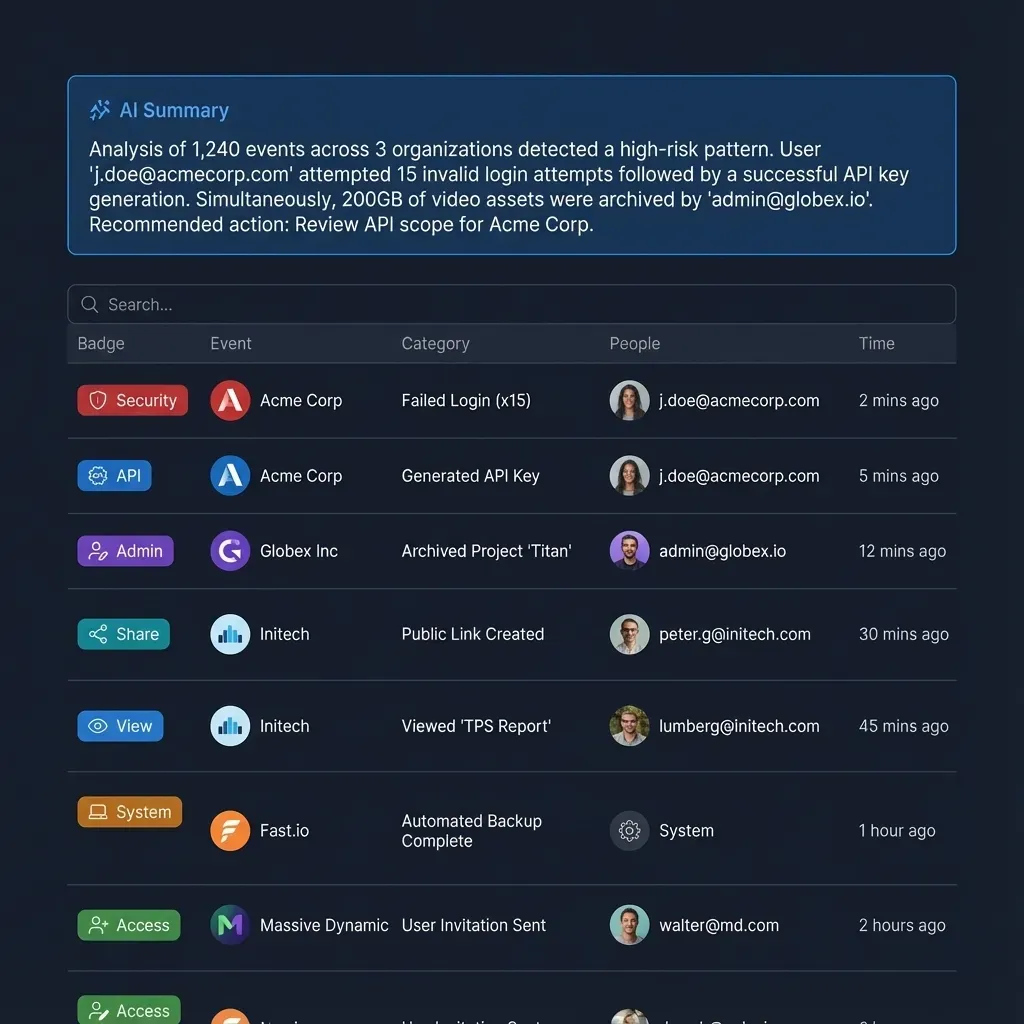
Managing Generated Assets at Scale
Generating a single image is easy. Managing hundreds of generated assets across a team is where most workflows break down. When designers, marketers, and content teams all generate images independently, you end up with duplicate files scattered across local drives, Slack threads, and email attachments.
The problem gets worse with AI images specifically because you need to track which prompt produced which image, which version was approved, and whether the commercial license covers your use case.
For individual creators, local folders with a consistent naming convention work fine. Google Drive or Dropbox handle basic team sharing. But when you need version history, granular permissions, and the ability for AI agents to generate and organize assets programmatically, you need something built for that workflow.
Other solid options for asset management include Brandfolder for enterprise brand asset libraries, Air for visual-first creative teams, and Bynder for organizations that need approval workflows baked into the DAM. The right choice depends on whether you need agent-level API access, human-only workflows, or a mix of both.
Which Generator Should You Pick?
The "best" generator depends entirely on what you're making and how much you want to spend.
Start here if you want the best output quality: GPT Image 2 via ChatGPT Plus ($20/month). The Arena leaderboard scores aren't just benchmark trivia. The conversational editing workflow saves real time when you're iterating on visuals with stakeholders.
Start here if you want a free option that's actually good: Google Imagen 4 via Gemini. Twenty free images per day, competitive quality, and no watermarks on paid plans. The $7.99/month Google AI Plus plan is the cheapest paid option with real capability.
Start here if aesthetics matter most: Midjourney v7. Nothing else matches it for mood, composition, and artistic flair. Worth the $10/month if you care about how images feel, not just whether they're technically accurate.
Start here if you need text in your images: Ideogram 3.0. The free tier is generous (10 prompts/day), and text rendering is genuinely reliable. If you make social graphics, posters, or any design with embedded text, start here.
Start here if you edit more than you generate: FLUX Kontext. It modifies existing images with precision that other tools can't match. The open-weight Dev model makes it accessible for developers.
Start here if you need vectors: Recraft V4. The only option that produces real SVG output. Everything else is raster.
Start here if you're in Adobe Creative Cloud: Firefly. The IP indemnification alone justifies it for commercial work, and the native Photoshop integration removes friction.
Start here if you want full control: Stable Diffusion 3.5. Free, private, and infinitely customizable. Bring your own GPU.
For teams generating images at volume, the real bottleneck isn't generation quality anymore. It's organizing, versioning, and distributing those assets. Whatever generator you pick, pair it with a storage and collaboration layer that supports both human review and programmatic access. Your future self will thank you when you're searching for that one approved version among 200 generated variants.
Sources
References used to verify factual claims in this guide.
-
Over 15 billion AI images have been created since mid-2022 across major platforms
-
GPT Image 2 scored 1,512 on the Arena.ai Text-to-Image leaderboard, a 242-point lead over the second-place model
-
Midjourney v7 produced more photorealistic outputs than v6 in 23 of 30 standardized prompt tests
Frequently Asked Questions
What is the most realistic AI image generator in 2026?
GPT Image 2 currently produces the most realistic AI images, scoring 1,512 on the Arena.ai leaderboard with a 242-point lead over the next closest model. Google Imagen 4 and Midjourney v7 follow closely, with Imagen 4 excelling at fast photorealistic output and Midjourney v7 producing the most aesthetically refined results. For free photorealism, Google Imagen 4 via Gemini is the strongest option.
Is Midjourney still the best AI image generator?
Midjourney v7 is still the best for aesthetic quality and artistic style. It produces images with better mood, composition, and visual flair than any competitor. But for raw photorealism and benchmark scores, GPT Image 2 has taken the overall lead as of April 2026. Midjourney also has no free tier, so budget-conscious users may prefer Imagen 4 via Google Gemini.
Which AI image generator is completely free?
Google Imagen 4, accessible through Google Gemini, offers about 20 free image generations per day with competitive quality. Ideogram 3.0 offers 10 free prompts per day (roughly 40 images). Stable Diffusion 3.5 is fully free if you self-host it on your own hardware. Among these, Google Gemini offers the best balance of quality and daily limits without requiring any technical setup.
Can I use AI-generated images commercially?
Yes, most AI image generators grant commercial use rights on paid plans. Midjourney, ChatGPT Plus, Ideogram (paid tiers), and Adobe Firefly all explicitly permit commercial use. Adobe Firefly goes further by offering IP indemnification because its training data comes from licensed sources. Free tiers often have restrictions. Check your specific platform's terms of service, and consider adding human creative input to strengthen copyright claims over your final work.
How much do AI image generators cost in 2026?
Monthly costs range from free to $200 depending on the tool and plan. Google Gemini is the best free option. Ideogram Basic starts at $7/month. Midjourney Basic is $10/month. ChatGPT Plus is $20/month. Adobe Firefly standalone is $9.99/month. For API-based pricing, Google Imagen 4 starts at $0.02 per image and FLUX Kontext averages $0.04-$0.10 per generation. Self-hosted Stable Diffusion has no per-image cost but requires GPU hardware.
What happened to DALL-E 3?
DALL-E 3 was effectively replaced by GPT Image 2, which launched in April 2026. GPT Image 2 uses a different architecture and produces better results across photorealism, text rendering, and editing capability. If you're currently using DALL-E 3 through ChatGPT, you're already accessing GPT Image 2 on supported plans.