Best Free AI Video Generators in 2026: What You Actually Get for $0
Free AI video generators have improved dramatically in 2026, but "free" means wildly different things depending on the tool. Some give you 66 daily credits with watermarks. Others let you export clean 1080p clips with no account. This guide breaks down exactly what each free tier includes so you can pick the right tool without hitting a paywall mid-project.


How We Evaluated Free Tiers
Every tool on this list was evaluated on the same five criteria: daily or monthly generation limits, maximum video length, output resolution, watermark presence, and whether commercial use is allowed. We focused on what you can actually produce without entering a credit card.
A few things changed the landscape in early 2026. OpenAI shut down Sora entirely in April 2026, removing one of the most talked-about options from the market. Google made Veo 3.1 available to all Google account holders for free. And several newer tools like Seedance entered the space with aggressive free tiers designed to pull users away from incumbents.
One important note: free tiers change frequently. Credit amounts, watermark policies, and resolution limits can shift without notice. The data below reflects testing and official documentation as of May 2026.
Related guides
- Best AI Music Generators in 2026: 10 Tools Tested and ComparedAI music generators have matured past the novelty stage. Tools like Suno, Udio, and AIVA now produce tracks that pass...
- InVideo AI Review 2026: 7 Features We Tested and What They CostInVideo AI crossed $70M in annual recurring revenue within 18 months of its AI pivot, but rapid growth doesn't...
- 10 Best AI Tools for Content Creators in 202685% of marketers now use AI for content creation, up from 61% in 2023, yet most still limit AI to a single workflow...
- Best Free AI Video Editors for Quick Edits and ClipsFree AI video editors handle the repetitive parts of editing existing footage, from auto-captioning to background...
- Best Free AI Image Editors You Can Use Right NowOver 61% of marketers now use AI tools for visual content, but most still pay for editing features that free...
- Best AI Video Enhancers in 2026About 40% of video editors now use AI tools for color grading and noise reduction, but most buying guides still rank...
More on this subject: AI Content and Media Generation (46 guides)
Free Tier Comparison at a Glance
Before diving into individual tools, here is a quick reference for the free limits that matter most.
Google Veo 3.1 (via Flow)
- Credits: ~50 daily AI credits (roughly 12 videos/day)
- Max length: 8 seconds
- Resolution: 720p
- Watermark: Yes ("Made with Veo")
- Commercial use: No
Seedance 2.0
- Credits: 100 daily credits (refreshing)
- Max length: 4 seconds
- Resolution: Up to 1080p
- Watermark: No
- Commercial use: Yes
Kling 3.0
- Credits: 66 daily credits (3-6 standard videos)
- Max length: 5 seconds
- Resolution: 720p
- Watermark: Yes
- Commercial use: No
Hailuo AI (MiniMax)
- Credits: 3-5 generations/day
- Max length: 6 seconds
- Resolution: 720p
- Watermark: Yes
- Commercial use: No
Runway Gen-4
- Credits: 125 one-time credits (no refresh)
- Max length: Varies by credit spend
- Resolution: 720p
- Watermark: No
- Commercial use: No
Pika
- Credits: 150 at signup, daily replenishment
- Max length: 3-4 seconds
- Resolution: Below 1080p
- Watermark: Yes
- Commercial use: No
Luma Dream Machine
- Credits: ~30 generations/month
- Max length: Varies
- Resolution: 720p
- Watermark: Yes
- Commercial use: No
InVideo AI
- Credits: 10 AI minutes/week, 4 exports/week
- Max length: 10 minutes
- Resolution: 720p
- Watermark: Yes
- Commercial use: No
Which Free AI Video Generators Produce the Best Output?
1. Google Veo 3.1
Google's Veo 3.1 is the strongest free option for raw output quality. Available through Google Flow with any Google account, it generates cinematic-quality clips with synchronized audio from text prompts. You get roughly 50 daily AI credits through Flow, which translates to about 12 short videos per day depending on quality settings. Fast mode costs around 20 credits per video. Quality mode uses about 100.
The catch: free-tier videos are capped at 720p and carry a visible "Made with Veo" watermark. You cannot use them commercially. But for prototyping, storyboarding, or testing visual ideas, the quality-to-cost ratio is unmatched.
Best for: High-quality B-roll and concept testing with zero spend.
2. Seedance 2.0
Seedance carved out a niche as the go-to watermark-free option. You get 100 daily credits that refresh automatically. Output hits 1080p, and the platform explicitly grants commercial rights on all tiers.
Generation speed is fast, typically 30-45 seconds per clip. The main limitation is video length: free clips cap at 4 seconds. That is enough for social media loops and product shots, but not for anything narrative.
Best for: Watermark-free social clips and product videos.
3. Kling 3.0
Kling offers the most generous daily credit allotment among major commercial tools: 66 credits per day, refreshing daily. In standard mode, that gets you 3-6 five-second videos. Kling handles human motion and hand movements better than most competitors, which matters for any video featuring people.
The downsides: free-tier output is watermarked, locked to 720p, and cannot be used commercially. Peak-hour queue times can stretch past 30 minutes. But the daily refresh means you can run consistent experiments without worrying about burning through a one-time credit dump.
Best for: Daily video experiments, especially clips featuring people.
Mid-Tier Free Options
4. Hailuo AI (MiniMax)
Hailuo gives you 3-5 generations per day with daily resets. Generation speed is its standout feature, typically completing in under two minutes. The platform handles facial expressions and human motion well. Free output is 720p with a watermark.
Hailuo works best as a rapid iteration tool. If you need to test five different prompt approaches in an afternoon, the daily reset and fast generation let you move quickly. Just plan to re-render your final pick on a paid tier if you need clean output.
Best for: Quick iteration on character-focused scenes.
5. Pika
Pika takes a different approach than photorealism. Its strength is stylized, artistic video with a library of branded effects like crush, melt, inflate, and explode. You start with roughly 150 credits at signup, with a small daily replenishment after that. Free clips are 3-4 seconds, watermarked, and below 1080p.
If you are making content that leans creative or experimental rather than realistic, Pika's effects library gives it an edge that pure text-to-video tools lack.
Best for: Stylized effects and artistic content.
6. Luma Dream Machine
Luma's Dream Machine provides about 30 generations per month on the free tier. Generation is fast, often under 30 seconds. The tool produces solid cinematic output with keyframe interpolation that gives you some control over the visual arc of each clip.
The free tier restricts you to 720p, adds a watermark, and blocks commercial use. Thirty monthly generations is enough to evaluate the tool but not enough for production use.
Best for: Evaluating cinematic AI video quality before committing to a paid plan.
Budget-Friendly Alternatives
7. InVideo AI
InVideo AI takes a different approach entirely. Instead of generating pixels from scratch, it combines your prompts with its library of 16 million stock clips, adds AI voiceovers, and handles editing automatically. The free tier gives you 10 AI minutes per week and 4 exports, at 720p with a watermark.
This is the best option if you need talking-head style content or stock-footage compilations rather than generated video. The output feels more like a produced video and less like an AI experiment.
Best for: Stock-footage video compilations with AI voiceovers.
8. CapCut (Desktop)
CapCut's desktop version deserves mention because it offers unlimited exports at up to 4K resolution with no watermark. It is primarily an editing tool rather than a pure text-to-video generator, but it includes AI-powered features like auto-captions, templates, and basic generation capabilities.
If your workflow involves editing existing footage rather than generating from nothing, CapCut's free desktop tier is hard to beat.
Best for: Editing and enhancing existing video with AI features.
Open-Source: WAN 2.2 and LTX Video
If you have a GPU with 24GB or more of VRAM, open-source models remove every free-tier limitation. WAN 2.2 is the community favorite for self-hosted video generation. No watermarks, no daily caps, no credit system, and no terms-of-service restrictions on commercial use.
LTX Video is a lighter alternative that runs faster but produces lower quality output. Both works alongside ComfyUI workflows and support community-built LoRA extensions.
The tradeoff is obvious: you need hardware, you need setup time, and you are on your own for quality tuning. But for teams already running GPU workstations, the per-video cost approaches zero.
Best for: GPU-equipped teams who want full control and zero per-generation costs.
How to Manage AI Video Assets Across Multiple Tools
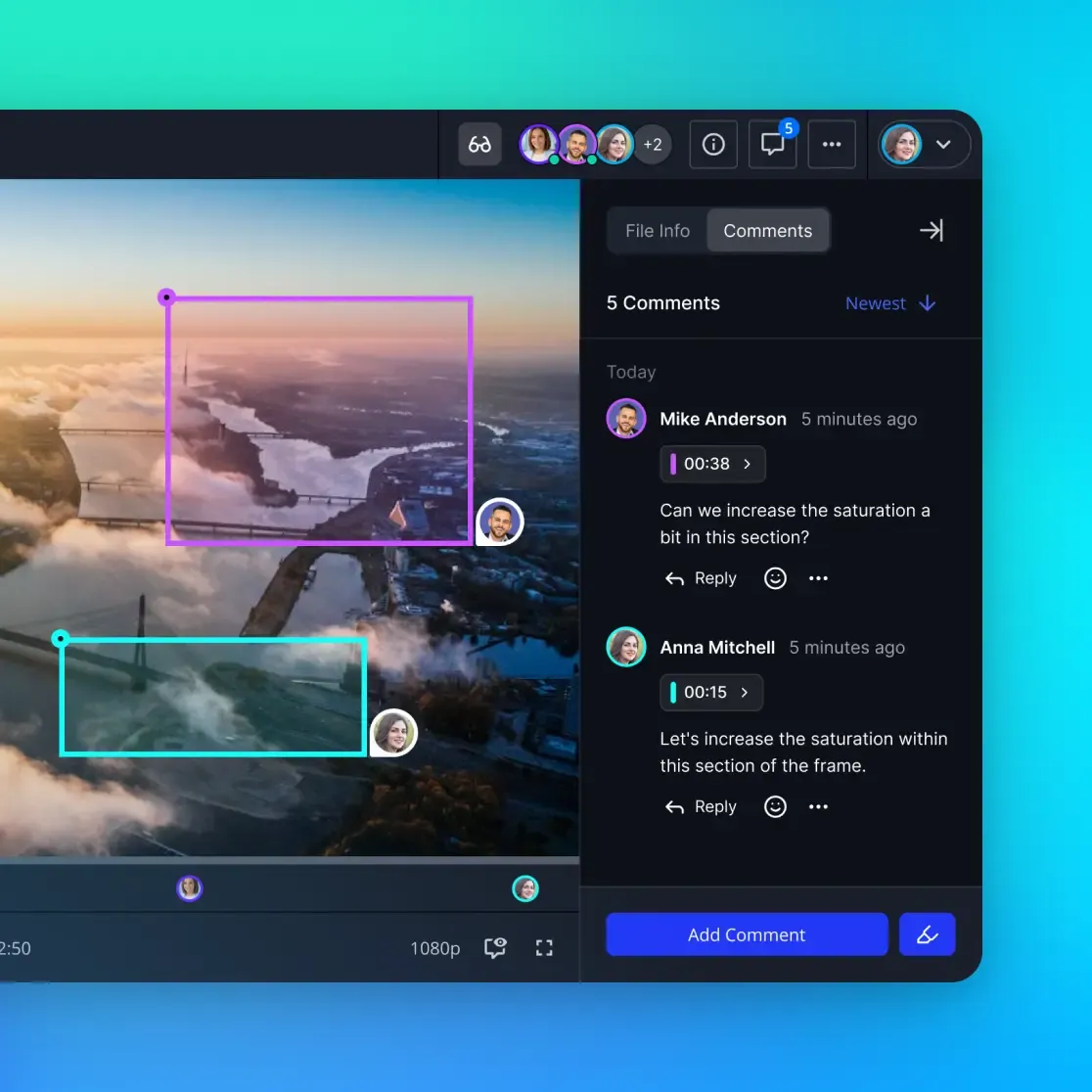
The practical challenge with free AI video generators is not generating clips. It is managing output across five different tools, each with different export formats, naming conventions, and resolution limits. Most teams testing free tiers end up with video files scattered across browser downloads, local folders, and cloud drives with no consistent organization.
A workspace approach helps. Rather than dumping exports into a downloads folder, set up a shared workspace where every generated clip gets versioned and tagged by tool, prompt, and resolution. This makes it straightforward to compare outputs across generators and find the right clip when you need it later.
Local storage, Google Drive, and Dropbox also work for smaller operations. The key is picking one central location before you start generating, not after your downloads folder has 200 unnamed clips.
Sources
References used to verify factual claims in this guide.
-
Google Veo 3.1 provides approximately 50 daily AI credits through Google Flow
-
Kling 3.0 free plan provides 66 credits per day
-
Seedance provides 100 daily credits with no watermark
-
OpenAI discontinued Sora on April 26, 2026 due to approximately $1 million per day in compute costs
-
Runway Gen-4 free tier provides 125 one-time credits that do not refresh
Frequently Asked Questions
What is the best completely free AI video generator?
Google Veo 3.1 through Google Flow offers the highest output quality on a free tier as of May 2026. You get roughly 50 daily credits with any Google account. Seedance 2.0 is the better choice if you need watermark-free output with commercial rights, offering 100 daily credits at 1080p with no watermark.
Can I make AI videos without paying?
Yes. Google Veo 3.1, Seedance, Kling 3.0, Hailuo AI, and Pika all offer free tiers that let you generate videos without a credit card. The limits vary widely, from Kling's 66 daily credits to Runway's 125 one-time credits that never refresh. Open-source options like WAN 2.2 have no limits at all if you have the GPU hardware to run them locally.
Do free AI video generators add watermarks?
Most do. Kling 3.0, Hailuo AI, Pika, Luma Dream Machine, and InVideo AI all watermark free-tier exports. The notable exceptions are Seedance 2.0 (no watermark on any tier), Runway Gen-4 (no watermark but limited free credits), and CapCut desktop (no watermark, unlimited exports). Google Veo 3.1 adds a 'Made with Veo' watermark on free and Pro tier videos.
What are the limitations of free AI video makers?
The most common limits are resolution caps (usually 720p), short maximum clip lengths (3-8 seconds), watermarks on exports, no commercial usage rights, and daily or monthly generation caps. Some tools like Runway give you a one-time credit dump that never refreshes, making the free tier more of a trial than an ongoing option.
What happened to Sora?
OpenAI shut down the Sora web app and all consumer-facing features on April 26, 2026. The company cited unsustainable compute costs, reportedly around $1 million per day, and declining user numbers. The Sora API will be discontinued on September 24, 2026. Sora is no longer an option for free or paid AI video generation.
Can I use free AI-generated videos commercially?
Only a few free tiers allow commercial use. Seedance 2.0 explicitly grants commercial rights on all tiers including free. Open-source models like WAN 2.2 have permissive licenses that allow commercial use. Most other tools, including Google Veo 3.1, Kling 3.0, Pika, and Luma Dream Machine, restrict free-tier output to personal use only.