How to Convert HEIC to JPG for Clay GTM Asset Pipelines
US searchers look up "heic to jpg" about 246,000 times a month, yet converter pages almost always stop at a ZIP download. Clay GTM teams still need durable JPG URLs, shared storage, and a way to call conversion endpoints from table rows. This guide covers conversion options, quality gates, and a practical Clay HTTP API pipeline with Fast.io as the collaborative asset layer.


Why HEIC still stalls Clay GTM asset handoffs
US searchers look up "heic to jpg" about 246,000 times per month, with keyword difficulty around 41, according to DataForSEO keyword metrics updated in July 2026. That demand looks like a simple format problem. For Clay go-to-market teams, it is usually a pipeline problem: iPhone field photos, event shots, and founder headshots arrive as HEIC, then stall in email tools, design apps, CRM image fields, or enrichment rows that expect a broadly compatible JPEG.
HEIC to JPG conversion turns Apple HEIF photos into JPEG files so GTM systems, email tools, and design apps can use them without compatibility errors. Apple adopted HEIF (High Efficiency Image File Format) for photos starting with iOS 11. Apple Support notes that HEIF and HEVC offer better compression than JPEG and H.264, so they use less storage while preserving the same visual quality. On supported iPhones and iPads, High Efficiency capture is the default path unless the user switches Camera Formats to Most Compatible, which writes new photos as JPEG.
That storage win becomes friction the moment a sales ops or marketing ops owner leaves the Apple ecosystem. Windows machines, many browser previews, ESP creative builders, and older design tools still mishandle HEIC. A Microsoft Tech Community thread from April 2026 is typical: an iPhone 16 Pro Max dump of roughly 1,000 HEIC files needed a fast batch convert path before the images were usable on Windows 10. One-off converter sites solve the click-to-download step. They rarely solve batch handoff into enrichment pipelines or collaborative storage for sales ops teams.
Clay sits in the middle of that handoff for many GTM desks. Clay is not a native HEIC converter. Clay University documents that HTTP API enrichment can send or retrieve data from any tool or database using an API endpoint, even when Clay has no native integration. That is the durable pattern: convert HEIC externally, store stable JPG assets where the team can share them, then reference the resulting URLs from Clay table rows for enrichment, research, and outbound personalization.
Related guides
- How to Use GitHub Copilot in GitLab CI/CD PipelinesRunning GitHub Copilot CLI in headless GitLab CI/CD pipelines allows development teams to run automated code reviews...
- How to Build RAG Pipelines with OpenClawOpenClaw RAG pipelines index documents into embeddings for semantic retrieval. This helps agents be more accurate with...
- How to Convert HEIC to PNG for Clay GTM Asset PipelinesUS searchers look up "heic to png" about 49,500 times a month, yet most converters stop at a browser download. Clay GTM...
- How to Convert PDF to JPG for Clay GTM Asset PipelinesUS searchers look up "pdf to jpg" about 201,000 times a month, yet most results stop at a one-click download. Clay GTM...
- How to Convert WebP to JPG for Clay GTM Asset PipelinesUS searchers look up "webp to jpg" about 110,000 times a month, yet most converter pages end at a ZIP download. Clay...
- How to Convert PDF to PNG for Clay GTM Creative AssetsUS searchers look up "pdf to png" about 74,000 times a month, yet most converters stop at a ZIP download. Clay GTM...
More on this subject: Clay and GTM Agents (82 guides)
Convert HEIC to JPG in five practical steps
If you only need the short path, use this sequence. It is the same flow whether you convert one founder photo or a folder of event images before a Clay campaign load.
- Collect HEIC sources. Pull photos from iPhone USB import, AirDrop, email attachments, shared drives, or a Receive share your field team uses after events.
- Convert to JPG. Use a batch HEIC converter, macOS Photos or Preview export, or a conversion API. Online tools such as FreeConvert and heictojpg.com handle browser uploads. FreeConvert documents drag-and-drop conversion, optional resize and EXIF controls, and automatic file deletion after a few hours. heictojpg.com advertises bulk conversion for large batches without installing desktop software.
- Run a quality checklist. Confirm orientation, resolution, color, file size, and filename conventions before anything touches Clay.
- Store the JPG assets in shared storage. Local folders and personal Google Drive downloads work for solo tests. For team GTM work, put approved JPGs in a shared workspace, S3 bucket, or Drive shared drive with a clear folder scheme.
- Reference durable URLs in Clay. Add a column for the public or permissioned JPG URL, then use that URL in enrichment, Claygent research prompts, or outbound personalization fields.
Desktop and OS options
On a Mac, Apple Support documents manual conversion from Photos or Preview: open the HEIF image, choose File > Export, and select JPEG before saving. That is fine for small batches and design review. For Windows bulk dumps, teams often use a dedicated HEIC converter or an API because Explorer and older Photos builds still create friction.
On iPhone, you can reduce future HEIC intake by setting Camera > Formats > Most Compatible so new captures write as JPEG. That helps outbound-heavy teams, but it does not fix the archive of High Efficiency photos already sitting on devices, in iCloud Photos, or in event folders from last quarter.
Online HEIC converter options
Browser converters are popular for ad hoc work because they require no install. FreeConvert supports HEIC to JPG with advanced settings such as auto-orient from EXIF gravity data, metadata stripping, and compression. heictojpg.com positions itself for high-volume free conversion and notes files are deleted after conversion. Both patterns are useful for marketing ops, but neither replaces a team asset library. Downloads land on one laptop. Clay rows and teammates still need a stable link.
API conversion for pipeline work
When conversion must run from a Clay table or a worker script, use a conversion API or a small service you control. The conversion endpoint accepts the HEIC file or a source URL, returns a JPG binary or a download URL, and logs success or failure per asset. Clay's HTTP API enrichment is designed for exactly this class of external call: choose method, endpoint, auth headers, body fields, rate limits, and field paths to return.
Quality checklist before Clay ingest
- Orientation: Correct EXIF rotation so portraits do not land sideways in email or CRM cards.
- Dimensions: Keep enough resolution for hero creative, but downscale oversized camera dumps that blow past ESP limits.
- File size: Target sizes your tools accept. Many outbound tools choke on multi-megabyte phone photos.
- Color and crops: Spot-check brand assets and product shots after lossy re-encode.
- Naming: Use stable names such as
acct-acme-founder-headshot.jpg, notIMG_4821.JPG. - Privacy: Strip location metadata when assets go into shared GTM folders or public shares.
Call conversion endpoints from Clay with HTTP API
Clay University's HTTP API guide is the official basis for this pattern. HTTP API lets you pull external data into a Clay table or push data out using any endpoint and method (GET, POST, PUT, DELETE). Common use cases in the docs include CRM pulls, marketing platform writes, database updates, and custom tools without a native Clay integration. Image conversion fits that last category when you already have a converter API.
Table design for asset rows
Build a dedicated Clay table for assets, not only people and companies. A practical column set:
asset_id: stable internal IDsource_heic_url: temporary source location for the original HEICaccount_name/contact_email: join keys back to your enrichment tableasset_type: headshot, event, product, office, otherjpg_url: final durable link after conversion and storageconversion_status: pending, success, failedwidth,height,bytes: optional fields returned by the converternotes: human review comments
Keep people enrichment and asset conversion in related tables when possible. That prevents a 20-column waterfall from mixing phone photos with firmographic providers.
Configure HTTP API enrichment
Clay documents two setup paths: AI-assisted Generate (Sculptor) and manual Configure. For a conversion endpoint, manual Configure is often clearer because you can see the body mapping.
- Open the assets table and click Add enrichment.
- Search for and select HTTP API.
- Choose method POST if the converter expects an upload or JSON job body.
- Enter the converter endpoint URL from the provider docs.
- Store auth in an HTTP API (Headers) account rather than pasting bearer tokens into plain Headers fields. Clay encrypts workspace-level header accounts and reuses them across columns.
- Map body fields from table columns, for example source URL, output format
jpg, and quality settings. - Set Field paths to return for the JPG URL and any status fields in the JSON response.
- Configure rate limits to match the converter API. Clay's docs use examples such as 10 requests per second when the provider allows it.
- Use conditional runs so the enrichment only fires when
source_heic_urlis present andjpg_urlis empty. - Test on one row, inspect the response, then run the table.
Example body shape for a URL-based converter (adapt field names to your provider):
{
  "source_url": "/Source HEIC URL",
  "output_format": "jpg",
  "auto_orient": true,
  "strip_metadata": true
}
Clay's docs stress JSON quoting rules: string column references need quotes, numbers do not. Test failures often come from body parse errors, missing auth, or rate limits. Fix those on a single row before spending credits on the full batch.
What not to invent in Clay
Clay templates catalog many GTM automations, from pre-call research to screenshot capture and outbound sequences. That catalog does not make Clay a built-in HEIC converter. Treat conversion as an external system of record for pixels, then use Clay as the orchestration layer that attaches the resulting JPG URLs to accounts, contacts, and campaign rows.
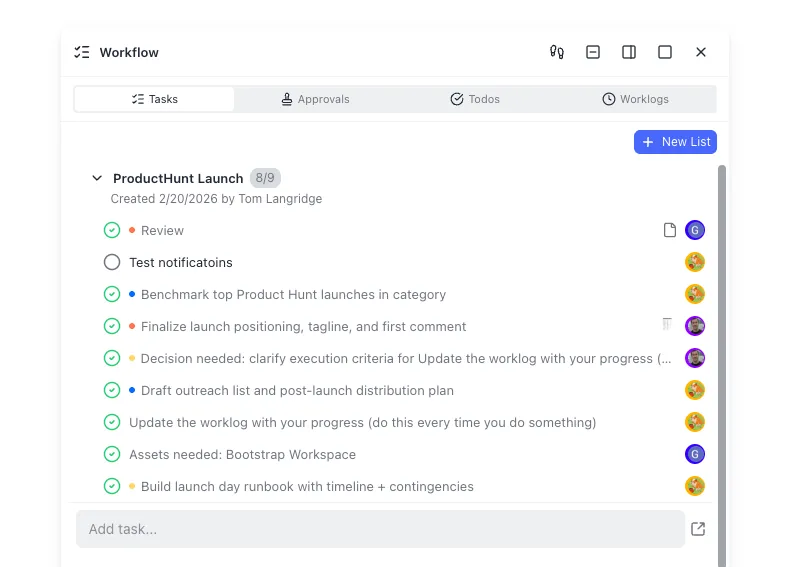


Keep Clay-ready JPG assets in one shared workspace
Store converted GTM photos in an org-owned Fast.io workspace with version history, Intelligence Mode search, and durable share links your Clay tables can reference. Start with a 14-day Business Trial.
Store approved JPGs where sales ops can actually reuse them
Conversion without storage recreates the original problem one format later. Someone still has a ZIP on a laptop, and Clay still has a dead local path.
Local disk is fine for a designer reviewing ten images. It fails when an SDR, a marketer, and an enrichment agent all need the same founder headshot next week.
Google Drive, Dropbox, or OneDrive are common next stops. Shared drives solve basic collaboration, but search is usually filename-first, permissions get messy across agencies, and there is little structure for agent access or immutable activity history.
Object storage such as Amazon S3 is durable and cheap at scale. Many engineering teams already host public marketing assets there. The tradeoff is operational: bucket policies, CDN wiring, and no native review surface for non-engineers.
Fast.io is a strong fit when the asset library is part of an agentic GTM workspace rather than only a static CDN folder. Create an org-owned workspace such as gtm-assets-2026, upload converted JPGs with chunked uploads for larger event dumps, and keep folder structure by account or campaign. Enable Intelligence Mode so files are indexed for semantic search and citation-backed chat. Sales ops can ask for "Acme founder headshot from the June field visit" instead of hunting through date folders.
For structured catalogs, use Metadata Views to extract fields such as account name, asset type, shoot date, brand color tags, and approved-for-outbound flags into a sortable grid. That is the structured extraction layer. Intelligence Mode remains the search and summarization layer.
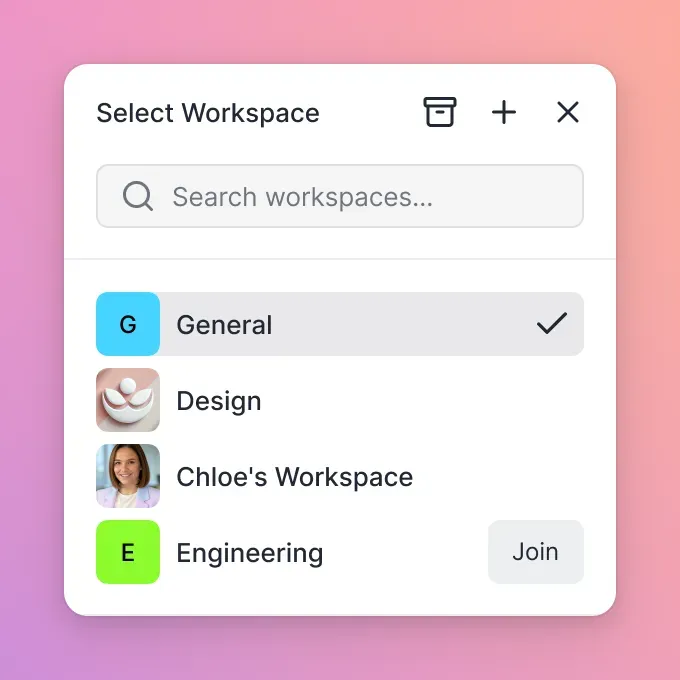
Permissions stay granular at org, workspace, folder, and file levels. Per-file version history matters when a designer replaces a crop or a conversion rerun improves quality. The activity log records who uploaded or replaced assets. Branded shares (Send, Receive, or Exchange) let agencies and freelancers contribute HEIC drops or pick up approved JPG packs without giving them full workspace admin rights. Receive shares are useful after trade shows when reps should upload phone photos without emailing multi-megabyte attachments.
Agents and humans can share the same workspace. An agent can upload converted JPGs through the API, write Collaborative Notes about review status, and transfer organization ownership to a human ops lead when the workspace is ready for billing control. Paid plans start at $9.99/mo with a 14-day Business Trial (credit card required). Details live on the pricing page and storage for agents overview.
Wire Clay rows to durable Fast.io asset URLs
Once JPGs live in shared storage, Clay should reference URLs, not binaries. Binary cells are hard to audit, hard to reuse across tables, and expensive to re-fetch.
- Include
heic_source_urlin your table. - Upload approved JPGs to Fast.io (or S3/Drive if that is your standard).
- Write the resulting
jpg_urlback to Clay through the Clay HTTP API, a webhook destination in your converter, or manual paste for short lists. - Downstream enrichments read
jpg_urlonly. If an image changes, update the storage file and keep the URL stable.
If upload is automated, a worker can watch conversion success events, push files into Fast.io, then POST the final URL back into Clay with another HTTP API enrichment or a reverse sync. Fast.io's WebSocket events feed or activity polling helps on the storage side: when a new file lands or a version changes, notify your worker so Clay rows update reliably.
Review and verification before sending outbound
Not every converted image should go live. Route sensitive or brand-critical assets through a review step before the Clay URL column is considered final. In Fast.io, comments and anchors sit beside the files: team members can anchor comments to specific image regions, track revisions in version history, and verify outputs. When the team confirms a version, update Clay once. That beats re-exporting HEIC five times because nobody knew which ZIP was current.
Failure modes to plan for
- Expired converter downloads: Browser converters often delete files after a few hours. Always re-host approved JPGs before the link dies.
- Auth mistakes in Clay: Prefer workspace header accounts over plain-text API keys in the Headers field.
- Rate limits: Batch event folders in waves. Clay supports request limit and duration settings on HTTP API enrichments.
- Mixed originals: Some phone dumps interleave HEIC and JPEG. Filter on extension before conversion to avoid double-encoding existing JPGs.
- Broken joins: If asset rows cannot join to accounts, the conversion succeeds but the GTM table never sees the image.
- Over-stripped metadata: Removing GPS is usually good. Removing color profile data can shift brand colors. Spot-check after strip operations.
Treat the end state as a small media system of record for GTM: originals archived if needed, JPGs approved and versioned, Clay holding only the URLs and status fields that enrichment workflows need.
Batch HEIC conversion patterns for marketing and sales ops
Can you batch convert HEIC for marketing workflows? Yes, and the right pattern depends on volume and privacy.
Small batches (under roughly 50 images): Online converters or macOS export are enough. Drop files, download JPGs, upload to shared storage, paste URLs into Clay.
Medium batches (event folders, quarterly content dumps): Use a desktop batch converter or a paid conversion API with folder watchers. Store results in a campaign folder, run Metadata Views or a spreadsheet log for inventory, then bulk-update Clay.
Ongoing pipelines: Reps and agencies drop HEIC into a Receive share or cloud folder. A worker converts new files, writes JPGs to Fast.io, and updates Clay asset rows through HTTP API. Conditional runs prevent re-processing rows that already have jpg_url.
For privacy-sensitive customer photos, prefer converters that delete uploads quickly, or run conversion inside infrastructure you control. FreeConvert states files are uploaded over HTTPS and deleted automatically after a few hours. That is still a third-party hop. Some teams keep originals off public converters entirely and only process anonymized product shots through SaaS tools.
Apple's share behavior is worth knowing for one-off collaboration: when you share HEIF media by AirDrop, Messages, or email and the receiver does not support the newer formats, Apple may automatically deliver a more compatible format such as JPEG. That helps casual handoffs. It does not replace a controlled conversion step for CRM libraries, paid media creatives, or Clay-driven personalization at scale.
The operational goal is boring reliability. Every account-facing image that enters a Clay GTM motion should resolve to a JPG URL that opens in a browser, loads in email builders, and survives the next teammate who was not on the original AirDrop thread.
Sources
References used to verify factual claims in this guide.
-
US search volume for the keyword "heic to jpg" is about 246,000 monthly searches with keyword difficulty around 41.
-
HEIF and HEVC offer better compression than JPEG and H.264, using less storage while preserving the same visual quality. Users can set iPhone Camera Formats to Most Compatible so new photos use JPEG instead of High Efficiency HEIF. On Mac, HEIF images can be exported to JPEG from Photos or Preview via File > Export.
-
Clay HTTP API enrichment can send or retrieve data from any tool or database using an API endpoint when no native integration exists. Clay supports GET, POST, PUT, and DELETE methods, workspace-level HTTP API header accounts, rate limiting, conditional runs, and single-row testing before full-table runs.
-
Clay publishes a library of GTM automation templates for workflows such as personalized pages, research, and outbound ops.
-
FreeConvert provides browser-based HEIC to JPG conversion with optional resize, EXIF auto-orient, metadata stripping, and automatic file deletion after a few hours.
-
heictojpg.com offers free bulk HEIC to JPG conversion in the browser without requiring an account for basic use.
-
Windows users commonly need batch HEIC to JPEG conversion after importing large iPhone photo libraries.
Frequently Asked Questions
How do I convert HEIC to JPG?
Upload or open the HEIC file in a converter, export or download as JPEG, then verify orientation and size. On Mac, Photos or Preview can export HEIF images to JPEG via File > Export. For bulk work, use a batch HEIC converter or conversion API, store the JPG in shared storage, and paste the durable URL into your Clay table.
Why do iPhone photos download as HEIC?
iPhone and iPad models that support High Efficiency capture save photos as HEIF/HEIC by default because the format uses less storage than JPEG at similar visual quality. Apple documents this under Camera Formats. Choosing Most Compatible writes new photos as JPEG, but existing HEIC libraries still need conversion for many non-Apple tools.
Can I batch convert HEIC for marketing workflows?
Yes. Online converters, desktop batch tools, and conversion APIs can process folders of HEIC images. For GTM desks, convert in bulk, run a quality checklist, store approved JPGs in a shared workspace or object store, then reference the URLs from Clay asset or account tables instead of emailing ZIP files.
Does Clay convert HEIC to JPG natively?
Clay does not need to be a native image converter for this workflow. Clay University documents HTTP API enrichment for calling any external endpoint row by row, including custom tools without a native integration. Use an external converter or API for pixels, then store JPG URLs in Clay columns.
Where should GTM teams store converted JPG assets?
Personal Drive folders work for solo tests. Team pipelines usually need shared storage with permissions and clear folder structure. Options include Google Drive shared drives, Amazon S3, or Fast.io workspaces with version history, Intelligence Mode search, Metadata Views for asset catalogs, and branded shares for agency handoffs.
What quality checks matter after HEIC conversion?
Check orientation, pixel dimensions, file size limits for email and ad tools, unexpected color shifts, stable filenames, and whether GPS or other sensitive metadata should be stripped before the image enters a shared GTM library or public share.
Related Resources

Keep Clay-ready JPG assets in one shared workspace
Store converted GTM photos in an org-owned Fast.io workspace with version history, Intelligence Mode search, and durable share links your Clay tables can reference. Start with a 14-day Business Trial.