How to Convert PDF to PNG for Clay GTM Creative Assets
US searchers look up "pdf to png" about 74,000 times a month, yet most converters stop at a ZIP download. Clay GTM teams still need PNG vs JPG decisions for ABM modules, transparent embeds, and versioned URLs they can attach to account rows. This guide covers conversion steps, format tradeoffs, and a practical Clay creative prep pipeline with Fast.io as the shared asset layer.


Why PDF to PNG still matters for Clay GTM desks
US searchers look up "pdf to png" about 74,000 times per month, with keyword difficulty around 14 and CPC near one dollar and ten cents, according to DataForSEO keyword metrics updated in July 2026. That demand looks like a one-click format problem. For Clay go-to-market teams, it is usually a creative pipeline problem: sales one-pagers, design exports, product UI sheets, and ABM module art start life as multi-page PDFs, then stall when landing pages, ads, and agent context need portable network graphics instead of document files.
PDF to PNG converts document pages into portable network graphics, often preferred when GTM creatives need transparency or crisp UI-like embeds rather than photographic JPEGs. A PDF keeps multi-page layout, fonts, and print fidelity. A PNG is a single raster image that web builders, social tools, and many design systems accept without a PDF viewer. Online tools such as Adobe Acrobat's PDF to PNG converter and pdf2png.com turn each page into an image you can download. pdf2png.com notes multi-page PDFs become multiple PNGs in a ZIP, and that uploads are purged after about 60 minutes. That is enough for a solo export. It is not a team asset system of record.
Clay sits next to that handoff for many GTM ops desks, but Clay is not a native PDF-to-PNG converter. Clay University documents that Claygent Builder can attach tone guides, messaging docs, PDFs, or CSVs into agent context so copywriting agents stay on-brand. The same University track documents list export as the bridge from Clay tables into CRMs, sequencers, Sheets, and other operational tools. The durable pattern is simple: convert PDF pages outside Clay, store approved PNGs where the team can version and share them, then reference stable URLs from Clay account rows and Claygent prompts. Do not claim Clay converts pixels natively. Treat conversion as creative prep, Clay as orchestration and enrichment, and shared storage as the place those assets live between campaigns.
Related guides
- 7 Best OpenClaw Skills for AI Pixel Art and Retro Game AssetsClawHub hosts over 5,400 OpenClaw skills, but finding the ones that actually produce usable pixel art for a game...
- Top 8 OpenClaw Integrations for Creative AgenciesCreative agencies choose OpenClaw integrations to speed up client handoffs and file deliveries. These tools handle...
- How to Convert HEIC to PNG for Clay GTM Asset PipelinesUS searchers look up "heic to png" about 49,500 times a month, yet most converters stop at a browser download. Clay GTM...
- How to Convert PDF to JPG for Clay GTM Asset PipelinesUS searchers look up "pdf to jpg" about 201,000 times a month, yet most results stop at a one-click download. Clay GTM...
- How to Convert HEIC to JPG for Clay GTM Asset PipelinesUS searchers look up "heic to jpg" about 246,000 times a month, yet converter pages almost always stop at a ZIP...
- How to Convert WebP to JPG for Clay GTM Asset PipelinesUS searchers look up "webp to jpg" about 110,000 times a month, yet most converter pages end at a ZIP download. Clay...
More on this subject: Clay and GTM Agents (82 guides)
When PNG beats JPG for ABM page modules
Most converter pages never answer the question GTM designers actually ask: should this sales one-pager become PNG or JPG? The format choice is not aesthetics. It is how the asset behaves on ABM landing modules, email modules, and product UI embeds.
Choose PNG when you need any of these:
- Transparency. Product UI chrome, logos, icons, and overlays that must sit on brand backgrounds without a white box. JPG cannot carry alpha. PNG can.
- Sharp edges and type. Screenshots, wireframe-like one-pager modules, charts with thin lines, and small UI text hold up better under lossless or near-lossless PNG than under aggressive JPG compression.
- Layered page modules. ABM pages often stack a hero graphic over a colored or photographic background. A transparent PNG from a design PDF keeps that composition intact.
- Agent visual context. When a Claygent or other agent should "see" a crisp layout reference rather than a photograph, PNG exports from the PDF page are usually clearer for UI-like content.
Choose JPG when you need any of these:
- Photographic content. Founder portraits, office photos, event shots, and lifestyle hero images compress better as JPG at similar visual quality.
- Strict size budgets. Email tools and some ad platforms punish multi-megabyte assets. A well-tuned JPG of a photo can be far smaller than an equivalent full-color PNG.
- No transparency requirement. If the page background is a fixed rectangular module with no alpha, JPG is often fine.
Practical decision grid for GTM ops
- Sales one-pager with solid brand background and heavy type: convert the PDF page to PNG for landing embeds; keep the PDF for email attachments and download rooms.
- Design PDF with logo cutouts or UI mockups over empty canvas: export PDF to transparent PNG when the design source supports alpha; if the PDF already flattened onto white, you will get white, not magic transparency.
- Product photo on a one-pager: crop the photo region to JPG, keep logos and UI callouts as PNG.
- Multi-page pitch deck for human reading: leave it PDF; convert only the pages that become web modules or social crops.
Transparency is a capability of the PNG format and of how the design was exported. Rasterizing a PDF page that was printed onto an opaque white background does not invent alpha. If you need a true transparent PNG, export from Figma, Illustrator, or another design tool with transparent background settings, or convert a PDF that already encodes transparent artwork and use a converter that preserves it. Spot-check the alpha channel on a checkerboard preview before the asset enters Clay rows.
Should sales one-pagers become PNG or JPG?
For web modules and ABM page inserts, prefer PNG when the one-pager is type-and-UI heavy or needs transparency. Prefer JPG only when the page is mostly photography and size is the constraint. Many teams keep both: the original PDF for downloads, a PNG for page modules, and a smaller JPG social crop for LinkedIn or paid ads.
Convert a PDF page to PNG in five steps
If you only need the short path, use this sequence. It works for one sales one-pager or a folder of ABM module sources before a Clay campaign load.
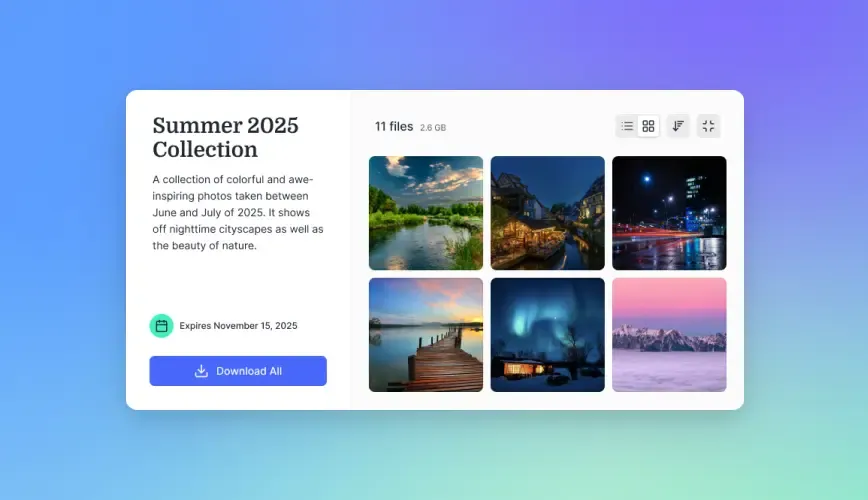
- Collect source PDFs. Pull sales one-pagers, design exports, and product sheets from shared drives, design tools, email, or a Receive share agencies use for creative drops.
- Convert PDF to PNG. Use Adobe Acrobat's online PDF to PNG tool, pdf2png.com, desktop Acrobat export, or a conversion API. Adobe's flow is upload, choose PNG when prompted, convert, then download. pdf2png.com converts each page of a multi-page PDF into separate PNGs and packages them in a ZIP. Batch uploads (pdf2png.com documents up to 20 PDFs at once) help when you are prepping a full account list's creative pack.
- Run a quality checklist. Confirm page crop, resolution, transparency, color, file size, and naming before anything hits Clay.
- Store approved PNGs in shared storage. Local downloads work for a solo designer. Team GTM work needs a shared workspace, Drive shared drive, or object store with a clear folder scheme by account or campaign.
- Reference durable URLs in Clay. Add columns for the PNG URL (and optional JPG social crop), status, and version notes. Join those URLs to account or contact rows for personalization, Claygent context, and export handoffs.
Online converters for ad hoc work
Browser converters are popular because they require no install. Adobe markets free PDF to PNG conversion with files processed on Adobe servers and deleted unless you sign in to save them. pdf2png.com emphasizes free conversion and automatic purge after about an hour. Both patterns solve click-to-download. Neither replaces a versioned library. Downloads land on one laptop. Clay rows and teammates still need a stable link after the converter deletes the temporary file.
Desktop and design-tool options
For brand-critical assets, export from the design source when you can. A design tool export to PNG often preserves intended crop, scale, and transparency better than rasterizing a print PDF. Desktop Acrobat or Preview can still help when the only source is a locked PDF from legal or product marketing. Export one page at a time when you only need a single module, so you avoid renaming twenty unused pages.
API conversion for pipeline volume
When conversion must run from a worker or an enrichment hop, use a conversion API or a small service you control. The endpoint accepts a PDF file or source URL, returns one PNG per page or a ZIP of pages, and logs success or failure per asset. Clay can call external HTTP endpoints when you need row-level automation; keep conversion external and store only URLs and status fields in the table.
Quality checklist before Clay ingest
- Page selection: Convert only the pages that become modules. Do not flood the library with unused appendix pages.
- Resolution: Export at double pixel density when modules appear on high-DPI screens; downscale for email if needed.
- Transparency: Preview on checkerboard. White boxes usually mean the PDF was flattened, not that PNG "failed."
- File size: Large full-bleed PNGs break some email and ad uploaders. Resize or use JPG for photo-heavy modules.
- Naming: Use stable names such as
acct-acme-onepager-v3.png, notDocument-Final-FINAL2.png. - Privacy: Avoid uploading confidential pitch PDFs to public converters when legal or customer data is involved. Prefer private tooling for those files.


Keep Clay-ready PNG creatives in one shared workspace
Store converted GTM one-pagers and transparent modules in an org-owned Fast.io workspace with version history, Intelligence Mode search, and durable share links your Clay tables can reference. Start with a 14-day Business Trial.
How Clay teams attach creative assets to account rows
Clay is strongest as the GTM table and agent layer, not as a media library. Official Claygent Builder docs describe attaching PDFs and other documents into agent context for tone and messaging. That is useful when an agent should read brand rules or a messaging doc. For visual ABM modules that live on landing pages or in CRM image fields, store the PNG outside Clay and put the URL on the row.
Table design for creative asset rows
Build a dedicated Clay table for creative assets, or add a tight set of columns on the account table when volume is low:
account_name/crm_id: join keyssource_pdf_url: original PDF location for auditpng_url: durable link to the approved page PNGjpg_url: optional social or photo cropasset_type: one-pager, UI module, logo lockup, chart, otherneeds_transparency: yes/noconversion_status: pending, success, failedversion: integer or semantic tag (v3)approved_by/approved_at: human sign-off fieldsnotes: crop issues, legal holds, campaign names
Keep enrichment waterfalls on people and companies separate from bulk creative conversion when possible. Mixing firmographic providers with pixel conversion columns creates noisy tables and expensive accidental re-runs.
Claygent context vs page modules
When the goal is agent judgment (score this account, write a personalized note, classify persona), Claygent Builder can use attached PDFs and messaging docs as business context. When the goal is a visual module on an ABM page, the agent and the page builder both need a PNG or JPG URL, not only a PDF attachment buried in agent settings. Convert first, host the PNG, then either:
- paste
png_urlinto account rows for personalization tools, or - attach a small brand PDF to Claygent for copy rules while still linking the PNG for creative systems.
Those are complementary, not substitutes.
Export and operational handoff
Clay University's export lesson frames export as the bridge from Clay workflows into CRMs, sequencers, Sheets, and other systems. CSV export is the universal path for one-time transfers and backups. Real-time integrations fit ongoing sync. For creative assets, export the columns that matter: account identifiers, png_url, version, and approval status. Hide intermediate conversion debug columns in an export view so downstream tools receive a clean sheet. That is how Clay ops hand off creative metadata without emailing ZIPs of PNGs that go stale by the next sprint.
Version and store PNG assets outside the converter ZIP
Conversion without storage recreates the original problem one format later. Someone still has a ZIP on a laptop, the converter purge timer is running, and Clay still has a dead local path.
Local disk is fine for a designer reviewing five one-pagers. It fails when an SDR, a marketer, and a Claygent prompt all need the same module next week.
Google Drive, Dropbox, or OneDrive are common next stops. Shared drives solve basic collaboration, but search is often filename-first, permissions get messy across agencies, and agent access is rarely first-class.
Object storage such as Amazon S3 is durable and cheap at scale. Engineering teams already host public marketing assets there. The tradeoff is operational: bucket policies, CDN wiring, and little review surface for non-engineers.
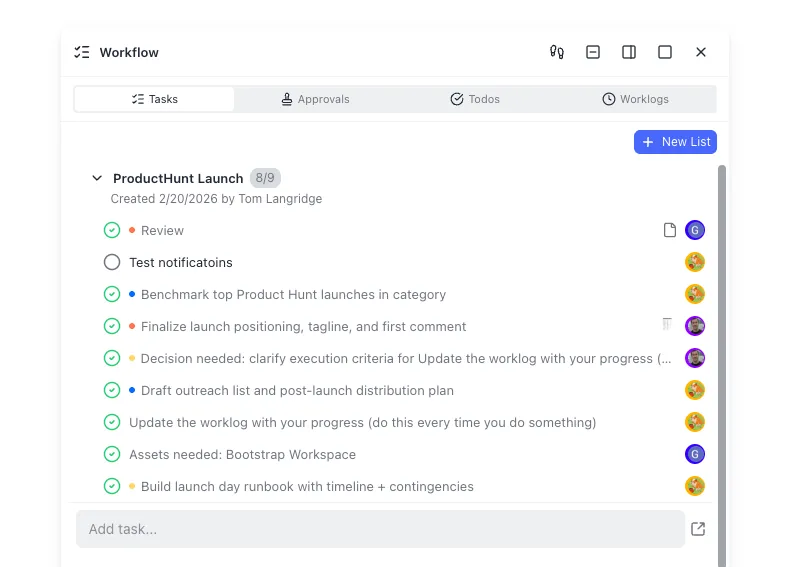
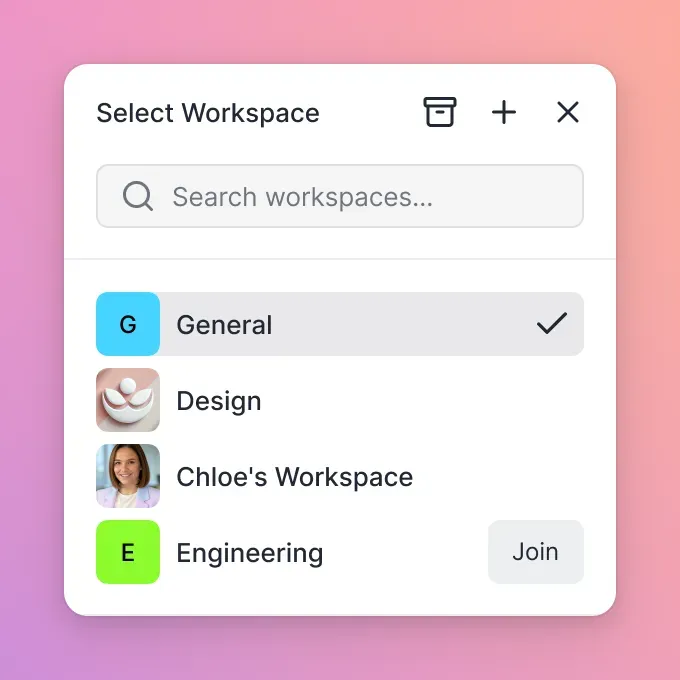
Fast.io fits when the creative library is part of an agentic GTM workspace rather than only a static CDN folder. Create an org-owned workspace such as gtm-creatives-2026, upload converted PNGs (and archived source PDFs) with clear folders by account or campaign, and keep per-file version history when design revises a crop or a converter rerun improves sharpness. Enable Intelligence Mode so files are indexed for semantic search and citation-backed chat. Ops can ask for "Acme Q3 one-pager transparent module" instead of hunting through date folders.
For structured catalogs, use Metadata Views to extract fields such as account name, asset type, page number, transparency flag, campaign, and approval status into a sortable grid. That is the structured extraction layer. Intelligence Mode remains the search and summarization layer. Agents can create Views, trigger extraction, and query results through Fast.io's consolidated MCP tools over Streamable HTTP at /mcp or legacy SSE at /sse. See the storage for agents overview for MCP access and current tool-surface details.
Permissions stay granular at org, workspace, folder, and file levels. The activity log records who uploaded or replaced assets. Branded shares (Send, Receive, or Exchange) let agencies drop source PDFs or pick up approved PNG packs without full workspace admin rights. Collaborative notes and comments can sit beside brand-critical creatives so marketing signs off before Clay's png_url is treated as final.
Agents and humans share the same workspace. An agent can upload converted PNGs through the API or MCP, write Collaborative Notes about review status, and transfer organization ownership to a human ops lead when the workspace is ready for billing control. Creating an account is free, but real work requires an organization on a paid subscription. Monthly plans start with a Business Trial of up to 14 days (credit card required); annual plans have no trial. Plans include Starter at $9.99/mo, Business at $49.99/mo, and Enterprise at $199.99/mo. Details live on the pricing page.
Wire Clay rows to durable PNG URLs and keep versions honest
Once PNGs live in shared storage, Clay should reference URLs, not binaries. Binary cells are hard to audit, hard to reuse across tables, and expensive to re-fetch.
Recommended handoff pattern
- Convert the right PDF pages to PNG (and optional JPG crops).
- Upload approved files to Fast.io (or S3/Drive if that is your standard).
- Copy the durable share or file URL into Clay's
png_urlcolumn. - Join or lookup that URL onto account tables by CRM ID or account name.
- Use the URL in personalization tools, landing-page builders, Claygent prompts that need a visual reference, or CRM writebacks that accept image links.
- Export clean views when ops needs a CSV of accounts plus creative URLs for another system.
If upload is automated, a worker can watch conversion success, push files into Fast.io, then POST the final URL back into Clay. Fast.io's WebSocket events feed or activity polling helps on the storage side: when a new file lands or a version changes, notify your worker so Clay rows update.
Versioning that Clay ops can trust
- Bump
versionon the row when the PNG file is replaced. - Keep the source PDF in an
originals/folder so legal can re-export later. - Never overwrite without history when two campaigns share the same account module. Fast.io's per-file version history (or object-store versioning on S3) is the safety net.
- Record who approved the asset. A PNG that "looks fine" can still use an outdated discount or product name.
Failure modes to plan for
- Expired converter downloads: Browser tools purge files quickly (pdf2png.com documents roughly a one-hour purge). Re-host approved PNGs before the link dies.
- False transparency expectations: Flattened print PDFs will not become transparent PNGs by format conversion alone.
- Oversized modules: Full-page PNGs at print resolution can exceed email and ad limits. Produce a web-sized derivative.
- Broken joins: Conversion succeeds, but the account table never sees the URL because join keys do not match.
- Stale Claygent attachments: Messaging PDFs attached to agents can drift from the live brand kit. Review agent document uploads on the same cadence as creative versions.
- Confidential PDFs on public converters: Route customer-sensitive decks through private conversion paths.
Treat the end state as a small media system of record for GTM: source PDFs archived, PNG modules approved and versioned, Clay holding the URLs and status fields enrichment workflows need, and exports carrying clean creative metadata into the rest of the stack.
Sources
References used to verify factual claims in this guide.
-
US search volume for the keyword "pdf to png" is about 74,000 monthly searches with keyword difficulty around 14 and CPC near one dollar and ten cents.
-
Claygent Builder lets you attach tone guides, messaging docs, PDFs, or CSVs directly into agent prompts for business context. Claygent Builder is Clay's hub for building, testing, and deploying Claygents for judgment-based GTM work such as research, scoring, and outbound copywriting.
-
Clay export bridges Clay workflows to operational tools such as CRMs, sequencers, and Google Sheets, with CSV export as a universal transfer method and dedicated export views for cleaner columns.
-
Adobe Acrobat provides an online PDF to PNG converter that converts uploaded PDFs to PNG images for download.
-
pdf2png.com converts multi-page PDFs into multiple PNG images packaged as a ZIP, supports batch uploads of up to 20 PDFs, and purges uploads and conversions after about 60 minutes.
-
Fast.io organization plans include Starter at $9.99/mo, Business at $49.99/mo, and Enterprise at $199.99/mo, each with a 14-day Business Trial that requires a credit card.
Frequently Asked Questions
Should I convert PDF sales one-pagers to PNG or JPG?
Prefer PNG when the one-pager is type-and-UI heavy, needs transparency, or will sit as a module on a colored ABM page. Prefer JPG when the page is mostly photography and file size is the constraint. Many teams keep the original PDF for downloads and produce both a PNG web module and a smaller JPG social crop.
Does PNG preserve transparency from design PDFs?
PNG supports transparency, but conversion only preserves alpha when the source artwork actually includes it and the converter does not flatten onto white. Print-style PDFs with opaque backgrounds usually produce opaque PNGs. For true transparent embeds, export from a design tool with a transparent background or convert a PDF that already encodes transparent artwork, then preview on a checkerboard.
How do Clay teams attach creative assets to account rows?
Store approved PNG files in shared storage, put durable URLs in Clay columns such as png_url, and join those columns to account or contact rows by CRM ID or account name. Claygent Builder can also attach PDFs and messaging docs as agent context for copy and research, which complements URL-based visual modules rather than replacing them. Use Clay export views when you need to hand account-plus-URL data to CRMs or Sheets.
How do I convert PDF to PNG?
Upload the PDF to a converter such as Adobe Acrobat online PDF to PNG or pdf2png.com, choose PNG output, convert, and download the resulting image or ZIP of page images. For multi-page files, each page typically becomes its own PNG. Then run a quality check, re-host approved files in shared storage, and reference the URLs from Clay rather than relying on temporary converter downloads.
Does Clay convert PDF to PNG natively?
Clay is not positioned as a native PDF-to-PNG converter. Official Claygent Builder docs cover attaching PDFs and other documents for agent context, and Clay University covers exporting lists to operational tools. Convert pixels externally, store versioned PNGs in a workspace or object store, and keep URLs plus status fields in Clay tables.
What is the difference between converting one PDF page and a whole deck?
One-page conversion is ideal for a single ABM module or social crop. Multi-page conversion produces one PNG per page, which is useful when several slides become separate assets. Avoid dumping unused appendix pages into the GTM library. Convert only the pages that will be referenced from Clay rows or landing modules.
Where should GTM teams store converted PNG assets?
Personal folders work for solo tests. Team pipelines need shared storage with permissions and clear structure. Options include Google Drive shared drives, Amazon S3, or Fast.io workspaces with version history, Intelligence Mode search, Metadata Views for asset catalogs, and branded shares for agency handoffs.
Related Resources

Keep Clay-ready PNG creatives in one shared workspace
Store converted GTM one-pagers and transparent modules in an org-owned Fast.io workspace with version history, Intelligence Mode search, and durable share links your Clay tables can reference. Start with a 14-day Business Trial.