Copilot vs Gemini: Which AI Assistant Is Better in 2026?
Gemini's 2-million-token context window is 5x larger than Copilot's, and it scores nearly double on SWE-bench coding benchmarks. But raw AI performance rarely decides the purchase. This comparison breaks down pricing tiers, coding workflows, writing quality, multimodal support, and the ecosystem lock-in that actually determines which assistant your team will use every day.


The 5x Context Gap That Reshapes the Comparison
Gemini 3 Pro ships with a 2-million-token context window, roughly 1.5 million words in a single session. Copilot, powered by GPT-5.1, tops out at 400,000 tokens. That 5x gap, confirmed across multiple benchmarks in early 2026, changes what each assistant can do in practice: Gemini can ingest an entire codebase or a 3,000-page legal document without chunking, while Copilot requires splitting large inputs across multiple prompts.
But context window size is one variable in a decision that involves pricing, ecosystem fit, deployment complexity, and what your team actually does all day. Microsoft 365 now exceeds 450 million commercial paid seats, while Google Workspace serves over 3 billion monthly active users. Most organizations are already locked into one ecosystem before they evaluate AI assistants, which means the "better" tool is usually the one that lives where your work already happens.
This guide covers each dimension separately so you can weight what matters for your team rather than relying on a single benchmark score.
Related guides
- Grok vs Claude: Which AI Is Better in 2026?Grok's mobile app market share grew 9.5x in 12 months while Claude quietly captured 70% of enterprise AI deals. Both...
- OpenClaw on Raspberry Pi vs Orange Pi: Which SBC Runs Your AI Agent Better?Raspberry Pi has official OpenClaw support and a massive ecosystem. Orange Pi offers more RAM and an onboard NPU for...
- Gemini Code Assist vs GitHub Copilot: Developer ComparisonChoosing between Gemini Code Assist and GitHub Copilot requires assessing how your development team manages workspace...
- GitHub Copilot vs Aider: Which AI Coding Assistant Fits Your Workflow?An IDE-integrated autocomplete engine is designed to minimize keystrokes by guessing the next few characters, but it...
- OpenCode vs GitHub Copilot Workspace: AI Agent Workspace ComparisonAn in-depth comparison of OpenCode and the sunset GitHub Copilot Workspace, exploring the architectural differences...
- GitHub Copilot vs. v0.dev: Front-End UI Builder vs. Code AssistantAn analytical comparison between GitHub Copilot and v0.dev, focusing on their respective strengths in backend logic and...
More on this subject: GitHub Copilot (130 guides)
Pricing Breakdown by Tier
The cost structures are fundamentally different. Microsoft sells Copilot as a per-seat add-on to existing M365 subscriptions. Google bundles Gemini into Workspace tiers and sells standalone consumer plans separately.
Microsoft Copilot pricing:
- Free Copilot: $0, basic chat and web search via Bing
- Microsoft 365 Copilot (Business): $18/user/month (annual), limited to organizations under 300 users
- Microsoft 365 Copilot (Enterprise): $30/user/month (annual), add-on to qualifying M365 plans
- GitHub Copilot Free: $0, 50 agent-mode requests and 2,000 code completions per month
- GitHub Copilot Pro: $10/user/month, 300 premium requests and unlimited inline suggestions
Google Gemini pricing:
- Free tier: Gemini 3.5 Flash for chat, limited Gemini Pro access, 5 Deep Research reports/month
- Google AI Plus: $7.99/month
- Google AI Pro: $19.99/month
- Google AI Ultra: $99.99/month (reduced from $249.99 at I/O 2026)
- Google Workspace: Gemini bundled into Business Standard, Plus, and Enterprise tiers (no separate add-on)
The key difference for enterprises: Microsoft charges a flat per-seat fee on top of your existing M365 license. You know the total cost before signing. Google dropped its standalone Workspace Gemini add-on in 2025 and now bundles AI into higher Workspace tiers, which simplifies licensing but means you might need to upgrade your entire Workspace plan to get Gemini features.
For individual developers, GitHub Copilot's free tier is hard to beat. Google's free Gemini tier offers more general-purpose AI capability, but the coding-specific tooling in GitHub Copilot (inline completions, agent mode, IDE integration) targets a different workflow.

How Copilot and Gemini Compare for Coding
This is where the benchmarks diverge most sharply. On SWE-bench, which tests the ability to resolve real GitHub issues end-to-end, Gemini scores 63.8% compared to Copilot's 33.2%. On GPQA Diamond, a graduate-level scientific reasoning benchmark, Gemini 3.1 Pro reaches 94.3% versus GPT-5.2's 92.4%.
Those numbers matter less than how each tool fits into a development workflow.
GitHub Copilot strengths:
- Deep IDE integration with VS Code, JetBrains, Neovim, and Xcode
- Agent mode that can plan, execute, and iterate on multi-file changes
- Inline code completions that feel like autocomplete rather than a separate tool
- Direct integration with GitHub issues, pull requests, and Actions
- Copilot Workspace for planning changes from issue to PR
Gemini Code Assist strengths:
- 2-million-token context lets you load entire repositories into a single session
- Stronger performance on complex, multi-step reasoning tasks
- Native Google Cloud integration for deploying and debugging cloud workloads
- Code customization trained on your own codebase (Enterprise tier)
- Gemini in Android Studio for mobile development
The practical split: if you work primarily in VS Code or JetBrains with GitHub repositories, Copilot's inline completions and agent mode create less friction. If you need to reason across a large codebase or work heavily in Google Cloud, Gemini's context window and Cloud integration give it an edge.
Both tools generate code with roughly 40-44% vulnerability rates in security audits, so neither eliminates the need for code review regardless of which you choose.


One workspace for every AI assistant your team uses
Fast.io connects to Copilot, Gemini, and any MCP-compatible agent.
Writing, Research, and Content Creation
For general writing tasks, the difference between Copilot and Gemini has narrowed considerably in 2026. Both produce competent drafts, summaries, and email responses. The real differences show up in where the writing happens and what sources each tool can access.
Copilot in Microsoft 365 drafts directly inside Word, Outlook, and PowerPoint. You highlight a paragraph in Word, ask Copilot to rewrite it, and the edit happens in place. Meeting summaries in Teams generate automatically. PowerPoint can build slide decks from a Word document or a prompt. The workflow stays inside the Microsoft apps you already have open.
Gemini in Google Workspace does the equivalent inside Docs, Gmail, and Slides. "Help me write" appears in Gmail compose windows. Gemini can pull context from your Drive files, recent emails, and calendar when generating responses. Google's search grounding means research queries get citations from the full Google Search index rather than Bing.
Head-to-head on writing quality, independent tests show Gemini produces content with more substance and engagement for general audiences, while Copilot delivers cleaner professional framing with tighter structure. Neither consistently wins across all writing tasks.
Where Gemini pulls ahead is research depth. Deep Research (available on Pro and Ultra plans) can synthesize multi-source reports with citations, processing far more source material per query thanks to the larger context window. Copilot's research capabilities rely on Bing, which covers less of the web than Google Search.
Where Copilot pulls ahead is structured business documents. Excel analysis, PowerPoint generation from data, and Word document formatting benefit from Copilot's tight integration with the Microsoft document model. Gemini in Sheets and Slides works, but the integration feels less mature for complex formatting tasks.
Why Ecosystem Lock-In Matters More Than Benchmarks
The ecosystem question is the one most comparison articles skip, and it matters more than any benchmark. Here is the reality: if your organization runs on Microsoft 365 with SharePoint, Teams, and Azure AD, deploying Copilot is a configuration toggle. Deploying Gemini means running a parallel AI stack alongside your existing Microsoft infrastructure.
The reverse is equally true. Google Workspace shops that try to layer Copilot on top face the same friction in the opposite direction.
Microsoft Copilot enterprise deployment:
- 2-to-6-week lead time for a full SharePoint permission audit before rollout
- Copilot Studio for building custom agents with no-code templates
- Pre-built role-based agents for sales, HR, and IT
- Data stays within the Microsoft 365 compliance boundary
- Admin controls through Microsoft 365 admin center and Intune
Google Gemini enterprise deployment:
- Gemini bundled into Workspace tiers, no separate license management
- Advanced agent scenarios require Vertex AI (separate Google Cloud platform)
- Transparency citations that link back to specific spreadsheet cells or PDF paragraphs
- Data residency controls through Google Workspace admin
- Gemini Notebook (formerly NotebookLM) for team knowledge bases built from internal documents
Microsoft's approach gives IT administrators more granular control over what Copilot can access and who can use specific features. Google's approach is simpler to turn on but pushes complex agent workflows into Vertex AI, which requires separate Google Cloud expertise.
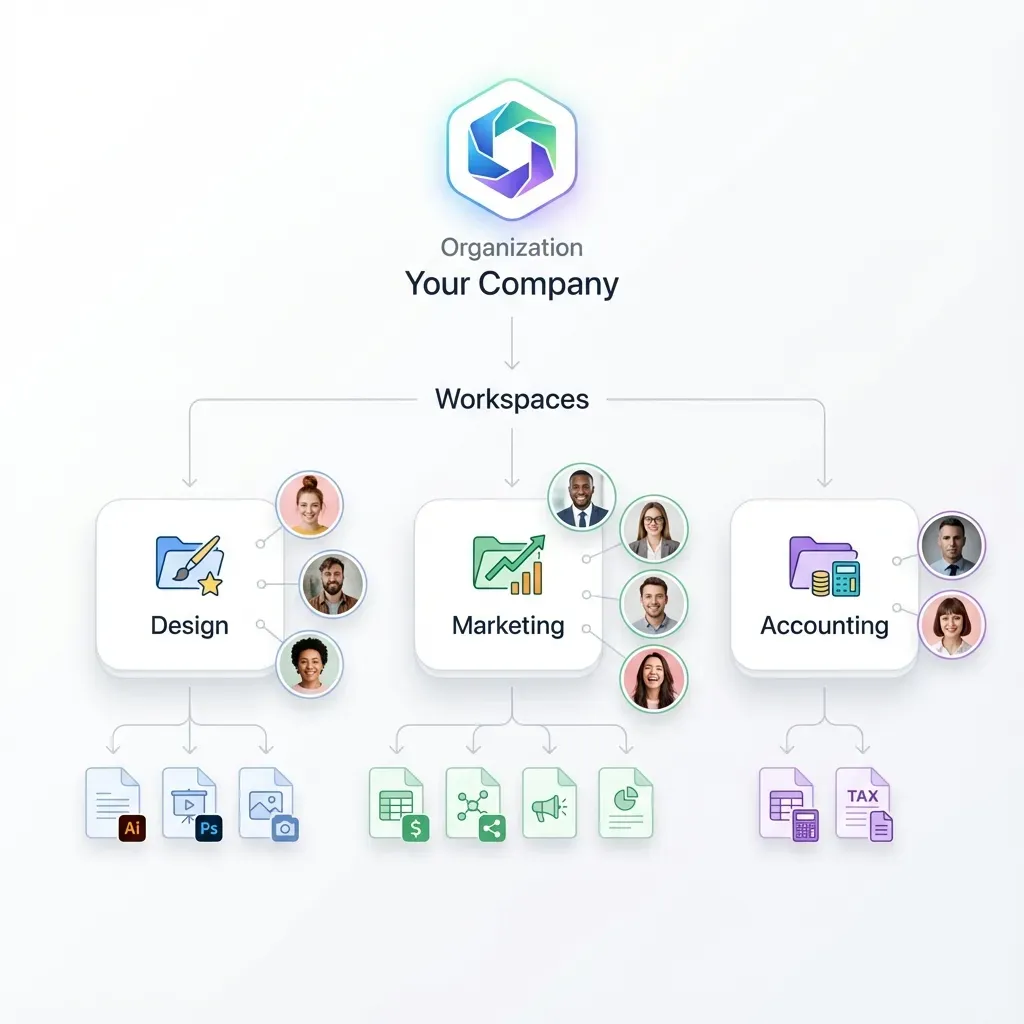
For organizations that use both ecosystems (more common than vendors like to admit), neither assistant works well across the boundary. Copilot cannot pull context from Google Drive. Gemini cannot draft in Word. This is where ecosystem-neutral tools become relevant: a shared workspace like Fast.io lets teams store files, run AI queries, and share outputs regardless of whether the upstream work happened in Microsoft or Google apps. The MCP server connects to both Copilot-driven and Gemini-driven agent workflows, so outputs persist in one place rather than splitting across ecosystems.
Multimodal Support and New Capabilities
Google expanded its lead in multimodal AI at I/O 2026 with the launch of Gemini Omni, a model that accepts any combination of text, images, audio, and video and reasons across all of them simultaneously. Gemini Omni generates short video clips (around 10 seconds) with audio, supports conversational editing of generated videos, and handles 8K resolution with improved object permanence.
Copilot's multimodal capabilities are more conservative. It can generate and analyze images through DALL-E integration, transcribe and summarize audio in Teams meetings, and process uploaded documents with charts and tables. Microsoft has focused on making these features reliable within the Office workflow rather than pushing the technical frontier.
For most business users, the practical multimodal features that matter are:
- Image analysis: both handle screenshots, diagrams, and charts well
- Document processing: both can read PDFs, spreadsheets, and presentations
- Meeting transcription: Copilot in Teams and Gemini in Meet both generate summaries
- Video understanding: Gemini handles uploaded video natively; Copilot does not yet match this
- Audio processing: Gemini processes raw audio files; Copilot focuses on Teams meeting audio
If your work involves processing video content, analyzing visual media, or generating multimodal outputs, Gemini is the stronger choice. If your multimodal needs are limited to document analysis and meeting summaries, both tools handle the job adequately.
Which One Should You Choose?
Skip the benchmarks and start with three questions:
1. Where does your team already work? If you live in Microsoft 365 with Teams, SharePoint, and Outlook, choose Copilot. If you live in Google Workspace with Gmail, Drive, and Meet, choose Gemini. The productivity gain from AI that works inside your existing apps outweighs any benchmark advantage from the competing tool.
2. What is your primary use case? For coding, GitHub Copilot's IDE integration beats Gemini Code Assist for day-to-day development, even though Gemini scores higher on benchmarks. For research and content creation, Gemini's larger context window and Google Search grounding give it a measurable advantage. For structured business documents (Excel analysis, PowerPoint decks, Word formatting), Copilot's Microsoft integration wins.
3. What is your budget model? Microsoft's per-seat pricing is predictable: $18 or $30 per user per month on top of M365. Google's bundled approach means you might pay less per user (Gemini comes free with higher Workspace tiers) but more overall if it forces a Workspace plan upgrade. For individual use, Google's free tier is more capable, while GitHub Copilot's free tier is better for coding specifically.
For teams that use both ecosystems or work with AI agents that span multiple platforms, adding a neutral collaboration layer avoids the lock-in problem entirely. Fast.io's agent workspaces provide built-in RAG once Intelligence is enabled, persistent storage, and a remote MCP server that connects to agents regardless of whether they run on Microsoft or Google infrastructure. Teams can evaluate with a 14-day Business Trial (credit card required; see /pricing/).
The best AI assistant is the one your team will actually use daily. Pick the ecosystem first, then optimize within it.
Sources
References used to verify factual claims in this guide.
-
Microsoft 365 exceeds 450 million commercial paid seats
-
Google Workspace has over 3 billion active monthly users
-
Gemini 3 Pro offers 2 million token context window vs Copilot's 400,000 tokens
-
SWE-bench scores: Gemini 63.8% vs Copilot 33.2%
-
Microsoft 365 Copilot Business costs $18/user/month, Enterprise $30/user/month
-
Google AI Ultra reduced from $249.99 to $99.99/month at I/O 2026
-
Both tools show approximately 40-44% vulnerability rates in generated code
-
Gemini Omni announced at Google I/O 2026 with multimodal video generation
Frequently Asked Questions
Is Copilot better than Gemini for coding?
It depends on the workflow. GitHub Copilot offers tighter IDE integration with VS Code, JetBrains, and inline code completions that feel native to the editor. Gemini Code Assist scores higher on benchmarks like SWE-bench (63.8% vs 33.2%) and its 2-million-token context window lets you load entire repositories. For day-to-day development in VS Code with GitHub repos, Copilot creates less friction. For reasoning across large codebases or Google Cloud projects, Gemini has the edge.
Which is cheaper, Copilot or Gemini?
For individuals, Google's free Gemini tier is more capable than free Copilot for general tasks. For coding, GitHub Copilot's free tier (50 agent-mode requests, 2,000 completions/month) beats Gemini's free coding tools. For enterprises, Microsoft charges $18-30/user/month as an add-on to M365. Google bundles Gemini into Workspace tiers, so the effective cost depends on whether you need to upgrade your Workspace plan.
Can I use Copilot and Gemini together?
Yes, but with friction. You can use GitHub Copilot for coding and Gemini for research or content creation. The challenge is that neither assistant can access the other's ecosystem. Copilot cannot search Google Drive, and Gemini cannot draft in Word. Teams that use both often benefit from an ecosystem-neutral workspace like Fast.io to centralize outputs from both tools.
Which AI assistant is better for business?
The answer depends almost entirely on your existing productivity suite. Organizations on Microsoft 365 should choose Copilot for its SharePoint, Teams, and Outlook integration. Organizations on Google Workspace should choose Gemini for its Gmail, Drive, and Meet integration. The AI quality difference between them is smaller than the productivity cost of fighting your existing ecosystem.
What is the context window difference between Copilot and Gemini?
Gemini 3 Pro offers a 2-million-token context window, roughly 1.5 million words per session. Copilot's GPT-5.1 provides up to 400,000 tokens. This 5x difference means Gemini can process entire codebases, lengthy legal documents, or full research collections in one session, while Copilot requires splitting large inputs across multiple prompts.
Does Gemini work with Microsoft Office?
Not directly. Gemini works alongside Google Workspace apps (Docs, Sheets, Slides, Gmail). To use AI in Microsoft Office apps, you need Microsoft Copilot. Some users work around this by using Gemini's web interface for research and drafting, then pasting results into Office documents, but you lose the inline editing and context features.
Related Resources

One workspace for every AI assistant your team uses
Fast.io connects to Copilot, Gemini, and any MCP-compatible agent.