Fund Administration Portal: Share NAV Reports and Statements
A fund administration portal is where fund admins deliver NAV reports, investor statements, and K-1s to GPs and LPs on a predictable cadence. This guide covers the documents a fund admin typically publishes, how the monthly and quarterly delivery cycle works in practice, and how to structure a portal that scales across dozens of funds without leaking information between investors.


What a Fund Administration Portal Actually Is
A fund administration portal is a secure workspace where fund administrators deliver NAV reports, investor statements, and K-1s to GPs and LPs. It sits between the fund accounting system, which produces the numbers, and the investors, who need the documents on a predictable schedule.
Most writing about fund administration focuses on the services an admin performs: accounting, compliance, transfer agency, tax work. The portal is the last mile. It is the piece investors actually interact with every month. Get it wrong and a fund admin's operational reputation erodes regardless of how clean the books are.
Three things distinguish a portal from generic file sharing.
First, the portal enforces investor-level segmentation. LP A should never see LP B's capital account statement, even by accident, even through a shared link that got forwarded. That isolation has to hold across hundreds of users and dozens of funds.
Second, the portal is periodic. NAV packs are typically delivered monthly or quarterly, with an annual audit cycle layered on top. The same structure repeats with new period labels. A portal that requires rebuilding folder trees every cycle will not survive.
Third, the portal is evidentiary. When an LP asks whether they received their Q3 statement, the admin needs to answer with a timestamp and an audit line, not a guess. Delivery receipts and access logs are not optional features here; they are the point.
Helpful references: Fastio Workspaces, Fastio Collaboration, and Fastio AI.
Related guides
- How to Choose Investor Portal Software That LPs Actually UseInvestor portal software gives LPs self-service access to fund documents, performance reports, capital call notices,...
- Limited Partner Portal: How GPs Share Reports and Capital CallsA limited partner portal is where general partners deliver fund reports, capital call notices, and tax documents to...
- How to Compare Board Portal Software and Pick the Right OneBoard portals vary widely in pricing, features, and target audience. This guide compares the leading platforms across...
- How to Choose a Board Portal for Your NonprofitGuide to board portal nonprofits: Nonprofit boards need the same secure document access, meeting management, and...
- Audit Data Room: How to Share PBC Files with External AuditorsAn audit data room is a secure workspace where a finance team shares prepared-by-client documents with external...
- ESG Data Room: Share Sustainability Disclosures with InvestorsAn ESG data room is where your sustainability disclosures stop being a spreadsheet thread and start being audit-ready...
More on this subject: Data Rooms and Due Diligence (53 guides)
Documents a Fund Admin Delivers Through the Portal
The document set varies by fund structure, strategy, and jurisdiction, but most fund admins publish some version of the following.
NAV pack. The monthly or quarterly net asset value package. It usually includes a NAV summary, a schedule of investments, a statement of assets and liabilities, a performance attribution table, and any footnotes the accounting team flagged. For a private fund this arrives later in the month than a hedge fund NAV, but the structure is similar.
Capital account statements. The per-investor ledger showing opening capital, contributions, distributions, allocated P&L, management fees, incentive allocations, and closing capital for the period. This is the document LPs check first and the one that most commonly generates questions.
Capital call and distribution notices. Drawdown notices with wire instructions when the GP calls capital, and distribution notices when capital is returned. These are time-sensitive. A missed capital call notice is a real operational problem, not a minor inconvenience.
K-1s and tax packages. The annual tax reporting bundle. Schedule K-1 for US partners, plus state K-1s, PFIC statements where relevant, and supporting workpapers. Tax season is when portal usage spikes, and when access control mistakes are most likely to surface.
Audited financial statements. The annual audit report from the fund's external auditor, typically delivered with a cover memo from the GP or administrator.
Side letter deliverables. Bespoke reports some LPs negotiated, such as most-favored-nation confirmations, ESG reporting, or specific position-level disclosures. These need to be targeted only to the LPs entitled to them.
Ad hoc requests. Verification letters for auditors, proof-of-assets letters for lenders, KYC refreshes, and one-off reports the investor relations team asks the admin to produce.
A well-structured portal handles all of these without the admin thinking about delivery mechanics each time. The first cycle is work. The twelfth should be routine.
How the Monthly and Quarterly Delivery Cycle Actually Runs
Fund admins serve dozens of funds at once, each with its own cadence, investor list, and document conventions. The portal has to make that manageable.
A typical monthly cycle for a private fund looks like this. The accounting team closes the books roughly fifteen business days after month end. Reviewers sign off on the NAV. The fund controller generates per-investor capital account statements from the accounting system. A reviewer compares totals across all investor statements against the fund-level NAV to confirm they reconcile. Then the documents are loaded into the portal, investors receive a notification, and the admin's email inbox fills with the predictable handful of questions about allocations.
Quarterly cycles add a narrative component. A GP letter, performance commentary, and sometimes a portfolio update. Annual cycles add audited financials and, later, K-1s. Each of these layers onto the same folder structure rather than replacing it.
The bottleneck is rarely the accounting close. It is usually the delivery itself: collating per-investor packs, double-checking that LP A's pack does not contain LP B's statement, notifying investors, and handling the replies. If the portal handles that cleanly, the admin team gets its evenings back. If it does not, every cycle ends in a scramble.
Portals that work well share a few patterns. Delivery is driven by an investor map, not by manually dragging files into folders. Notifications go out in a single batch with confirmation that each investor received theirs. Access logs capture when each LP opened each document, which answers ninety percent of "did you send me..." emails before they escalate.


Build a portal your LPs will actually open
Set up investor-level folders, branded delivery, and audit trails on Fastio. Start 14-day trial, granular permissions, and versioning that handles restatements without losing the original. Built for fund administration portal workflows.
Designing a Portal That Holds Up Across Dozens of Funds
The structural question every fund admin eventually faces is how to organize the portal so it scales. A few patterns work; most do not.
Fund, then period, then investor
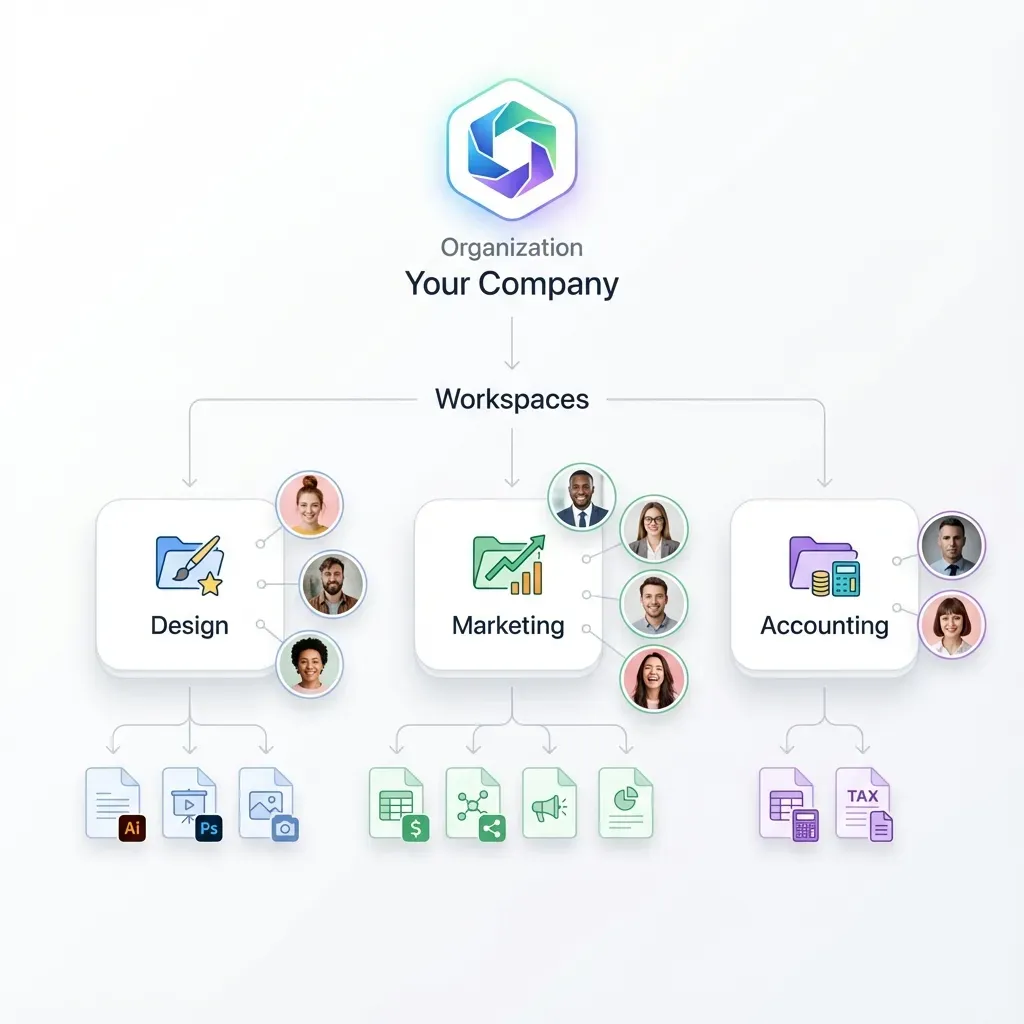
The most durable structure separates fund-level documents from investor-level documents. At the top level, one workspace or folder per fund. Inside each fund, a shared area for fund-level documents every investor can see: offering memoranda, audited financial statements, quarterly letters. Then a per-investor subtree for the documents only that investor should access: capital account statements, K-1s, side letter deliverables, custom reports.
The investor subtree should be period-agnostic in its structure. Inside each investor folder, periods are the leaves: 2026-Q1, 2026-Q2, and so on. This means adding a new period never requires restructuring. It means onboarding a new investor is a matter of provisioning the subtree, not rebuilding the hierarchy.
Permissions at the folder, not the file
Scoping permissions file by file is how leaks happen. A fund admin loading hundreds of statements a month will eventually put one in the wrong place. The defense is structural: set permissions at the investor folder, grant the LP and the GP access there, and let files inherit. If the folder is correct, every file dropped into it is correct by construction.
Platforms that let you set granular permissions at the org, workspace, folder, and file level make this easy to enforce. Fastio follows that pattern, and it is a reasonable baseline to look for in any system you evaluate against Dropbox, Box, Google Drive, or dedicated data room products.
Branded delivery the LP recognizes
LPs receive documents from many funds. A portal that looks like a generic file-share link gets treated like one. Branded share surfaces, where the admin or GP's logo and colors are visible, reduce the chance an LP ignores the notification or flags it as phishing. This is a small touch with disproportionate impact on investor response rates.
Versioning that does not confuse the investor
Corrections happen. An NAV gets restated, a K-1 needs a revised cost basis, a statement had a rounding error. The portal should keep both the original and the revised document with clear labels, not silently overwrite. Investors sometimes cite the original before they see the correction, and having both available is the difference between a five-minute clarification and an hour of forensic work.
The Audit Trail Is the Product
Fund admins are judged on accuracy, but they are remembered for how they handle questions. When an LP or auditor asks what was delivered, when, and to whom, the answer has to be specific.
A portal that logs every access, download, and share action gives the admin a clean answer without a scramble. The log should capture the user, the document, the action, the timestamp, and the IP where relevant. Exporting the log for a specific investor or period is how you respond to an auditor's request without a day of manual reconstruction.
This matters beyond audits. Regulators in several jurisdictions now expect fund admins to demonstrate delivery of investor communications, not just claim they were sent. The log is the demonstration. If your current process relies on forwarded emails and screenshots, you are accumulating operational risk that a proper portal retires.
The same log also helps with internal quality control. If an investor claims they never received their Q2 statement but the log shows three downloads from their IP range, the conversation changes. If the log shows no access, the admin knows to resend rather than argue.
Intelligent workspaces add another layer: files loaded into the portal can be indexed so the admin team can search across the full document history by meaning, not just filename. Finding every instance of a particular side letter clause across five funds and two years becomes a query rather than a project.
What to Look for When You Evaluate Portal Options
Fund admins considering a portal upgrade typically look at three categories of tool: generic file-sharing platforms, dedicated investor reporting products, and workspace platforms that combine sharing with collaboration. Each has tradeoffs.
Generic platforms like Dropbox, Google Drive, or OneDrive are inexpensive and familiar to investors. They struggle with investor-level segmentation at scale and with evidentiary logging. They are fine for a single fund with ten LPs and a problem for an admin serving twenty funds.
Dedicated investor reporting products handle the delivery workflow well and often works alongside fund accounting systems. They can be expensive per seat, and they tend to lock the admin into a particular way of working. Evaluate them against your actual fund mix, not the demo fund.
Workspace platforms like Fastio occupy a middle ground. You get granular permissions at the org, workspace, folder, and file level, branded shares for delivery, detailed audit trails, and versioning. Because workspaces are general-purpose, the same portal infrastructure can host the admin's internal working files, the GP's investor relations materials, and the LP-facing delivery surface without three separate systems.
When you evaluate any option, run the same test: load a realistic fund with twenty investors, deliver a fake NAV pack, audit the resulting permissions, and ask a colleague to try to see another LP's statement. If the test passes cleanly, the system is probably workable. If you have to think carefully about why the test passed, the system will fail in production when the admin team is tired at month-end close.
Sources
References used to verify factual claims in this guide.
-
Fund administration software vendor context for delivery workflows
Frequently Asked Questions
What is a fund administration portal?
A fund administration portal is a secure workspace where fund administrators deliver NAV reports, investor statements, capital call and distribution notices, K-1s, and audited financials to GPs and LPs. It sits between the fund accounting system and investors, handling the periodic delivery workflow with investor-level segmentation and an audit trail.
How do fund admins share NAV reports?
Most fund admins share NAV reports through a secure portal rather than email. The admin generates a fund-level NAV summary and per-investor capital account statements, loads them into a dedicated folder for the period, notifies investors through the portal, and relies on access logs to confirm delivery. Email is used only for the notification, never for the documents themselves.
How often are NAV packs delivered?
NAV packs are typically delivered monthly or quarterly, depending on the fund strategy. Hedge funds and liquid strategies usually publish monthly NAVs within fifteen to twenty business days of month-end. Private equity and venture funds generally publish quarterly, with audited annual financial statements layered on top.
What documents should a fund administration portal support?
At minimum: NAV packs, capital account statements, capital call and distribution notices, K-1s and tax packages, audited financial statements, and side letter deliverables. Many portals also host offering documents, subscription agreements, and ad hoc verification letters for auditors and lenders.
How do fund admins prevent one LP from seeing another LP's statements?
Through structural permissions rather than file-by-file scoping. The durable approach is to create a per-investor folder, grant access at the folder level, and let documents inherit. This prevents a misplaced file from becoming a data leak, because a document in the wrong folder does not appear to the wrong investor.
Do fund admins need a dedicated portal or is a file-sharing tool enough?
For a single fund with a handful of LPs, a general file-sharing tool with careful permissions can work. As the admin takes on more funds, investor-level segmentation, evidentiary logging, and repeatable periodic delivery become difficult to manage in generic tools. Most admins move to a workspace platform or dedicated investor reporting product once they cross roughly ten funds or a few hundred LPs.
Related Resources

Build a portal your LPs will actually open
Set up investor-level folders, branded delivery, and audit trails on Fastio. Start 14-day trial, granular permissions, and versioning that handles restatements without losing the original. Built for fund administration portal workflows.