Limited Partner Portal: How GPs Share Reports and Capital Calls
A limited partner portal is where general partners deliver fund reports, capital call notices, and tax documents to their investors. This guide walks through what belongs in an LP portal, how GPs run the quarterly cycle, and what to look for when you set one up.


What Is a Limited Partner Portal?
A limited partner portal is a secure workspace where GPs share fund performance reports, capital calls, K-1s, and subscription documents with their LPs. It replaces the old pattern of emailing PDFs to a distribution list, which left sensitive fund information sitting in personal inboxes and made it hard to prove who saw what. The portal sits between the fund administrator, the GP team, and the investor. When a quarterly report is finalized, it goes into the portal. When a capital call is issued, LPs get a notification pointing to the call notice in the portal. When tax season comes, K-1s land in the same place LPs go for everything else. Between those milestones, capital calls and distribution notices can arrive on any schedule the fund documents allow. The portal has to handle all of it without forcing LPs to learn a different tool each time. The audience is narrow but demanding. LPs in a private equity or venture fund are often sophisticated institutional investors: pension funds, endowments, family offices, fund of funds. Their operations teams pull documents into their own record-keeping systems and expect predictable naming, reliable notifications, and clean audit trails. A portal that loses a document or fails to notify on a capital call creates real operational pain for the LP and real reputational damage for the GP.
Helpful references: Fastio Workspaces, Fastio Collaboration, and Fastio AI.
Related guides
- How to Set Up a Private Equity Virtual Data RoomPrivate equity virtual data rooms protect deal documents during fundraising, buyouts, and exits. This guide covers...
- Fund Administration Portal: Share NAV Reports and StatementsA fund administration portal is where fund admins deliver NAV reports, investor statements, and K-1s to GPs and LPs on...
- How to Compare Board Portal Software and Pick the Right OneBoard portals vary widely in pricing, features, and target audience. This guide compares the leading platforms across...
- How to Choose a Board Portal for Your NonprofitGuide to board portal nonprofits: Nonprofit boards need the same secure document access, meeting management, and...
- Audit Data Room: How to Share PBC Files with External AuditorsAn audit data room is a secure workspace where a finance team shares prepared-by-client documents with external...
- ESG Data Room: Share Sustainability Disclosures with InvestorsAn ESG data room is where your sustainability disclosures stop being a spreadsheet thread and start being audit-ready...
More on this subject: Data Rooms and Due Diligence (53 guides)
What Documents Go in an LP Portal?
The document set is stable across most private funds, even though the names vary. A typical LP portal holds the following categories.
Subscription documents. Subscription agreements, side letters, W-9s or W-8s, investor questionnaires, AML and KYC evidence. These go in at the start of the relationship and get referenced any time a transfer, rollover, or compliance check happens.
Fund governing documents. The limited partnership agreement, private placement memorandum, management agreement, and any amendments. LPs pull these when they have a question about fee calculations, waterfall mechanics, or their specific commitment terms.
Capital activity notices. Capital call notices, drawdown schedules, and distribution notices. Each one needs to reach every relevant LP with enough lead time to wire funds or process a distribution.
Quarterly reports. The GP's letter, financial statements, portfolio company updates, valuation detail, and the capital account statement for each LP. The capital account statement is investor-specific; everything else in the quarterly report is usually common to the fund.
Annual tax documents. Each investor's Schedule K-1. These are strictly investor-specific and have to be delivered to the right recipient.
Audited financials. The annual audit report, usually a few months after year-end.
Ad-hoc items. LPAC materials, consent requests, meeting recordings, side letter MFN disclosures. These do not follow a fixed calendar but still need to be filed in a predictable place. A good portal lets the GP mirror this taxonomy in its folder structure, so an LP landing in the portal in October can find Q2 quickly without guessing.
The Quarterly Reporting Cycle
The quarterly cycle is the heartbeat of the LP relationship. Miss it by a week and LPs notice. Miss it by a month and your fund administrator starts fielding calls.
- Quarter end. The fund administrator begins closing the books, reconciling portfolio valuations, and preparing financial statements.
- Draft financials arrive. The GP team writes the quarterly letter, updates portfolio company summaries, and refreshes the valuation narrative.
- Mid-cycle. Final review. Auditors sign off where required. Capital account statements are generated for each investor.
- End of cycle. Reports publish to the LP portal. LPs receive a notification with a direct link.
The last step is where portals earn their keep. Without one, the GP's investor relations person is attaching PDFs to individual emails, each with a custom capital account statement. With one, every LP sees the common fund documents in a shared folder, plus their own capital account statement in a folder only they can access. Capital calls run on a faster clock. A typical call notice gives LPs a short window, set in the LPA, to wire funds. The portal has to deliver the notice, prove delivery, and make the wire instructions easy to retrieve. LPs will often forward the notice to their operations or custodian team, so the document itself needs to be self-contained and labeled.


Run your next LP reporting cycle in one place
Set up a dedicated workspace for each fund with granular permissions, branded shares, and audit trails. Fastio offers a 14-day Business Trial and paid plans. Built for limited partner portal workflows.
How GPs Share K-1s With LPs
K-1 delivery is the hardest single event in the LP reporting calendar. The process looks roughly like this: the GP posts each investor's K-1 to that investor's folder in the portal, and the LP gets a notification. They download it, forward it to their accountant, and the cycle ends. The failure modes are predictable. A K-1 posted to the wrong folder exposes one investor's tax data to another. Uploading the wrong version and not noticing until LPs have already filed is a mess. Portals that handle this well share a few traits.
- Per-investor folders with strict access controls, so document A cannot end up visible to investor B.
- Publish K-1s on the date you announced. LPs plan their filings around your schedule.
- Send one notification when K-1s post, not one per investor per correction.
- Keep prior-year K-1s accessible. LPs sometimes discover issues months later.
Choosing and Setting Up an LP Portal
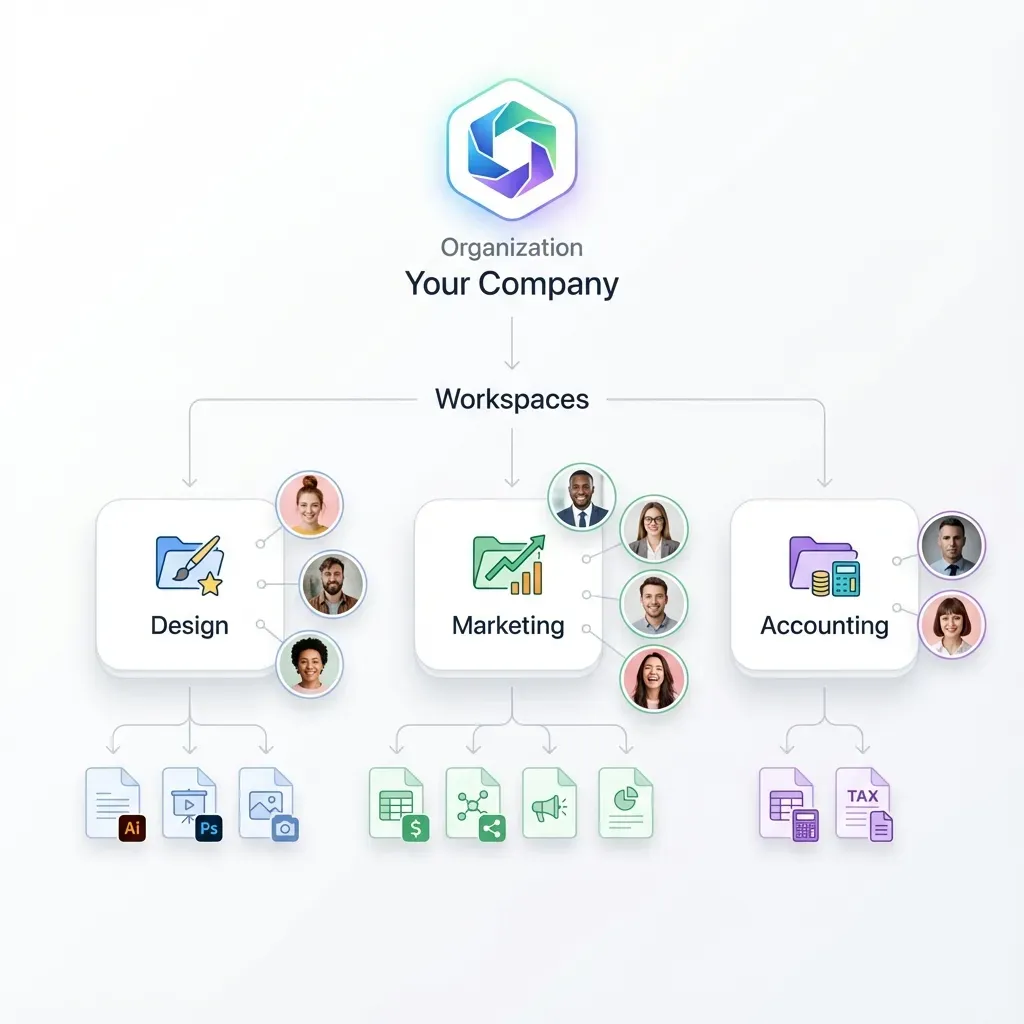
There are three common paths: a specialized LP portal product from a fund administration software vendor, a general-purpose secure file platform configured for LP workflows, or a custom build on top of cloud storage. Specialized LP portals come with templated folder structures, investor provisioning tied to the fund's investor records, and direct integrations with common fund accounting systems. The tradeoff is that you are locked into one vendor's idea of how an LP relationship should work, and switching is painful once years of history live in the system. General-purpose secure file platforms give GPs more flexibility. You design the folder structure, control the permissioning, and keep the portal separate from your fund accounting platform, which matters if you ever change administrators. Fastio is one option in this category. The shared workspace model maps cleanly onto fund reporting: a workspace per fund, folders per document category, and granular permissions down to the individual file so each LP sees only what they should.
What to verify before you commit
- Permissioning granularity. Can you set permissions at the folder and file level, or only at the top-level workspace?
- Audit trails. Every download, view, and permission change should be logged. Ask the vendor to show you a real audit log, not a screenshot of a marketing page.
- Branding. LPs expect your fund's brand, not a generic portal. Logos and colors on the investor-facing view matter more than they sound.
- Notifications. LPs need to be notified when documents are posted, but not so often that they start ignoring the emails. Look for per-LP notification preferences.
- Bulk operations. You need bulk upload plus a way to route each file to the correct recipient.
- Export and portability. If you change platforms in three years, how do you get your data out? A portal you cannot leave is a portal you regret. For teams running multiple funds, workspace-level isolation matters. You do not want a permissioning mistake in Fund II to expose anything in Fund III. Each fund should live in its own workspace with its own access list, and changes in one workspace should have no effect on another.
Audit Trails, Security, and Investor Trust
An LP portal is a trust instrument. LPs commit capital for many years on the strength of the GP's ability to run the fund professionally, and how documents are handled is part of that impression.
Three things matter most.
Access control. Only the right people see the right documents. An LP portal that cannot enforce this at the file level is not a portal, it is a shared drive with a login screen. Controls should survive personnel changes: when an LP's analyst leaves their firm, removing access should be fast and auditable.
Audit trail. The portal should record who accessed what and when, and the log should be queryable. If an LP claims they never received a capital call notice, the GP should be able to pull the access history for that document and that investor inside a few minutes. Intelligent workspaces can also index the documents themselves, so a GP can search across prior reports by content rather than only by filename.
Delivery proof. Notifications should be logged and retrievable. This is usually the weakest link in email-based workflows, where a notice buried in a spam folder creates a real dispute. Portal-based delivery with confirmed receipt removes most of that ambiguity.
A note on compliance language. LP operations teams often ask GPs about security certifications. Any claim here has to be accurate. If your portal vendor has the certifications, say so. If they do not, lean on concrete security features such as encryption at rest, encryption in transit, granular permissions, audit logging, and SSO. LPs prefer specific truth to vague assurance.
Frequently Asked Questions
What is a limited partner portal?
A limited partner portal is a secure workspace where GPs share fund performance reports, capital calls, K-1s, and subscription documents with their LPs. It replaces email-based delivery of sensitive fund documents with a single system that tracks access and keeps everything organized by fund and investor.
How do GPs share K-1s with LPs?
GPs post each investor's K-1 to a folder only that investor can access, then send a notification when it is ready to download. Corrected K-1s replace the original in place, with the change noted in the follow-up notification.
What documents go in an LP portal?
Subscription documents, fund governing documents like the LPA and PPM, capital call and distribution notices, quarterly reports with capital account statements, annual K-1s, audited financials, and ad-hoc items like LPAC materials and consent requests.
How often do LPs receive reports?
Most funds publish reports quarterly, with each LP's capital account statement, plus K-1s and audited financials once a year. Capital calls and distributions arrive on a less predictable schedule driven by deal activity.
Can LPs access older reports in the portal?
Yes, a well-configured LP portal retains the full history of reports and tax documents for the life of the fund. LPs often need to pull prior-year K-1s or quarterly statements when they update internal records or respond to tax questions, so retention and searchability matter.
Do LPs prefer portals over email?
Institutional LPs generally prefer portals because documents are easier to locate, access control is clearer, and operations teams can pull files on their own schedule. Smaller LPs sometimes still prefer email, so many GPs pair portal delivery with an email notification that links to the document.
Related Resources

Run your next LP reporting cycle in one place
Set up a dedicated workspace for each fund with granular permissions, branded shares, and audit trails. Fastio offers a 14-day Business Trial and paid plans. Built for limited partner portal workflows.