How to Choose Investor Portal Software That LPs Actually Use
Investor portal software gives LPs self-service access to fund documents, performance reports, capital call notices, and tax filings. This guide covers what to look for in a platform, how the major options compare, and how to set up a portal that reduces IR workload without creating more problems than it solves.


What Is Investor Portal Software?
Investor portal software is a secure platform that gives investors self-service access to fund documents, performance reports, capital call notices, and communications. Instead of emailing quarterly PDFs to a distribution list and hoping they reach the right people, you publish documents to a portal where each LP sees only what they should see.
The core problem is straightforward. Fund managers produce a steady stream of documents: quarterly reports, capital call notices, distribution notices, K-1s, audited financials, subscription agreements. Those documents need to reach specific investors on a predictable schedule, with proof of delivery, without leaking one LP's capital account statement to another.
Email handles none of this well. Attachments land in inboxes with no access controls, no audit trail, and no way to retract a misdirected file. A portal creates a single location where documents are organized by fund and period, access is controlled per investor, and every view and download is logged.
The shift toward portal-based delivery has been accelerating. LPs increasingly expect on-demand access to essential data rather than waiting weeks after quarter-end for a static PDF package. Sophisticated institutional investors, including pension funds, endowments, and family offices, now treat portal access as a baseline expectation when evaluating fund managers. According to a CSC report on LP reporting standards, today's investors demand more than static reports delivered on a fixed schedule.
Helpful references: Fastio Workspaces, Fastio Collaboration, and Fastio AI.
Related guides
- How to Choose a White Label Data Room for Client-Facing DealsA white label data room lets advisory firms, investment banks, and service providers rebrand a virtual data room with...
- Fund Administration Portal: Share NAV Reports and StatementsA fund administration portal is where fund admins deliver NAV reports, investor statements, and K-1s to GPs and LPs on...
- Best Data Room Software for Secure Document SharingData room software provides secure, permission-controlled workspaces for sharing confidential documents during M&A,...
- Best Virtual Data Room Providers for Every Deal TypeChoosing a virtual data room provider depends on what kind of deal you are running. This guide breaks down the top VDR...
- How to Set Up a Private Placement Data RoomA private placement data room is a secure virtual workspace where issuers share private placement memorandums,...
- Best Ansarada Alternatives for Virtual Data Rooms in 2026Ansarada was a well-regarded virtual data room for M&A and due diligence, but Datasite's 2024 acquisition has raised...
More on this subject: Data Rooms and Due Diligence (53 guides)
Features That Separate Good Portals from File Dumps
Not every investor portal delivers the same value. Some are little more than a branded folder with a login screen. Others provide genuine workflow automation that reduces IR team overhead. Here is what to evaluate.
Investor-level document segmentation. Every LP should see only their own capital account statements, K-1s, and subscription documents. Fund-level documents like the quarterly letter can be shared broadly, but anything investor-specific needs strict isolation. This is not just a nice-to-have. A segmentation failure that exposes one LP's financial data to another creates legal exposure and erodes trust immediately.
Automated document distribution. The portal should let you upload a batch of documents and route them to the correct investors automatically, based on naming conventions, fund associations, or metadata tags. If your IR team is still manually uploading 200 individual K-1s to 200 separate folders, the portal is not doing its job.
Notification and delivery tracking. When a new document is published, the portal should notify the relevant investors by email. More importantly, it should log who was notified, who opened the notification, and who actually viewed or downloaded the document. When an LP asks whether they received their Q3 statement, you answer with a timestamp, not a guess.
Self-service access. LPs should be able to log in, filter by fund and period, and pull what they need without contacting the IR team. A CSC report on LP reporting expectations found that modern investors expect the ability to filter by fund, metric, date range, or asset class and pull information on their own schedule. Every support query an LP can resolve through the portal is one fewer email your operations team handles.
Audit trail and compliance logging. Regulators and auditors want to know who accessed what and when. The portal should produce downloadable access logs for any document or folder, covering views, downloads, and failed access attempts.
Branding and presentation. The portal is often the most visible touchpoint between your fund and its investors. Customizable branding, clean navigation, and a professional interface matter more than they might seem. An investor who struggles to find their capital call notice in a cluttered interface will email your team instead, defeating the purpose.
How Investor Portals Compare to Data Rooms
Investor portals and virtual data rooms solve different problems, even though they share surface-level features like permissioned document access and audit trails. Choosing the wrong one creates friction.
A virtual data room is built for time-limited, high-security transactions. Think M&A due diligence, fundraising, or deal closings. Data rooms emphasize watermarking, granular print and download controls, NDA enforcement, and detailed analytics on viewer behavior. Once the deal closes, the room often gets archived or shut down.
An investor portal is an ongoing operational tool. It runs for the life of the fund, serving quarterly reports, capital calls, and tax documents on a repeating cycle. The structure persists and grows over time rather than being set up and torn down for each event.
Where the confusion starts is that some vendors bundle both capabilities into a single product. Allvue, for instance, offers both an investor portal and a deal management data room as part of its alternative investment platform. Juniper Square integrates data rooms directly into its investor portal, so LPs can access deal-specific materials alongside their regular fund reporting.
The practical question is which workflow dominates your needs. If you run a fund with 50 LPs who need quarterly reporting and annual tax documents, you want a portal with strong distribution automation and a repeating folder structure. If you are raising a new fund and need to share a PPM with prospective investors under NDA, you want a data room with watermarking and engagement analytics. Many firms end up using both, sometimes from the same vendor.


Build Your Investor Portal with Fastio
Set up a secure document workspace with per-investor permissions, audit trails, and branded sharing. Built for investor portal software workflows.
Evaluating the Major Platforms
The investor portal market splits into two categories: purpose-built platforms designed for fund managers, and general-purpose secure file sharing platforms that can be configured for investor reporting. Each has tradeoffs.
Purpose-Built Investor Portals
Juniper Square is the most widely recognized name in real estate and private equity investor management. Its portal connects onboarding, reporting, and communications into one platform. GPs control exactly what information is published and when, and the portal provides engagement analytics showing who logged in, which documents were viewed, and how investors interact with posts. Juniper Square's Winter 2026 release added real-time dashboards and in-portal subscription initiation. Pricing requires a custom quote and scales with fund count and features.
Allvue Systems offers an investor portal as part of its broader alternative investment technology suite. The portal integrates directly with Allvue's fund accounting and CRM products, which means data flows from the accounting engine to the portal without manual re-keying. Allvue's portal supports automated notice generation, customizable dashboards, and a network of over 90,000 connected LPs. Pricing is custom and typically requires a demo.
Dynamo Software focuses on investor reporting with strong document distribution workflows. It handles capital activity notices, tax documentation delivery, and investor communications. Dynamo is particularly common among firms that want a portal tightly integrated with their CRM and fundraising tools.
Agora targets real estate sponsors specifically, with pricing starting around $200 per month. It covers investor onboarding, distributions, and reporting in a more accessible package for smaller sponsors.
General-Purpose Platforms Configured for Investor Portals
Not every fund manager needs a purpose-built solution. If your reporting workflow is straightforward, meaning quarterly document uploads, per-investor folders, and notification emails, a general-purpose secure workspace can work well at a fraction of the cost.
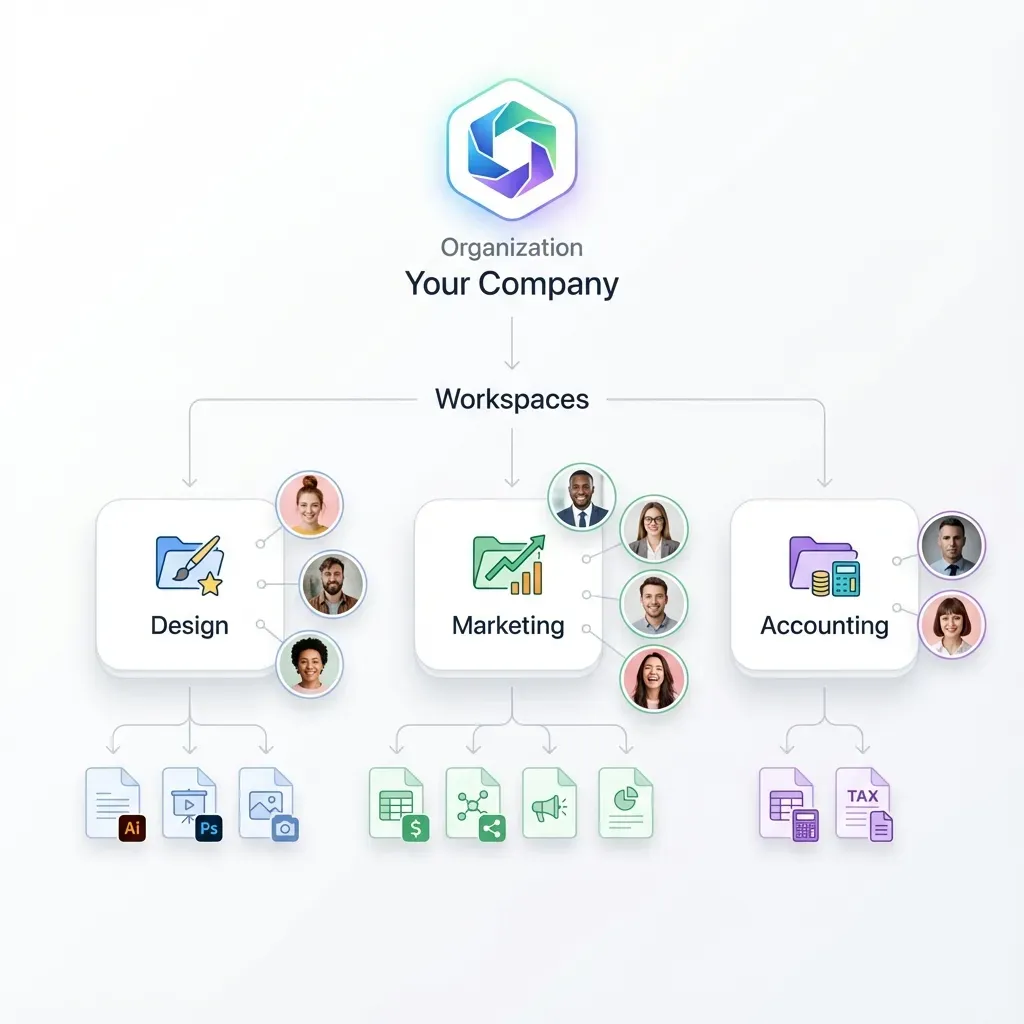
Fastio provides shared workspaces with granular permissions at the org, workspace, folder, and file level. You can create a workspace per fund, set up investor-specific folders with view-only access, and use branded shares to deliver documents through a professional interface. Audit trails log every view and download. The platform also supports file versioning, so replacing a corrected K-1 preserves the original and the update. Once Intelligence is enabled for the workspace, uploaded documents are indexed for semantic search, which means your IR team can ask questions about fund documents through the AI chat instead of digging through folders manually.
Fastio offers a 14-day Business Trial requiring a credit card, with plans starting at Starter ($9.99/mo; see /pricing/). For a fund manager running one or two funds with under 50 LPs, that provides a cost-effective way to evaluate secure workspaces.
SharePoint is another common choice for firms already invested in Microsoft's ecosystem, though configuring it for investor-level segmentation requires careful permissions work and ongoing maintenance.
Setting Up an Investor Portal
Implementation details vary by platform, but the underlying structure is consistent. Here is a practical setup sequence that works regardless of which tool you choose.
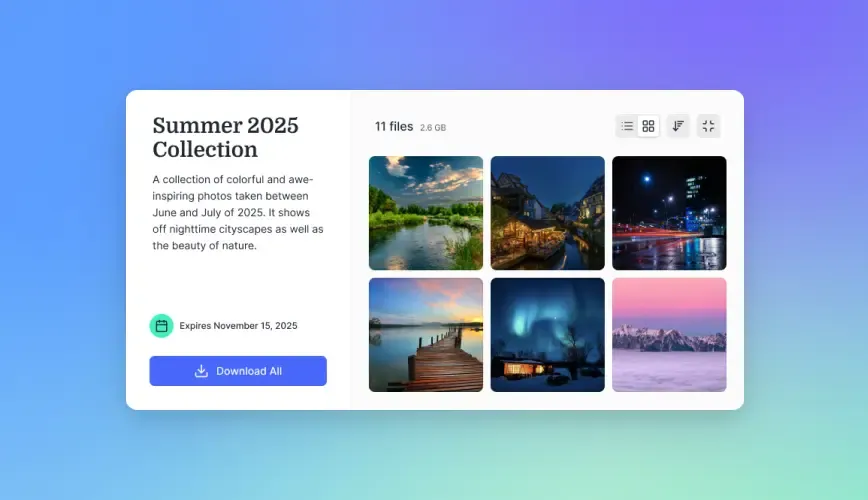
Step 1: Define your folder taxonomy. Start with a structure that mirrors how your fund produces documents. A common pattern is to organize by fund at the top level, then by document type (quarterly reports, capital calls, tax documents, legal), then by period. Investor-specific documents like K-1s and capital account statements go into per-investor subfolders within each fund.
Step 2: Configure permissions. Each investor should have access to their own folder and to fund-level documents shared across all LPs. No investor should see another investor's specific financial data. Test this before going live by logging in as a test user with LP-level permissions and verifying they can see only what they should.
Step 3: Set up your distribution workflow. Decide how documents get routed after upload. Purpose-built platforms like Juniper Square and Allvue automate this based on investor-fund associations in their CRM. On a general-purpose platform, you may need to upload to the correct folders manually or build a simple script that sorts files by naming convention. On Fastio, you can structure workspaces with per-investor folders and use the API or MCP server to automate uploads programmatically.
Step 4: Configure notifications. Investors should receive an email when new documents are available. Most platforms handle this natively. The email should be brief: "Your Q3 2026 report is now available in the portal" with a direct link. Avoid embedding the document in the email itself.
Step 5: Onboard your investors. Send login credentials with clear instructions. Include a short guide showing where to find quarterly reports, capital calls, and tax documents. The first login experience sets the tone. If an LP cannot find their K-1 within 60 seconds of logging in, they will email you instead.
Step 6: Run a pilot cycle. Before going live with all investors, run one quarterly cycle with a small group. Upload test documents, verify permissions, confirm notifications arrive, and check that the audit log captures what you expect. Fix any issues before rolling out to the full investor base.
Reducing IR Workload Without Losing the Personal Touch
The promise of an investor portal is less time spent on routine document requests. In practice, portal adoption only delivers that benefit if investors actually use it. A portal that sits idle while LPs continue emailing your IR team is just another system to maintain.
Adoption comes down to three things: the portal has to be easier than email, it has to be reliable, and investors have to know it exists. That last point sounds obvious, but plenty of firms launch a portal and then continue attaching documents to emails "just in case," which trains investors to ignore the portal entirely.
Stop attaching documents to emails. Once the portal is live, emails should contain a link to the portal, not the document itself. This is the single most effective change you can make. It forces the habit shift and ensures every access goes through the portal's audit trail.
Publish on a consistent schedule. If LPs learn that quarterly reports appear in the portal within 45 days of quarter-end, they stop asking. If the timing is unpredictable, they email to check. Consistency builds trust in the system.
Track adoption metrics. Monitor login rates, document view rates, and support ticket volume. If 30% of your LPs have never logged in after two quarters, they need a phone call, not another email. If support tickets for "where is my K-1" drop by half after the first year, the portal is working.
Keep the human relationship. A portal handles the routine. Quarterly letters, capital calls, and tax documents should flow through the system without manual intervention. But relationship-level communication, such as a call about a new fund, a discussion about portfolio strategy, or a response to a concern about valuation, still happens between people. The portal frees up time for those conversations by eliminating the transactional ones.
Fund managers who implement portals with clear distribution workflows report meaningful drops in routine support queries within the first two quarters, according to vendor case studies from Allvue and Juniper Square. The savings come not just from fewer emails, but from fewer follow-up threads: "Did you get my K-1?" "Can you resend the capital call?" "Where is the Q2 report?" Each of those threads takes 10 to 15 minutes to resolve. Multiply that by 50 LPs and four quarters, and the operational cost of not having a portal adds up quickly.

Sources
References used to verify factual claims in this guide.
-
LPs increasingly expect on-demand access to essential data rather than waiting weeks for static PDF packages
-
85% of LPs have been asking GPs for more customized investor reporting
-
91% of LPs say they are more likely to invest with GPs who outsource fund administration to third-party specialists
-
Allvue investor portal features including automated notice generation and configurable dashboards
-
Juniper Square Winter 2026 release added real-time dashboards and in-portal subscription initiation
Frequently Asked Questions
What is investor portal software?
Investor portal software is a secure platform that gives investors self-service access to fund documents, performance reports, capital call notices, and communications. It replaces email-based document distribution with an organized workspace where each investor sees only the documents relevant to them, with full audit trails on every view and download.
What features should an investor portal have?
The most important features are investor-level document segmentation (so no LP sees another LP's data), automated document routing, email notifications with delivery tracking, self-service search and filtering, audit trails for compliance, and customizable branding. Distribution automation, which routes uploaded documents to the correct investors automatically, is the feature that saves the most IR team time.
How do you set up an investor portal?
Start by defining a folder structure that mirrors your fund's document types (quarterly reports, capital calls, tax documents, legal). Configure per-investor permissions so each LP sees only their own financial data plus shared fund documents. Set up notification emails, onboard a pilot group of investors, and run one full quarterly cycle before rolling out to all LPs.
What is the difference between an investor portal and a data room?
An investor portal is an ongoing operational tool for delivering quarterly reports, capital calls, and tax documents over the life of a fund. A virtual data room is a time-limited, high-security environment built for specific transactions like M&A due diligence or fundraising. Data rooms emphasize watermarking, NDA enforcement, and viewer analytics. Some vendors offer both in a single platform.
How much does investor portal software cost?
Purpose-built platforms like Juniper Square use quote-based pricing that scales with fund count. Mid-market options like Agora start around $200 per month. Allvue and Dynamo offer custom pricing. General-purpose platforms like Fastio offer paid plans starting at $9.99/mo with a 14-day Business Trial (card required; see /pricing/).
Can a general-purpose file sharing platform work as an investor portal?
Yes, if it provides granular folder-level permissions, audit trails, branded sharing, and notification capabilities. Platforms like Fastio support per-investor folder structures with view-only access, file versioning, and activity logging. The tradeoff is that you configure the investor workflow yourself rather than getting pre-built fund management features like automated K-1 routing or CRM integration.
Related Resources

Build Your Investor Portal with Fastio
Set up a secure document workspace with per-investor permissions, audit trails, and branded sharing. Built for investor portal software workflows.