Cline GitHub: Repo, Releases, and How to Contribute
The Cline GitHub repository has about 64,700 stars and draws roughly 880 US monthly searches for "cline github," yet most results drop you on a raw README with no map. This guide covers the official cline/cline monorepo, release tracks for VS Code, CLI, and SDK, marketplace vs source install, and how to contribute without a closed PR.


The official Cline GitHub repository
As of 16 July 2026, the official cline/cline repository shows about 64,700 GitHub stars, roughly 6,900 forks, and a public Apache License 2.0. Separately, DataForSEO reports about 880 US monthly searches for the navigational query "cline github." That is a lot of people landing on a monorepo homepage without a guided tour of what to open first, how releases are versioned, or which directory maps to the IDE versus the CLI.
Quotable definition: The Cline GitHub repository hosts the open-source coding agent runtime used by the VS Code extension, JetBrains plugin, CLI, and SDK.
GitHub's own description of the project is short and accurate: "Autonomous coding agent as an SDK, IDE extension, or CLI assistant." The product site and docs back that up. Cline is not a single binary. It is a shared agent core packaged as multiple surfaces, with public docs at docs.cline.bot and community channels linked from the repo (Discord, r/cline, feature-request discussions).
If you only have five minutes on the page, work this list in order:
- Official repo URL: https://github.com/cline/cline under the
clineorg, default branchmain. - What the project contains: TypeScript monorepo with
sdk/,apps/cli/,apps/vscode/, root product CHANGELOG, docs tree, and contributing guides. - Where docs live: Public site at docs.cline.bot; install guide at Installing Cline; repo
docs/mirrors documentation source. - Marketplace vs source: Most users install from the VS Code Marketplace, JetBrains Marketplace, or
npm install -g cline. Source builds are for contributors and people who need unreleased changes. - License and security: Apache 2.0 in
LICENSE. Report security issues through GitHub Security Advisories, not public issues. - Community entry points: Discord, r/cline, Feature Requests discussions, and the careers page linked from the README.
That sequence answers the navigational intent behind "cline github" better than scrolling a long marketing README. Stars and forks tell you the project is active and widely watched. They do not tell you which package to install for your editor, or which release tag applies to the CLI on your CI runner.
Treat third-party forks and renamed marketplace clones carefully. The extension ID on the Visual Studio Marketplace is saoudrizwan.claude-dev (historical package name, current product is Cline). The JetBrains plugin is published as plugin ID 28247-cline. When you clone for contribution work, use https://github.com/cline/cline.git and follow the org's CONTRIBUTING.md.
Related guides
- Hermes Agent GitHub: Open Source Repo, Architecture, and How to ContributeThe Hermes Agent GitHub repository at NousResearch/hermes-agent is where Nous Research develops its open-source,...
- How to Use GitHub CopilotGitHub Copilot Free limits individuals to 2,000 code completions and 50 chat requests per month, so the real skill is...
- Kilo Code vs Cline: Open-Source Coding Agent ComparisonCline is free for individual developers under Apache 2.0, with its public repo past 64,000 GitHub stars, while pairwise...
- What Is Cline? Open-Source AI Coding Agent ExplainedCline reports 8.0M+ installs across platforms and ships as Apache 2.0 open source, which is why developers keep asking...
- Cline vs Aider: IDE Agent vs Git CLI PairingCline vs Aider is less a quality contest and more a control-model choice. Cline is an approval-gated multi-surface...
- How to Use Git Worktrees with Cline for Parallel AI CodingRunning multiple autonomous AI coding agents in a single Git directory causes file collisions, test port contention,...
More on this subject: Cline (105 guides)
How the monorepo maps to IDE, CLI, SDK, and Kanban
The biggest content gap around Cline GitHub is structural. Search results treat the repo as "the VS Code extension source." Official README index material is clearer: one agent engine, several distribution surfaces, with some pieces still mid-migration.
SDK (sdk/)
The Node.js programmatic surface. Install with npm install @cline/sdk. Docs live under the Cline SDK section on docs.cline.bot. This is the path if you want custom tools, multi-agent orchestration, connectors, or scheduled automations on the same engine that powers the products. Root package.json workspaces include sdk/packages/* and SDK examples.
CLI (apps/cli/)
Terminal UI, headless mode, shell flows, and CI-friendly JSON output. Install path for users is npm install -g cline (nightly: cline@nightly). Platform binaries cover macOS, Linux, and Windows on arm64 and x64 via optional dependencies. The CLI README states that plan/act modes, MCP servers, checkpoints, rules, skills, and provider configuration match the IDE surfaces.
VS Code extension (apps/vscode/, migration in progress)
Marketplace install remains the default for daily use. Source work happens under apps/vscode with bun-based install, proto generation, and F5 debug workflows described in CONTRIBUTING.md. The root README still notes the VS Code extension as "WIP migrating," so expect path names and scripts to evolve; read the latest contributing steps before you build.
JetBrains plugin
Available from the JetBrains Marketplace for IntelliJ IDEA, PyCharm, WebStorm, GoLand, and related IDEs. The official monorepo index states JetBrains plugins are not currently open-sourced. Install and use the published plugin; do not expect a full JetBrains client tree inside cline/cline.
Kanban
Multi-agent task board with worktrees and dependency chains. Shipped as a related product (npm i -g kanban or npx kanban) with source tracked in cline/kanban, not as the primary package under apps/cli.
Docs and governance files
Useful top-level anchors for humans and agents alike:
README.mdfor product surfaces and model/provider matrixCONTRIBUTING.mdfor issue-first contribution rulesCHANGELOG.mdfor extension-oriented product notesCODE_OF_CONDUCT.md,SECURITY.md,LICENSE.clinerules/and project agent config directories for in-repo agent conventionsdocs/for documentation source consumed by the public docs site
When you are deciding what to clone, match the job to the package:
- Edit code with human approval in an IDE: marketplace extension or plugin first.
- Automate reviews or fixes in CI: CLI headless mode.
- Embed the agent in your own product: SDK.
- Run many parallel agent tasks from a board: Kanban.
- Patch or audit the engine: full monorepo with bun, git-lfs, and the apps you actually touch.
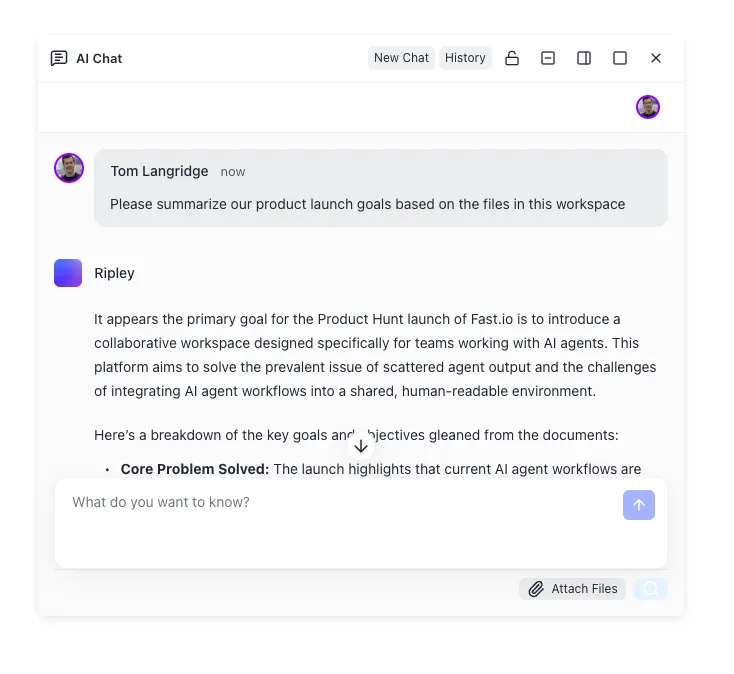
Local disk, Git remotes, and object storage such as S3 remain fine places for source checkout and build artifacts. Those tools do not give a team a shared, permissioned workspace where agent diffs, plan notes, and delivery packages stay queryable after the task ends. For that coordination layer, teams often add a workspace product such as Fast.io next to the git remote rather than treating the laptop clone as the only system of record.

Release tracks and how often Cline ships
Cline does not publish a single linear version number for every surface. GitHub Releases on cline/cline use separate tag families. Reading that correctly prevents the classic "I upgraded the extension and my CLI is still three weeks behind" mismatch.
Recent public tags (sampled mid-July 2026) fall into clear tracks:
- VS Code / product tags:
v4.0.xstyle releases (for examplev4.0.8on 11 July 2026,v4.0.7on 9 July 2026). - CLI tags:
cli-v3.0.xstyle releases, often within a day or two of related work (for examplecli-v3.0.42andcli-v3.0.41on 16 and 15 July 2026). - SDK tags:
sdk/sdk/v0.0.xstyle releases (for examplesdk/sdk/v0.0.62on 16 July 2026).
Cadence is high. In a 30-release window around July 2026, CLI tags dominated count, with VS Code v4 tags and SDK tags interleaved. Treat "latest" as track-specific:
- Pin CI to an explicit
cli-v*tag or npm version, not "whatever main is today." - Let the IDE auto-update from the marketplace if you want the polished extension channel, or pin a known good
v4.xwhen your team needs change control. - Follow SDK changelogs under
sdk/when you build on@cline/sdk, because SDK minor versions can move independently of the marketplace extension.
Practical release hygiene for teams:
- Subscribe to the GitHub Releases feed for
cline/clineif you maintain internal install docs. - Record three version fields in your runbooks: extension version,
cline --version(or package version), and@cline/sdkversion when applicable. - Prefer npm's
cline@nightlyonly on non-production machines. Nightly is useful for early testing, not for shared agent pipelines. - Read surface-specific CHANGELOG files when the root changelog is silent about CLI or SDK-only fixes.
- Confirm JetBrains plugin versions from the JetBrains Marketplace page, not from monorepo tags, while that client remains closed source.
High star counts and frequent tags signal an active project. They also mean main can move under you. Contributors should rebase often. Product teams should pin installers. Neither group should assume that "Cline 4" and "Cline CLI 3" share a single release train.


Keep Cline agent output in one shared workspace
Store plans, diffs, and delivery packages where humans and agents both work. Fast.io gives you org-owned workspaces, version history, Intelligence Mode, and an MCP endpoint, with a 14-day free trial on monthly plans.
Marketplace install versus building from GitHub source
Official install docs split the world into four paths: IDE extension, CLI, Kanban, and SDK. Most "cline github" searchers want one of the first two. Building from source is a different job.
Marketplace and package installs (recommended for use)
VS Code family (VS Code, Cursor, Devin Desktop (formerly Windsurf), VSCodium, Antigravity):
- Open Extensions (
Ctrl/Cmd + Shift + X). - Search
Cline. - Install the Cline extension.
- Open Cline from the activity bar or Command Palette (
Cline: Open In New Tab). - Complete provider setup (Cline Provider, ClinePass, or your own model keys).
Devin Desktop and VSCodium use Open VSX with the same install flow. Marketplace listing: VS Marketplace item saoudrizwan.claude-dev.
JetBrains:
- Settings → Plugins → Marketplace.
- Search
Cline, install, restart. - View → Tool Windows → Cline.
- Complete provider authorization.
Direct link: JetBrains plugin 28247-cline.
CLI:
Requires Node.js 20+ (22 recommended), then:
npm install -g cline
cline auth
cline
Or pass a one-shot task: cline "your task".
SDK:
mkdir my-agent && cd my-agent
npm init -y
npm install @cline/sdk
Kanban (preview board workflows):
Requires Node.js 18+, then:
npx kanban
Build from the GitHub repository (contributors and advanced users)
Follow the project's CONTRIBUTING.md rather than improvising. Core requirements observed in the official guide:
- Install git-lfs, then
git clone https://github.com/cline/cline.git. - Open the project in VS Code.
- Install bun.
- For extension work:
cd apps/vscode && bun run install:all, then generate protos before first build. - Build the SDK package when your surface depends on it:
cd sdk && bun run build. - Launch with F5 / Start Debugging for an Extension Development Host window.
- Format and test before PR (
bun run format:fix, surface-specific test scripts such ascd apps/vscode && bun run test).
Linux contributor machines need the GUI test libraries listed in CONTRIBUTING.md (for example dbus, libgtk-3-0, xvfb, and related packages) if you run the VS Code extension test suite.
When source install is worth it
- You are fixing a bug or landing a feature with maintainer approval.
- You need to verify a PR branch against your own codebase.
- You are auditing how tools, approvals, or MCP wiring work in the open code.
When it is not
- You only want Cline in Cursor or VS Code today. Use the marketplace.
- You need a stable CI agent. Pin a published CLI version from npm.
- You want the JetBrains experience. Use the published plugin; the client is not fully open-sourced in this monorepo.
After Cline writes or rewrites files, those changes usually live in a local git worktree until you commit or hand them off. Some teams keep that entirely on local disk or push straight to GitHub. Others stage intermediate plans, logs, and client deliverables in shared cloud storage such as Google Drive or Dropbox, then lose search and version clarity. A better middle path for agentic teams is a shared org workspace with per-file version history, granular permissions, and agent-accessible MCP endpoints. Fast.io is built for that layer: humans use the UI, agents use Streamable HTTP at /mcp (legacy SSE at /sse), and ownership can transfer from agent-built structure to a human owner while admin access remains available. Plans start at Starter $9.99/mo, Business $49.99/mo, and Enterprise $199.99/mo, with a free trial of up to 14 days on monthly billing that requires a credit card.
Contributing without a closed pull request
Cline's contribution policy is explicit and easy to miss if you only skim the stars counter. From the official CONTRIBUTING.md:
- All members must follow the Code of Conduct.
- Bug reports go through the issue templates after a duplicate search.
- Security vulnerabilities go through GitHub Security Advisories, never public issues.
- Features and larger contributions start with a GitHub Issue. Check Feature Requests discussions first, open a request if needed, and wait for core maintainer approval before implementing.
- PRs without approved issues may be closed.
- Small bug fixes, typo corrections, minor wording improvements, and simple type fixes that do not change behavior are the exception to the issue-first rule.
That policy is friendlier than it sounds. It protects reviewers on a high-velocity monorepo. With thousands of open issues historically and a very active release train, unscoped drive-by PRs do not scale.
Picking work
Look for labels such as good first issue and help wanted on cline/cline issues. Documentation improvements under /docs are also welcome. As of this writing, only a small number of open issues carried the good first issue label, so treat the label as a curated queue, not a large backlog of easy tickets.
PR quality bar
Official guidance asks contributors to:
- Keep each PR focused on a single feature or bug fix.
- Split large changes into smaller, reviewable PRs and commits.
- Run lint and format checks (
bun run lint,bun run format/format:fixdepending on surface). - Add or update tests for behavior changes.
- Pass CI, which enforces linting and formatting.
Discord's #contributors channel is the social on-ramp if you want pairing help before you open a PR. Paid roles, if you want them, are linked from the README careers page at cline.bot.
A sane first-contribution path
- Star and watch the repo only if you actually want notification noise; otherwise just bookmark Releases and Discussions.
- Reproduce a small bug or pick an approved issue.
- Comment on the issue so maintainers know it is claimed.
- Fork, branch from current
main, keep the diff narrow. - Run the relevant tests for
apps/vscode, CLI, or SDK packages you touched. - Open the PR with a link to the approved issue and a short reproduction or screenshot for UI work.
If your goal is not code contribution but operational use, you do not need a fork at all. Install from marketplace or npm, keep .clinerules in your application repos, and store long-lived agent outputs where the rest of the team can find them. Git remains the source of truth for source. Shared workspaces remain the better home for plans, research dumps, client packages, and multi-agent intermediate files that should not clog pull requests.
Using Cline with durable team storage
Cline is strong at local action: reading a repo, running commands, editing files, and (with approval) iterating until tests pass. The weak point for multi-person teams is rarely the agent loop. It is everything that happens after the agent stops.
Common patterns and their tradeoffs:
- Local only: Fast, private, fragile. Laptop dies, context dies.
- Git remotes only: Excellent for source. Poor fit for bulky intermediates, unreviewed dumps, or non-code deliverables you do not want on
main. - Generic drives (Google Drive, Dropbox, Box, OneDrive): Familiar sharing, weak agent APIs, weak semantic search over agent history.
- Object storage (S3 and peers): Great for bulk artifacts, more work to make human review and permissions pleasant.
Fast.io sits in the workspace layer between agent tooling and long-term team access. Relevant capabilities for Cline users:
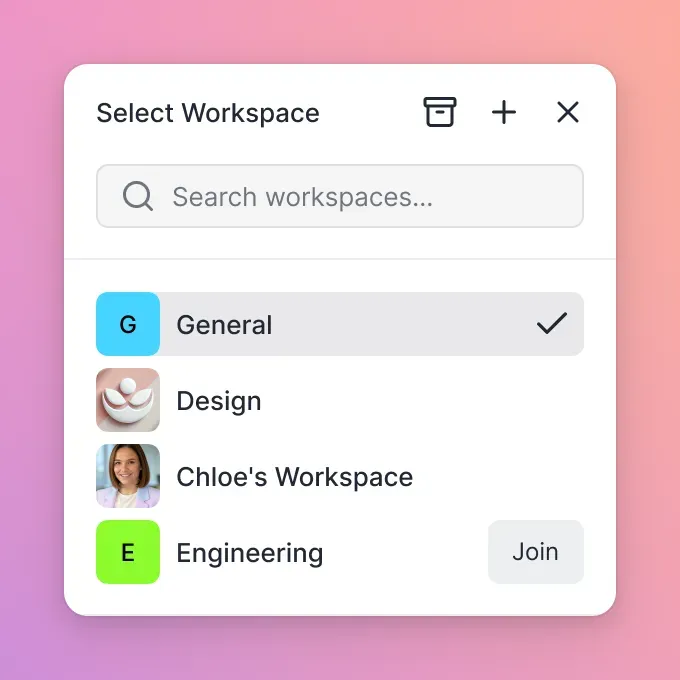
- Org-owned workspaces with granular permissions at org, workspace, folder, and file levels
- Per-file version history so concurrent agent and human edits remain recoverable
- Intelligence Mode for auto-indexing and hybrid search (full-text, semantic, metadata-value) when you need to ask questions with citations
- Consolidated MCP tools over Streamable HTTP (
/mcp) and legacy SSE (/sse) so agents can work the same files humans browse - Branded shares for client handoff, detailed activity log for sensitive work, a real-time activity feed for reactive automation
- Ownership transfer so an agent can scaffold structure and a human can take the org forward without losing admin continuity
Example workflow many teams adopt:
- Run Cline against a git checkout for implementation.
- Upload plans, eval notes, and delivery zips to a Fast.io workspace (or pull them in via cloud import from Drive/Dropbox/OneDrive/Box when the files already live there).
- Enable Intelligence on the workspace so later questions about "what did the agent change last week?" do not depend on chat scrollback.
- Share a branded link with reviewers, or keep permissions internal until the PR merges.
- If an automation agent created the workspace scaffolding, transfer ownership to the human lead and keep agent admin as needed.
Cline stays the coding agent. Git stays the source control system. Fast.io is the shared intelligent workspace where agent output becomes team output. Start with the 14-day free trial if you want to test that split on a real project.
Sources
References used to verify factual claims in this guide.
-
cline/cline had about 64,700 GitHub stars, about 6,900 forks, Apache License 2.0, and description 'Autonomous coding agent as an SDK, IDE extension, or CLI assistant' as of 16 July 2026
-
US monthly search volume for the keyword 'cline github' is about 880 according to DataForSEO keyword data for this article Monorepo maps SDK to sdk/, CLI to apps/cli/, VS Code extension under migration, JetBrains plugins not currently open-sourced, Kanban in cline/kanban
-
Cline is Apache 2.0 licensed open source; README states Apache 2.0 © 2026 Cline Bot Inc.
-
Official install paths include IDE extension, CLI via npm install -g cline, SDK via npm install @cline/sdk, and Kanban via npx kanban
-
Contributions for features require an approved GitHub issue first; PRs without approved issues may be closed
-
Recent GitHub Releases include separate tracks such as v4.0.8, cli-v3.0.42, and sdk/sdk/v0.0.62 around mid-July 2026 v4.0.8 published 11 July 2026 and v4.0.7 published 9 July 2026 on GitHub Releases
-
VS Code Marketplace extension item name is saoudrizwan.claude-dev
-
JetBrains Cline plugin is published as plugin 28247-cline
Frequently Asked Questions
Where is the official Cline GitHub repo?
The official repository is https://github.com/cline/cline under the cline organization. Homepage metadata points to https://cline.bot, and product docs live at https://docs.cline.bot. Prefer that org path over forks when you install, star, or file issues.
Is Cline open source on GitHub?
Yes. The cline/cline repository is published under the Apache License 2.0. The README describes Cline as an open-source coding agent for IDE and terminal use. Note that the JetBrains client is distributed via JetBrains Marketplace and is not fully open-sourced in the monorepo according to the project's own product index.
How do I install Cline from GitHub?
For normal use, install from the VS Code Marketplace, JetBrains Marketplace, or npm (`npm install -g cline`) rather than building source. To build from GitHub for contribution, clone https://github.com/cline/cline.git with git-lfs installed, install bun, follow CONTRIBUTING.md for apps/vscode or other surfaces, generate protos, then launch with VS Code's debugger (F5). Features and large changes need an approved GitHub issue before a PR.
How many stars does the Cline GitHub repository have?
On 16 July 2026 the GitHub API reported about 64,700 stargazers and about 6,900 forks for cline/cline. Star counts change daily, so check the repository badge for the live total.
What is the difference between Cline CLI and the VS Code extension on GitHub?
Both share the same agent core. The VS Code extension ships through the marketplace and is developed primarily under apps/vscode in the monorepo. The CLI lives under apps/cli and publishes npm package cline with its own cli-v* GitHub release tags. Use the extension for interactive editor work and the CLI for terminal, headless, and CI workflows.
Where do Cline docs live relative to the GitHub repo?
Public documentation is hosted at https://docs.cline.bot, including the installing guide at /getting-started/installing-cline. The monorepo also contains a docs/ directory used as documentation source. Community support channels (Discord, Reddit, Discussions) are linked from the repository README.
How often does Cline release new versions?
Cline ships on separate tracks. Mid-July 2026 GitHub Releases showed frequent cli-v3.0.x tags, interleaved v4.0.x product tags, and sdk/sdk/v0.0.x tags, sometimes on the same day. Pin versions per surface instead of assuming one global version number.
Related Resources

Keep Cline agent output in one shared workspace
Store plans, diffs, and delivery packages where humans and agents both work. Fast.io gives you org-owned workspaces, version history, Intelligence Mode, and an MCP endpoint, with a 14-day free trial on monthly plans.