What Is Cline? Open-Source AI Coding Agent Explained
Cline reports 8.0M+ installs across platforms and ships as Apache 2.0 open source, which is why developers keep asking what the agent actually is. This guide defines Cline in plain terms, maps its IDE, CLI, Kanban, and SDK surfaces, explains Plan/Act mode, and shows where shared workspaces fit when agent output needs to leave a single machine.


What Cline is, in plain terms
Cline's product site reports 8.0M+ installs across platforms and an Apache 2.0 open-source license, with the public GitHub repository at about 64.7k stars. That scale is the reason "what is cline" keeps drawing informational search demand: people meet the extension, the CLI, or a colleague's workflow and need a clean definition before they install anything.
Cline is an open-source AI coding agent that lives in your editor and terminal. It reads and writes files, runs terminal commands, can use a browser, and extends itself with tools. Every action is designed to require your explicit approval so you stay in control of what changes on disk and in the shell.
That definition is the whole product thesis. Cline is not autocomplete that only fills the current line. It is an agent loop: observe the project, plan work, call tools, read the results, and continue until the task is done or you stop it. Official docs describe the same shape: an AI coding agent in the editor and terminal that reads files, writes code, runs commands, and waits for approval.
You will see Cline on several surfaces that share one agent core:
- IDE extensions: VS Code Marketplace extension and JetBrains plugin, plus support paths for Cursor, Devin Desktop (formerly Windsurf), and other editors
- CLI: interactive terminal chat or headless runs for scripts and CI
- Kanban: a web task board for many parallel agents with per-card worktrees
- SDK:
@cline/sdkfor embedding the same core in your own apps and automations - Enterprise controls: team governance, remote configuration, and observability on top of the same runtime
Model access is not locked to one vendor. Cline supports bring-your-own-key cloud providers, local runtimes such as Ollama and LM Studio, OpenRouter-style gateways, and Cline-hosted billing paths (including ClinePass for selected open coding models). You pick the model; Cline provides the agent runtime and tool loop around it.
If you only remember one sentence: Cline is the open agent runtime that turns a model plus your approval into file edits, shell work, and tool calls inside the places you already develop.
Related guides
- Best Devin AI Alternatives: Open-Source and Terminal Coding AgentsA 2026 study of over 128,000 GitHub projects shows that up to 28.66% of repositories now deploy active coding agents...
- Hermes LLM: Nous Research's Open-Source Model Family ExplainedHermes LLM is Nous Research's family of open-source large language models, fine-tuned for instruction following,...
- Kilo Code vs Cline: Open-Source Coding Agent ComparisonCline is free for individual developers under Apache 2.0, with its public repo past 64,000 GitHub stars, while pairwise...
- Cline vs Trae: Open-Source Coding Agent vs ByteDance AI IDE ComparedCline and ByteDance's Trae represent two divergent philosophies for agentic software engineering. Cline embeds a...
- How the Cline Coding Agent Operates: Prompts, Context Loops, and File ModificationsThe Cline coding agent has recorded over 4.5 million installs on the Visual Studio Code Marketplace, showing a shift...
- How to Use Cline Plan Mode EffectivelyCline Plan mode is read-only by design. Official docs separate thinking from doing, with three task-size paths and...
More on this subject: Cline (105 guides)
How Plan mode and Act mode work
Plan and Act are the dual-mode system Cline docs highlight for structured development. They separate thinking from doing so the agent does not start rewriting the tree before you agree on the approach.
Plan mode
In Plan mode, Cline can explore the codebase, run searches, and discuss strategy. It is constrained so it does not modify files or execute commands. That constraint is intentional. Planning stays about understanding architecture, edge cases, and tradeoffs instead of drifting into half-finished edits.
Plan mode fits:
- Features where the approach is not obvious
- Debugging when you are unsure what is wrong
- Architecture decisions that touch many files
- Code review and security analysis
- Learning an unfamiliar repository
Act mode
When the plan is solid, you switch to Act mode. Conversation context carries over, so you do not restate the plan. Cline can now edit files, run commands, and execute the strategy. Default behavior still expects approval on file edits and terminal commands unless you deliberately enable auto-approve for safer tool classes.
Act mode fits:
- Implementing a solution you already planned
- Routine changes with a clear approach
- Following established patterns in the repo
- Running tests and making adjustments
- Quick fixes where the solution is obvious
How teams actually use the switch
A practical pattern for medium work is Plan first, then Act: describe the goal, let Cline map relevant files, debate the approach, then flip to Act and review each step. For large work, Cline docs describe /deep-planning as an extended planning pass that systematically explores dependencies before implementation. For tiny fixes (typos, missing imports, obvious one-line repairs), starting in Act mode is fine.
You can also assign different models to each mode. A stronger reasoning model can plan while a faster model implements. Official docs show that model selection is preserved when you switch modes, so the toggle is part of cost and quality control, not only UX.
The Plan/Act split is also why Cline feels different from pure chat assistants. Planning builds shared context before tools fire. That context is what keeps multi-file edits coherent when the agent finally acts.
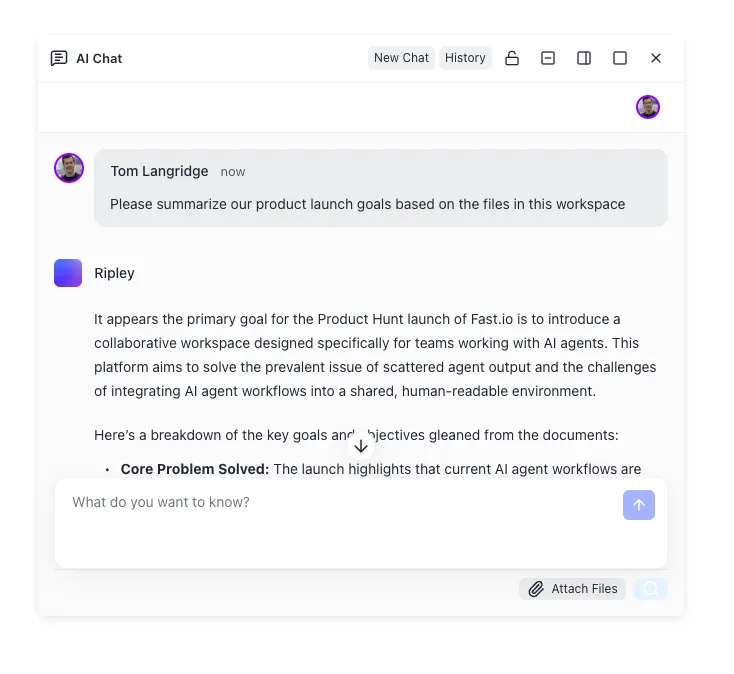
IDE, CLI, Kanban, SDK, and enterprise surfaces
Many overview pages jump straight into install screenshots and bury the product map. Cline is easier to evaluate if you treat it as one agent core with several delivery surfaces.
VS Code and other editors
The VS Code extension is still the entry point most people meet first (Marketplace id saoudrizwan.claude-dev, reflecting the earlier Claude Dev name). In the editor, Cline sits beside the project tree: you open a workspace folder, chat about a task, review diffs, and approve tool calls. JetBrains plugins bring the same experience to IntelliJ IDEA, PyCharm, WebStorm, GoLand, and related IDEs. Docs also list Cursor, Devin Desktop, Antigravity, Zed, and Neovim (via ACP mode) among supported environments.
Inside the IDE surface, the agent can coordinate multi-file edits, watch linter and compiler feedback, and keep checkpoints so you can undo agent steps. Terminal commands run in your environment with live output, including long-running processes such as dev servers.
CLI
The CLI installs with npm i -g cline and runs on macOS, Windows, and Linux. It supports interactive chat and fully headless automation. Headless mode is the path into scripts, cron-style schedules, and CI pipelines: pipe input, request JSON-oriented output, and chain agent work without a GUI. Official materials also describe multi-agent teams from the CLI, scheduled agents, and connectors to messaging platforms for remote task intake.
Kanban
Kanban is a separate application built on the same agent core. You run many agents in parallel from a web task board. Cards map to worktrees, auto-commit behavior, and dependency chains so parallel tasks stay isolated instead of fighting over one dirty working tree. Install guidance in docs and the monorepo points at a Kanban package (npx kanban / global install paths depending on the current package docs). Use Kanban when the bottleneck is concurrent work, not a single interactive chat.
SDK
The SDK (npm install @cline/sdk) is the programmatic agent core behind the CLI, Kanban, VS Code extension, and JetBrains plugin. Product docs position it for custom agents, automations, and product embeddings: register tools, lifecycle hooks, and multi-agent patterns without forking the whole extension UI. If you are building an internal coding bot or packaging Cline-style loops into another product, the SDK is the surface, not the Marketplace extension.
Enterprise layer
Enterprise materials describe security and governance, observability (OpenTelemetry and common monitoring stacks), team management, remote configuration of providers, and APIs for org-level administration. Treat this as a control plane around the same agent, not a different coding model. Individuals still start on the open runtime; organizations add policy, audit, and centralized provider setup when they need it.
Rules, skills, and MCP
Across surfaces, project guidance lives in .clinerules (and related rules/skills mechanisms) so coding standards travel with the repo. Model Context Protocol (MCP) extends the agent beyond built-in file and shell tools. You can attach local STDIO servers or remote Streamable HTTP / legacy SSE servers so Cline can call external systems: databases, APIs, cloud infrastructure, or workspace platforms. In the IDE, MCP servers are managed from the Cline MCP panel; in the CLI, cline mcp walks through list/add/edit/enable flows. Config examples use a mcpServers map with either command/args for local processes or url plus transport type for remote endpoints.
That map (IDE + CLI + Kanban + SDK + enterprise policy + MCP) is the real answer to "what is Cline?" beyond a single VS Code screenshot.



Keep Cline output in a workspace the team can review
Connect agents to org-owned Fast.io workspaces with version history, Intelligence Mode search, and MCP access over Streamable HTTP. Start a 14-day free trial (credit card required) on Starter, Business, or Enterprise.
How Cline differs from GitHub Copilot and similar tools
Comparison searches almost always pair Cline with GitHub Copilot because both sit in the editor. The products solve different jobs.
GitHub Copilot (as a category of AI pair programmers) is strongest at inline suggestions, chat over open files, and tightly integrated PR-oriented flows inside the GitHub ecosystem. It optimizes for speed while you type and for assistance that stays close to the current buffer. Cline optimizes for agentic tasks: multi-step plans, multi-file edits, terminal execution, browser use, and tool calling with an approval gate.
Practical differences developers notice:
- Autonomy shape: Copilot-class tools often complete or explain code in place. Cline runs a tool loop that can span read, edit, build, test, and fix cycles.
- Approval model: Cline's product stance is human-in-the-loop approval for actions that change the system. That matches teams who want agent power without silent disk or shell changes.
- Open runtime: Cline is Apache 2.0 and inspectable. You can audit how tools are invoked, run local models, and embed the SDK. Copilot is a hosted product with its own packaging and licensing.
- Model choice: Cline is provider-flexible (cloud keys, local models, gateways). Copilot's model surface is defined by GitHub's product offerings.
- Surfaces beyond the IDE: Cline's CLI, Kanban, and SDK target automation and multi-agent orchestration. Copilot has expanded surfaces too, but the open agent runtime story is Cline's center of gravity.
None of that means one replaces the other. Many developers keep a completion assistant for day-to-day typing and reserve Cline for larger refactors, repo exploration, test repair loops, and scripted agent jobs. The decision is less "which brand wins" and more "do I need an agent that can operate tools under approval, or a companion that stays in the editor chrome?"
Cline also sits near other open agents and IDE forks. Evaluations should check license, local vs remote execution, approval UX, MCP support, and whether the project has a real CLI/SDK story. Cline's documented stack is unusually broad for a single open agent core.
Where Cline work should live after the agent finishes
Cline is local-first in the common IDE and CLI paths: it edits the workspace on your machine, runs your shell, and keeps task history in local storage. That is excellent for individual speed. It is incomplete for team handoff.
When agent output must leave a laptop, teams reach for familiar options first:
- Local git remotes only: fine for code that already belongs in a repo, weak for mixed artifacts (plans, logs, screenshots, exports, client packs) that never become commits
- Object storage such as S3: durable blobs, but you build your own UI, permissions model, and search
- Drive-style folders (Google Drive, Dropbox, OneDrive): easy human sharing, weak agent APIs and concurrent agent audit trails
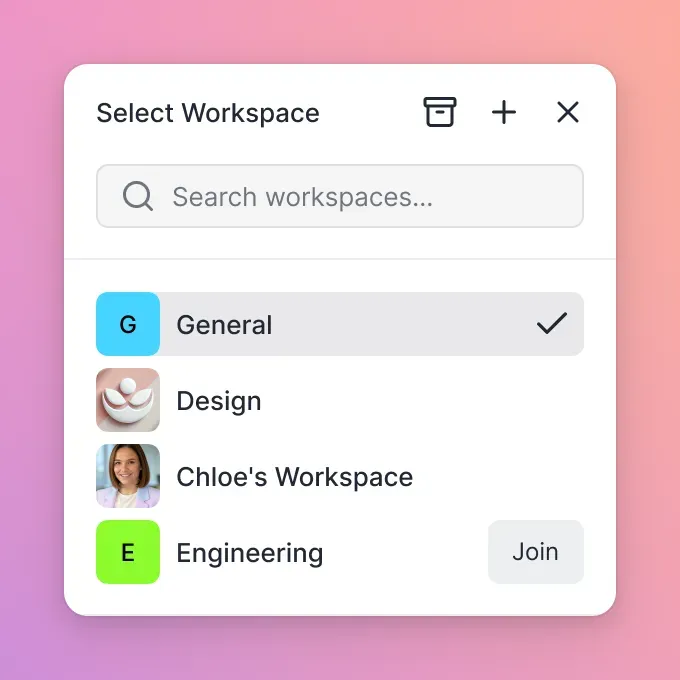
A better pattern for agentic teams is a shared intelligent workspace where humans and agents use the same files. Fast.io is one such layer. Agents and people share org-owned workspaces with per-file version history, granular permissions, and a detailed activity log. Enable Intelligence Mode and files are indexed for hybrid search (full-text, semantic, and metadata-value queries) plus citation-backed Q&A. For structured extraction from PDFs, images, and office docs, Metadata Views turn natural-language field requests into a typed, filterable table without hand-built OCR rules.
Cline connects to external systems through MCP. Fast.io exposes a consolidated MCP toolset over Streamable HTTP at /mcp and legacy SSE at /sse for agent clients that register the workspace server (see the agent storage guide at /storage-for-agents/). A practical workflow looks like this:
- Cline plans and implements in the local repo with Plan/Act and approvals.
- Deliverables that need review (build outputs, reports, client folders, research packs) are written into a shared Fast.io workspace via MCP or upload.
- Teammates review in the UI; agents query the same files through MCP or the API.
- Ownership transfer hands an agent-built org or workspace to a human while the agent can keep admin where appropriate.
- Downstream systems subscribe to the activity feed over WebSocket or long-poll to learn when files change.
Creating a user account is free, but real work needs an organization on a paid plan: Starter $9.99/mo, Business $49.99/mo, or Enterprise $199.99/mo. Monthly plans start with a trial of up to 14 days that requires a credit card. That model fits agent handoffs: an agent can create structure, then a human starts the trial and owns the billing relationship.
Keep git as the source of truth for source code. Use a shared workspace when the problem is coordination: multi-agent concurrency, non-code artifacts, review by non-developers, durable version history, and search that works after the chat session is gone.
A practical first week with Cline
You do not need every surface on day one. A sane rollout looks like this.
Install one surface and prove the approval loop. Install the VS Code extension or the CLI, connect a model (BYOK or Cline-hosted billing), open a throwaway project, and run a small task. Watch how Plan mode explores without writing, how Act mode requests edits, and how you reject or redirect a bad step. If approvals feel noisy, tune auto-approve only for read-only tools; leave write and shell gated.
Encode project rules. Add a .clinerules file (or project rules your team already maintains) covering architecture boundaries, test commands, and forbidden paths. Pair it with a .clineignore so secrets, env files, and generated junk stay out of the agent's reach. Rules are how Cline stops relearning your house style every session.
Attach one MCP server that matters. Pick a single external need: issue tracker, docs search, or a shared workspace MCP such as Fast.io. Confirm tools appear, run one tool call with approval, and only then expand the allowlist. MCP sprawl is a common failure mode; one working server beats five half-configured ones.
Move a real multi-file task through Plan then Act. Choose a medium feature or bug. Force Plan mode until the approach is explicit, enable checkpoints, then Act. Review diffs like a PR. If the agent is thrashing, drop back to Plan instead of spamming Act.
Decide the automation surface. If the value is interactive coding, stay in the IDE. If you need CI or recurring jobs, try headless CLI. If you need many parallel agents, evaluate Kanban. If you are productizing the loop, open the SDK docs. Do not adopt all four because they exist.
Days six and seven: Fix persistence and handoff. Local task JSON is not a team archive. Put durable artifacts in git when they are code, and in a shared workspace when they are deliverables, research, or cross-agent state. Define who reviews agent output, how version history is used when an agent goes sideways, and how ownership moves from agent-created structure to a human-owned org.
Common failure patterns to avoid:
- Running Act mode with broad auto-approve on a production checkout
- Pointing the agent at a monorepo without rules, so it edits the wrong package
- Expecting a small local model to match frontier tool-use quality on multi-file refactors
- Leaving successful agent output only in a chat transcript or a single laptop path
- Treating Cline enterprise policy and personal BYOK setups as interchangeable without documenting which profile applies
When those basics are solid, Cline stops feeling like a novelty sidebar and starts looking like what the official materials claim: one open agent runtime you can run in the editor, the terminal, a task board, or your own product, always with a human able to say no.
Sources
References used to verify factual claims in this guide.
-
Cline reports 8.0M+ installs across platforms.
-
Cline is Apache 2.0 open source with about 64.7k GitHub stars.
-
Official docs define Cline as an AI coding agent in the editor and terminal that reads/writes files, runs commands, uses a browser, and requires approval. ClinePass is listed as a flat $9.99/month subscription path for selected open coding models with higher API rate limits.
-
Plan mode explores without modifying files or running commands; Act mode executes with retained planning context.
-
US monthly search volume for the query what is cline is about 1,300 according to DataForSEO keyword metrics used in this content backlog.
Frequently Asked Questions
What is Cline used for?
Cline is used for agentic software work inside your development environment: multi-file edits, refactors, test-and-fix loops, codebase exploration, terminal automation, and tool-extended workflows via MCP. Developers use the IDE when they want interactive approval, the CLI for scripts and CI, Kanban for parallel agents, and the SDK when embedding the same core into custom products.
Is Cline an open source coding agent?
Yes. Cline is open source under the Apache 2.0 license. The public repository is github.com/cline/cline, and the product site positions the project as an open coding agent runtime without vendor lock-in to a single model provider.
How is Cline different from GitHub Copilot?
GitHub Copilot-class tools focus on inline completion and editor-native assistance. Cline is an open agent that plans and acts with tools: reading and writing files, running commands, using a browser, and calling MCP servers under approval. Cline also ships CLI, Kanban, and SDK surfaces around one agent core, and lets you bring your own model keys or local models.
What is Cline Plan and Act mode?
Plan mode is for exploration and strategy without file changes or command execution. Act mode is for implementing the plan with edits and terminal commands, still under your approval model. Context carries across the switch, and you can assign different models to each mode for cost or quality tradeoffs.
Does Cline support MCP?
Yes. Official docs cover adding local STDIO MCP servers and remote servers over Streamable HTTP or legacy SSE. In the IDE you manage servers from the MCP panel; in the CLI you can use interactive MCP management and config commands. MCP is how Cline reaches databases, APIs, and workspace platforms beyond built-in file and shell tools.
How do you install Cline?
Install paths depend on the surface. The VS Code extension is on the Visual Studio Marketplace (publisher id saoudrizwan.claude-dev). The CLI installs with npm i -g cline. The SDK installs with npm install @cline/sdk. JetBrains has a marketplace plugin. Kanban is a separate app for multi-agent boards. After install, connect a model via BYOK, local runtime, or Cline-hosted billing, then open a project and try Plan mode before Act mode.
Where should teams store files that Cline produces?
Source code should stay in git. For shared deliverables, mixed artifacts, and multi-agent concurrency, use a persistent shared workspace. Local disks isolate work to one machine; raw object storage lacks collaboration UX; consumer drives are weak for agent APIs. Fast.io provides org-owned workspaces with version history, permissions, Intelligence Mode search, Metadata Views, MCP access, and ownership transfer, starting with a 14-day free trial on paid org plans.
Related Resources

Keep Cline output in a workspace the team can review
Connect agents to org-owned Fast.io workspaces with version history, Intelligence Mode search, and MCP access over Streamable HTTP. Start a 14-day free trial (credit card required) on Starter, Business, or Enterprise.