Claude for Students: Free Access, Study Tips, and Student Pricing in 2026
Around 6,600 people search for "claude student discount" every month, and the answer is straightforward: Anthropic does not offer one. But Claude's free tier now includes Sonnet 4.6, web search, file uploads, Projects, and memory across conversations, which covers most undergraduate and graduate workflows without spending anything.


The Student Discount Question, Answered
6,600 monthly searchers ask Google whether Claude offers a student discount. Anthropic's pricing page confirms the answer: no dedicated student plan exists as of June 2026. There is no .edu verification portal, no percentage-off coupon, and no hidden "Education" tab in your account settings.
That does not mean students are stuck paying $20 per month for Pro. Claude's free tier has expanded since its launch, and several campus programs provide full Pro access at no cost to students at partner institutions. The gap between free and paid has narrowed enough that most academic work fits comfortably within the free plan's limits.
Here is what the pricing structure looks like right now:
- Free: $0. Sonnet 4.6, web search, file uploads, Projects, Artifacts, memory, code execution, desktop app
- Pro: $20/month ($17/month billed annually at $200). Adds Opus 4.8, Claude Code, Claude Cowork, Research, higher usage limits
- Max: From $100/month. 5x or 20x usage boost over Pro, priority access, early features
The free tier is genuinely useful for students. The question is whether your specific workflow hits its limits.
Related guides
- Cline Pricing and Cost Guide: Free vs. Enterprise PlansWhile a standard developer subscription to a closed AI coding assistant charges a flat $20.00 per month, developers...
- How to Get GitHub Copilot Free with the Student Developer PackVerified students can bypass the monthly subscription fee for AI-assisted coding by utilizing the GitHub Education...
- Claude vs Gemini in 2026: Pricing, Coding, and Capabilities ComparedClaude Opus 4.8 scores 88.6% on SWE-bench Verified while Gemini 3.1 Pro sits at 80.6%, but Gemini's API pricing starts...
- Can Claude Access Google Drive? Permissions, Limits & Fast.io WorkspacesClaude cannot directly browse entire Google Drive file hierarchies in standard web chat, but users can grant access...
- Can Claude Access OneDrive? Direct Connectors vs Workspace MCPClaude can access OneDrive files through manual file uploads, local desktop sync directory access in Claude Desktop, or...
- Claude Opus Context Window: Token Limits, Pricing, and Large-Corpus SearchThe Claude Opus context window defines the active working memory available for complex reasoning, document analysis,...
More on this subject: Claude and Claude Code (280 guides)
What the Free Tier Actually Includes
Claude's free plan runs on Sonnet 4.6, Anthropic's mid-tier model. You do not get Opus 4.8, the flagship model reserved for Pro and Max subscribers. For most student tasks (essay feedback, research summarization, study guides, coding help), Sonnet 4.6 performs well.
Core features available at $0:
- Sonnet 4.6 with a 200K token context window
- Web search for pulling in current sources
- File uploads: up to 20 files per conversation, 500 MB each
- Projects for organizing conversations around a single topic with custom instructions
- Artifacts for generating standalone documents, code, and interactive outputs
- Memory across conversations so Claude remembers your preferences and context
- Adaptive thinking (throttled compared to paid tiers)
- Code execution and file creation (Excel, Word, PDF export)
- Desktop app for Mac and Windows
- MCP connectors for extending Claude with external tools
What you do not get on free:
- Opus 4.8 (Anthropic's most capable model)
- Claude Code (the terminal-based coding agent)
- Claude Cowork (collaborative workspace features)
- Research (structured multi-source investigations)
- Priority access during peak demand
The 200K context window is worth calling out. That is roughly 150,000 words, enough to paste in a full research paper, a textbook chapter, or a lengthy dataset and still have room for your questions. For comparison, ChatGPT's free tier offers a smaller context window.

How to Stretch Your Free Tier Messages Further
Anthropic replaced fixed daily message caps with a rolling 5-hour window in early 2026. Free users get roughly 15 to 40 messages per window, depending on conversation complexity and server demand.
That range is wide because Claude meters by tokens, not messages. A short question like "What year was the Treaty of Westphalia signed?" barely touches the quota. Uploading a 30-page PDF and asking for a detailed analysis consumes more. File attachments, conversation history, and tool definitions all draw from the same token pool.
Practical implications for students:
- Short study Q&A sessions (flashcard-style): you can comfortably get 30 to 40 exchanges per window
- Document analysis with file uploads: expect closer to 15 to 20 exchanges before hitting the cap
- After hitting the limit, you wait 1 to 5 hours for the window to roll over
- During peak hours (weekday afternoons in the US), limits tighten and response times slow because paid subscribers get priority
Strategies that stretch your quota:
- Start new conversations for new topics instead of letting context accumulate in a single thread
- Use Projects to set custom instructions once rather than repeating context every message
- Do your heaviest work during off-peak hours (early morning, late evening, weekends)
- Copy-paste relevant excerpts instead of uploading entire documents when you only need Claude to look at a few pages
- Use web search sparingly, since each search call adds tokens to your message


Keep your research files organized across every AI tool you use
Upload your research once, search it semantically, and connect it to Claude or any other AI tool through the MCP server.
Study Workflows That Work on the Free Tier
The most effective way to use Claude for academics is as a thinking partner, not a ghostwriter. Submitting AI-generated work as your own is plagiarism at virtually every institution. Using Claude to sharpen your own thinking is a different category entirely.
Literature review and source analysis
Upload a paper (or paste its text) and ask Claude to identify the core argument, methodological strengths and weaknesses, and how it relates to other work you are reading. Claude's web search can also pull in recent publications you might have missed, though you should always verify citations independently since AI can hallucinate references.
Writing feedback with rubric alignment
Paste your draft along with the assignment rubric. Ask Claude to evaluate your work against each rubric criterion and suggest specific improvements. This is like having a writing tutor who checks your argument structure, evidence quality, and formatting against the exact standards your professor uses.
Exam preparation
Ask Claude to generate practice questions based on your course material. Upload your lecture notes or textbook excerpts and request questions at different difficulty levels. Follow up with "explain why option B is wrong" to deepen understanding rather than just memorizing answers.
Coding assignments
Describe the problem and your current approach. Ask Claude to explain where your logic breaks down rather than writing the solution for you. Sonnet 4.6 handles Python, JavaScript, Java, C++, and most languages students encounter in coursework. The code execution feature lets you test snippets directly in the conversation.
Math and science problem-solving
Walk through problems step by step. Claude handles calculus, linear algebra, statistics, physics, and chemistry well. Ask it to check your work at each step rather than jumping to the final answer. Anthropic's Learning Mode (available through Claude for Education at partner schools) is specifically designed to guide rather than answer, asking you "How would you approach this?" before providing solutions.
Research organization with Projects
Create a Project for each course or research topic. Add custom instructions like "I am writing a thesis on X. My advisor prefers APA format. My argument is Y." Every conversation in that Project inherits this context, saving you from repeating background information every session.
How to Get Claude Pro for Free Through Your University
While there is no individual student discount, Anthropic runs several institutional programs that give students full Pro access at no cost.
Claude for Education (university-wide licenses)
Launched in April 2025, Claude for Education gives entire campuses access to Claude Pro features. If your university has signed an agreement, logging into claude.ai with your school email automatically activates Pro-level access. Current partner institutions include Northeastern University (50,000 students across 13 campuses), the London School of Economics, Champlain College, Syracuse University, University of Pittsburgh, Columbia University, and the University of Northampton.
The education version includes Learning Mode, which uses Socratic questioning to guide students through problems instead of handing over answers. Faculty can also use it to generate rubrics, create varied-difficulty assignments, and provide individualized feedback.
Claude Campus Ambassadors
Selected students collaborate directly with Anthropic's research and product teams to lead AI education initiatives on campus. Ambassadors receive Claude Pro access, API credits, and a program stipend. The Spring 2026 cohort applications have closed, but Anthropic runs new cycles regularly.
Claude Builder Clubs
Student-run campus organizations supported by Anthropic. Members get Claude Pro access and monthly API credits (amounts vary by club, with some providing $50/month in API credits). Clubs organize hackathons, workshops, and demo events with Anthropic speakers.
Student Builders API Credits
Individual students can apply for approximately $50 in API credits through Anthropic's Student Builders program. You need a developer account, a .edu email, an Anthropic Organization ID, a project description, and an estimated usage plan. Approval typically takes 5 to 7 business days.
Research credit programs
For graduate students and researchers, Anthropic offers research credits ranging from $1,000 to $25,000 for qualifying academic projects. These are competitive and require a detailed project proposal, but they are substantial if your thesis or research involves building with Claude's API.
GitHub Student Developer Pack
Students verified through GitHub Education get access to Claude Haiku 4.5 through GitHub Copilot in VS Code. As of March 2026, premium models (Sonnet 4.6 and Opus 4.8) are no longer manually selectable for student pack users, but Haiku 4.5 remains available for coding assistance.
Managing Your Research Files Across AI Tools
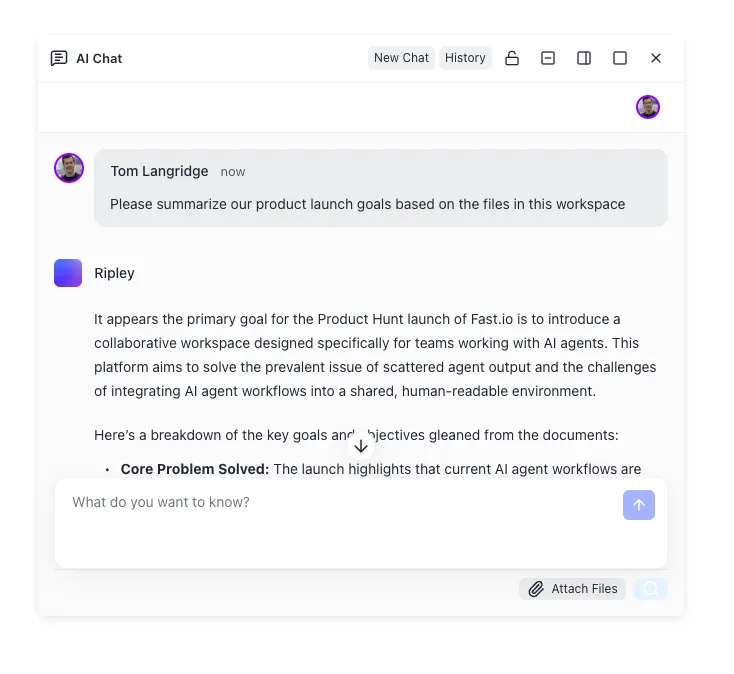
One friction point for students using Claude's free tier is file management. You upload a PDF to one conversation, analyze it, then start a new conversation for a different question about the same document and have to upload it again. Each upload counts toward your rate limit tokens.
Local storage works for simple workflows. You keep files on your laptop, upload them as needed, and move on. But once you are juggling research across multiple AI tools, collaborating with study groups, or building a thesis over months, scattered files become a real problem.
Cloud storage platforms solve the persistence layer. Google Drive and Dropbox are the defaults most students already use. They work fine for basic file sync but were not designed for AI-agent workflows.
Fast.io takes a different approach by building workspaces where both humans and AI agents work with the same files. You upload research materials once, and they stay indexed and searchable. Once Intelligence is enabled for the workspace, documents are indexed for semantic search and RAG-style chat with citations, so you can ask questions about your entire research library without re-uploading individual files each session.
For students building projects with Claude's API (through the Student Builders or research credit programs), Fast.io's MCP server connects directly to Claude, letting your agent read from and write to persistent workspaces. Fast.io offers a 14-day Business Trial, card required; see pricing.
The practical advantage: your research files stay organized in one place, accessible to both you and any AI tools you use, rather than scattered across conversation uploads that expire when the chat does.
Sources
References used to verify factual claims in this guide.
-
6,600 monthly searches for 'claude student discount' Claude free tier includes Sonnet 4.6 with web search, file uploads, Projects, and Artifacts at no cost Claude Pro costs $20/month or $17/month with annual billing ($200 billed upfront)
-
Claude for Education launched April 2, 2025 with Northeastern University, LSE, and Champlain College as initial partners
-
Free tier allows approximately 15-40 messages per rolling 5-hour window depending on complexity
-
GitHub Student Developer Pack provides Claude Haiku 4.5 access through Copilot; premium models no longer selectable as of March 2026
Frequently Asked Questions
Does Claude AI have a student discount?
Anthropic does not offer an individual student discount for Claude Pro as of June 2026. There is no .edu verification system and no discount codes. The main cost-saving options are the free tier (which includes Sonnet 4.6, web search, file uploads, and Projects), annual billing on Pro ($17/month instead of $20/month), and institutional access through Claude for Education at partner universities.
Is Claude AI free for students?
Claude's free tier is available to everyone, not just students. It includes Sonnet 4.6 with a 200K context window, web search, file uploads (up to 20 files per conversation at 500 MB each), Projects, Artifacts, memory, and code execution. The main limitation is a rolling 5-hour rate limit of roughly 15 to 40 messages depending on complexity.
Which AI is best for students?
Claude's free tier is strong for writing feedback, research analysis, and step-by-step problem solving because of its large context window and careful reasoning. ChatGPT offers a free tier with image generation. Google Gemini works alongside Google Workspace tools many students already use. The best choice depends on your primary use case. Many students use two or three of these tools interchangeably.
Can students use Claude for homework?
Most universities distinguish between using AI as a learning tool (acceptable) and submitting AI-generated work as your own (plagiarism). Using Claude to explain concepts, check your reasoning, get feedback on drafts, or generate practice questions is generally fine. Always check your institution's specific AI policy and disclose AI use when required.
How do I get Claude Pro for free as a student?
Check whether your university has a Claude for Education partnership. Students at partner schools like Northeastern, LSE, Columbia, and Syracuse get Pro access by logging in with their school email. You can also join a Claude Builder Club on campus for Pro access and API credits, apply for the Student Builders program for API credits, or apply for research credits if you are working on an academic project.
What is Claude's Learning Mode?
Learning Mode is a feature available through Claude for Education at partner universities. It uses Socratic questioning to guide students through problems rather than providing direct answers. Instead of solving a math problem outright, Claude asks 'How would you approach this?' and walks you through the reasoning process step by step.
Can I upload my textbook to Claude?
You can upload excerpts and individual chapters as PDF files (up to 500 MB per file, 20 files per conversation on the free tier). Claude's 200K context window can handle substantial documents. However, uploading copyrighted textbooks in their entirety raises legal and ethical questions depending on your jurisdiction and intended use. Uploading specific sections for study purposes is generally considered fair use in educational contexts.
Related Resources

Keep your research files organized across every AI tool you use
Upload your research once, search it semantically, and connect it to Claude or any other AI tool through the MCP server.