Claude Cowork Pricing: What Each Plan Actually Unlocks
Anthropic bundles Claude Cowork into every paid Claude subscription rather than selling it separately, which means the real pricing question is not whether you can access Cowork but how much agentic work each tier actually supports. Pro at $20/month, Max at $100 or $200/month, Team at $25/seat, and Enterprise at custom pricing all grant the same Cowork features, but agentic tasks burn through usage allowances five to twenty times faster than regular chat.


Why Cowork Pricing Is Not What It Looks Like
Agentic work inside Claude Cowork consumes usage allowances five to twenty times faster than standard chat, according to Anthropic's own documentation. A task that takes screenshots, reads files, orchestrates sub-agents, and chains multi-step actions burns through your plan's token budget at a rate that makes the sticker price misleading. The $20/month Pro plan and the $200/month Max 20x plan both grant full Cowork access, but a Pro subscriber might exhaust their weekly allowance in a single morning of heavy automation.
That consumption gap is the central tension in Cowork pricing. Anthropic does not sell Cowork as a standalone product. There is no separate SKU, no add-on fee, and no free tier. If you pay for any Claude subscription, you already have Cowork in the Desktop app. The question is whether your plan's usage ceiling matches the volume of agentic work you plan to run.
Every plan shares the same usage pool across Claude chat, Claude Code, and Cowork. Burn tokens in one, and you lose capacity in the others. The 5-hour rolling window resets continuously, but a weekly cap sits on top of it, limiting total throughput regardless of when you work. Understanding these mechanics matters more than comparing feature checklists, because the features are identical across tiers. Only the usage budget changes.
Related guides
- OpenClaw Pricing: What It Actually Costs to Run in 2026OpenClaw is MIT-licensed and costs nothing to download. The real bill comes from two things: where you host it and...
- Cline Pricing and Cost Guide: Free vs. Enterprise PlansWhile a standard developer subscription to a closed AI coding assistant charges a flat $20.00 per month, developers...
- Claude Code Pricing: Plans, Costs, and Usage Limits ExplainedAnthropic doubled Claude Code's five-hour usage caps in May 2026, but most pricing guides still lump chat and coding...
- Claude Cowork vs Claude Code: Which One Should You Use?Claude Code now accounts for roughly 4% of all public GitHub commits, and Claude Cowork went generally available in...
- Claude Cowork Demo: What Each Task Type Looks Like Before You SubscribeOpt-in SaaS trials convert at a median 14%, yet Claude Cowork has no free trial, requiring a $20/month Pro subscription...
- How to Use Claude Cowork SafelyClaude Cowork is a research preview that brings agentic capabilities to Claude Desktop, letting Claude read, write, and...
More on this subject: Claude and Claude Code (278 guides)
Plan-by-Plan Breakdown
Pro ($20/month, or $17/month billed annually)
Pro gives you the complete Cowork feature set: local file access, scheduled tasks, sub-agent coordination, project workspaces, MCP connectors, plugins, and mobile dispatch. The 1x usage baseline means you get the standard token allocation per 5-hour window plus a weekly cap.
In practice, Pro handles light to moderate Cowork usage well. Running a scheduled morning email digest, processing a handful of documents per day, or automating a weekly report fits comfortably. The constraint surfaces when you run long multi-step tasks that involve repeated screenshots and file operations. Those tasks can consume your 5-hour window allocation in under an hour of active work.
Pro is the right starting point for solopreneurs, consultants, and anyone testing whether Cowork fits their workflow before committing to a higher tier.
Max 5x ($100/month)
Max 5x multiplies the Pro usage baseline by five. Same features, same interface, five times the token budget. This tier suits daily Cowork users who run multiple automated tasks, chain sub-agents for research and drafting, or process batches of files regularly.
The practical difference: where a Pro user might hit their limit after two or three intensive Cowork sessions per week, a Max 5x user can run intensive sessions daily without throttling. Max subscribers also get priority access during high-traffic periods and early access to new features as Anthropic rolls them out.
Max 20x ($200/month)
Max 20x provides twenty times the Pro usage baseline. This tier exists for users who treat Cowork as their primary work interface, running it continuously throughout the day. Content teams automating competitive research pipelines, developers coordinating multi-agent coding workflows, and operations teams running scheduled automations across multiple MCP connectors are the target audience.
At $200/month, the math works when you quantify the labor it replaces. One agency reported that a competitive intelligence pipeline costs $15 to $30/month in Cowork usage and replaces roughly three hours of manual research per week.
Team Standard ($25/seat/month, or $20/seat billed annually)
Team plans add organizational controls on top of Pro-level usage. Central billing, SAML SSO, admin dashboards, Microsoft 365 integration, and the guarantee that Anthropic will not train models on Team conversations by default. Usage per seat matches the Pro baseline.
Team plans support 5 to 150 seats with the ability to mix Standard and Premium seat types within the same organization. This means you can give most of your team Standard seats and reserve Premium seats for the power users who need more headroom.
Team Premium ($125/seat/month, or $100/seat billed annually)
Team Premium gives each seat 5x the Standard usage allocation, matching the individual Max 5x plan. Same admin controls as Standard, just more capacity per person. This tier makes sense for teams where multiple members run Cowork-heavy workflows daily.
Enterprise ($20/seat plus API-rate usage)
Enterprise pricing starts at roughly $60/seat with a 70-seat minimum for sales-assisted deals. Features beyond Team include role-based access controls, SCIM provisioning, audit logs, a Compliance API, custom data retention policies, network access controls, IP allowlisting, and a strict security requirements-ready option. Enterprise plans also get a 500K token context window instead of the standard 200K.
Enterprise customers can stream Cowork activity via OpenTelemetry to external SIEM tools. This is the primary audit pathway for Cowork, since Cowork events are not currently captured in the Compliance API.
What Actually Drives Cowork Costs
The sticker price of each plan tells you less than the usage mechanics behind it. Three factors determine how fast you burn through your Cowork allowance.
Screenshot frequency. Cowork takes screenshots to understand your screen state, and images are far more expensive than text in token terms. A task that takes ten screenshots during execution consumes more budget than a text-only chat exchange of similar length. Tasks involving UI verification, visual QA, or application monitoring are the most screenshot-heavy.
Sub-agent chains. When Cowork spawns sub-agents to handle parallel subtasks, each sub-agent consumes tokens independently. A research task that spawns three sub-agents to investigate different angles uses roughly three times the tokens of a single-threaded approach. The orchestration overhead adds to the total.
Peak hour penalties. During weekday peak hours (5am to 11am Pacific), Anthropic applies a 1.3x to 1.5x usage multiplier. The same task run at 7am PT burns through your budget 30% to 50% faster than the same task run at 2pm PT. If you have flexibility in scheduling, shifting heavy Cowork work to off-peak hours stretches your plan further.
The shared usage pool across Claude chat, Code, and Cowork creates a practical constraint that most pricing guides ignore. A developer who spends their morning in Claude Code and their afternoon in Cowork is drawing from the same weekly cap. If you use Claude heavily across multiple surfaces, the effective Cowork capacity of your plan is lower than the headline number suggests.
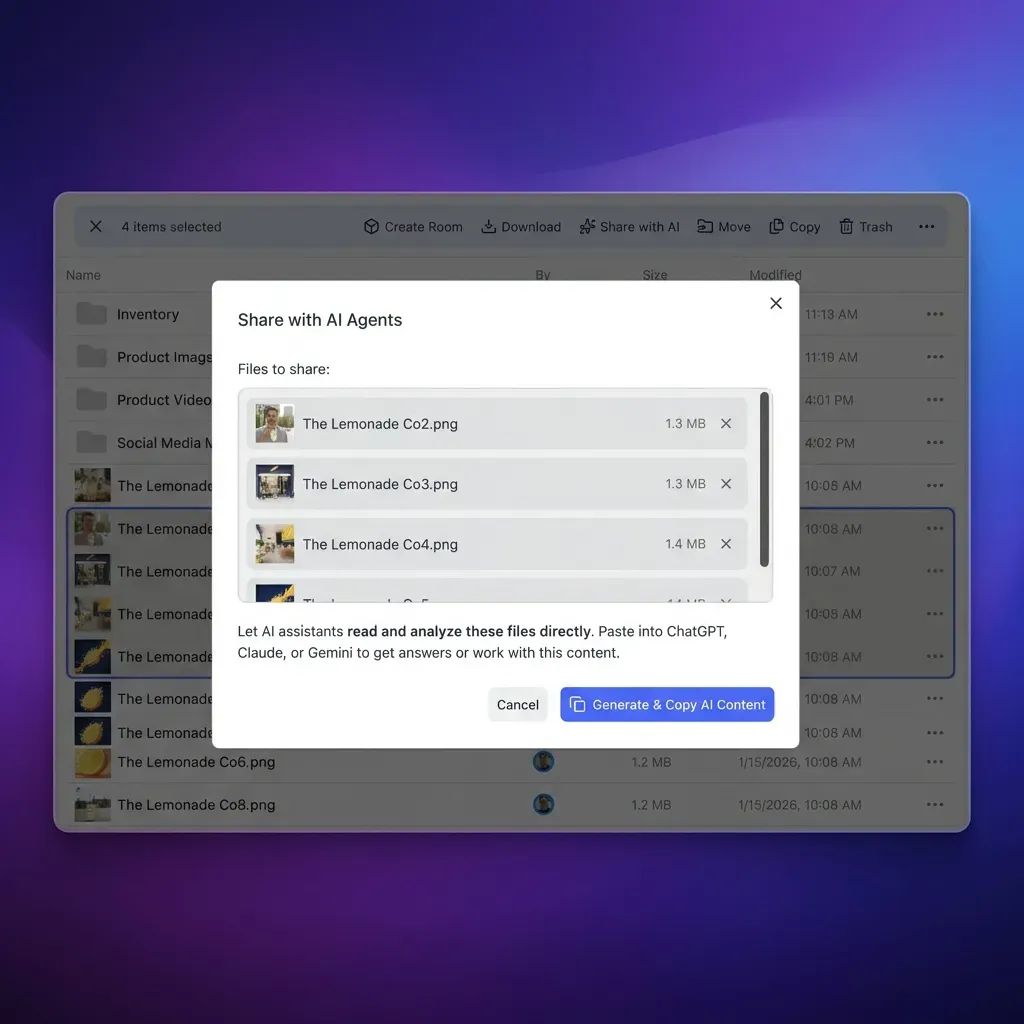
For workflows that generate outputs worth preserving, the local file system works until your laptop closes. Outputs written to a local folder disappear from agent access when the machine sleeps. A persistent storage layer like Fastio solves this by giving both Cowork and your team access to the same files through MCP. Fastio provides shared workspaces with granular permissions and a detailed activity log, which covers the storage side while keeping your Cowork outputs accessible.



Persist Cowork outputs where your whole team can reach them
Fastio gives Claude Cowork a persistent file layer through MCP with shared workspaces, granular access, and audit logging.
Picking the Right Tier for Your Workflow
Start with how many hours of active Cowork work you expect per week, not with the feature list. Every plan ships the same Cowork capabilities. The only variable is how much runway you get before hitting a usage wall.
Start with Pro if you are exploring Cowork for the first time, running a few scheduled tasks, or using it for occasional document processing. Most users who interact with Cowork for under five hours per week stay within Pro limits comfortably. If you hit the usage cap more than twice in a week, that is the signal to upgrade.
Move to Max 5x if you use Cowork daily for substantive tasks: research pipelines, content generation, multi-step automation, or file processing. The five-fold increase in usage budget means you can run two to three intensive sessions per day without throttling.
Choose Max 20x if Cowork is your primary working tool throughout the day. This tier is for users who treat Claude as a full-time collaborator, not a tool they check in with occasionally. The cost is justified when the agentic work replaces significant manual labor.
Use Team Standard if you need organizational controls (SSO, central billing, admin oversight) and your team's per-person Cowork usage is moderate. Team Standard seats match Pro-level capacity.
Use Team Premium if your team has power users who would otherwise hit Team Standard limits regularly. Mixing Standard and Premium seats within the same organization lets you right-size spending without over-provisioning the entire team.
Go Enterprise if you need compliance features (audit logs, SCIM, data retention policies, IP allowlisting), the expanded 500K context window, or OpenTelemetry streaming for centralized Cowork monitoring. The per-seat-plus-usage pricing model means costs scale with actual consumption rather than a flat rate.
One pattern worth considering: pair your Claude subscription with an external storage layer so that Cowork outputs persist beyond your local machine. Fastio workspaces give agents and humans access to the same files. Claude writes to Fastio via the MCP server, and your team reviews outputs in the browser. You can explore this setup with a 14-day Business Trial and keep your Cowork budget focused on compute rather than worrying about file persistence.
Common Pricing Questions, Answered Directly
Does Cowork cost extra on top of my Claude subscription?
No. Cowork is bundled into every paid Claude plan. There is no add-on charge, no separate license, and no usage-based fee beyond what your subscription already includes. The only cost consideration is whether your plan's usage ceiling supports the volume of agentic work you want to run.
Can I try Cowork before paying?
Not directly. There is no free Cowork tier. The free Claude plan does not include Cowork access. However, Pro at $20/month (or $17/month on annual billing) is the lowest entry point, and Anthropic does not require a long-term commitment on monthly billing.
Is annual billing worth it?
Annual billing saves roughly 17% on Pro ($17 vs $20/month) and 20% on Team Standard ($20 vs $25/seat). For Max plans, Anthropic has not published annual discounts as of June 2026. If you are confident you will use Cowork for at least six months, annual Pro billing pays for itself by month seven.
What happens when I hit my usage limit?
Claude does not charge overage fees. When you hit the 5-hour window or weekly cap, Cowork stops accepting new tasks until the window resets. You can still access Claude chat with reduced capacity. Upgrading to a higher tier takes effect immediately and resets your usage allocation.
Should I upgrade from Pro to Max or add API access instead?
If you primarily need more Cowork and Claude Code capacity, upgrading to Max is simpler. If you are building applications that call Claude programmatically, API access (billed separately per token) might be more cost-effective for those specific workloads. The two are not mutually exclusive. Many developers maintain a Max subscription for interactive work and a separate API account for production applications.
Sources
References used to verify factual claims in this guide.
-
Agentic work burns usage allowances five to twenty times faster than standard chat
-
Pro starts at $20/month ($17 annual), Max 5x at $100/month, Max 20x at $200/month Team Standard at $25/seat/month ($20 annual), Team Premium at $125/seat ($100 annual) Enterprise plans include 500K token context window, HIPAA-ready option, and start around $60/seat with 70-seat minimum
-
Peak hours (5am to 11am Pacific weekdays) apply a 1.3x to 1.5x usage multiplier
-
Competitive intelligence pipeline costs $15 to $30/month in usage and replaces roughly three hours of manual work per week
Frequently Asked Questions
Is Claude Cowork included in Pro?
Yes. Claude Cowork is included in every paid Claude plan, starting with Pro at $20/month. Pro subscribers get the complete Cowork feature set including local file access, scheduled tasks, sub-agent coordination, project workspaces, MCP connectors, and mobile dispatch. The only difference between Pro and higher tiers is the usage allocation, not the feature set.
What's the difference between Pro and Max for Cowork?
Features are identical. The difference is usage capacity. Pro provides a 1x usage baseline, Max 5x provides five times that amount for $100/month, and Max 20x provides twenty times the baseline for $200/month. Since Cowork tasks burn through usage allowances five to twenty times faster than standard chat, Max subscribers can run more agentic work before hitting throttling limits. Max also includes priority access during peak traffic and early access to new features.
Can I use Claude Cowork for free?
No. Claude Cowork requires a paid Claude subscription. The free Claude plan does not include Cowork access. The most affordable entry point is Pro at $20/month (or $17/month with annual billing). There is no free trial specifically for Cowork, but the monthly Pro plan has no long-term commitment.
Does Claude Cowork cost extra on top of the subscription?
No. Cowork is bundled into every paid plan at no additional charge. There is no add-on fee, separate license, or per-task billing. Your subscription's existing usage allowance covers all Cowork activity, shared with Claude chat and Claude Code usage.
How fast does Cowork burn through my usage limit?
Agentic Cowork tasks consume five to twenty times more of your usage allowance than equivalent text-based chat interactions. The higher consumption comes from screenshots (which are token-expensive), sub-agent coordination, and multi-step file operations. During peak hours (5am to 11am Pacific on weekdays), usage burns 30% to 50% faster due to Anthropic's peak-hour multiplier.
What is the cheapest way to use Claude Cowork?
Pro at $17/month with annual billing is the lowest-cost option. To stretch your usage further, schedule heavy Cowork tasks outside of peak hours (after 11am Pacific on weekdays), batch file operations into fewer sessions, and avoid screenshot-intensive tasks when possible. Pairing Cowork with a shared external storage layer like Fastio offloads file persistence so your usage budget stays focused on compute.
Related Resources

Persist Cowork outputs where your whole team can reach them
Fastio gives Claude Cowork a persistent file layer through MCP with shared workspaces, granular access, and audit logging.