OpenClaw Pricing: What It Actually Costs to Run in 2026
OpenClaw is MIT-licensed and costs nothing to download. The real bill comes from two things: where you host it and which LLM you connect. This guide breaks down actual monthly costs across four hosting providers, six LLM pricing tiers, and four usage scenarios, so you can budget before you deploy.


The Software Is Free. Everything Else Has a Price Tag.
OpenClaw ships under the MIT license. There is no paid tier, no premium edition, no per-seat fee. You download it, install it, and run it. The project is maintained by Peter Steinberger and an active open-source community, and it is not affiliated with Anthropic despite defaulting to Claude as its primary LLM provider.
That said, "free software" does not mean "free to operate." Running OpenClaw requires two things that cost money:
- A server to host the OpenClaw process (unless you run it on your laptop, which works but limits uptime)
- API access to at least one LLM provider, since OpenClaw itself has no built-in language model
The total monthly cost ranges from roughly $7 for a lightweight personal setup to $500+ for a team running frontier models at high volume. Where you land depends entirely on the choices below.
Related guides
- Hermes Agent Pricing: What It Costs to Run in 2026Hermes Agent from Nous Research is MIT-licensed and free to download, but "free" software still costs money to run. The...
- Claude Code vs Cline: API Costs and Pricing Model ComparisonAn analysis of the operational costs and billing models behind Claude Code and Cline. We break down the math of token...
- OpenClaw Free Tier: Features, Limits, and SetupOpenClaw agents connect to persistent Fastio workspaces with scalable cloud storage and usage credits. Review Starter,...
- OpenClaw for Business: Use Cases, Costs, and Deployment That Actually WorkSelf-hosted OpenClaw costs 3x to 5x more than the VPS sticker price once you add LLM API bills and maintenance labor,...
- OpenClaw vs OpenCode: What Each Tool Actually Does and When to Use ItOpenClaw and OpenCode are the two most-starred open-source AI agent projects on GitHub, and developers keep asking...
- How to Run OpenClaw in VS Code: Three Extension Approaches ComparedThe official OpenClaw extension has nearly 5,000 VS Code installs, but it only covers one of three ways to connect...
More on this subject: OpenClaw Setup and Guides (199 guides)
VPS Hosting: $3.29 to $49 Per Month
OpenClaw needs a server that stays online. You can run it on your own machine, but most users deploy to a VPS for 24/7 availability. Here are the current options from providers that explicitly support OpenClaw.
Contabo (Dedicated OpenClaw Tiers)
Contabo publishes four tiers designed for OpenClaw workloads:
- Cloud VPS 10 (Personal): 4 vCPU, 8 GB RAM, 75 GB NVMe for $4.50/month
- Cloud VPS 20 (Power User): 6 vCPU, 12 GB RAM, 100 GB NVMe for $7.00/month
- Cloud VPS 40 (Team): 12 vCPU, 48 GB RAM, 250 GB NVMe for $25.00/month
- Cloud VPS 60 (Enterprise): 16 vCPU, 64 GB RAM, 500 GB NVMe for $49.00/month
All plans include unlimited traffic and DDoS protection. Prices reflect 12-month subscription rates.
Hostinger
Hostinger's KVM 1 plan starts at $6.99/month for personal OpenClaw projects. Their documentation breaks costs into tiers by usage intensity, with light personal use at $6 to $13/month and small business deployments at $25 to $50/month including estimated LLM spend.
Hetzner
The CAX11 ARM server runs $3.29/month (rising to $4.49 in April 2026) with 2 vCPU, 4 GB RAM, and 40 GB NVMe. This is the cheapest reliable option for a single-user OpenClaw instance, though the limited RAM means you will want to keep concurrent tasks low.
Elestio (Managed Hosting)
Elestio offers fully managed OpenClaw deployments with a pay-as-you-go model. You pick your cloud provider (Hetzner, AWS, DigitalOcean, Vultr, and others), region, and specs. Storage runs $0.15/GB/month. They offer a $20 free trial credit, and basic support is included. This is the easiest setup if you want someone else handling server maintenance.
Oracle Cloud (Free Tier)
The Oracle Cloud free tier gives you 4 OCPU (8 vCPU), 24 GB RAM, and large storage at no cost indefinitely. The catch: Oracle may reclaim idle instances unless you upgrade to Pay As You Go billing. It works well for experimentation but is risky for anything you depend on.
How Much Do LLM APIs Cost with OpenClaw?
Your LLM bill will almost exceed your hosting bill. OpenClaw supports multiple providers, and pricing varies by more than 100x between the cheapest and most expensive models.
Current Per-Token Pricing (Per 1M Tokens)
Budget tier:
- GPT-OSS-120B: $0.039 input, $0.10 output
- GPT-5 Nano: $0.05 input, $0.40 output
- GPT-4o-mini: $0.15 input, $0.60 output
Mid tier:
- Gemini 2.5 Flash: $0.30 input, $2.50 output (free tier available with limits)
- Claude Haiku 4.5: $1.00 input, $5.00 output
Premium tier:
- GPT-4o: $2.50 input, $10.00 output
- GPT-5.4: $2.50 input, $15.00 output
- Claude Sonnet 4.6: $3.00 input, $15.00 output
- Gemini 2.5 Pro: $1.25 input, $10.00 output
Frontier tier:
- Claude Opus 4.6: $5.00 input, $25.00 output
What This Means in Practice
A single agent task typically requires 3 to 8 LLM calls and consumes 80,000 to 150,000 input tokens for a medium-complexity request. Running 10 medium tasks per day on GPT-OSS-120B costs roughly $0.50/month. The same workload on Claude Opus 4.6 costs roughly $75/month.
The model you pick is the single biggest cost decision you will make.
The Hidden Cost: Heartbeat Tokens
OpenClaw's default configuration includes a heartbeat feature that sends periodic requests to your LLM provider. By default, it fires every 30 minutes, consuming 8,000 to 15,000 tokens per call. Over 24 hours, that adds up to roughly 570,000 input tokens before you run a single task.
On a budget model like GPT-OSS-120B, the heartbeat costs pennies. On Claude Opus 4.6, it adds approximately $2.85/day, or $85/month, just to keep the agent checking in.
You can disable the heartbeat entirely by setting the interval to zero, which stops all background token consumption. Alternatively, enable isolated sessions with light context to reduce each heartbeat call to 2,000 to 5,000 tokens, roughly a 90% reduction. For most personal use cases, disabling the heartbeat and running tasks on demand is the right call.



Persistent storage for your OpenClaw outputs
Persistent workspace with semantic search, file versioning, and MCP access.
Four Real-World Cost Scenarios
Here is what OpenClaw actually costs for four common deployment patterns, with specific providers and models.
Personal Use: $7 to $15/Month
- Hosting: Hetzner CAX11 at $3.29/month
- Model: GPT-OSS-120B or Gemini 2.5 Flash (free tier)
- Usage: 5 to 10 tasks per day, heartbeat disabled
- LLM spend: $2 to $10/month
- Total: $7 to $15/month
This covers a personal assistant handling email drafts, research summaries, and light automation. If you stay within Gemini's Trial limits, you can run this setup for under $5/month.
Power User: $25 to $80/Month
- Hosting: Contabo Cloud VPS 10 at $4.50/month
- Model: Claude Haiku 4.5 or GPT-4o
- Usage: 20 to 50 tasks per day, lightweight heartbeat enabled
- LLM spend: $20 to $75/month
- Total: $25 to $80/month
Suitable for a developer or freelancer running coding assistance, document analysis, and workflow automation throughout the workday.
Small Team: $60 to $200/Month
- Hosting: Contabo Cloud VPS 40 at $25/month
- Model: Claude Sonnet 4.6 or GPT-5.4
- Usage: Multiple users, 50 to 200 tasks per day
- LLM spend: $35 to $175/month
- Total: $60 to $200/month
A 3 to 5 person team using OpenClaw for customer support drafting, content generation, and internal research. The 48 GB RAM on this tier handles concurrent agent sessions without swapping.
Enterprise: $500 to $1,500+/Month
- Hosting: Contabo Cloud VPS 60 at $49/month or dedicated hardware
- Model: Claude Opus 4.6 or mixed-model routing
- Usage: High-volume automation, 500+ tasks per day
- LLM spend: $450 to $1,500+/month
- Managed option: Elestio managed hosting adds operational overhead reduction
- Total: $500 to $1,500+/month
At this scale, most teams implement model routing: sending simple tasks to budget models and reserving frontier models for complex reasoning. This can cut LLM spend by 40 to 60% compared to running everything through a single premium model.
How to Store and Share What OpenClaw Produces
OpenClaw generates files, reports, and data that need to go somewhere after creation. The cheapest approach is keeping everything on your VPS, but that creates problems once you need to share outputs with teammates, version files across sessions, or hand off agent work to a human reviewer.
Local storage works until it does not. VPS disk is not backed up by default, files are not searchable beyond filenames, and sharing means setting up additional infrastructure.
S3 or Google Cloud Storage handles durability, but both require configuring buckets, managing IAM credentials, and building your own sharing layer.
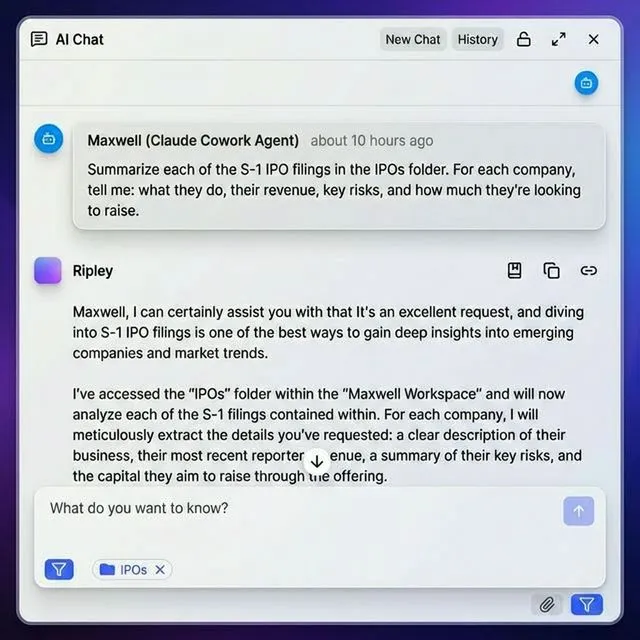
Fastio solves the storage-plus-collaboration problem for agent workflows specifically. Fastio offers a 14-day Business Trial (card required), and paid plans start at $9.99/mo with usage-based credits at /pricing/. Once Intelligence is enabled on a workspace, files uploaded through the Fastio MCP server are indexed for semantic search, so your team can ask questions about agent outputs without digging through folders.
The ownership transfer feature is particularly useful for OpenClaw deployments: your agent builds a workspace, populates it with generated content, and transfers it to a human who reviews, edits, and publishes. The agent retains admin access for future updates while the human controls distribution.
For teams already running OpenClaw, the practical workflow is:
- OpenClaw generates files on your VPS
- A post-task script uploads outputs to Fastio via the MCP server or API
- Team members access files through shared workspaces with granular permissions
- Once Intelligence is enabled, files are indexed for search and AI-powered Q&A
You can start with the Business Trial and scale credits as your usage grows.
How to Reduce Your OpenClaw Bill
If your monthly bill is higher than expected, these are the highest-impact changes, ordered by savings potential.
Route by Task Complexity
Not every request needs a frontier model. Simple lookups, formatting tasks, and template generation work fine on GPT-OSS-120B or GPT-5 Nano. Reserve Claude Sonnet or Opus for multi-step reasoning, code generation, and analysis. Teams that implement model routing typically save 40 to 60% on LLM costs.
Disable or Reduce the Heartbeat
As covered above, the default heartbeat can cost more than your actual task usage on premium models. Disabling it is the single fast way to reduce your bill.
Use Free Tiers Strategically
Gemini 2.5 Flash offers a free tier with rate limits. Oracle Cloud offers a permanently free VPS tier. Combining both gives you a functional OpenClaw deployment at $0/month for light use, though you accept the risk of Oracle reclaiming idle instances.
Right-Size Your VPS
If your agent runs 10 tasks per day, you do not need 48 GB of RAM. Start with the cheapest tier that meets your concurrency needs and upgrade only when you hit actual performance limits, not anticipated ones.
Monitor Token Usage
Track your actual token consumption for a week before committing to a model tier. Many users overestimate their needs and pay for premium models that handle the same workload a mid-tier model could. The difference between Claude Haiku 4.5 and Claude Opus 4.6 is a 5x price increase per token.
Sources
References used to verify factual claims in this guide.
-
Contabo Cloud VPS 10 starts at $4.50/month with 4 vCPU, 8 GB RAM, 75 GB NVMe
-
Hostinger KVM 1 plan starts at $6.99/month for OpenClaw
-
Hetzner CAX11 runs $3.29/month with 2 vCPU, 4 GB RAM, 40 GB NVMe Oracle Cloud free tier offers 4 OCPU (8 vCPU), 24 GB RAM, 200 GB storage Default heartbeat consumes 8,000 to 15,000 tokens per call every 30 minutes
-
Elestio storage costs $0.15/GB/month with pay-as-you-go billing
Frequently Asked Questions
Is OpenClaw free to use?
OpenClaw itself is completely free. It is open-source software released under the MIT license with no paid tiers or premium features. The costs come from hosting the software on a server (typically $3 to $50/month depending on the VPS provider) and paying for LLM API access from providers like Anthropic, OpenAI, or Google.
How much does it cost to run OpenClaw per month?
Total monthly costs range from about $7 for a personal setup (budget VPS plus a cheap LLM) to $500+ for enterprise team deployments using frontier models. A typical power user running Claude Haiku 4.5 on a Contabo VPS spends $25 to $80/month. The LLM API bill is almost always the largest portion of the total cost.
What is the cheapest way to host OpenClaw?
The cheapest reliable option is Hetzner's CAX11 ARM server at $3.29/month with 2 vCPU, 4 GB RAM, and 40 GB NVMe. Oracle Cloud's free tier offers more resources (8 vCPU, 24 GB RAM) at no cost, but carries the risk of instance reclamation. For managed hosting, Elestio starts with a $20 free trial credit and bills based on actual resource usage.
Does OpenClaw have an enterprise plan?
No. OpenClaw is a single open-source project with no commercial tiers. Enterprise deployments use the same software on larger infrastructure. The 'enterprise cost' ($500 to $1,500+/month) comes from higher-spec VPS plans, premium LLM models, and increased task volume rather than any paid OpenClaw license.
Which LLM is the cheapest to use with OpenClaw?
GPT-OSS-120B currently offers the lowest per-token cost at $0.039 per million input tokens and $0.10 per million output tokens. GPT-5 Nano is another budget option at $0.05/$0.40. Gemini 2.5 Flash provides a free tier with rate limits, making it effectively $0 for light usage.
What does the OpenClaw heartbeat cost?
The default heartbeat fires every 30 minutes and consumes 8,000 to 15,000 tokens per call. On Claude Opus 4.6, this adds roughly $85/month in background token usage. On budget models like GPT-OSS-120B, the cost is negligible. You can disable the heartbeat entirely or enable lightweight mode to cut consumption by about 90%.
Can I run OpenClaw for free?
Technically yes, by combining Oracle Cloud's free VPS tier with Gemini 2.5 Flash's free API tier. This gives you a functional setup at $0/month for light use. The trade-offs are Oracle's instance reclamation risk and Gemini's rate limits, so it works for experimentation but is not reliable for production workflows.
Related Resources

Persistent storage for your OpenClaw outputs
Persistent workspace with semantic search, file versioning, and MCP access.