Claude Cowork Features, from File Access to Scheduled Tasks
A Growth Unhinged survey found that 32% of GTM operators now use Cowork as their primary Claude product, matching both Chat and Code in adoption within months of launch. This guide maps every Cowork feature, from folder-scoped file access and sub-agent coordination to scheduled tasks and MCP connectors, so you can evaluate which capabilities actually apply to your workflows.


What Claude Cowork Actually Ships
A Growth Unhinged survey of GTM operators found Cowork reached 32% primary-product share within weeks of its April 2026 GA launch, pulling even with Chat (30%) and Code (31%). That adoption speed makes sense once you see what Cowork bundles: local file access, background task execution, plugin extensibility, and MCP-based connectors, all running inside an isolated VM sandbox on your machine.
Cowork is included on every paid Claude plan. Pro starts at $20/month, Team at $25/seat, and Enterprise is custom-priced. There is no separate Cowork SKU. If you are paying for Claude, you already have it in the Desktop app under the Cowork tab.
The feature set breaks into six categories: file system access, task execution and scheduling, permission controls, plugins and MCP connectors, output generation, and enterprise monitoring. The rest of this guide walks through each one with enough detail to know whether it fits your use case or whether you need to look elsewhere.
Related guides
- How to Configure Devin AI Docker File Access and DevcontainersContainer usage among IT professionals reached 92% in 2025, highlighting the need for standard environments in software...
- Can Copilot Access OneDrive? File Permissions, Personal vs Business & SetupUsers asking can Copilot access OneDrive will find that retrieval depends on whether they use a personal account or an...
- Claude Cowork vs Claude Code: Which One Should You Use?Claude Code now accounts for roughly 4% of all public GitHub commits, and Claude Cowork went generally available in...
- How to Build Claude Cowork Client Portals for AI AutomationA Claude Cowork client portal gives agencies a branded staging area for their autonomous agents. The agents securely...
- How to Use Claude AI for Marketing: Campaigns, Content, and AutomationEighty percent of marketing teams feel pressure to adopt AI, but only 6% have embedded it into actual workflows. Claude...
- Claude Cowork OneDrive Connector: File Access & BenchmarksConnecting Claude Cowork to Microsoft OneDrive allows AI agents to access enterprise files during collaborative work...
More on this subject: Claude and Claude Code (278 guides)
How File Access and Project Workspaces Work
Cowork reads and writes local files without manual uploads or downloads. You grant folder-scoped access, and Claude can open, edit, create, and organize files inside those folders. The recommended setup is a dedicated working directory per project rather than granting access to your entire home folder.
Project workspaces group related tasks into persistent, self-contained environments. Each project gets its own files, links, instructions, and memory. This matters because Claude retains context across sessions within a project. You do not re-upload the same brief every time you start a new task.
Workspaces also support global and folder-level instructions via CLAUDE.md files. Drop a CLAUDE.md at the workspace root to set standing context ("always use AP style," "never modify files in /archive"). Subfolder-level instructions override or extend the global ones. This replaces the repetitive preamble most people paste into every chat session.
Code execution happens inside an isolated virtual machine, separate from your main operating system. Claude can run scripts, process data, and generate outputs without risking your system files. The VM sandbox handles the compute; your local file system handles the persistence.
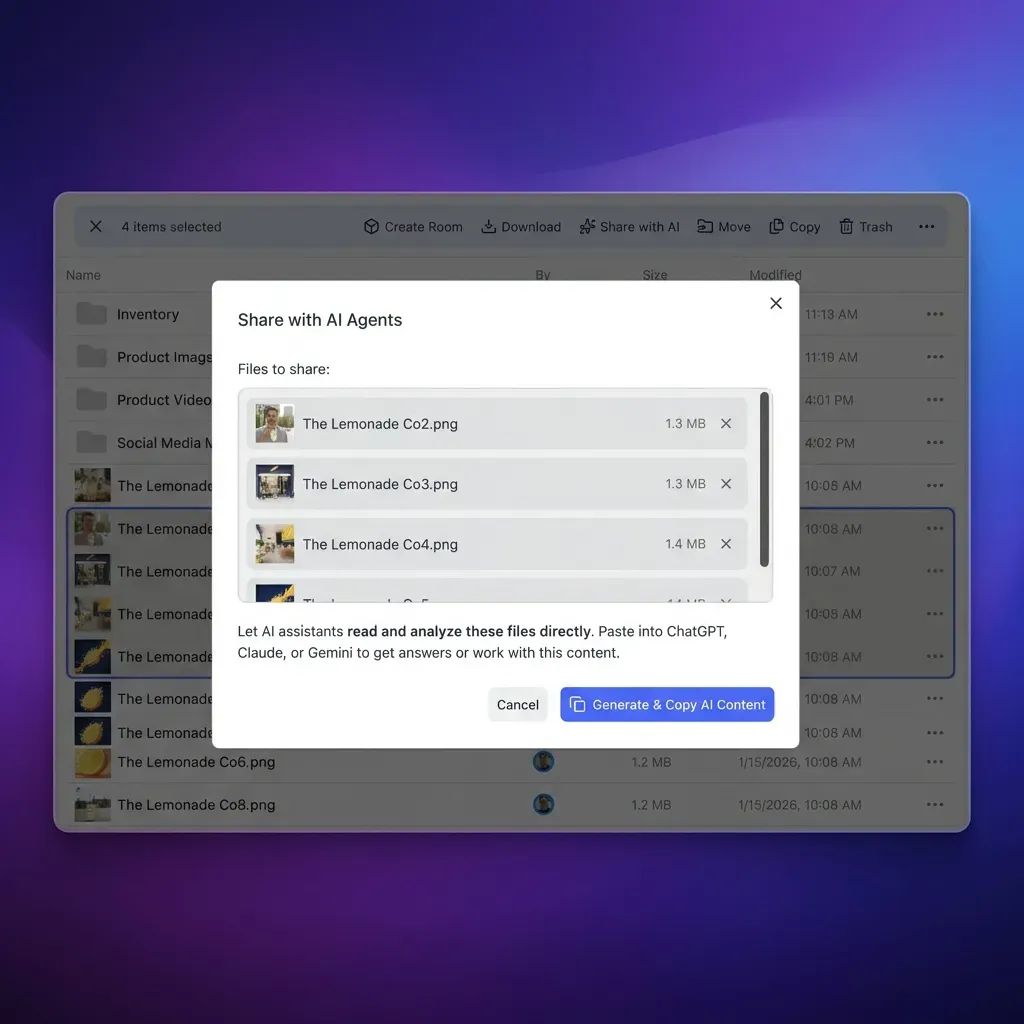
For teams that need persistent storage beyond a single laptop, connecting an external workspace through MCP fills the gap. A service like Fastio gives agents and humans the same file layer: upload a document through the web UI and Claude sees it instantly through MCP, or let Claude write outputs that your team accesses in a browser. Fastio offers a 14-day Business Trial, card required; see pricing.
Task Execution, Sub-Agents, and Scheduling
Cowork handles multi-step tasks by breaking work into smaller pieces and coordinating parallel workstreams. You describe the outcome you want, and Claude plans the execution, showing its reasoning and progress indicators at each step. You can steer mid-task: interrupt a running job to redirect, add constraints, or change the output format.
Sub-agent coordination is where Cowork moves beyond a chat interface. Claude spawns background sub-agents to handle subtasks concurrently. One sub-agent might research competitor pricing while another drafts a comparison table. The orchestration layer manages handoffs between them. This is the same agentic architecture that powers Claude Code, now accessible without a terminal.
Scheduled tasks automate recurring work. Type /schedule in any Cowork task to set a cadence: "every weekday at 8am," "every Monday at 9am," or any human-readable schedule. Common uses include pulling morning email summaries, generating weekly metrics reports, running Slack digests, or checking regulatory updates on a schedule you define once.
One constraint worth knowing: scheduled tasks only run while your computer is awake and the Claude Desktop app is open. If your laptop is closed at the scheduled time, the task does not run. For always-on automation, you would need a server-based approach or a cloud storage layer that persists outputs regardless of machine state. Fastio workspaces serve this role, since files written by an agent persist even when the originating machine goes offline.
Dispatch connects the Claude mobile app to Claude Desktop. You can assign a task from your phone, and Claude executes it on your desktop machine with full access to local files, connectors, and plugins. This works for Pro and Max plan users.


Persist Cowork outputs where your whole team can find them
Fastio gives Claude agents and human teams the same workspace. generous storage, MCP-ready endpoint for reads and writes.
What Permission Controls Keep Your Data Safe
Cowork ships with two permission modes, controlled by a mode selector in the session UI:
- Ask before acting: Claude pauses before each action so you can approve or reject it. This is the default for new users and the right choice when working with sensitive files or unfamiliar workflows.
- Act without asking: Claude executes without pausing for approval. Faster for routine work, but requires more trust in the task definition.
In both modes, Claude always asks before permanently deleting files. There is no configuration that bypasses deletion confirmation.
Per-tool permission stances add granular control over MCP connectors and plugins. Each tool exposed by an MCP server can be set to Allow (runs automatically), Ask (requests permission each time), or Blocked (cannot run at all). Standard Cowork users configure this per-tool in the session UI. Enterprise admins can lock tool stances via the toolPolicy key in managedMcpServers, overriding individual user preferences.
Additional safety measures include reinforcement learning that trains Claude to recognize and refuse malicious instructions, content classifiers that scan untrusted material for prompt injection attempts, and per-application permission grants for computer use features. Claude requests permission before accessing each application on your machine, and you can proactively block sensitive apps like banking or healthcare portals.
For enterprise deployments, Team and Enterprise plans can stream Cowork events via OpenTelemetry to SIEM tools for centralized monitoring. Cowork activity is not currently captured in the Compliance API, so OpenTelemetry is the primary audit pathway.
Plugins, MCP Connectors, and Vertical Bundles
Plugins bundle skills, connectors, slash commands, and sub-agents into a single installable package. Install a plugin once and Claude gains a complete toolkit for a specific job function. The plugin marketplace has fewer than 200 community plugins as of May 2026, compared to the GPT Store's 3 million+ custom GPTs. The count is growing, but breadth is limited today.
MCP connectors are how Cowork talks to external systems. Built on the Model Context Protocol open standard, the connector library covers Gmail, Google Drive, Google Calendar, Slack, Notion, Salesforce, DocuSign, and dozens of third-party servers. Connectors use remote MCP servers hosted by Anthropic and partners rather than local servers on your machine. This simplifies setup but means connector availability depends on what Anthropic and the community have built.
Vertical bundles package plugins, skills, and connectors for specific functions:
- Legal (launched May 12): 12 plugins, 20+ MCP connectors including Clio, Filevine, NetDocuments, Westlaw, and Lexis
- Small Business (launched May 13): 15 workflows, 15 skills, 10+ connectors including Stripe, QuickBooks, Gusto, and Zendesk
- Marketing Ops (launched May 18): 5 workflows with HubSpot Marketing, Google Analytics 4, and Linear connectors
- Financial Services: announced for Q2-Q3 2026
For file-heavy workflows where Cowork outputs need to persist beyond a single machine, connecting Fastio's MCP server adds persistent cloud storage with built-in RAG. The MCP server exposes a consolidated MCP toolset covering workspace management, file operations, AI queries, and sharing. Agents write files to Fastio; humans access them in the browser. Fastio offers a 14-day Business Trial, card required; see pricing.
Notable connector gaps as of June 2026: no native Shopify, Amazon Seller, Square POS, or NetSuite integrations.

Output Generation and Live Artifacts
Cowork generates polished deliverables directly, not just text responses. Supported output formats include:
- Excel spreadsheets with working formulas, formatted cells, and multiple sheets
- PowerPoint presentations with structured slides and layouts
- Word documents and formatted reports
- Charts and dashboards that re-execute their underlying code when reopened
That last point is Live Artifacts, a feature where code-backed documents refresh their data on reopen. A dashboard built on Tuesday morning pulls fresh numbers when you open it Thursday afternoon. This works for charts, data visualizations, and any artifact with executable code behind it.
Microsoft 365 integration went GA on May 7, 2026, with add-ins for Excel, PowerPoint, and Word. Outlook integration is in beta. Chrome integration is also available for browser-based workflows.
The practical value here is skipping the export step. Instead of asking Claude to "write the analysis" and then manually formatting it in Excel, Cowork produces the finished spreadsheet. For teams generating recurring reports, weekly decks, or client-facing documents, this eliminates a manual formatting step that typically takes 20-30 minutes per deliverable.
When outputs need to be shared with clients or stakeholders who do not use Claude, a cloud workspace bridges the gap. Generate a report in Cowork, save it to a Fastio workspace, and share a branded link with view-only permissions. The recipient gets a professional download page without needing a Fastio account, and you retain an audit trail of who accessed what.
Sources
References used to verify factual claims in this guide.
-
32% of GTM operators use Cowork as their primary Claude product
-
Claude Cowork GA launched April 9, 2026, included on all paid plans Fewer than 200 community plugins as of May 2026 Microsoft 365 add-ins for Excel, PowerPoint, and Word reached GA May 7, 2026 Legal bundle launched May 12 with 12 plugins and 20+ MCP connectors
Frequently Asked Questions
Does Claude Cowork have access to my files?
Only the files you explicitly grant access to. Cowork uses folder-scoped permissions: you authorize specific directories, and Claude can read, write, and create files within them. You can revoke access at any time from Settings. Code execution runs inside an isolated VM, separate from your file system. The recommended practice is creating a dedicated working folder rather than granting access to broad directories.
Can Claude Cowork create Excel spreadsheets?
Yes. Cowork generates Excel files with working formulas, formatted cells, and multiple sheets. It also produces PowerPoint presentations, Word documents, and code-backed dashboards. Microsoft 365 add-ins for Excel, PowerPoint, and Word reached general availability in May 2026.
Does Claude Cowork support plugins?
Yes. Plugins bundle skills, connectors, slash commands, and sub-agents into installable packages. The marketplace has fewer than 200 community plugins as of May 2026. Anthropic also ships vertical bundles (Legal, Small Business, Marketing Ops) that package multiple plugins and MCP connectors for specific job functions.
What permission controls does Claude Cowork have?
Cowork offers two session-level modes: Ask before acting (Claude pauses for approval) and Act without asking (Claude executes freely). File deletion always requires explicit approval regardless of mode. Each MCP tool can be individually set to Allow, Ask, or Blocked. Enterprise admins can lock tool permissions via policy, overriding user preferences.
Is Claude Cowork available on Linux?
Not as of June 2026. Cowork runs on macOS and Windows through the Claude Desktop app. Linux support has not been announced.
Do scheduled tasks run when my computer is off?
No. Scheduled tasks require your computer to be awake and the Claude Desktop app to be open. If the machine is asleep or the app is closed at the scheduled time, the task does not execute. For always-on automation, pair Cowork with a cloud storage layer like Fastio that persists outputs regardless of machine state.
How much does Claude Cowork cost?
Cowork is included on every paid Claude plan at no additional charge. Pro costs $20/month, Team is $25/seat with a 5-seat minimum, and Enterprise pricing is custom. There is no separate Cowork add-on or SKU.
Related Resources

Persist Cowork outputs where your whole team can find them
Fastio gives Claude agents and human teams the same workspace. generous storage, MCP-ready endpoint for reads and writes.