10 Best OpenClaw Workflows for AI Property Management and Tenant Communication
AI adoption among property managers jumped from 21% to 34% in a single year, yet most tools on the market are fixed-feature platforms that cost $99 to $375 per month. OpenClaw property management workflows take a different approach: individual skills from ClawHub handle maintenance triage, rent collection sequences, lease renewals, and multilingual tenant communication, then chain together on top of whatever software you already use.


Property Management Software Automates the Ledger, Not the Inbox
AI usage among property managers jumped from 21% in 2024 to 34% in 2025, according to Revenue Memo's industry analysis. That growth sounds healthy until you realize what the remaining 66% are still doing manually: answering the same tenant questions about parking spots, routing maintenance requests to the right vendor, and chasing late rent payments with graduated email sequences.
The problem is not awareness. It is pricing and flexibility. Purpose-built property management AI tools from vendors like EliseAI and AppFolio AI run $99 to $375 per month, and they only work inside their own ecosystem. If you use Buildium, you cannot plug in an AppFolio AI module. If you manage 15 units on a spreadsheet, you are priced out entirely.
OpenClaw property management workflows solve this by breaking the automation into individual skills. Each skill handles one task: answering tenant FAQs, triaging maintenance requests, sending rent reminders, or detecting tenant language and responding in kind. You install them from ClawHub, configure them for your property setup, and chain them into sequences that run on top of Buildium, AppFolio, your email inbox, or a WhatsApp thread. According to the Blink Blog, this layered approach can reduce tenant response times by 73% and free up over 15 hours per week for a mid-size property manager.
The 10 workflows below are organized by the four core property management functions: maintenance, rent collection, leasing, and tenant communication.
Related guides
- How to Build Claude Cowork WorkflowsAgentic workflows handle repetitive data processing, but setting them up requires structure. Learn how to build Claude...
- Best Storage Solutions for Base44 WorkflowsAccording to the Flexera 2025 State of the Cloud Report, 84% of organizations identify managing cloud spend and...
- Best OpenClaw Workflows for AI Inventory and Catalog ManagementAverage U.S. retail inventory accuracy is just 66%, and more than a third of small businesses still track stock by...
- Best OpenClaw Workflows for AI Storyboard and Scene PlanningOver 1 million professionals use AI storyboarding tools, but most require manual interaction per frame. OpenClaw's...
- Best OpenClaw Workflows for AI Social Media Post CreationOpenClaw social media post creation workflows chain content ideation, copy generation, image creation, and...
- Best OpenClaw Workflows for AI Workflow Automation Builder ToolsClawHub's curated index lists 529 skills across its Browser & Automation and Productivity & Tasks categories, yet most...
More on this subject: OpenClaw Workflows and Integrations (69 guides)
How We Evaluated These Workflows
ClawHub lists hundreds of skills tagged under productivity and business, but most are generic task runners that do not understand property management context. We filtered for workflows that meet three criteria:
- Property management specificity: Does the skill understand landlord-tenant concepts like lease terms, maintenance urgency levels, and rent schedules, or is it just a generic email responder?
- Integration with existing tools: Can the workflow connect to property management platforms (Buildium, AppFolio, spreadsheets) via email, webhooks, or APIs, or does it require ripping out your current system?
- Chain compatibility: Can the skill pass output to another skill in a multi-step sequence (maintenance request arrives, gets triaged, routes to vendor, confirms with tenant), or does each step require manual intervention?
Skills built for commercial real estate investing, mortgage calculations, or home staging did not make the cut. Rental property management has different requirements: recurring tenant interactions, urgency classification, regulatory constraints on communications, and audit trails for disputes.
The table below summarizes the 10 workflows by category.
Maintenance Workflows: Triage, Emergency Routing, and Vendor Dispatch
Maintenance is where OpenClaw delivers the fast return for property managers. According to the Blink Blog, 68% of tenant inquiries are repetitive, and a large share of those are maintenance-related: "my faucet is dripping," "the hallway light is out," "my heater stopped working." Each request needs urgency classification, vendor assignment, and tenant confirmation. Done manually, that loop takes 20 to 45 minutes per request. Automated, it takes under 30 seconds for the initial response.
1. Maintenance Request Triage
The triage workflow collects details from the tenant (what broke, when it started, photos if available), classifies the urgency into three levels (routine, urgent, emergency), and routes the request to the appropriate response path. Routine requests like a dripping faucet get queued for the next available contractor visit. Urgent issues like a broken dishwasher mid-cycle get same-day scheduling. Emergencies route to the after-hours workflow below.
The automation hooks-skill makes this work by connecting OpenClaw to your existing intake channel. Tenants submit requests through their usual method, whether that is email, a Buildium portal, or a WhatsApp message, and the automation hooks triggers the triage agent. The agent uses the memory-skill to recall past maintenance history for that unit, so it knows that apartment 4B has had three plumbing calls this year and the issue might need a plumber rather than a handyman.
2. Emergency After-Hours Router
Genuine emergencies (flooding, no heat in winter, gas leaks, lockouts) need a human on-call, not a chatbot apologizing for business hours. This workflow filters incoming requests for emergency keywords and severity indicators, then pages your on-call maintenance staff directly through SMS via Twilio or WhatsApp Business API. Non-emergencies that arrive after hours get an acknowledgment message with an estimated response time for the next business day.
The distinction matters legally. In most U.S. jurisdictions, landlords are required to address habitability emergencies within 24 hours. An AI that misclassifies a broken furnace in January as "routine" creates liability. The Blink Blog specifically notes that human oversight remains required for legally sensitive scenarios, and this workflow enforces that by escalating rather than resolving.
3. Vendor Dispatch and Tracking
Once a request is triaged, someone needs to actually schedule the repair. The vendor dispatch workflow uses the gog (calendar) skill to check contractor availability, send scheduling requests, and confirm appointments with both the vendor and the tenant. The web_search skill can also pull local contractor ratings and availability if your usual vendor is booked.
The practical output is a maintenance pipeline: request arrives, gets classified, routes to the right vendor, vendor confirms a time slot, tenant receives a confirmation message with the window. Property managers review exceptions and override when needed, but the default path runs without manual coordination.


Give your property management agent a workspace it can actually use
Shared storage, Intelligence Mode for semantic search across lease documents, and MCP server access for your OpenClaw agent. Starts with a 14-day free trial.
Rent Collection Workflows: Reminders, Escalation, and Tracking
Late rent collection is a relationship problem disguised as a financial one. Send the reminder too early and tenants feel micromanaged. Send it too late and you are already behind on your own mortgage payment. OpenClaw handles this with graduated sequences that adjust tone and timing based on where the tenant sits in the payment cycle.
4. Rent Reminder Sequence
The Blink Blog documents a four-step sequence that most property managers customize from the default template:
- Day before due date: Friendly reminder with payment link and amount due
- Due date: Confirmation request if payment was submitted, or gentle nudge if not
- 3 days late: Firmer follow-up noting the late fee policy and offering to discuss payment arrangements
- 7 days late: Escalation to the property manager for personal follow-up
The cron skill schedules each message automatically. You configure the sequence once per property, set the due dates, and the agent handles the cadence. The key design choice: the 7-day message does not threaten eviction or send legal notices. It escalates to a human. OpenClaw handles the routine communication; the property manager handles the judgment calls.
5. Late Payment Escalation
The escalation workflow picks up where the reminder sequence ends. If the 7-day follow-up does not produce payment or a response, the workflow compiles a summary for the property manager: tenant name, unit, amount owed, communication history, and any previous payment issues from the memory-skill. This gives the manager full context before making a phone call or starting a formal process.
The summary-skill generates a concise brief from the conversation thread, so the manager does not need to read through a chain of automated messages to understand the situation. This is especially useful for managers handling 50 or more units where individual tenant histories blur together.
Leasing Workflows: Renewals, Move Coordination, and Vacancy Monitoring
Lease renewals are predictable deadlines that somehow still catch property managers off guard. A tenant's lease expires August 31, the renewal conversation should start in May, but the calendar reminder gets buried under maintenance requests and rent issues. OpenClaw makes renewals systematic rather than reactive.
6. Lease Renewal Outreach
The calendar-skill triggers renewal outreach at three intervals: 90 days before expiration (initial offer with proposed terms), 60 days (follow-up with any negotiation), and 30 days (final confirmation or notice to vacate). Each message pulls the current lease terms from the document-skill, so the renewal offer references the actual rent amount, lease duration, and any special clauses.
Property managers review and approve renewal terms before the first message goes out. The automation handles the timing and follow-up, not the negotiation itself. If a tenant wants to negotiate rent or change lease terms, the workflow routes the conversation to the manager with the tenant's response and the current market rate context from the web_search skill.
7. Move-In/Move-Out Coordinator
Move coordination involves dozens of small tasks that each take five minutes but collectively consume an entire day: sending the move-in checklist, scheduling the walkthrough, arranging key handoff, documenting unit condition, setting up utility transfer reminders, and collecting forwarding addresses. The document-skill generates and sends customized checklists based on the property type (apartment vs. single family) and the tenant's situation (new tenant vs. renewal with unit transfer).
The practical value is consistency. Every tenant gets the same onboarding experience regardless of whether the property manager is handling one move-in or five that week.
8. Vacancy and Market Monitor
Empty units cost money every day. The web_search skill powers a market monitoring workflow that tracks local rental listings, comparable properties, and neighborhood vacancy rates. The cron skill runs this search on a weekly schedule and generates a brief with pricing recommendations.
This workflow is less about automation and more about intelligence. Instead of checking Zillow and Apartments.com manually, the agent compiles the data and highlights changes: "Three comparable 2BR units listed this week at $1,450, down from $1,525 last month. Your vacant unit is listed at $1,500." The property manager decides whether to adjust pricing, but the research is done.
Tenant Communication Workflows: Multilingual Responses and FAQ Automation
According to the Blink Blog, 68% of tenant inquiries are repetitive questions about lease terms, pet policies, parking assignments, and move-in procedures. Answering the same question for the fifteenth time is not a good use of a property manager's afternoon. These two workflows handle the volume.
9. Multilingual Auto-Response
OpenClaw detects tenant language automatically and responds in Spanish, Mandarin, or French without separate configuration or skill installation. This is built into the communication layer, not a bolt-on translation step. When a tenant sends a message in Spanish, the response comes back in Spanish. When they switch to English for a follow-up, the agent switches with them.
For property managers in markets with diverse tenant populations (Los Angeles, New York, Miami, Houston, San Francisco), this eliminates the need for bilingual staff on every shift or expensive translation services. The Camino Real Estate skill on ClawHub, verified in the awesome-openclaw-skills repository, adds location intelligence by evaluating addresses for both buyers and renters, which pairs well with multilingual outreach when marketing vacant units to diverse communities.
OpenClaw connects to tenant communication channels through email (IMAP/SMTP), WhatsApp Business API, Telegram, and SMS via Twilio. The channel flexibility matters because tenant demographics influence communication preferences. Younger tenants tend toward text and WhatsApp. Older tenants prefer email. International tenants often default to WhatsApp regardless of age.
10. Tenant FAQ Responder
The FAQ responder is the simplest workflow to set up and often the first one property managers deploy. You provide the agent with your lease template, house rules, parking map, pet policy, and move-in guide. When a tenant asks "Can I have a dog?" the agent checks the pet policy document and responds with the specific breed restrictions, deposit requirements, and weight limits for that property.
The memory-skill stores property-specific details so the agent gives accurate answers per building. Building A allows pets under 50 pounds with a $500 deposit. Building B is no pets. The agent does not mix these up because each property's documents are stored separately in the agent's memory context.
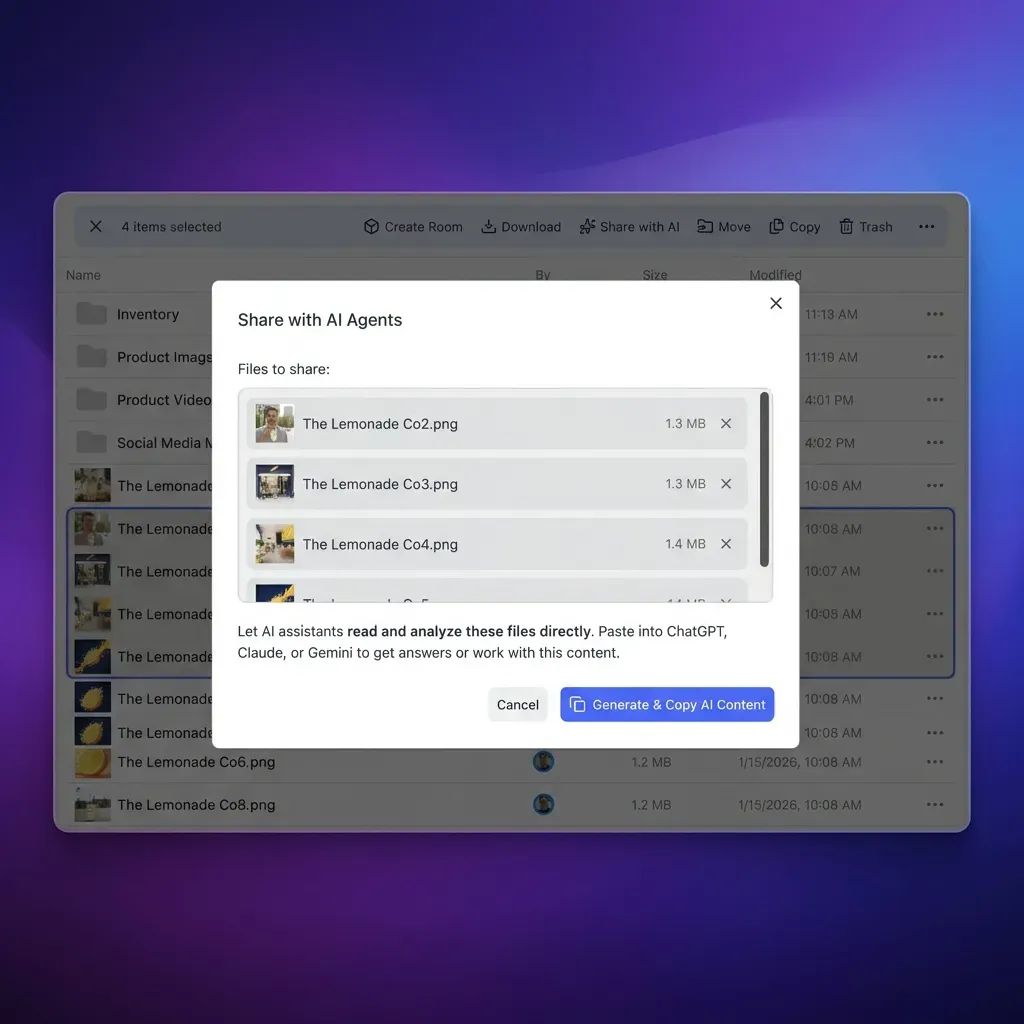
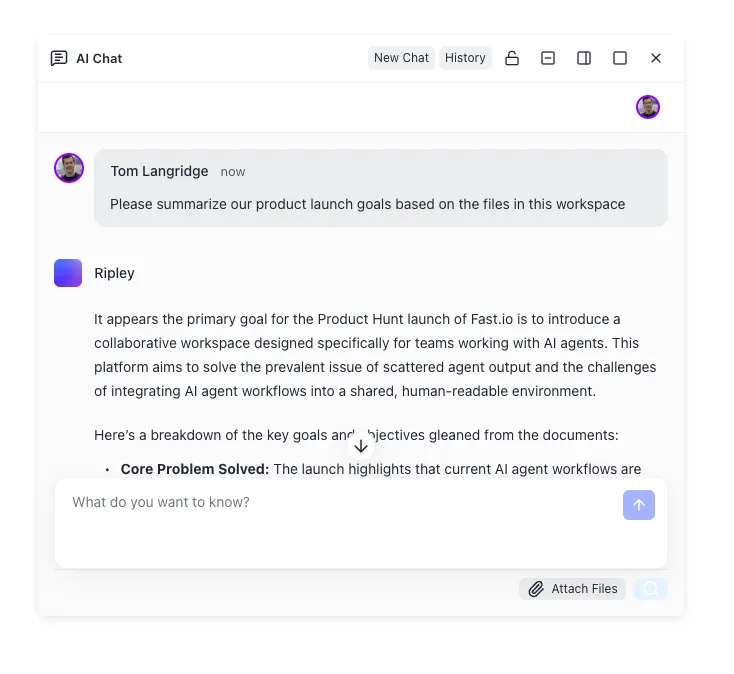
Storing those property documents, lease templates, and communication logs in a workspace that both agents and humans can access is where Fast.io fits into the stack. Upload your lease agreements, pet policies, and maintenance vendor lists to a Fast.io workspace, enable Intelligence Mode for semantic search, and your OpenClaw agent can query those documents through the Fast.io MCP server while your property managers access the same files through the web interface. Plans include storage, monthly AI credits, and multiple workspaces, and monthly plans start with a trial of up to 14 days, which covers a small to mid-size portfolio.
How to Set Up Your First OpenClaw Property Management Workflow
The Blink Blog estimates basic setup at 2 to 4 hours for email, FAQ automation, and rent reminders. Advanced configuration including WhatsApp integration, maintenance routing, and multilingual support takes approximately one full day. That timeline assumes you already have your property documents organized. If your lease templates and house rules exist only as paper copies or scattered PDFs, add document preparation time.
Start with the workflow that creates the most immediate time savings for your portfolio. For most property managers, that is either the FAQ responder (if you answer the same questions daily) or the maintenance triage workflow (if you manage properties with frequent repair requests).
Recommended starting sequence:
- Deploy the Tenant FAQ Responder with your lease documents and house rules
- Add the Rent Reminder Sequence for your next billing cycle
- Set up Maintenance Request Triage once you have FAQ handling stable
- Layer in Multilingual Auto-Response if your tenant population needs it
- Configure Lease Renewal Outreach for leases expiring in the next 90 days
Integration paths by current software:
- Buildium users: Connect via email webhooks. Maintenance requests submitted through the Buildium portal trigger the triage workflow via IMAP monitoring.
- AppFolio users: Similar email-based integration. AppFolio's notification system sends emails that OpenClaw can intercept and process.
- Spreadsheet managers: Start with email-skill and SMS via Twilio. No portal integration needed because tenants contact you directly.
Where to store property documents for agent access:
Local files work for a single-property landlord, but property managers handling multiple buildings need a central document repository that both the AI agent and human staff can access. Fast.io workspaces serve this role: organize documents by property, enable Intelligence Mode for semantic search across all lease agreements, and give your OpenClaw agent access through the MCP server. Your property managers search the same workspace through the browser when they need to pull a specific lease clause or verify a pet policy. One source of truth, two access paths.
Human oversight remains essential for legally sensitive communications. Eviction notices, lease termination letters, security deposit disputes, and fair housing compliance all require human review. Configure your workflows to escalate these scenarios rather than attempt to resolve them autonomously.
Sources
References used to verify factual claims in this guide.
-
AI usage among property managers jumped from 21% in 2024 to 34% in 2025 Organizations using AI in property management report 20-30% improvement in operational efficiency
-
68% of tenant inquiries are repetitive questions about lease terms, parking, and move-in procedures OpenClaw property management automation can reduce response times by 73% and free up over 15 hours per week Purpose-built property management AI tools cost $99 to $375 per month Basic OpenClaw property management setup takes 2-4 hours, advanced configuration approximately one full day
Frequently Asked Questions
Can OpenClaw help manage rental properties?
OpenClaw handles the communication and coordination layer of property management. It automates tenant FAQ responses, maintenance request triage, rent collection reminders, and lease renewal outreach. It works on top of your existing property management software (Buildium, AppFolio, or spreadsheets) rather than replacing it. The Blink Blog documents 10 specialized property management skills covering these workflows.
What OpenClaw skills work for landlords?
The most useful skills for landlords are email-skill for tenant communication, automation hooks-skill for maintenance request intake, cron for scheduled rent reminders, calendar-skill for lease renewal timing, document-skill for checklist generation, memory-skill for per-property context, and web_search for vacancy market monitoring. These chain together into complete workflows covering the four core landlord responsibilities: maintenance, rent collection, leasing, and tenant communication.
How does OpenClaw handle tenant maintenance requests?
OpenClaw collects the maintenance request details, classifies urgency into three levels (routine, urgent, emergency), and routes the request accordingly. Routine issues get queued for the next contractor visit. Urgent issues trigger same-day scheduling. Emergencies page on-call staff through SMS or WhatsApp. The agent uses memory-skill to recall past maintenance history for each unit, so recurring issues get flagged for the property manager's attention.
Does OpenClaw support multilingual tenant communication?
OpenClaw detects tenant language automatically and responds in Spanish, Mandarin, or French without separate configuration. When a tenant sends a message in Spanish, the response comes back in Spanish. The detection is built into the communication layer rather than requiring a separate translation skill. This works across email, WhatsApp, Telegram, and SMS channels.
How much does OpenClaw property management automation cost compared to alternatives?
Purpose-built property management AI tools from vendors like EliseAI and similar platforms cost $99 to $375 per month. OpenClaw skills are individually priced, many are free, and you only install the ones you need. Basic setup (email, FAQ, reminders) takes 2 to 4 hours. For document storage that both your agent and human staff can access, Fast.io plans include storage and monthly AI credits, with a 14-day free trial.
What property management software does OpenClaw integrate with?
OpenClaw integrates indirectly with Buildium, AppFolio, and other property management platforms through email (IMAP/SMTP), webhooks, and APIs rather than direct database connections. It also connects to tenant communication channels including WhatsApp Business API, Telegram, and SMS via Twilio. This means you keep your existing software and layer OpenClaw's automation on top.
Related Resources

Give your property management agent a workspace it can actually use
Shared storage, Intelligence Mode for semantic search across lease documents, and MCP server access for your OpenClaw agent. Starts with a 14-day free trial.