7 Best OpenClaw Tools for Accountants and Financial Workflow Automation
CPAs recover an estimated 240 hours per year in billable capacity when AI handles routine preparation, according to the Thomson Reuters Institute. OpenClaw skills let accountants automate specific workflow steps, from invoice extraction and payment matching to AR follow-up and tax deadline tracking, then chain them into pipelines that match how their practice actually operates.

Accounting Software Automates the Ledger, Not the Workflow Around It
CPAs recover an estimated 240 hours per year, worth roughly $19,000 in billable capacity, when AI handles routine preparation and administrative tasks, according to the Thomson Reuters Institute's 2025 report. Scale that across a five-person firm and you are looking at nearly $100,000 in recovered capacity that currently disappears into document collection, payment matching, and deadline tracking.
The accounts payable automation market hit $5.5 billion in 2024 and is projected to reach $18.1 billion by 2034 at 14% annual growth, according to Custom Market Insights. That trajectory reflects how much manual coordination persists even after firms adopt QuickBooks or Xero. The ledger software handles journal entries and financial statements. Everything surrounding those entries stays manual: chasing clients for missing W-2s, matching bank transactions to invoices, sending reminders on overdue receivables, monitoring state filing deadlines, compiling month-end reconciliation packs for review.
OpenClaw approaches this problem differently from standalone accounting AI products. Instead of buying a fixed-feature platform, you install individual skills from ClawHub. Each skill handles one workflow step. An OCR skill extracts invoice data. An accounting skill posts entries to Xero. An AR skill sends graduated follow-up emails. A compliance skill tracks regulatory changes. Chain those skills together and the agent runs the full sequence, routing exceptions to human review when confidence drops below threshold.
According to the Consero Global 2026 CFO Report, 97% of finance departments have now adopted AI in some form, up from 76% in 2025. The question for most accounting practices is not whether to adopt AI, but which specific workflows to target first and how to maintain the human oversight that professional liability requires. OpenClaw's skill-by-skill approach lets you start with one workflow, prove the time savings, and expand incrementally.
Related guides
- How to Set Up an MCP Server for n8n Workflow AutomationThe Model Context Protocol turns n8n into an AI-accessible automation platform. This guide walks through setting up n8n...
- How to Automate E-Signatures from Clay Prospect WorkflowsClay e-signature workflow automation is the process of triggering contract signing and capturing executed agreements...
- 7 Best OpenClaw Tools for AI Travel Itinerary Planning and Booking AutomationOpenClaw's skill registry includes over 110 transportation skills and 29 dedicated travel tools, but most agents cobble...
- Best OpenClaw Tools for AI Spreadsheet Analysis AutomationManual reporting still eats hours every week, even when the analysis itself takes minutes. OpenClaw skills for...
- Best OpenClaw Tools for AI Video Editing AutomationOpenClaw's ecosystem includes both built-in video generation tools and community-developed editing skills that handle...
- 7 OpenClaw Tools That Automate Employee Onboarding ContentGartner projects that 40% of enterprise applications will embed task-specific AI agents by the end of 2026, up from...
More on this subject: OpenClaw Tools (101 guides)
How We Evaluated These OpenClaw Skills
The finance category on ClawHub contains over 300 skills, but quality scores range from 1.0 to 2.5 out of 5. Most are personal finance trackers or simple calculators that do not fit professional accounting workflows. We filtered for tools that meet three criteria:
- Accounting workflow relevance: Does it solve a real problem accountants face (invoice intake, AR management, compliance tracking, financial reporting) or just a generic data task?
- Integration depth: Can it connect to accounting platforms like QuickBooks or Xero, or does it only output raw text to the terminal?
- Pipeline compatibility: Can the skill chain with other tools in a multi-step workflow, or does it require manual handoff between steps?
Skills built for personal budgeting, cryptocurrency trading, or stock analysis did not make the cut. Accounting automation has different requirements: accuracy against a chart of accounts, multi-tenant client isolation, and audit trail support.
The table below summarizes the seven skills that passed our filter, ordered by breadth of workflow coverage.

Top OpenClaw Accounting Tools
1. KiloClaw Accounting Recipes
KiloClaw is the managed hosting platform built on OpenClaw, offering 14 pre-built automation recipes designed for accounting firms. The recipes cover the full practice lifecycle: Reconciliation Autopilot, Document-to-Ledger Pipeline, Invoice Processing Fast Lane, Close Deadline Commander, Client Chase Minimizer, 13-Week Cash Flow Forecaster, Tax Change Radar, and Payroll Compliance Sentinel.
Key strengths:
- Covers tax compliance, cash flow forecasting, close management, and payroll alongside standard invoice processing
- Deploys through plain English configuration with no coding required
- Includes access to 500+ AI models and 30+ integrations including Gmail, Slack, and Discord
Limitations:
- Separate platform from ClawHub with its own ecosystem
- Recipes impose a specific workflow structure that may not match your existing processes
Best for: Mid-size firms that want comprehensive practice automation without configuring individual skills.
Pricing: $55/month with a 1-day free trial.
2. Bookkeeper (Meta-Skill)
Created by h4gen on ClawHub, the bookkeeper orchestrates four sub-skills into a single invoice-to-ledger pipeline: Gmail inbox monitoring, DeepRead OCR for invoice extraction, Stripe API for payment verification, and Xero for accounting entries. The workflow scans your inbox for invoice emails, extracts structured data from attachments, cross-references Stripe transactions for payment confirmation, and creates payable bills in Xero.
Key strengths:
- Handles the full cycle from email arrival to ledger posting without manual intervention at each step
- Never marks an invoice as paid without payment evidence from Stripe
- Routes uncertain OCR extractions to a manual review queue before posting to the ledger
Limitations:
- Only supports Xero for the accounting entry step, not QuickBooks
- Requires API keys for DeepRead OCR and the Maton gateway
Best for: Teams that receive invoices by email and already use Stripe and Xero.
Pricing: Free (open source). Sub-skill API keys may have associated costs.
3. Xero Skill
The Xero skill provides managed OAuth integration through the Maton API gateway, with over 4,800 downloads on ClawHub, the highest install count among accounting skills. Published in February 2026, it handles contact management, invoice creation, payment recording, account queries, and financial reporting.
Key strengths:
- Full read and write access to Xero's API for invoices, payments, contacts, and reports
- Supports read-only scopes for teams that want AI-generated financial reports without write risk
- OAuth and tenant routing handled automatically by the Maton gateway
Limitations:
- Requires a Maton API key for authentication
- No built-in OCR or document extraction, so pair it with Veryfi or another extraction skill for document intake
Best for: Xero users who want their OpenClaw agent to create invoices, track payments, or generate financial reports.
Pricing: Free skill. Maton API gateway may have usage costs.
4. QuickBooks Skill
Mirrors the Xero skill's architecture but targets QuickBooks Online, with over 1,400 ClawHub downloads. It manages customers, vendors, invoices, payments, bills, and financial reports through QuickBooks REST endpoints. OAuth and realmId routing are handled automatically, so the agent authenticates once and maintains access across sessions.
Key strengths:
- Full API coverage for creating invoices, recording payments, and pulling P&L and balance sheet reports
- OAuth handled by the Maton gateway with persistent session management
- Published February 2026 alongside the Xero skill, actively maintained
Limitations:
- Write access means you should test with sample data before connecting production books
- Same Maton API dependency as the Xero skill
Best for: QuickBooks Online users who want agent-driven accounting operations.
Pricing: Free skill. Maton API gateway may have usage costs.
More Financial Workflow Skills
5. Invoice Chaser
Invoice Chaser automates accounts receivable follow-up with escalating reminder sequences and AR aging reports. Most accounting skills focus on the intake side of the workflow (getting data into the ledger). This one focuses on the collection side (getting paid).
Key strengths:
- Generates escalating follow-up sequences keyed to days-outstanding buckets at 30, 60, and 90+ days
- Produces AR aging reports summarizing outstanding balances by client and age bracket
- Fills a workflow gap most bookkeeping-focused OpenClaw skills ignore entirely
Limitations:
- Quality score of 1.9 out of 5 on ClawHub suggests limited community polish
- Outbound emails should route through human approval before sending to clients
Best for: Firms with recurring overdue receivables that want graduated, automated collection follow-up.
Pricing: Free.
6. Veryfi
Veryfi's ClawHub skill brings their commercial OCR engine into OpenClaw for extraction from receipts, invoices, bank statements, and multi-page financial documents. The engine is purpose-built for financial documents, so it handles edge cases like itemized restaurant receipts, multi-page supplier invoices, and mixed-format documents better than general-purpose vision models.
Key strengths:
- Returns fully structured data including vendor, amounts, dates, line items, tax breakdowns, and currency
- Higher accuracy than general-purpose models on financial documents with complex layouts
- Works as the extraction layer in larger pipelines when paired with QuickBooks or Xero skills
Limitations:
- Extraction only, not a full accounting solution. You still need a separate skill for ledger posting.
- Free trial is 14 days, then usage-based API pricing
Best for: High-volume invoice and receipt processing where extraction accuracy matters more than cost.
Pricing: 14-day free trial, then usage-based API pricing.
7. Clawshier
Clawshier captures receipt photos and logs expenses directly to Google Sheets with OCR extraction, field structuring, validation, and monthly aggregation. The pipeline runs in four steps: text extraction from the image, field structuring into categories, validation against expected formats, and posting to a spreadsheet with monthly summary views.
Key strengths:
- Direct Google Sheets output is immediately usable for tax preparation or expense reports
- Creates monthly aggregation sheets with summary views and charts
- Processing takes 5 to 12 seconds per image using OpenAI's vision model
Limitations:
- Thermal receipts with poor lighting reduce accuracy to roughly 60%
- Date format confusion between DD-MM and MM-DD is a known issue
Best for: Freelancers and sole practitioners who track expenses in spreadsheets rather than accounting software.
Pricing: Free skill. OpenAI vision credits cost roughly $2/month at typical volume.


Store accounting records where agents and humans can share them
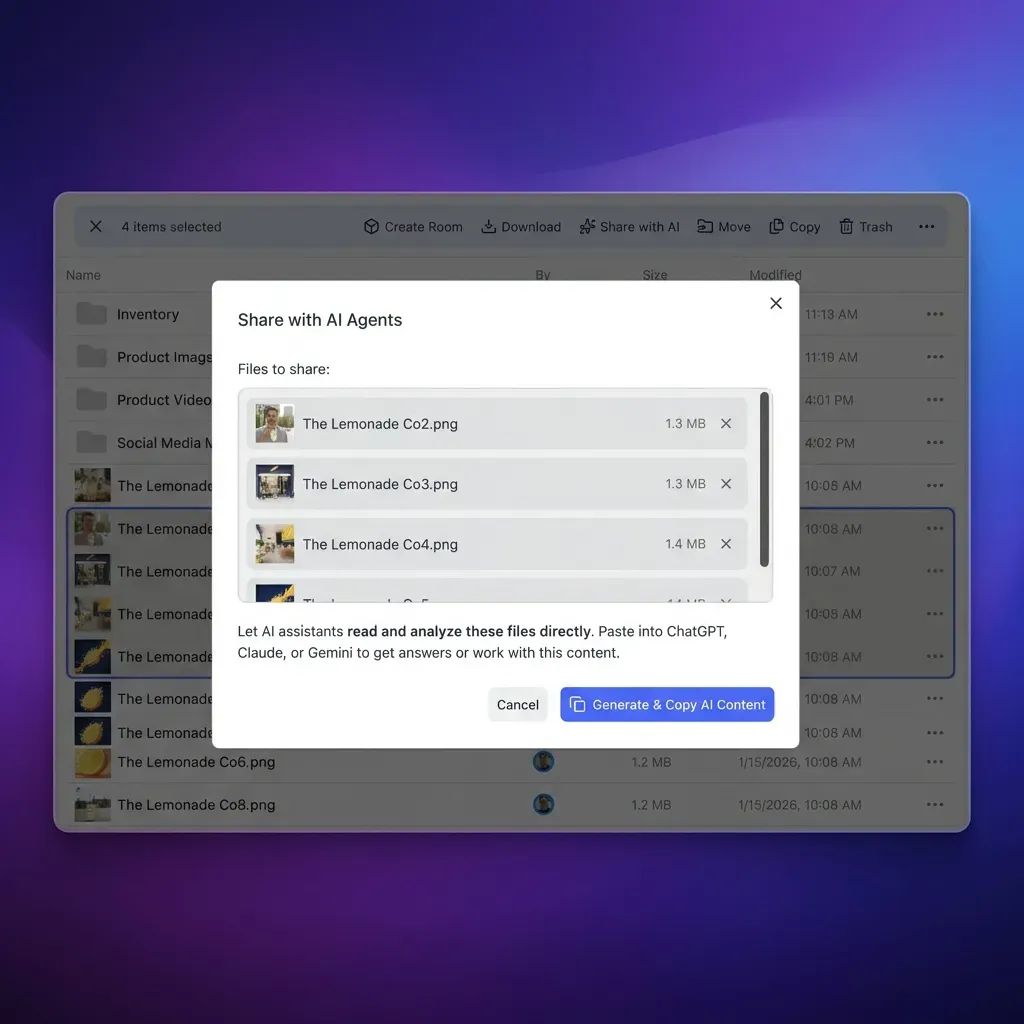
Fast.io gives your OpenClaw agent persistent workspace storage with built-in document indexing, Metadata Views for structured extraction, and MCP access.
Chaining Skills into Automated Accounting Pipelines
Individual skills handle individual tasks. The real efficiency gain comes from chaining them so the agent runs a complete workflow without human handoff at each step.
A practical three-skill pipeline for QuickBooks users:
- Email monitoring: Gmail sub-skill filters for emails matching invoice subject patterns and sender domains you configure.
- Document extraction: Veryfi processes attachments and returns structured JSON with vendor, amounts, dates, and line items. Low-confidence extractions route to a review queue.
- Accounting entry: The QuickBooks skill creates a bill, attaches the source document reference, and records the payment if a matching transaction exists.
For Xero users, the bookkeeper meta-skill bundles this entire sequence into a single install. For broader practice workflows covering tax compliance, close management, and cash flow forecasting, KiloClaw recipes handle the orchestration on managed infrastructure.
According to Blink's analysis of a five-person firm, AP intake and coding drops from 4 hours to 45 minutes of review per week. Client document follow-up goes from 3 hours to 30 minutes. Tax deadline monitoring falls from 2 hours to 15 minutes. Conservative total: roughly 8 hours per staff member per week recovered.
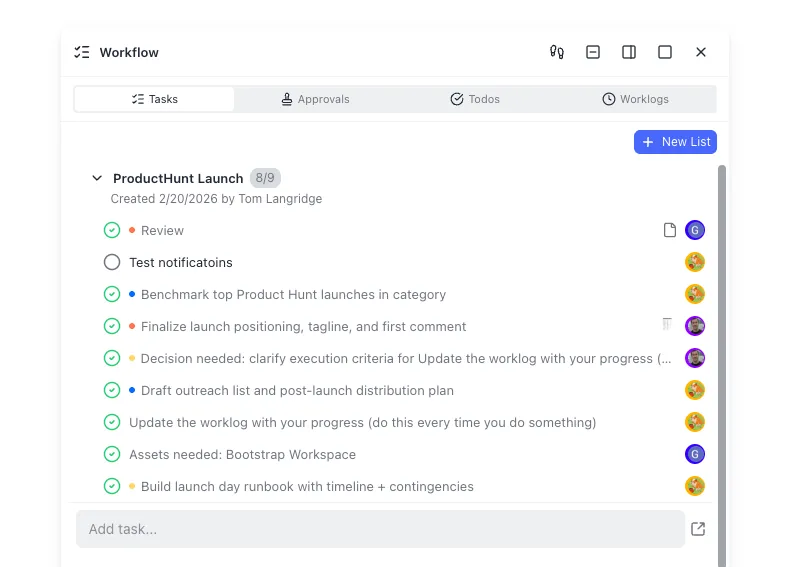
For storing processed documents and maintaining audit trails across sessions, Fast.io workspaces provide persistent storage with automatic file indexing. Once Intelligence is enabled for the workspace, the agent can search past invoices by content rather than filename. When processing completes, the agent uploads extraction logs and source documents to a shared workspace and transfers ownership to a human reviewer. Metadata Views extract structured fields from uploaded financial documents into a filterable spreadsheet without manual tagging. Fastio offers a 14-day Business Trial (card required; see pricing) with paid plans starting at $9.99/month.
Which Setup Fits Your Practice?
Your choice depends on practice size, accounting platform, and appetite for configuration.
Sole practitioners and freelancers: Start with Clawshier for expense tracking into Google Sheets. Add Veryfi if you process more than a handful of invoices monthly. No accounting software integration required.
Small firms on Xero: Install the bookkeeper meta-skill for an all-in-one invoice pipeline. It handles email monitoring, OCR, payment verification, and ledger posting with built-in guardrails that route uncertain items to human review.
Small firms on QuickBooks: Install the QuickBooks skill plus Veryfi, then configure the pipeline manually. You get the same automation as the Xero bookkeeper pipeline, with a few more setup steps.
Mid-size firms wanting managed infrastructure: KiloClaw's 14 recipes cover the full practice lifecycle from document intake through month-end close. At $55/month, the cost is modest compared to traditional AP automation tools running $200 to $500 per month.
Every setup: Add Invoice Chaser if AR collections are a bottleneck. It fills a gap that bookkeeping-focused skills miss entirely by automating the collection side of the workflow rather than just the intake side.
For any configuration, persistent file storage keeps extraction logs, processed documents, and audit trails accessible across agent sessions. A Fast.io workspace provides that durability with built-in search, versioning, and an MCP server your agent can access directly.
Sources
References used to verify factual claims in this guide.
-
CPAs recover an estimated 240 hours per year, worth roughly $19,000 in billable capacity 97% of finance departments have adopted AI in some form, up from 76% in 2025
-
Accounts payable automation market reached $5.5 billion in 2024, projected to $18.1 billion by 2034 at 14% CAGR AP intake and coding drops from 4 hours to 45 minutes of review per week for a five-person firm using OpenClaw
Frequently Asked Questions
Can OpenClaw automate accounting tasks?
OpenClaw can automate the preparation and coordination work around accounting: invoice extraction, payment matching, document collection, AR follow-up, tax deadline tracking, and report compilation. It accelerates repetitive administrative tasks while routing professional judgment calls like tax positions, client advice, and GL posting to human review. The agent drafts and queues; accountants approve and execute.
What OpenClaw skills work for tax preparation?
KiloClaw's Tax Change Radar recipe tracks federal and state regulatory updates and converts them into firm-specific checklists. The Close Deadline Commander maintains filing calendars with rolling alerts at 14 days, 7 days, and 48 hours before deadlines. For document collection during tax season, the Client Chase Minimizer automates requests for missing W-2s, 1099s, bank statements, and K-1s with human-approved follow-up emails.
How do accountants use AI agents for financial workflows?
Accountants typically start with one high-volume, low-judgment workflow like invoice intake or AR follow-up. They install OpenClaw skills that handle the mechanical steps (OCR extraction, payment matching, reminder emails) and set up human approval gates before any outbound communication or ledger posting. Once the first workflow proves net-positive, they expand to additional workflows like tax deadline monitoring or month-end reporting.
Is it safe to give an AI agent access to accounting data?
OpenClaw runs on your own infrastructure, so client data stays under your control. Best practices include starting with read-only API scopes, using internal client IDs instead of names or SSNs in prompts, testing with sample data before connecting production books, and routing all outbound client communications through staff approval. KiloClaw adds AES-256 encryption at rest and TLS 1.3 in transit for managed deployments.
How much does OpenClaw accounting automation cost?
Individual ClawHub skills like the Bookkeeper, QuickBooks, Xero, Invoice Chaser, and Clawshier are free to install. Costs come from API keys for the Maton gateway (OAuth), Veryfi (OCR), and OpenAI (vision models), plus optionally managed hosting. KiloClaw's managed platform starts at $55/month. Self-hosting OpenClaw costs $15 to $30 per month in infrastructure plus model API costs. Both options are significantly cheaper than traditional AP automation tools at $200 to $500 per month.
Related Resources

Store accounting records where agents and humans can share them
Fast.io gives your OpenClaw agent persistent workspace storage with built-in document indexing, Metadata Views for structured extraction, and MCP access.