5 Best OpenClaw Skills for AI Personal Finance Tracking and Budget Planning
A TD Bank survey found that 55% of Americans now use AI for personal finance, up from 10% last year, but only 18% trust it to act without human oversight. OpenClaw personal finance skills sit in that gap: they run locally, store data on your machine, and let the LLM categorize and summarize without sending transaction data to a third party. This guide ranks five ClawHub finance skills by privacy model, feature depth, and how well they fit into a broader agent workflow.


Why Local-First Finance Tracking Matters for AI Agents
A February 2026 TD Bank survey of 2,504 Americans found that 55% now use AI to manage personal finances, up from 10% the previous year. But only 18% trust AI to make financial recommendations on its own. That trust gap explains why the most popular OpenClaw finance skills take a local-first approach: your transaction data stays on your machine, the LLM categorizes and summarizes it, and you decide what to act on.
Most AI budgeting apps work the other way around. Mint, Copilot, and Monarch send your bank credentials to their servers, process transactions in the cloud, and return a dashboard. You trade privacy for convenience. OpenClaw skills flip that model. They store data in local SQLite databases or JSON files, use the LLM for natural language parsing and categorization, and deliver alerts through messaging apps you already use like Telegram, Slack, or WhatsApp.
ClawHub currently hosts 311 finance and investing skills out of over 13,700 total. Not all of them are worth installing. Some are wrappers around paid APIs. Others lack basic features like budget limits or export support. We tested the finance-specific skills that focus on expense tracking and budgeting, then ranked them by three criteria: privacy model (where your data lives), feature completeness (categorization, budgets, alerts, summaries), and orchestration fit (how well the skill chains with other tools in an agent workflow).
Related guides
- CrewAI Tools: Extending Agents with Custom SkillsCrewAI tools let autonomous agents do more than generate text. They can search the web, read files, run code, and call...
- Awesome Claude Code: Best Skills, Tools, and Community ResourcesThe awesome-claude-code ecosystem on GitHub has grown past 200,000 combined stars across 11 curated lists, but most...
- 8 OpenClaw Skills for AI Visual Search and Reverse Image LookupGoogle Lens now handles over 20 billion visual searches per month, up 43% from 2024, but most of that capability stays...
- 7 Best OpenClaw Tools for AI Travel Itinerary Planning and Booking AutomationOpenClaw's skill registry includes over 110 transportation skills and 29 dedicated travel tools, but most agents cobble...
- Top 8 OpenClaw Skills for Healthcare Clinical DocumentationOpenClaw Medical Skills is an open-source library of 869 AI agent modules spanning five medical domains. This guide...
- 5 Best OpenClaw Skills for AI Content Scoring and Quality GradingClawHub hosts over 44,000 skills, but fewer than a dozen specifically address content quality scoring as distinct from...
More on this subject: OpenClaw Tools (101 guides)
How We Evaluated These Skills
Every skill in this guide meets a baseline: it tracks expenses, runs locally, and requires no paid API keys for core functionality. Beyond that, we weighted four factors:
- Data storage model: SQLite databases are easier to query and back up than flat JSON files. Skills that use structured storage scored higher.
- Natural language support: Can you say "spent $23 on lunch" and have the skill extract the amount, category, and date? Or do you need to fill in structured fields manually?
- Budget and alert features: Tracking expenses is table stakes. The useful skills also let you set monthly budgets, receive alerts when you approach limits, and generate summaries on demand.
- Maintenance and adoption: Download counts on ClawHub signal whether a skill has an active community. Skills with more users tend to get faster bug fixes and better documentation.
We excluded skills that primarily focus on investment tracking, stock analysis, or crypto trading. Those are separate categories on ClawHub with different evaluation criteria. This guide covers the personal spending and budgeting workflow: logging transactions, categorizing them, setting budgets, and getting alerts when you overspend.

Comparison Table: 5 OpenClaw Personal Finance Skills
All five skills store data locally and require no external API keys for their core expense tracking features. The main differences are in storage format, how much the LLM handles during input, and whether the skill supports budgeting beyond simple logging.


Back up your financial data without giving up privacy
Fast.io gives your OpenClaw agent persistent, versioned cloud storage for financial exports and reports, and your agent connects through the MCP server. Starts with a 14-day free trial.
The 5 Best OpenClaw Skills for Personal Finance
1. personal-finance
The personal-finance skill by gabdevbr is the most straightforward budget tracker on ClawHub. It uses a SQLite database (finance.db) to store every transaction with an amount, category, and optional note. The skill ships with eight preset categories: Food, Rent, Utilities, Travel, Entertainment, Shopping, Health, and Misc. You can add custom categories on the fly.
What sets it apart from the other skills on this list is its structured reminder system. You can register EMIs (equated monthly installments) and annual expenses like insurance premiums or subscriptions. The skill checks scheduled items and triggers reminders through your messaging app when payments are due. It also generates weekly spending digests that break down totals by category.
The SQLite backend makes this skill easy to back up and query directly. You can run SQL against finance.db to build custom reports without going through the agent. With 2.4K downloads, it has the second-largest user base among finance skills on ClawHub.
Best for: People who want structured category-based budgeting with recurring payment reminders delivered through Telegram, Slack, or WhatsApp.
Limitations: No savings goal tracking. No gamification or streak features. The preset categories cover common expenses but miss things like childcare or pet care until you add them manually.
2. intelligent-budget-tracker
The intelligent-budget-tracker by enjuguna takes a more programmatic approach. It is a TypeScript library designed for AI agents and bots, not just end users. The core API exposes methods for initializing storage, adding expenses and income (including natural language parsing), creating budgets and savings goals, and registering recurring transactions.
The standout feature is smart budget suggestions. After collecting enough transaction history, the skill analyzes your spending patterns and recommends category-specific budget limits. It also computes trends over time, so you can see whether your grocery spending is creeping up month over month.
Budget alerts use configurable thresholds. Set a $500 monthly budget for dining and get notified at 80%, 90%, and 100%. The skill tracks both expenses and income, which means it can calculate net savings and report how much you kept each month after all spending.
Best for: Developers building personal finance bots or automated reporting pipelines. The API-first design makes it easy to chain with other skills or expose through a custom interface.
Limitations: No frontend or chat interface out of the box. You need to build the conversational layer yourself or pair it with another skill that handles messaging.
3. expense-tracker-pro
Expense-tracker-pro by jhillin8 focuses on conversational expense logging. Say "spent $45 on groceries" and the skill extracts the amount, assigns it to a category based on context (groceries maps to Food), and logs the timestamp. No forms, no structured input, no manual categorization.
The natural language processing handles common variations: "Netflix subscription $15.99" gets tagged as Subscriptions, "uber to airport $38" becomes Transportation. You can query spending the same way: "What did I spend this week?" or "Am I over budget on entertainment?" returns a summary.
All data persists in your local agent memory, so there is no separate database file to manage. The tradeoff is that backups require exporting through the skill rather than copying a file. With 2.5K downloads, it is the most-installed finance skill on ClawHub.
Best for: Users who want the fast path from "I spent money" to "it is tracked." The conversational interface means you can log expenses mid-conversation without switching context.
Limitations: Data lives in agent memory rather than a standalone database. If you reset your agent or switch machines, you need to export and reimport. No recurring transaction support.
4. smart-expense-tracker
The smart-expense-tracker by Manish Pareek packs 25 features into a single skill, including several you will not find elsewhere on this list. Split expenses let you divide a dinner bill among friends and track who owes what. Spending streaks gamify the process: stay under budget for a week and the skill acknowledges it. Miss a day of logging and your streak resets.
Data is stored as JSON files in ~/.openclaw/expense-tracker/ with automatic weekly backups to a backups/ subdirectory. The skill keeps your last four weekly backups and deletes older ones automatically. It supports quick logs, daily/weekly/monthly summaries, budget tracking, recurring items, search, and CSV export.
The skill makes no external network calls. Every operation runs locally against the JSON files, so there is zero data leakage even if your agent has internet access for other skills.
Best for: Users who want a feature-rich tracker with gamification and split expense support. The automatic backup system adds a safety net that other JSON-based skills lack.
Limitations: JSON storage is slower to query than SQLite for large transaction histories. The gamification features (streaks, achievements) add complexity that not everyone wants.
5. finance-skill
The finance-skill by safaiyeh takes a different approach. Instead of logging individual transactions conversationally, it parses PDF bank statements and credit card statements directly. Share a statement with your agent, and the skill extracts every transaction, categorizes it, and stores the structured data in ~/.openclaw/workspace/finance/transactions.json. Raw statements are kept in a separate statements/ directory for reference.
This is useful for month-end reconciliation. Rather than logging every coffee purchase in real time, you download your statement at the end of the month, feed it to the agent, and get a full spending breakdown in seconds. You can then query the data: "How much did I spend at restaurants in May?" or "Show me all transactions over $100."
Best for: Users who prefer batch processing over real-time logging. If you already have bank statements as PDFs, this skill turns them into queryable data without manual entry.
Limitations: No budget tracking, no alerts, no savings goals. This is a parsing and query layer, not a full budgeting system. For complete coverage, pair it with personal-finance or intelligent-budget-tracker for the budgeting side.
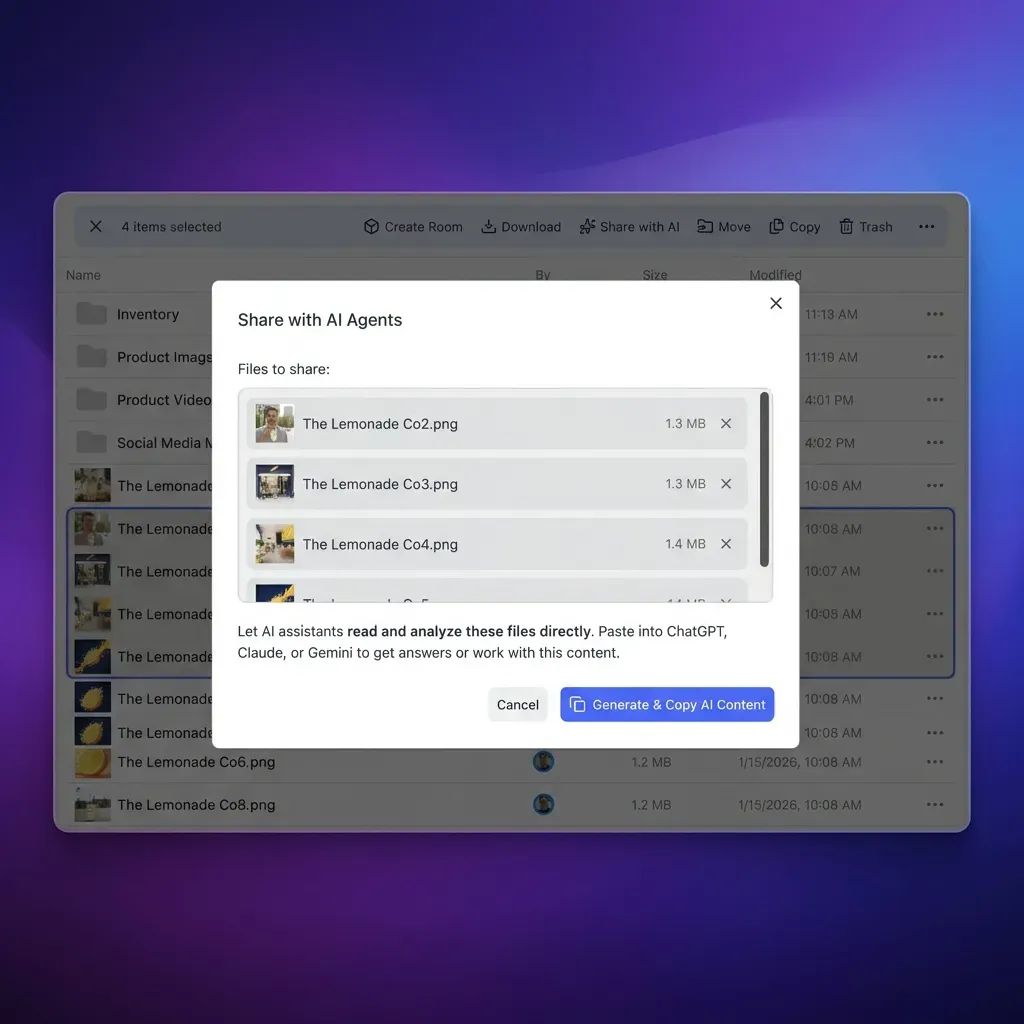
Backing Up Financial Data with a Persistent Workspace
Every skill on this list stores data locally, which is the right default for financial privacy. But local-only storage has a practical problem: if your laptop dies, your agent resets, or you move to a new machine, your transaction history goes with it unless you planned ahead.
One approach is manual backup. Copy your SQLite database or JSON files to an external drive periodically. Another is to push exports to cloud storage like Google Drive or S3. Both work, but both require you to remember and act.
A third option is Fast.io, which provides persistent cloud workspaces designed for agent workflows. Your OpenClaw agent can write financial exports, monthly summaries, or full database backups to a Fast.io workspace using the MCP server. The files stay versioned and searchable. If you need to hand off financial records to an accountant or share a spending report with a partner, you can create a branded share link without exposing your entire workspace.
Fast.io's Intelligence Mode auto-indexes uploaded documents, so you can ask questions like "What were my top spending categories last quarter?" against your exported reports using the built-in RAG layer. Plans include storage, monthly credits, and multiple workspaces, and monthly plans start with a trial of up to 14 days.
Local storage protects your privacy. A persistent workspace protects your data from loss. The two are not mutually exclusive. Run your finance skills locally, then back up periodically to a workspace that your agent and your accountant can both access when needed.
Which OpenClaw Finance Skill Should You Choose?
The right skill depends on how you want to interact with your financial data.
If you want a structured budgeting system with recurring payment reminders, start with personal-finance. Its SQLite backend is the most reliable storage option on this list, and the EMI reminder feature saves you from late fees on predictable bills.
If you are building a finance bot or want programmatic access to budgets, savings goals, and trend analysis, intelligent-budget-tracker gives you an API-first foundation that you can wire into any interface.
If speed matters most and you want to log expenses by talking to your agent, expense-tracker-pro has the most polished conversational interface. The 2.5K download count reflects how many people prefer that workflow.
If you want the most features in a single install, smart-expense-tracker covers split expenses, gamification, and automatic backups. Just be aware that the JSON storage model is less efficient than SQLite for heavy querying.
If you already have PDF statements and want to analyze them retroactively, finance-skill is the only option here that handles statement parsing directly.
You can also combine skills. Use finance-skill to import historical statements, personal-finance for day-to-day tracking and budgets, and a Fast.io workspace for cloud backup and sharing. OpenClaw skills are modular by design, so mixing two or three to cover different parts of the workflow is common practice.
Sources
References used to verify factual claims in this guide.
-
55% of Americans now use AI for personal finance management, up from 10% the previous year Only 18% of respondents trust AI to make financial recommendations on its own
-
ClawHub hosts over 13,700 skills with 311 in the finance and investing category
-
personal-finance skill has 2.4K downloads on ClawHub
-
expense-tracker-pro has 2.5K downloads on ClawHub
Frequently Asked Questions
Can OpenClaw track my expenses automatically?
OpenClaw finance skills track expenses through conversational input or statement parsing, not by connecting directly to your bank account. You log transactions by telling your agent "spent $30 on groceries" or by uploading a PDF bank statement. The LLM handles categorization and extraction. Some setups described in community guides forward email receipts to the agent for semi-automatic logging, but full bank API integration requires additional configuration outside of the core skills.
Is OpenClaw safe for personal finance data?
The skills in this guide store all transaction data locally on your machine in SQLite databases or JSON files. No financial data is sent to external servers by the skills themselves. The LLM processes your input to categorize and summarize, but the structured data stays on disk. The main risk vector is the LLM provider: if you use a cloud-hosted model, your natural language prompts (which may contain transaction details) pass through that provider's API. Running a local model through Ollama eliminates that exposure entirely.
What is the best OpenClaw skill for budgeting?
For most users, the personal-finance skill offers the best balance of budgeting features and simplicity. It tracks spending by category, lets you set monthly budgets, and sends alerts through messaging apps when you approach limits. If you need savings goals and trend analysis on top of budgeting, the intelligent-budget-tracker provides a more complete API but requires more setup. Expense-tracker-pro is the best choice if you primarily want conversational logging with basic budget alerts.
How does OpenClaw connect to bank accounts?
OpenClaw does not connect to bank accounts natively. The finance skills work with manual input (conversational logging) or document parsing (PDF statements). Community guides describe workarounds using email forwarding rules to capture transaction receipts, or using bank export features to download CSV or PDF statements that the agent can process. Direct bank API integration would require a custom skill or an external service like Plaid, which adds complexity and moves some data off your local machine.
Can I use multiple OpenClaw finance skills together?
Yes. OpenClaw skills are modular, so you can install several and use each for a different part of your workflow. A common combination is finance-skill for importing historical bank statements, personal-finance for daily expense tracking and budget alerts, and a cloud workspace like Fast.io for backing up exports and sharing reports. Each skill maintains its own local data store, so there is no conflict between them.
Related Resources

Back up your financial data without giving up privacy
Fast.io gives your OpenClaw agent persistent, versioned cloud storage for financial exports and reports, and your agent connects through the MCP server. Starts with a 14-day free trial.