7 Best OpenClaw Tools for AI Architectural 3D Rendering
Traditional architectural renders cost $800 to $8,000 per image and take one to three weeks. OpenClaw skills let agents handle parts of that pipeline, from CAD rendering and DXF conversion to image-to-3D generation and Blender scene export. This guide compares seven tools by pipeline stage so you can pick the right combination for your visualization workflow.


The Cost Problem in Architectural Rendering
Outsourced architectural rendering costs $800 to $8,000 per image, with turnaround times of one to three weeks for high-end studios. Mid-tier services charge $800 to $2,500 and still take five to ten business days. A small firm doing 20 projects per year can spend $30,000 annually on render outsourcing alone.
OpenClaw skills break this pipeline into programmable steps that agents can execute. Instead of sending a floor plan to a render studio and waiting, an agent can convert DXF drawings to images, generate 3D models from reference photos, compose scenes in Blender, and export final renders. Each step uses a different skill, and the output of one feeds the next.
No single skill covers the full architectural rendering pipeline. The tools in this guide span five stages: CAD import, drawing conversion, model generation, scene composition, and asset storage. Picking the right combination depends on where your current workflow bottleneck sits.

Related guides
- Best n8n Tools for AI Agents: Top 10 Nodes for 2026n8n changed AI automation with its visual workflow builder. We rank the best nodes and integrations for building...
- Best Tools for CrewAI Agents: Top Picks for 2026CrewAI agents need good tools to be useful. The framework handles coordination, but external integrations let agents...
- 7 Best OpenClaw Tools for 3D ArtistsTop OpenClaw tools for 3D artists manage large files, connect to Blender MCP, and support agent collaboration....
- 7 Best OpenClaw Tools for AI 3D Model GenerationOpenClaw's skill registry includes several tools that search, download, and generate 3D models in printable formats....
- 7 Best OpenClaw Tools for AI Mockup and Product VisualizationProduct teams using AI mockup tools report iteration cycles up to 70% faster than manual design workflows, yet most...
- Top OpenClaw Tools for Graphic DesignersGraphic designers use top OpenClaw tools to handle routine tasks like resizing files and generating palettes. These...
More on this subject: OpenClaw Tools (101 guides)
How We Evaluated These Tools
We tested each skill against real architectural workflow tasks: importing CAD geometry, converting technical drawings, generating 3D models from reference images, manipulating Blender scenes, and sourcing existing building components.
Evaluation criteria:
- Format support: Whether the skill handles architectural file types like DXF, STL, STEP, GLB, OBJ, and FBX
- Pipeline fit: How well the skill chains with other tools in a multi-step rendering workflow
- Agent integration: Quality of SKILL.md documentation, MCP compatibility, and install simplicity
- Architectural relevance: Whether the tool serves building visualization or general 3D work
We prioritized skills with active maintenance, clear ClawHub listings, and documented capabilities. Tools that required complex multi-service authentication or showed no recent updates were noted but ranked lower.
Helpful references: Fast.io Workspaces, Fast.io AI, and the Fast.io MCP server.
Skill Comparison at a Glance
Use this table to compare the seven tools before reading the detailed entries.
1. cad-agent
cad-agent is a Dockerized rendering server that gives AI agents visual feedback during CAD work. Agents send build123d modeling commands via HTTP and receive multi-view PNG renders in return, letting them iterate on geometry without needing a desktop CAD application open.
For architectural workflows, this means an agent can model building components like walls, columns, and window frames parametrically and verify each iteration visually. The server runs inside Docker, keeping all mesh processing contained.
ClawHub Page: clawskills.sh/skills/clawd-maf-cad-agent
Available on: ClawHub (free, open source)
Strengths:
- Multi-view rendering with four PNG angles per model
- STL and STEP export for downstream rendering tools
- HTTP API makes it straightforward to chain with other pipeline skills
- All CAD logic runs inside Docker, no local CAD install needed
Limitations:
- Requires Docker installed and running
- Flagged as "OpenClaw Suspicious" in security audit; review source before production use
- Limited to build123d geometry; does not import Revit, ArchiCAD, or other BIM formats directly
Best for: Agents designing parametric building components and needing visual verification at each step.
Pricing: Free; open source.
2. dxf-to-image
dxf-to-image converts DXF files from CAD applications like Rhino or AutoCAD into PNG, JPG, or SVG images. Architects share floor plans and construction drawings as DXF files constantly, and this skill lets agents convert those drawings into shareable image formats without opening desktop CAD software.
The skill supports customizable output dimensions, DPI settings, and margin configuration. SVG export preserves vector quality for presentations or web use, while PNG and JPG work for quick reviews and client communications.
ClawHub Page: clawskills.sh/skills/qrost-dxf-to-image
Available on: ClawHub (free, open source)
Strengths:
- Handles DXF files from Rhino, AutoCAD, and map-grabber exports
- Three output formats: PNG (raster), JPG (compressed), SVG (vector)
- Adjustable DPI and dimensions for presentation-quality output
- Both VirusTotal and OpenClaw security audits returned benign
Limitations:
- DXF only; does not handle DWG, IFC, or other architectural exchange formats
- Requires
pip install -r requirements.txtafter installation for ezdxf, matplotlib, and Pillow dependencies - No 3D rendering; converts 2D drawing views only
Best for: Converting architectural floor plans and construction drawings into shareable images for client review or documentation.
Pricing: Free; open source.


Store and share architectural renders from your agent pipeline
Upload CAD files, index project assets for search, and hand finished visualizations to architects through branded share links.
3. Hitem3D
Hitem3D turns reference photos into textured 3D models through an API-based skill on ClawHub. For architecture, an agent can take a photo of a building facade, site feature, or interior element and generate a 3D model ready for integration into a visualization scene.
The skill supports five output formats: GLB, OBJ, STL, FBX, and USDZ. It handles single-image, multi-view, and batch processing tasks, with selectable resolution tiers and model variants. The generation pipeline integrates geometry and texture in a unified workflow designed to reduce visible seams on surfaces.
ClawHub Page: clawhub.ai/lihuihui-bj/hitem3d
Strengths:
- Five output formats cover everything from previews (GLB) to fabrication (STL, FBX)
- Structure-aware texture generation reduces seam artifacts
- Batch processing mode for generating multiple models in one agent session
- Geometry-only or integrated texturing modes depending on downstream needs
Limitations:
- API-based pricing; costs vary by resolution tier and generation mode
- Output quality depends heavily on input image quality and angle
- Architectural-scale models (full buildings) may need manual cleanup for production rendering
Best for: Generating 3D models from reference photos of building elements, site features, or furniture for visualization scenes.
Pricing: API-based; see the Hitem3D ClawHub page for current rates.
4. OpenSCAD 3D Modeling
The OpenSCAD 3D skill converts natural language descriptions into parametric 3D models through OpenSCAD code generation. Agents describe a building component in plain text, the skill generates OpenSCAD scripts, validates the syntax, renders multi-angle preview images, and exports STL files.
For architectural work, parametric modeling matters when you need variations of the same component. Describe a window frame with specific dimensions, and the agent can generate ten variants at different scales without redrawing each one. The skill includes printability analysis and format conversion for downstream tooling.
Source: github.com/Averroeskw/openclaw-openscad-3d
Strengths:
- Text-to-3D pipeline: describe the shape, get a model
- Automated syntax validation catches errors before rendering
- Multi-angle PNG previews for visual verification
- STL export for importing into Blender or other visualization tools
Limitations:
- OpenSCAD uses CSG (boolean operations on primitives), which limits organic or curved shapes
- Complex architectural elements with many curves may produce heavy meshes
- Requires OpenSCAD installed locally
Best for: Generating parametric building components (brackets, connectors, frames, fixtures) where you need dimension variants quickly.
Pricing: Free; open source.
5. Blender MCP
The Blender MCP skill connects OpenClaw agents directly to a running Blender instance through the Model Context Protocol. Agents can import assets, modify objects, set materials, and export scenes without manual Blender interaction. For architectural visualization, this is the scene composition step where individual models become a complete rendering.
The skill covers common production-prep tasks: applying transforms (scale, rotation, location), setting object origins, ordering and applying modifiers, and cleaning geometry. These are exactly the steps that eat time when preparing architectural models for final rendering.
Source: openclaw/skills on GitHub (official community skill)
Install: See the five-minute setup guide for configuration.
Strengths:
- Direct MCP connection to Blender workspace for object and scene manipulation
- Production-ready geometry cleanup: transforms, origins, modifiers
- Asset import, material assignment, and scene export
- Requires Blender 3.0+ and Python 3.10+, both widely available
Limitations:
- Requires a running Blender instance; headless rendering needs additional configuration
- Complex shader networks may need manual fine-tuning after agent setup
- Focused on scene preparation more than final photorealistic rendering
Best for: Composing architectural visualization scenes from imported models, applying materials, and preparing geometry for rendering.
Pricing: Free; open source.
6. find-stl
find-stl searches Printables for existing 3D model files (STL, 3MF, ZIP) matching a given concept or part name. For architectural visualization, agents can source pre-made furniture, fixtures, landscaping elements, and building components instead of modeling everything from scratch.
The skill handles Printables' time-limited download links automatically and records license information, file hashes, and attribution data in a manifest.json file. This matters for commercial architectural projects where asset licensing needs documentation.
ClawHub Page: clawskills.sh/skills/ajmwagar-find-stl
Available on: ClawHub (free, open source)
Strengths:
- Automated search, download, and licensing documentation in one step
- Downloads complete file packages (ZIP) when available
- Manifest includes creator attribution and verification hashes
- Over 2,000 downloads on ClawHub
Limitations:
- Searches Printables only; does not cover TurboSquid, Sketchfab, or other architectural asset libraries
- Flagged as "OpenClaw Suspicious" in security audit
- Downloaded models may need scale and orientation adjustments for architectural scenes
Best for: Sourcing pre-made 3D assets (furniture, fixtures, site elements) to populate architectural visualization scenes.
Pricing: Free; open source.
7. Fast.io
Rendering pipelines generate large files. CAD source files, intermediate 3D models, texture sets, and final renders accumulate quickly, and local storage runs out fast. An agent working across multiple pipeline stages needs persistent storage that survives between sessions.
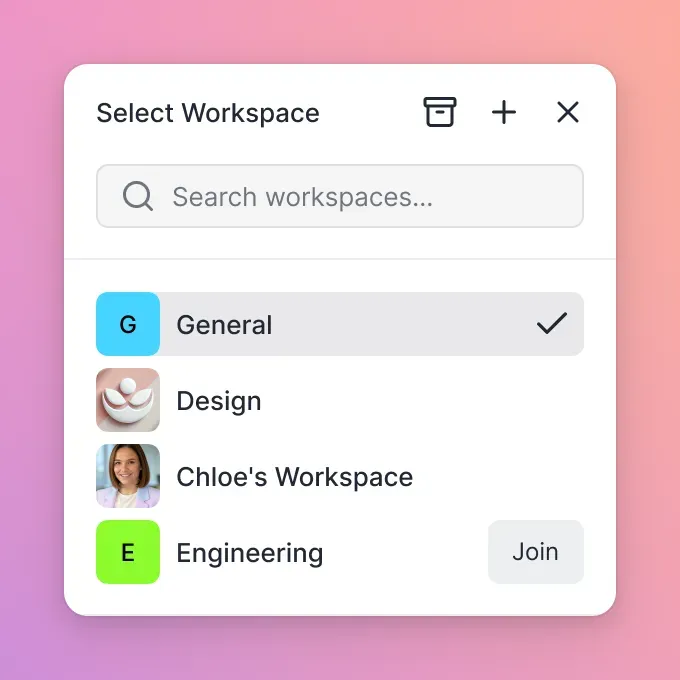
Fast.io provides a shared workspace where agents and architects access the same indexed files. The Fast.io MCP server gives OpenClaw agents a consolidated MCP toolset for file management, uploads, AI search, and branded sharing. An agent uploads a rendered visualization, and a human architect downloads it through a branded share link without needing direct agent access.
Connection: Remote MCP server at https://mcp.fast.io/mcp/tools
Strengths:
- Persistent workspace storage and usage credits
- Intelligence Mode auto-indexes uploaded files for semantic search across project assets
- Ownership transfer: agents build a workspace and hand it to an architect or client
- The WebSocket events feed notifies downstream agents when new renders arrive
Limitations:
- Large scene files can be uploaded directly or in chunks via the API
- Intelligence Mode indexing consumes additional AI credits
- Not a rendering tool; provides the storage and handoff layer around rendering tools
Best for: Persistent storage, semantic search, and human handoff for multi-stage architectural rendering pipelines.
Pricing: 14-day Business Trial (credit card required); paid plans start at $9.99/mo at fast.io/pricing.
How to Build a Complete Rendering Pipeline from These Tools
The seven tools in this guide cover distinct pipeline stages. Pick based on where your current bottleneck sits.
Starting from CAD files: Begin with dxf-to-image to convert drawings into shareable formats, then use cad-agent to render parametric components with visual feedback at each iteration.
Starting from photos: Use Hitem3D to generate 3D models from reference images, then bring them into Blender MCP for scene composition and material assignment.
Starting from scratch: OpenSCAD 3D handles parametric component generation from text descriptions. Use find-stl to source pre-made assets for scene population instead of modeling every chair and light fixture.
For all pipelines: Add Fast.io as the storage layer. Agents read source files and write outputs to the same workspace, and architects access finished renders through branded share links. Fast.io offers a 14-day Business Trial with paid plans starting at $9.99/mo, giving teams ample storage and credits to test a full pipeline before scaling.
Start at fast.io/storage-for-openclaw or read the MCP skill documentation for setup details.
Sources
References used to verify factual claims in this guide.
-
Outsourced architectural rendering costs $800 to $8,000 per image with turnaround of one to three weeks for high-end studios Small firms doing 20 projects per year spend $30,000 annually on render outsourcing
-
cad-agent is a Dockerized rendering server for build123d with multi-view PNG output and STL/STEP export
-
dxf-to-image converts DXF files to PNG, JPG, or SVG with customizable dimensions and DPI
-
Hitem3D generates models in GLB, OBJ, STL, FBX, and USDZ with structure-aware integrated texture generation
-
find-stl has 2,000+ downloads on ClawHub and searches Printables for STL/3MF/ZIP files
Frequently Asked Questions
Can OpenClaw create architectural renderings?
OpenClaw can automate parts of the architectural rendering pipeline through skills. cad-agent provides a rendering server for parametric CAD models with multi-view PNG output. Hitem3D generates textured 3D models from reference photos. The Blender MCP skill lets agents compose and export scenes. No single skill produces a finished photorealistic rendering on its own, but chaining them covers the pipeline from CAD input to scene composition.
What OpenClaw skills work with CAD files?
cad-agent handles build123d parametric modeling with multi-view PNG rendering and STL/STEP export. dxf-to-image converts DXF files from Rhino or AutoCAD into PNG, JPG, or SVG formats. The OpenSCAD 3D skill generates parametric models from text descriptions and exports STL files for use in other tools.
How do I use OpenClaw for 3D visualization?
Pick tools for your specific pipeline stages. Use cad-agent or OpenSCAD 3D for geometry creation, Hitem3D for image-to-3D conversion, and Blender MCP for scene composition and material assignment. Use Fast.io or a similar storage skill to persist large files between agent sessions. Chain the tools by passing output from one skill as input to the next.
Does OpenClaw work alongside Blender for architecture?
Yes. The Blender MCP skill connects OpenClaw agents to a running Blender instance through the Model Context Protocol. Agents can import models, modify objects, apply materials, clean geometry, and export scenes. Setup takes about five minutes with Blender 3.0+ and Python 3.10+.
How do agents handle large architectural rendering files?
Fast.io provides persistent cloud storage accessible through its remote MCP server, so agents can upload and retrieve large CAD files, 3D models, and rendered images without filling local storage. Once Intelligence Mode is enabled, files are indexed for semantic search, and ownership transfer lets agents hand finished project workspaces to human architects or clients.
Related Resources

Store and share architectural renders from your agent pipeline
Upload CAD files, index project assets for search, and hand finished visualizations to architects through branded share links.