7 Best OpenClaw Tools for AI Mockup and Product Visualization
Product teams using AI mockup tools report iteration cycles up to 70% faster than manual design workflows, yet most mockup tool lists cover standalone web apps like Placeit and Smartmockups rather than agent-driven batch generation. This guide ranks seven OpenClaw skills and integrations that generate product renders, packaging mockups, and interactive prototypes from text or reference images, then explains how to store and share the output with a team.


Why Agent-Driven Mockups Beat Manual Tools
The proxy keyword "ai mockup generator" pulls 720 monthly searches at a keyword difficulty of 24, which signals strong demand from product and ecommerce teams already comfortable with AI tooling. Traditional mockup generators handle one image at a time through a browser interface. OpenClaw skills flip that model: describe what you need in a chat message, and the agent generates, iterates, and exports without switching tabs.
The practical difference shows up in batch workflows. An ecommerce team launching 40 SKUs can write a single prompt template, feed it a spreadsheet of product names and descriptions, and let an OpenClaw agent produce the full set of lifestyle shots or packaging renders overnight. That pipeline does not exist in Placeit or Smartmockups, which require manual uploads and template selection for each image.
Agent-driven mockups also compose with other skills. A research agent can pull competitor product photography from the web, pass reference images to a visual generation skill, and store the output in a shared workspace for a designer to review the next morning. The rest of this article breaks down the seven tools that make those workflows possible.

Related guides
- Best n8n Tools for AI Agents: Top 10 Nodes for 2026n8n changed AI automation with its visual workflow builder. We rank the best nodes and integrations for building...
- Best Tools for CrewAI Agents: Top Picks for 2026CrewAI agents need good tools to be useful. The framework handles coordination, but external integrations let agents...
- Best OpenClaw Tools for AI Shopping Assistants and Product RecommendationsClawHub lists 51 shopping and e-commerce skills, but most handle niche marketplace lookups or regional grocery...
- 7 Best OpenClaw Tools for AI Architectural 3D RenderingTraditional architectural renders cost $800 to $8,000 per image and take one to three weeks. OpenClaw skills let agents...
- Top OpenClaw Tools for AI Dropshipping Product Research and Listing OptimizationDropshipping product research still eats hours of manual browsing, even for experienced sellers. OpenClaw skills turn...
- Top OpenClaw Tools for Graphic DesignersGraphic designers use top OpenClaw tools to handle routine tasks like resizing files and generating palettes. These...
More on this subject: OpenClaw Tools (101 guides)
How We Evaluated These Tools
We tested each tool for mockup quality, OpenClaw compatibility, batch processing support, and cost per image. Evaluation criteria:
- Visual output quality: Resolution, text rendering accuracy, and realism of product placement.
- OpenClaw integration: Native ClawHub skill, MCP endpoint, or documented agent workflow.
- Batch and automation support: Can the skill process multiple prompts in sequence without manual intervention?
- Format flexibility: Packaging mockups, app prototypes, lifestyle shots, 3D renders, or a mix.
- Pricing: Free tiers, per-image costs, and whether API keys require a paid subscription.
Tools that required no setup beyond a ClawHub install scored higher than those needing Docker containers or external API configuration. We weighted mockup-specific features over general image generation, since a tool that produces great landscapes but poor product placement does not help a product team.
Related references: Fastio Workspaces, Fastio AI, and Storage for OpenClaw.
Comparing OpenClaw Mockup and Visualization Tools


Store and share your agent-generated mockups in one workspace
Upload product renders, prototypes, and 3D models to a searchable workspace your whole team can access. generous storage, Intelligence Mode for visual search, branded share links for client review.
1. Nano Banana Pro
Nano Banana Pro connects OpenClaw to Google DeepMind's Gemini image generation engine. It produces high-resolution product mockups at up to 4K from text prompts, and accepts up to 14 reference images for multi-image compositing. That reference-image limit matters for packaging mockups where you need the product, background, and brand elements to stay consistent across a batch.
A standout workflow is automated knolling: the agent arranges products in a flat-lay composition used heavily in ecommerce and social media. An SEO research agent can identify trending product aesthetics, pass that data to a visual agent running Nano Banana Pro, and generate a full set of lifestyle shots without a photographer. Text rendering error rates sit below 10%, which makes the skill usable for packaging labels and UI screenshots that include readable copy.
Strengths:
- 4K output resolution for print-ready and commercial use.
- Up to 14 input images for complex compositing scenes.
- Sub-10% text rendering error rate for labels and UI copy.
- Cron job support for scheduled batch generation.
Limitations:
- Requires a Google Generative AI API key or third-party provider.
- Compositing 14 images in a single scene can produce unpredictable layouts without careful prompting.
Pricing: $0.134 per 2K image, $0.24 per 4K image via Google API. Third-party providers like APIYI offer flat $0.05 per image at any resolution.
Best For: Ecommerce teams that need photorealistic product renders and packaging mockups at scale.
2. Huashu Design
Huashu Design generates interactive HTML prototypes with clickable navigation, editable PowerPoint decks, motion design exports (MP4 at 25fps or 60fps), and print-quality infographics. Where Nano Banana Pro focuses on raster images, Huashu Design produces functional prototypes that a product manager can click through and annotate.
The skill follows a "Junior Designer" workflow: it gathers brand assets (logo, product shots, UI screenshots, color palette, fonts) before generating anything, then shows assumptions early and iterates based on feedback. That process avoids the common AI design problem of producing polished output that ignores brand guidelines entirely.
Prototypes render as pixel-accurate device frames, including iPhone 15 Pro with Dynamic Island. The skill verifies output with Playwright before delivery, so broken layouts get caught before they reach a stakeholder. It also enforces anti-AI-slop rules through careful typography and CSS Grid choices, avoiding the purple-gradient defaults that plague most AI design tools.
Strengths:
- Clickable HTML prototypes with real navigation and state.
- Editable PPTX output with text frames, not flattened image beds.
- Motion exports for product demo videos.
- Brand asset protocol enforces visual consistency.
Limitations:
- Primary documentation is in Chinese, which adds friction for English-speaking teams.
- Prototype fidelity depends on providing thorough brand assets upfront.
Pricing: MIT licensed, free. No subscription or per-use costs. API usage for the underlying LLM is the only variable cost.
Best For: Product teams building app prototypes, pitch decks, or demo videos from text descriptions.
3. CAD Agent and OpenSCAD 3D
These two open-source skills handle physical product visualization. CAD Agent provides a Docker-containerized rendering server that lets agents send parametric modeling commands via HTTP and receive rendered images back. It supports boolean operations (union, subtraction, intersection), transformations, and exports to STL, STEP, and 3MF formats. The visual feedback loop means the agent can see what it built, evaluate the result, and iterate without human intervention.
OpenSCAD 3D takes a different approach: text-to-STL via natural language. Describe a part in plain English, and the skill generates OpenSCAD code, compiles it to STL, and runs printability analysis with PLA material cost estimation. It supports headless PNG rendering via Xvfb, so no GPU is required for preview images.
Both skills fill a gap that raster mockup generators cannot: accurate dimensional models of physical products. If you are visualizing a consumer electronics enclosure, a custom bottle shape, or a retail display stand, these tools produce models you can rotate, measure, and send to a 3D printer.
Strengths:
- STL, STEP, 3MF, and OBJ export for downstream manufacturing workflows.
- Printability analysis with material cost estimates (OpenSCAD 3D).
- Visual iteration loop without human intervention (CAD Agent).
- No GPU required for preview rendering.
Limitations:
- CAD Agent requires Docker, which adds setup complexity.
- OpenSCAD models are parametric geometry, not photorealistic renders. You get accurate shapes, not lifestyle photography.
Pricing: Both are MIT licensed and free.
Best For: Hardware teams, packaging engineers, and anyone who needs dimensionally accurate 3D product models.
4. Frontend Design
The Frontend Design skill pushes OpenClaw past generic purple-gradient templates into production-grade UI with intentional design direction. It supports specific visual styles (brutalist, editorial, high-contrast) and enforces thoughtful typography, spacing, and color choices. For product visualization, this means generating realistic landing page mockups, marketing site prototypes, and UI component previews that match a brand's visual identity.
The skill works best for web and mobile app mockups where the deliverable is a functional HTML page rather than a static image. Unlike Figma or Sketch exports, the output runs in a browser and responds to interactions.
Strengths:
- Bold aesthetic direction beyond AI defaults.
- Browser-native output that responds to interactions.
- Supports multiple design philosophies (brutalist, minimal, editorial).
Limitations:
- Limited to web/HTML output. Not suitable for packaging or 3D product renders.
- Requires pairing with an image generation skill for photo-realistic elements.
Pricing: Available on ClawHub. Pricing varies by marketplace listing.
Best For: Marketing teams prototyping landing pages and product launch pages.
5. Atlas Design Operator and Fastio for Output Management
Atlas is a design operator skill with over 20 core capabilities for asset generation, branding, and creative automation. It turns rough ideas into polished visuals, consistent branding, and production-ready assets. For mockup workflows, Atlas handles the brand-consistency layer: generating social graphics, marketing materials, and on-brand product visuals that share a unified color palette and typography.
Once a mockup pipeline produces output, the files need to go somewhere a team can review them. Local storage works for a solo developer, but breaks down when a product manager, designer, and ecommerce lead all need to see the same batch of renders. S3 or Google Drive can store the files, but neither indexes images for semantic search or provides branded sharing links.
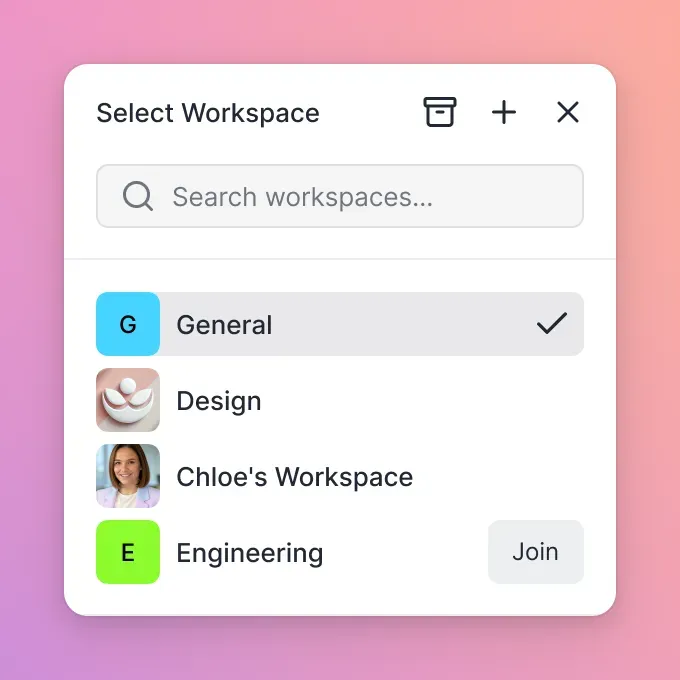
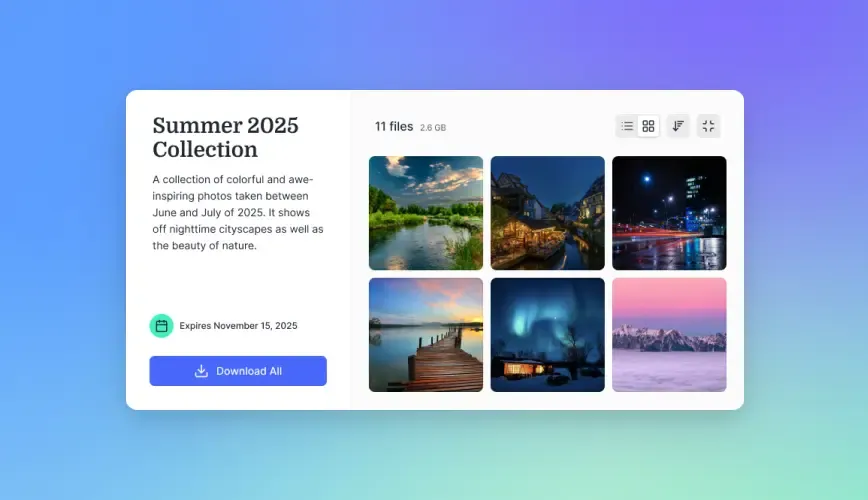
Fastio fills this gap as the output management layer. Upload mockup batches to a workspace and the files are auto-indexed by Intelligence Mode, making them searchable by description ("show me all the blue packaging variants") rather than filename. Agents connect via the MCP server using Streamable HTTP at /mcp, so the generation agent can upload directly to a shared workspace without human intervention. Ownership transfer lets an agent build and organize a complete asset library, then hand it to a product manager who reviews, comments, and distributes through branded share links.
Fastio strengths for mockup workflows:
- Generous storage, enough for thousands of product renders.
- Intelligence Mode turns uploaded images into a searchable visual database.
- Branded share links for client review and stakeholder approval.
- Metadata Views can extract structured data from design specs alongside your renders.
- Ownership transfer from agent to human preserves full audit history.
Atlas strengths:
- 20+ asset generation capabilities in one skill.
- Brand consistency enforcement across all output.
Atlas pricing: $49 one-time purchase on ShopClawMart.
Fastio pricing: 14-day Business Trial (credit card required). Paid plans start at $9.99/mo (see pricing).
Best For: Teams that need a shared, searchable home for agent-generated mockup assets, with Atlas for brand-consistent generation and Fastio for storage and distribution.
Choosing the Right Tool for Your Mockup Workflow
The choice depends on what you are visualizing and who receives the output.
Photorealistic product photography: Start with Nano Banana Pro. Its 4K output and multi-image compositing handle ecommerce hero shots, flat-lay compositions, and social media graphics. Pair it with Fastio for batch storage and team review.
Interactive app prototypes: Use Huashu Design. The clickable HTML output and device-frame rendering make it the strongest option for product demos and stakeholder presentations. Export to PPTX when the audience prefers slides.
Physical product models: CAD Agent or OpenSCAD 3D, depending on your comfort with Docker. CAD Agent provides a visual feedback loop for iterative design. OpenSCAD 3D excels at text-to-STL for quick dimensional checks and printability analysis.
Web and landing page mockups: Frontend Design handles browser-native prototypes with real aesthetic intent. Combine it with Nano Banana Pro when you need product photography placed into a page layout.
Brand-consistent batches: Atlas enforces a unified visual identity across a large set of assets. Use it when you need 50 social graphics that all share the same palette, typography, and layout grid.
Storage and team distribution: Fastio sits at the end of every pipeline above. Persistent workspaces, semantic search via Intelligence Mode, and branded shares replace the scattered Google Drive folders and Slack threads that mockup files usually end up in. Set up a workspace at fast.io/pricing and connect your OpenClaw agent via MCP.
Sources
References used to verify factual claims in this guide.
-
Proxy keyword 'ai mockup generator' has 720 monthly searches with KD 24
-
Product teams using AI mockup tools report 70% faster iteration cycles
-
Nano Banana Pro text rendering error rate below 10% Nano Banana Pro costs $0.134 per 2K image and $0.24 per 4K image via Google API
-
Atlas design operator skill priced at $49 on ShopClawMart
-
Huashu Design is MIT licensed and free
Frequently Asked Questions
Can AI generate product mockups?
Yes. AI image generation models like Google's Gemini (used by the Nano Banana Pro skill) produce photorealistic product mockups from text descriptions or reference images. The output quality has reached a point where ecommerce teams use AI-generated lifestyle shots alongside traditional product photography, with resolution support up to 4K for print and commercial use.
How do you create mockups with OpenClaw?
Install a visual generation skill from ClawHub, such as Nano Banana Pro for raster mockups or Huashu Design for interactive prototypes. Configure your API key for the underlying model, then describe the mockup you want in the OpenClaw chat. The agent generates the image or prototype, and you can iterate by providing feedback in follow-up messages. For batch workflows, write a prompt template and let the agent process multiple products in sequence.
What is the best AI tool for product visualization?
It depends on the output format. For photorealistic product photography and packaging renders, Nano Banana Pro offers the best combination of resolution, compositing, and batch support within OpenClaw. For interactive app prototypes with clickable navigation, Huashu Design produces functional HTML mockups. For dimensionally accurate 3D models, CAD Agent or OpenSCAD 3D export to STL, STEP, and other manufacturing formats.
Can OpenClaw render 3D product images?
OpenClaw does not render 3D models natively, but skills like CAD Agent and OpenSCAD 3D add that capability. CAD Agent runs a Docker-containerized rendering server that produces shaded 3D views, technical drawings, and multi-view composites. OpenSCAD 3D converts natural language descriptions to parametric 3D models and renders preview PNGs without a GPU. Both export to STL and other formats for downstream use.
How much do AI mockup tools for OpenClaw cost?
Most OpenClaw mockup skills are free and open source (MIT license). The primary cost is API usage for the underlying AI model. Nano Banana Pro costs $0.13 to $0.24 per image through Google's API, or $0.05 per image through third-party providers. Huashu Design, CAD Agent, and OpenSCAD 3D are entirely free. Atlas is a one-time $49 purchase on ShopClawMart.
Can I batch-generate product mockups with OpenClaw?
Yes. Nano Banana Pro supports Cron-scheduled batch generation, and its multi-image compositing accepts up to 14 reference images per scene. You can script an OpenClaw agent to iterate through a product catalog, generate mockups for each SKU, and upload the results to a shared workspace like Fastio for team review. This pipeline replaces manual one-at-a-time uploads in traditional mockup tools.
Related Resources

Store and share your agent-generated mockups in one workspace
Upload product renders, prototypes, and 3D models to a searchable workspace your whole team can access. generous storage, Intelligence Mode for visual search, branded share links for client review.