7 Best OpenClaw Skills for AI Writing Voice Cloning and Personal Style Replication
Most guides split audio voice cloning and writing style replication into separate categories, but OpenClaw skills let you handle both from a single agent workflow. This list ranks seven ClawHub skills that clone vocal characteristics, replicate writing tone, or combine both for personal brand consistency across text and audio.


Why Personal Style Replication Needs Both Voice and Writing
Smallest.ai can clone a voice from just five seconds of audio, while ElevenLabs needs about 30 seconds. On the writing side, ClawHub hosts over 5,400 curated skills, including dedicated tools for matching tone, vocabulary, and sentence rhythm. But here is the gap most guides miss: audio voice cloning and writing style replication almost always get treated as separate problems, even though personal brand consistency depends on both.
OpenClaw skills bridge this divide. A single agent session can analyze your writing samples to capture sentence patterns and vocabulary choices, then feed that same style profile into audio generation. The result is content that sounds like you in both text and speech, without switching between disconnected tools.
This list covers seven skills split across three categories: audio voice cloning (skills that synthesize speech matching your vocal characteristics), writing style replication (skills that learn and reproduce your written tone), and hybrid workflow tools (skills that help tie both together). We tested each for ClawHub availability, setup complexity, output quality, and how well they fit into agentic workflows.

Related guides
- How to Use Claude Code Skills in ClineAccording to GitHub's Octoverse 2024 report, the number of developers building with generative AI on the platform...
- How to Install and Manage Cline Agent SkillsAI coding agents boost code volume by 180%, but shipped code rises by only 30%, showing a critical gap in development...
- Top OpenClaw Skills for AI Voice Cloning and Voice ModificationThe voice cloning market crossed $2 billion in 2025 and is growing at 27% annually, but most cloning tools still run as...
- Best OpenClaw Skills for AI Video Script WritingVideo scripts drive every stage of production, and OpenClaw skills can automate the writing process across formats....
- Best OpenClaw Skills for AI Writing Assistant ToolsVoltAgent's curated registry filtered ClawHub's 13,700+ entries down to roughly 5,200 production-grade skills, with...
- Best OpenClaw Skills for AI Cover Letter and Job Application WritingA field experiment of 7,287 job applications showed tailored cover letters produce 53% more callbacks, but follow-up...
More on this subject: OpenClaw Skills (109 guides)
How We Evaluated These Skills
Every skill on this list meets four criteria:
- ClawHub availability: Installable directly from the OpenClaw skills registry. No manual cloning or custom setup scripts.
- Sample efficiency: How little input audio or text the skill needs to produce a usable clone. Five seconds of audio or a few hundred words of writing is the bar.
- Output quality: Whether cloned voices sound natural and cloned writing reads like the original author, not a generic approximation.
- Agent integration: How cleanly the skill fits into multi-step OpenClaw workflows alongside storage, sharing, and handoff tools.
We weighted sample efficiency heavily because most practitioners hit friction at the data collection step. A skill that needs 30 minutes of studio-quality audio is a non-starter for someone who just wants to clone their conference talk voice for podcast intros.
Voice Cloning Skills
These three skills handle audio voice synthesis, each with a different approach to cloning fidelity and infrastructure requirements.
1. ElevenLabs CLI
The ElevenLabs CLI skill connects OpenClaw agents to ElevenLabs' full voice platform: text-to-speech, speech-to-text, and instant voice cloning from short audio samples. ElevenLabs offers over 10,000 community-shared voices in its Voice Library, plus instant cloning that works from roughly 10 seconds of recorded audio.
Key strengths:
- Instant voice cloning from short samples, no studio recording needed
- Access to the full ElevenLabs Voice Library for pre-built voices
- Supports both text-to-speech generation and speech-to-text transcription in one skill
Limitations:
- Requires an ElevenLabs API key (free tier available with usage limits)
- Cloned voice quality scales with sample length, so 10 seconds works but longer samples sound better
Best for: Creators who want fast voice cloning without leaving their OpenClaw session.
Install: Available on ClawHub under the name elevenlabs-cli.
2. Clonev (Coqui XTTS v2)
Clonev runs Coqui's XTTS v2 model to clone any voice from a 6-to-30-second WAV sample and generate speech in that voice. It supports 14 languages with cross-language cloning, so you can record a sample in English and generate speech in Spanish using the same voice.
Key strengths:
- Works from as little as 6 seconds of audio
- Cross-language voice cloning across 14 languages
- Runs locally, so no API costs or data leaving your machine
Limitations:
- Requires local GPU for reasonable generation speed
- Audio quality depends on sample clarity, so noisy recordings produce noisy clones
Best for: Developers who want voice cloning without third-party API dependencies.
3. Verbatik Text-to-Speech and Voice Cloning
Verbatik gives OpenClaw agents access to 2,700+ pre-trained neural voices across 50+ languages, plus instant voice cloning from 10-second audio samples. It adds emotional controls (7 emotions) and adjustable speed, pitch, and volume that the other skills lack.
Key strengths:
- Emotion and prosody controls: 7 emotions, speed 0.5x to 2x, pitch adjustment of -12 to +12 semitones
- 2,700+ pre-trained voices as starting points before cloning
- Pay-as-you-go pricing with no monthly subscription ($0.002/1K characters for pre-trained, $0.10/1K for cloned, $3 per voice clone)
Limitations:
- Requires Verbatik API key from api.verbatik.com
- Cloned voice pricing is 50x more expensive per character than pre-trained voices
Best for: Teams producing multilingual audio content who need fine-grained control over delivery style.
Install: Available on ClawHub as the Verbatik text-to-speech and voice cloning agent skill.



Store your voice profiles and writing samples in one workspace
Persistent storage with Intelligence Mode for semantic search across your voice and writing assets. MCP-ready for your OpenClaw agent.
Writing Style Replication Skills
Voice cloning handles how you sound. These skills handle how you write, capturing sentence structure, vocabulary preferences, and tonal patterns from your existing text.
4. Brand Voice Profile
This skill lets you define and store a reusable brand voice profile that other OpenClaw skills can reference during content generation. Instead of re-describing your tone in every prompt, you set it once and it persists across sessions.
Key strengths:
- Persistent voice profiles that survive between OpenClaw sessions
- Works as a foundation layer that other writing skills can consume
- Supports multiple profiles for different brands or contexts
Limitations:
- Defines voice parameters rather than learning them from samples; you describe your style rather than having it extracted
- Effectiveness depends on how precisely you articulate your voice characteristics
Best for: Marketing teams managing multiple brand voices across content types.
Install: Available on ClawHub as the brand voice profile skill.
5. Critical Article Writer
The critical article writer generates draft articles, outlines, and editorial content in a distinctive analytical voice. It combines skeptical commentary with conversational tone and strategic humor, making it useful as a reference for anyone building a writing style that questions conventional narratives rather than echoing them.
Key strengths:
- Produces research-backed opinion pieces with a consistent critical perspective
- Handles multiple formats: full articles, outlines, social threads, and standalone posts
- Balances technical depth with readable prose
Limitations:
- Optimized for tech industry critique; adapting its style to other domains requires prompt engineering
- The skeptical default tone may not fit every brand voice
Best for: Writers and thought leaders producing analytical content on technology, AI, and business topics.
6. Academic Writing
The academic writing skill from Teamolab provides expert guidance for scholarly papers, literature reviews, and research methodology. It enforces formal conventions around citation style, argument structure, and discipline-specific terminology that general writing tools miss.
Key strengths:
- Handles formal academic style: proper citation patterns, structured argumentation, and discipline-appropriate vocabulary
- Covers the full academic writing workflow from literature review to methodology sections
- Maintains consistent scholarly tone across long documents
Limitations:
- Not designed for casual or marketing content; the formal register is a feature, not a bug
- Works best with clear disciplinary context provided upfront
Best for: Researchers and graduate students who need writing assistance that respects academic conventions.
Install: Available on ClawHub as the academic writing skill from Teamolab.
Tying Voice and Writing Together with Agent Storage
These skills generate audio files and writing profiles, but the output needs to live somewhere persistent. Voice samples, cloned audio, brand voice configs, and writing samples are all files that an agent needs to read, reference, and share across sessions.
7. Fast.io MCP Server
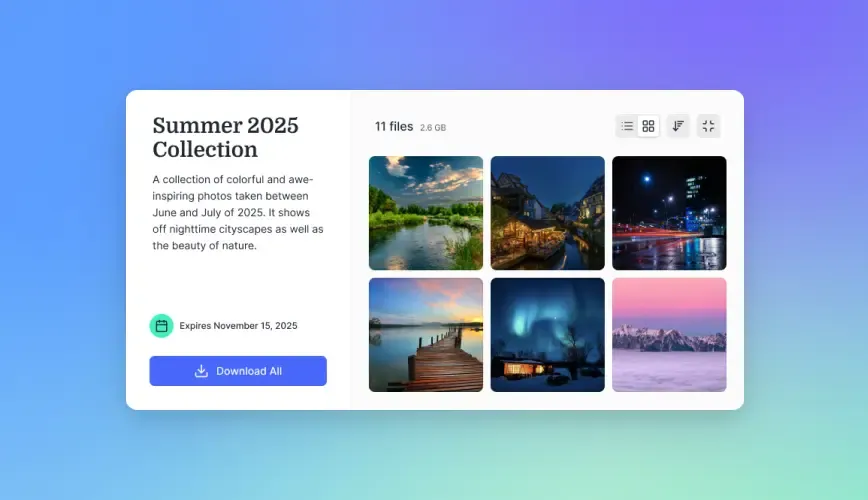
Fast.io provides the storage and collaboration layer for voice cloning and writing style workflows. Upload your voice samples to a workspace, run cloning skills against them, and store the generated audio alongside your brand voice profiles. Once Intelligence is enabled for the workspace, it auto-indexes everything for semantic search, so your agent can find "the voice sample from the March podcast" without knowing the exact filename.
Key strengths:
- 14-day Business Trial with paid plans starting at $9.99/month, plenty of room for voice samples and generated audio
- Intelligence Mode indexes files for RAG once enabled, letting agents query voice and writing assets by meaning
- Ownership transfer: an agent builds a library of cloned voices and writing profiles, then hands the workspace to a human
- MCP server with a consolidated MCP toolset, accessible via Streamable HTTP at mcp.fast.io
Limitations:
- Storage and intelligence layer, not a voice synthesis engine; requires pairing with the cloning skills above
- AI credits are usage-based for Intelligence Mode queries
Best for: Anyone running multi-skill voice and writing workflows who needs persistent, searchable storage for their assets.
Pricing: 14-day Business Trial, card required; paid plans start at $9.99/month. Get started at fast.io/pricing.
Most voice cloning workflows generate dozens of intermediate files: raw samples, cleaned audio, cloned outputs, A/B test versions. Without persistent storage, agents lose context between sessions. With Fast.io, the agent uploads a voice sample, runs the ElevenLabs or Clonev skill, stores the result, and links it to the brand voice profile, all within the same workspace. When it is time to hand off to a human editor, ownership transfer moves the entire library without re-uploading anything.
For teams already using OpenClaw for content production, the pattern is straightforward: store writing samples and voice recordings in a Fast.io workspace, enable Intelligence Mode for semantic search, and let your agent pull the right reference materials when generating new content. The MCP server gives the agent direct access to upload, download, search, and share operations without leaving the OpenClaw session.
Building a Complete Personal Style Replication Workflow
Individual skills are useful, but the real value comes from chaining them. Here is a practical workflow that combines voice cloning with writing style replication:
Step 1: Collect your samples. Upload 3 to 5 writing samples (blog posts, emails, or reports that represent your natural voice) and at least one 10-to-30-second audio recording to a Fast.io workspace. Once Intelligence is enabled for the workspace, your agent can search these by content later.
Step 2: Build your writing profile. Run the brand voice profile skill to define your tone, vocabulary preferences, and stylistic patterns. Reference your uploaded writing samples as the source material. Save the resulting profile to your workspace.
Step 3: Clone your voice. Point the ElevenLabs CLI or Clonev skill at your audio sample. Generate a test phrase and compare it against the original. Store the voice profile alongside your writing profile.
Step 4: Generate content. When creating new content, your agent pulls both profiles from the workspace. Writing tasks use the brand voice profile to match your tone. Audio tasks use the cloned voice for narration or voiceovers. The output stays consistent across both formats.
Step 5: Iterate and refine. Store generated content back to the same workspace. Over time, your agent builds a library of examples that gets better at matching your style. Intelligence Mode lets it search past outputs to find the best reference for any new task.
This workflow runs entirely within OpenClaw. The voice cloning skills handle synthesis, the writing skills handle tone, and Fast.io provides the persistent storage and search layer that connects them. No switching between platforms or manually moving files between tools.
Sources
References used to verify factual claims in this guide.
-
ElevenLabs Voice Library contains over 10,000 community-shared voices
-
Coqui XTTS v2 can clone voices from 6-second audio clips across 17 languages
-
Verbatik offers 2,700+ pre-trained neural voices with voice cloning from 10-second samples
-
Smallest.ai clones voices from 5 seconds of audio compared to 30 seconds for ElevenLabs
-
VoltAgent awesome-openclaw-skills repository catalogs 5,400+ curated skills
Frequently Asked Questions
Can OpenClaw clone my writing style?
Yes. Skills like brand-voice-profile let you define and store your writing tone, vocabulary, and stylistic preferences. The agent references this profile when generating new content. For more nuanced replication, you can upload writing samples to a workspace and have the agent analyze patterns directly, though this requires some prompt engineering to extract the right characteristics.
What OpenClaw skills work for voice cloning?
Three main options exist on ClawHub. The ElevenLabs CLI skill connects to ElevenLabs' platform for instant voice cloning from short audio samples. Clonev uses Coqui XTTS v2 for local, offline voice cloning from 6-second samples across 14 languages. Verbatik provides 2,700+ neural voices with emotion controls and voice cloning from 10-second samples. Each takes a different approach to the tradeoff between convenience, cost, and local control.
How do I make AI write in my personal style?
Start by collecting 3 to 5 representative writing samples, pieces where you were writing naturally rather than following a template. Upload them to a workspace with Intelligence Mode enabled so an agent can search them semantically. Then use a brand voice profile skill to formalize your patterns into a reusable profile. The key is specificity. Instead of describing your style as "professional but friendly," note concrete patterns like "short sentences for emphasis, minimal adjectives, questions as transitions."
What is the best OpenClaw skill for text-to-speech voice cloning?
For most users, the ElevenLabs CLI skill offers the best balance of quality, speed, and ease of setup. It clones voices from roughly 10 seconds of audio and connects to a library of over 10,000 community voices. For developers who want to avoid API costs and keep data local, Clonev (Coqui XTTS v2) is the better choice since it runs entirely on your machine with no external dependencies.
Do I need separate tools for audio and writing voice cloning?
In OpenClaw, yes. Audio voice cloning (synthesizing speech that sounds like you) and writing style replication (generating text that reads like you) use different underlying models and skills. But they work together within the same agent session. You can store both your voice profile and writing profile in the same workspace, and your agent references whichever one the current task requires.
How much audio do I need to clone my voice with OpenClaw skills?
It depends on the skill. Clonev (Coqui XTTS v2) works from as little as 6 seconds of audio. ElevenLabs instant cloning needs about 10 seconds for a usable result, though longer samples produce better quality. Verbatik also works from 10-second samples. In practice, recording 30 seconds of natural speech gives all three skills enough material to produce a recognizable clone.
Related Resources

Store your voice profiles and writing samples in one workspace
Persistent storage with Intelligence Mode for semantic search across your voice and writing assets. MCP-ready for your OpenClaw agent.