Best OpenClaw Skills for AI Homework Help and Study Tutoring
A 2025 Harvard study found that students using an AI tutor learned more than twice as much as students in traditional classrooms, and they did it in less time. OpenClaw's skill registry includes dedicated tools that replicate this kind of guided tutoring across subjects, from Socratic math coaching through Telegram to adaptive language lessons with spaced-repetition flashcards.


Why AI tutoring works better than you expect
A randomized controlled trial at Harvard, published in Scientific Reports in June 2025, tested 194 physics students across two learning formats: traditional active-learning classrooms led by experienced instructors, and at-home sessions with a custom AI tutor. The AI-tutored students learned more than twice as much, and they finished in a median of 49 minutes compared to 60 minutes for the classroom group. The study used a crossover design, so every student experienced both formats, ruling out self-selection bias.
That result matters here because OpenClaw skills can replicate the same pedagogical approach the Harvard tutor used: step-by-step guidance rather than direct answers, Socratic questioning, and adaptive pacing based on the student's responses. The difference is that OpenClaw skills are modular. Instead of one monolithic tutor app, you pick a skill for the subject, connect it to a messaging platform your student already uses, and let the agent handle the rest.
OpenClaw's official documentation describes the platform as a student study companion that covers concept explanation, essay outlining, exam preparation, and research assistance across subjects including math, physics, chemistry, biology, history, literature, economics, psychology, computer science, and languages. Students can access help through Telegram and WhatsApp on mobile, which removes the friction of opening a separate app or website.
This guide evaluates the best skills for each part of that workflow. We focused on tools available through ClawHub (OpenClaw's public skill registry) and verified use cases from the awesome-openclaw-usecases repository, filtering for skills with active maintenance and practical documentation.
Related guides
- How to Use Claude Code Skills in ClineAccording to GitHub's Octoverse 2024 report, the number of developers building with generative AI on the platform...
- How to Install and Manage Cline Agent SkillsAI coding agents boost code volume by 180%, but shipped code rises by only 30%, showing a critical gap in development...
- Best OpenClaw Skills for AI Quiz and Exam Question GenerationHigher education instructors already use AI for assessments at a meaningful rate, but most tools are standalone SaaS...
- Best OpenClaw Skills for AI Study Guide and Flashcard GenerationOpenClaw's skill registry includes dedicated tools that turn lecture notes and textbook PDFs into structured Anki...
- Best OpenClaw Skills for Web ResearchWeb research skills let OpenClaw agents find and read information on the live web. Without them, your AI is stuck with...
- Top 7 OpenClaw Skills for Growth HackersThese top OpenClaw skills help growth hackers automate experimentation and analytics. They scale campaigns faster. Real...
More on this subject: OpenClaw Skills (109 guides)
What we looked for in each skill
We evaluated each skill against five criteria before including it:
Teaching quality. Does the skill guide students toward understanding, or does it just provide answers? Skills that use Socratic questioning, break problems into steps, and explain reasoning score higher than those that dump solutions.
Subject coverage. How many academic disciplines does the skill handle? A skill that covers math, science, English, and history is more useful than one limited to a single domain.
Mobile access. Can students reach the tutor through Telegram, WhatsApp, or another messaging app? Homework help is most useful when it meets students where they already spend time.
Pipeline fit. Does the skill work well alongside other OpenClaw tools? A tutoring skill that can receive input from a PDF extractor or feed output to a flashcard generator is more valuable than one that operates in isolation.
Setup complexity. How quickly can a parent, teacher, or student get the skill running? Skills that work after a single install command reduce the barrier to entry.
The seven best OpenClaw skills for homework and tutoring
Each skill below handles a different part of the study workflow. Some tutor specific subjects, some generate practice material, and some handle research. You can use them individually or chain them together.
1. Homework Tutor: Socratic Coaching via Telegram
The Homework Tutor use case, documented in the awesome-openclaw-usecases repository (use case #69), turns OpenClaw into a patient tutor that guides students through homework problems without giving direct answers. It uses the Socratic method: asking questions that lead students toward understanding rather than handing them solutions.
Key strengths:
- Covers math, science, English, and history with subject-specific teaching methods
- Math problems get step-by-step walkthroughs with visual descriptions
- Science concepts connect to everyday experiences kids already understand
- History is presented as memorable stories rather than dry facts
- Practice mode generates five problems at the student's level with immediate feedback
Setup: Connect a Telegram bot to your OpenClaw instance and configure the child's grade level and subjects. The use case documentation recommends scheduling automated prompts at 4 PM on weekdays so the tutor is ready when homework starts.
Best for: Parents who want a structured homework companion that teaches rather than provides answers. The Socratic approach builds problem-solving skills that transfer beyond the specific assignment.
2. Study: All-in-One Learning Assistant
The Study skill on the LobeHub marketplace acts as a standalone learning assistant that combines flashcard generation, spaced-repetition scheduling, active-recall quizzing, and concept explanation in a single package. Instead of connecting to external tools, it manages the entire study cycle within one skill.
Key strengths:
- Generates flashcards from pasted text, notes, or document excerpts
- Built-in spaced-repetition scheduling adapts to your review performance
- Active-recall quizzing with immediate feedback on answers
- Concept explanation that adjusts to your current mastery level
Limitations:
- Cards stay within the Study skill's own system rather than exporting to Anki
- Less granular control over formatting compared to dedicated flashcard tools
Best for: Students who want a self-contained study system without installing or managing separate applications. Works well for quick review sessions during breaks between classes.
3. Language Learning: Adaptive Polyglot Tutor
The Language Learning skill is an AI polyglot tutor that teaches any human language using adaptive, conversational methods tailored to the learner's level and goals. It starts with a diagnostic placement test, then builds a personalized lesson plan.
Key strengths:
- Three curriculum tracks: full immersion, conversational/vocabulary focus, or basic phrases with cultural context
- Interactive conversation practice with pronunciation feedback and correction
- Vocabulary drills with spaced-repetition flashcards built in
- Roleplay scenarios for travel, exam, or workplace preparation
- Dialect support and cultural notes that go beyond textbook language
Best for: Students studying a foreign language who want daily conversation practice without scheduling a human tutor. The adaptive difficulty keeps lessons challenging without being overwhelming.
4. Academic Deep Research: Rigorous Source Gathering
The Academic Deep Research skill by kesslerio conducts exhaustive investigation through mandated two-cycle research per theme, APA 7th edition citations, evidence hierarchy ranking, and three user checkpoints. It uses OpenClaw's native web_search and web_fetch tools, so it requires no external API keys.
Key strengths:
- Structured research methodology with built-in checkpoints for student review
- APA 7th edition citation formatting, ready to paste into papers
- Evidence hierarchy ranking helps students evaluate source quality
- Self-contained: uses OpenClaw's native search tools without external dependencies
Best for: High school and college students writing research papers who need help finding, evaluating, and citing sources. The structured methodology teaches good research habits alongside producing usable output.
5. Adaptive Test: Personalized Quiz Generation
The Adaptive Test skill builds a testing engine using Item Response Theory (IRT) and Computerized Adaptive Testing (CAT). It generates questions, adjusts difficulty based on the student's responses, and produces personalized learning recommendations based on performance patterns.
Key strengths:
- IRT-based difficulty calibration targets the student's actual ability level
- AI-powered question generation creates fresh problems from source material
- Performance analytics identify specific knowledge gaps
- Personalized recommendations point students toward topics that need more work
Best for: Exam preparation where students need to identify and focus on their weakest areas. The adaptive difficulty prevents wasting time on material already mastered.
6. Web Search: Research Without Leaving the Chat
OpenClaw's built-in Web Search tool and the community web-search-free skill give students research capability directly inside the tutoring conversation. When a student asks about a topic, the tutor can pull current information, verify facts, and cite sources without switching to a browser.
Key strengths:
- Immediate fact-checking during tutoring sessions
- Source URLs included for citation in assignments
- The free community skill uses self-hosted SearXNG with no API keys required
- Combines with the Academic Deep Research skill for longer research projects
Best for: Quick fact-finding during homework sessions and building the habit of verifying claims with sources.
7. Fast.io Workspaces: Persistent Storage for Study Materials
Once your tutoring agent generates flashcards, practice problems, and research notes, those materials need to live somewhere accessible across sessions. You could store files locally, use Google Drive, or put them in Dropbox. Fast.io workspaces add an intelligence layer: uploaded documents are auto-indexed for semantic search, and the MCP server gives your OpenClaw agent direct read/write access to files.
Key strengths:
- Persistent workspaces with a 14-day Business Trial, card required; see pricing
- Intelligence Mode indexes uploaded PDFs and notes for semantic search and summarization
- MCP server with a consolidated MCP toolset lets OpenClaw agents read, write, and organize files programmatically
- Branded shares let you send study guides or practice sets to classmates through a single link
Limitations:
- Not a tutoring tool itself; requires pairing with the skills above
- Intelligence Mode is a workspace-level setting, not a per-file toggle
Best for: Students and study groups who accumulate research papers, lecture notes, and generated study materials across a semester. The Starter plan covers most individual study workflows after a 14-day trial, and the intelligence layer means you can ask questions about your entire document collection.
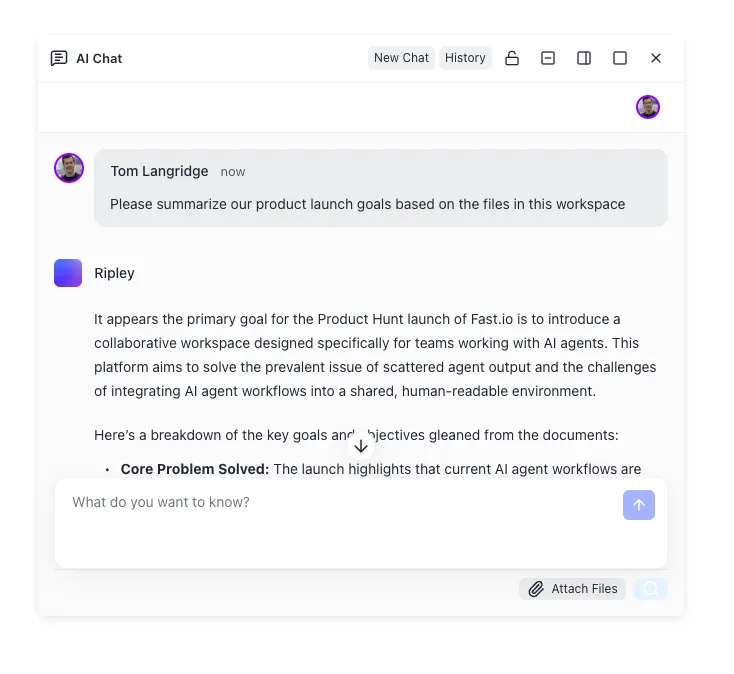


Give your student a study workspace that grows with them
Connect your OpenClaw tutor through the MCP server and keep every study session searchable.
Building a complete study pipeline
These skills work best when chained together. Here is a practical workflow that covers a typical homework session from start to finish.
Step 1: Upload source material. Drop your lecture PDF, textbook chapter, or assignment sheet into a Fast.io workspace or a local directory your agent can access. If using Fast.io, Intelligence Mode automatically indexes the content for semantic search.
Step 2: Research and context. Use the Academic Deep Research skill or Web Search to gather background information on the topic. The research output feeds into the tutoring session, giving the agent verified facts and citations to reference.
Step 3: Guided tutoring. Start the Homework Tutor or Language Learning skill depending on the subject. The tutor walks through the material using Socratic questioning, breaking complex problems into manageable steps. For language assignments, the Language Learning skill runs conversation practice and vocabulary drills.
Step 4: Generate review material. After the tutoring session, use the Study skill to create flashcards from the concepts covered. The Adaptive Test skill can generate a practice quiz targeting the areas where the student struggled most.
Step 5: Review on mobile. Because OpenClaw connects to Telegram and WhatsApp, students can review flashcards and run quick quizzes from their phone between classes or during commute time. No separate app installation required.
This pipeline works because each skill handles one stage cleanly. The Homework Tutor does not need to generate flashcards, and the Study skill does not need to teach Socratic questioning. You pick the right tool for each step and let OpenClaw coordinate them.
Setting up OpenClaw for a student
Getting a tutoring setup running takes three steps for most configurations.
Connect a messaging platform. OpenClaw supports Telegram and WhatsApp as primary interfaces. Telegram is the most common choice for tutoring because it supports rich formatting, inline images, and bot commands. Set up a Telegram bot through BotFather, connect it to your OpenClaw instance, and the student interacts with the tutor by sending messages to the bot.
Install the skills you need. Each skill installs through ClawHub with a single command or through the OpenClaw Skills UI. For a basic homework setup, install the Homework Tutor use case configuration and the Study skill. Add Language Learning if foreign language help is needed. The Web Search tool is built into OpenClaw by default, so no separate installation is required.
Configure grade level and subjects. The Homework Tutor use case documentation recommends specifying the student's grade level and current subjects during setup. This calibrates the difficulty of explanations and practice problems. You can also schedule automated check-ins so the tutor sends a prompt at a consistent time each day.
For persistent file storage across sessions, connect your OpenClaw instance to a Fast.io workspace through the MCP server. This lets the agent save generated study materials, retrieve past session notes, and build a searchable archive of everything the student has studied. Fastio offers a 14-day Business Trial, card required; see /pricing/.
Parents and teachers who want to monitor progress can review the agent's conversation history and the study materials stored in the workspace. Because everything runs through a messaging platform the student already uses, adoption friction is minimal compared to standalone tutoring apps.
Sources
References used to verify factual claims in this guide.
- 1 Kestin et al., Harvard University physics study, published in Scientific Reports, June 2025 Accessed
Students using an AI tutor learned more than twice as much in less time compared to those in traditional active-learning classrooms
-
62% of students in middle school grades and above reported using AI for help with their homework by December 2025, up from 48% in May 2025
-
OpenClaw covers concept explanation, essay outlining, exam preparation, and research assistance with mobile access via Telegram and WhatsApp
-
Homework Tutor use case uses Socratic method with support for math, science, English, and history
Frequently Asked Questions
Can OpenClaw help with homework?
OpenClaw has a documented Homework Tutor use case that covers math, science, English, and history. It uses Socratic questioning to guide students through problems step by step rather than providing direct answers. Students interact with the tutor through Telegram or WhatsApp on their phone.
How do I set up OpenClaw as a study tutor?
Connect a Telegram bot to your OpenClaw instance, install the tutoring skills you need from ClawHub (Homework Tutor, Study, Language Learning), and configure the student's grade level and subjects. The setup takes about 15 minutes for a basic configuration.
What subjects can OpenClaw tutor?
The official documentation lists math, physics, chemistry, biology, history, literature, economics, psychology, computer science, philosophy, and languages. The Homework Tutor use case focuses on math, science, English, and history with subject-specific teaching methods for each.
Is OpenClaw safe for students?
OpenClaw is open-source software that runs on your own hardware or server, so conversations stay under your control. Parents can review conversation history and configure which skills the agent has access to. The Homework Tutor use case is designed to teach rather than provide answers, which discourages copy-paste shortcuts.
Can students use OpenClaw on their phone?
Students access OpenClaw through Telegram or WhatsApp, both of which run on iOS and Android. There is no separate app to install. The messaging interface supports text, images, and formatted responses for math notation and code examples.
How does OpenClaw compare to ChatGPT for homework help?
ChatGPT is a general-purpose chatbot that answers questions directly. OpenClaw with the Homework Tutor skill uses Socratic questioning to guide students toward answers themselves, which builds deeper understanding. OpenClaw also runs locally, so parents control the data, and skills can be customized for specific grade levels and subjects.
Related Resources

Give your student a study workspace that grows with them
Connect your OpenClaw tutor through the MCP server and keep every study session searchable.