Best OpenClaw Skills for AI Quiz and Exam Question Generation
Higher education instructors already use AI for assessments at a meaningful rate, but most tools are standalone SaaS platforms disconnected from actual course material. OpenClaw skills take a different approach. They plug directly into your local files, lecture notes, and LMS data to generate quizzes calibrated to your curriculum. This guide ranks the best OpenClaw skills for quiz and exam question generation, covering adaptive testing, flashcard-based review, and LMS-connected workflows.


Why OpenClaw Changes Assessment Creation
According to a Cengage Group report, 39% of higher education instructors now use AI specifically to create quizzes and assessments. That number has grown fast, but the tools most educators reach for are standalone SaaS platforms like Quizgecko, Laxu AI, or Kahoot. You upload a PDF, get questions back, and hope they match what you actually taught.
OpenClaw skills work differently. Because OpenClaw runs locally and reads your file system, a quiz generation skill can pull directly from your lecture notes, syllabus, code repositories, or Canvas exports. The questions it generates reflect your actual curriculum rather than a general-purpose AI's interpretation of a topic.
The practical result: teachers who use AI tools at least weekly save an average of 5.9 hours per week, according to a Gallup/Walton Family Foundation study from June 2025. For assessment creation specifically, the savings come from skipping the upload-and-hope loop that standalone tools require.
This guide covers seven OpenClaw skills that handle different parts of the assessment pipeline, from adaptive testing with statistical models to simple flashcard quizzes and LMS integration.
Related guides
- How to Use Claude Code Skills in ClineAccording to GitHub's Octoverse 2024 report, the number of developers building with generative AI on the platform...
- How to Install and Manage Cline Agent SkillsAI coding agents boost code volume by 180%, but shipped code rises by only 30%, showing a critical gap in development...
- Best OpenClaw Skills for AI Homework Help and Study TutoringA 2025 Harvard study found that students using an AI tutor learned more than twice as much as students in traditional...
- 7 Best OpenClaw Skills for AI Pixel Art and Retro Game AssetsClawHub hosts over 5,400 OpenClaw skills, but finding the ones that actually produce usable pixel art for a game...
- Best OpenClaw Skills for AI Recipe Generation and Cooking AssistantsThe AI-generated recipe market passed $610 million in 2024, but most recipe apps still lock data behind closed...
- Best OpenClaw Skills for AI Story and Narrative GenerationOpenClaw's skill system turns a general-purpose AI agent into a specialized writing machine. ClawHub hosts thousands of...
More on this subject: OpenClaw Skills (109 guides)
How We Evaluated These Skills
Not every ClawHub skill labeled "education" actually generates useful assessments. We filtered through the registry's education and personal development categories and tested skills against three criteria:
Question type coverage. Does the skill generate multiple-choice, short-answer, and coding challenges, or just one format? Assessment diversity matters because different question types test different cognitive levels, from recall to application.
Curriculum grounding. Can the skill read your local files, course exports, or LMS data to generate questions? A skill that only works from typed prompts is not meaningfully different from asking ChatGPT directly.
Configuration depth. Can you set difficulty levels, question counts, subject scope, and output format? Instructors need control over these parameters to match assessments to specific learning objectives.
We also checked each skill's security scan results on ClawHub, install count where available, and whether it stores data locally or sends it to external servers.
Comparison: Top OpenClaw Quiz Generation Skills
Each skill targets a different part of the assessment workflow. Some generate questions from scratch. Others connect to existing quiz infrastructure or handle the distribution and storage side.
1. adaptivetest
The adaptivetest skill brings Item Response Theory (IRT) and Computerized Adaptive Testing (CAT) to OpenClaw. Instead of generating a flat list of questions at uniform difficulty, it adjusts question selection based on how the test-taker performs. Answer a question correctly, and the next one gets harder. Miss one, and the system recalibrates.
This matters for formal exams where you need to distinguish between students at different skill levels. A fixed 20-question quiz treats every student the same. An adaptive test can identify mastery or gaps in half the questions because it is not wasting items on difficulty levels the student has already demonstrated.
Key strengths:
- IRT-based difficulty calibration means questions are statistically validated, not just subjectively labeled "easy" or "hard"
- AI question generation creates new items based on subject matter and target difficulty
- Personalized learning recommendations follow each assessment, pointing students toward specific weak areas
Key limitations:
- Requires a larger item bank to work well, since adaptive algorithms need enough questions at each difficulty level
- More setup than simpler quiz skills, better suited for instructors comfortable with assessment design concepts
Best for: University courses or certification programs where precise measurement of student ability matters more than speed of quiz creation.
Available on ClawHub. Search for "adaptivetest" in the OpenClaw skills registry to install.



Build a shared question bank your whole department can search
Upload AI-generated assessments to a Fastio workspace. Once Intelligence is enabled, files are indexed for semantic search across your question bank.
2. study-buddy-ai
Study Buddy AI is a 22-feature study assistant that includes quiz generation as one piece of a broader learning toolkit. When you trigger "quiz me," it generates multiple-choice questions from your flashcard sets and provides instant feedback with explanations for each answer.
What makes it practical is the local-first design. All data stays on your machine in local JSON files. No network calls, no external servers, no concerns about student data leaving the device. For K-12 educators or institutions with strict data policies, that privacy model removes a common adoption blocker.
Key strengths:
- Generates flashcards and quizzes from the same source material, so study and assessment stay aligned
- Built-in spaced repetition schedules cards for review based on a 1-to-5 difficulty rating, spacing reviews from 1 to 14 days
- Tracks quiz results over time in local JSON, letting students see which topics they struggle with
- Includes a Pomodoro timer, streak tracking, and gamification to keep students engaged
Key limitations:
- Questions are primarily multiple-choice, no short-answer or coding challenges
- Works best for factual recall rather than higher-order thinking skills
Best for: Students doing self-directed review, or instructors who want to give students a tool for practice quizzes outside of class.
Available on ClawHub. Search for "study-buddy-ai" in the skills registry to install.
3. canvas-lms (Plus Three More Education Skills)
The canvas-lms skill connects OpenClaw directly to your Canvas LMS instance via REST API. It provides 23 tools for pulling course data, assignments, grades, submissions, and announcements. While it does not generate quiz questions itself, it gives OpenClaw the context it needs to generate assessments grounded in actual course content.
The workflow looks like this: the skill pulls your assignment descriptions, module structures, and learning objectives from Canvas. You then prompt OpenClaw to generate questions based on that data. The result is an assessment that reflects what you actually taught, not what a generic AI thinks the topic covers.
Configuration: Set two environment variables (CANVAS_TOKEN and CANVAS_URL) and install the skill. OpenClaw can then query rosters, modules, due dates, and submission data.
anki-connect takes a different approach. It bridges OpenClaw to your existing Anki flashcard decks via a local REST API, letting the agent read, create, and modify cards programmatically. If you already have thousands of Anki cards organized by course, this skill lets OpenClaw generate new cards that fit your existing structure rather than starting from scratch.
english-learn-cards is narrower but useful for language instructors. It provides a flashcard-based vocabulary system with built-in word lists. Language teachers can use it to generate vocabulary quizzes calibrated to specific proficiency levels.
aclawdemy rounds out the set as an academic research platform skill. It is not a quiz generator, but it can pull papers and research documents that OpenClaw can then use as source material for assessment questions in graduate-level courses.
All four skills are available on ClawHub. Search the OpenClaw skills registry by name to find and install each one.
OpenClaw's Built-In Assessment Generation
You do not always need a dedicated skill. OpenClaw's native capabilities handle straightforward quiz generation when you provide clear parameters. According to Tencent Cloud's education guide, you can provide the subject matter, difficulty level, and question count, and the agent generates multiple-choice, short-answer, or coding challenge questions tailored to your curriculum.
The key difference from standalone AI quiz tools: OpenClaw reads your local files. Point it at a folder of lecture slides, a textbook PDF, or a code repository, and the questions it generates reflect that specific material. Standalone tools like Quizgecko or Laxu AI achieve 95%+ accuracy on factual content, but they only know what you upload through their web interface. OpenClaw knows everything in your working directory.
For coding challenges specifically, OpenClaw's access to your terminal and file system means it can generate questions that reference your actual codebase, run test cases, and validate student solutions against expected outputs. No standalone quiz tool offers that depth of integration.
Practical example: An instructor teaching a Python data structures course could point OpenClaw at their assignment repository and prompt: "Generate 10 short-answer questions about binary search trees at intermediate difficulty, using the code examples from assignments 3 and 4." The agent reads the files, understands the specific implementation patterns taught, and produces questions tied to the actual coursework.
This native approach works well for quick assessment creation. For more structured or repeated workflows, the dedicated skills above add automation layers like spaced repetition, adaptive difficulty, and LMS integration.
Storing and Sharing Assessments with Fastio
Generating questions is one half of the problem. The other half is organizing, versioning, and distributing assessments across a teaching team. Most OpenClaw quiz skills store output locally, which works for a single instructor but breaks down when multiple people need access to the same question banks.
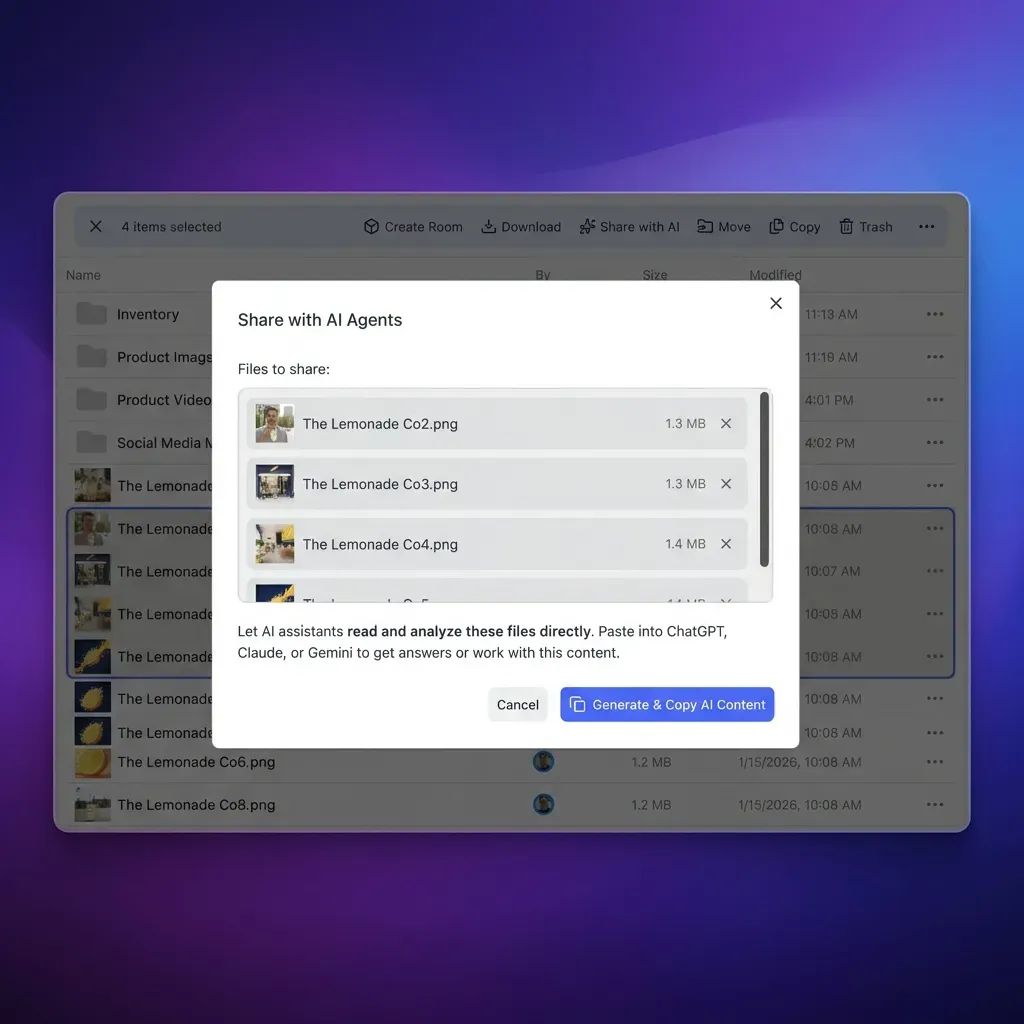
Fastio workspaces solve the distribution problem. An instructor generates assessments with OpenClaw, uploads them to a shared workspace, and collaborators access the same versioned files. Intelligence Mode auto-indexes uploaded documents, so you can search across your entire question bank by meaning rather than filename. Ask "find all questions about recursion at advanced difficulty" and get results from every assessment file in the workspace.
The Fastio remote MCP server connects directly to OpenClaw, giving agents a consolidated toolset for file management, workspace organization, and AI-powered search once Intelligence is enabled. An agent can generate a quiz, upload it to a shared workspace, and notify systems through activity polling or the WebSocket events feed, all without manual file copying.
For institutions that need a clear handoff between AI-generated content and human review, Fastio's ownership transfer lets an agent build and organize a complete assessment workspace, then transfer ownership to a department head. The agent keeps admin access for future updates, but the human controls distribution.
Alternatives exist for this layer. Google Drive works for basic file sharing, and S3 handles raw storage. Fastio's advantage is the combination of remote MCP agent access, built-in semantic search across assessment files once Intelligence is enabled, and a 14-day Business Trial.
Sources
References used to verify factual claims in this guide.
-
39% of higher education instructors use AI specifically to create quizzes and assessments Teachers who use AI tools at least weekly save an average of 5.9 hours per week
-
Top AI quiz generators like Laxu AI and Quizgecko achieve 95%+ accuracy on correct answers in testing
-
Over 5,400 community-built skills available in the OpenClaw skills registry
Frequently Asked Questions
Can OpenClaw generate exam questions?
Yes. OpenClaw can generate multiple-choice, short-answer, and coding challenge questions when you provide subject matter, difficulty level, and question count. It reads local files like lecture notes or code repositories to ground questions in your actual curriculum. Dedicated skills like adaptivetest add statistical difficulty calibration on top of this base capability.
What question types does OpenClaw support for quizzes?
OpenClaw supports three main question formats natively, including multiple-choice, short-answer, and coding challenges. The study-buddy-ai skill focuses on multiple-choice with instant feedback. The adaptivetest skill adds IRT-calibrated question selection. For flashcard-style Q&A, anki-connect and english-learn-cards provide additional formats.
How do you create assessments with OpenClaw?
Point OpenClaw at your course material (lecture slides, PDFs, code repos) and specify the subject, difficulty level, question count, and format. For a more structured workflow, install a dedicated skill like adaptivetest for adaptive exams or study-buddy-ai for practice quizzes. The canvas-lms skill can pull assignment data from your LMS to give OpenClaw better context for question generation.
Are OpenClaw quiz skills better than standalone AI quiz generators?
They solve different problems. Standalone tools like Quizgecko and Laxu AI offer polished web interfaces and achieve 95%+ accuracy on uploaded content. OpenClaw skills works alongside your local file system and development environment, which means questions can reference your actual codebase, lecture files, and LMS data without manual uploads. The tradeoff is more setup for deeper curriculum grounding.
Is student data safe with OpenClaw quiz skills?
Most OpenClaw education skills operate locally. Study-buddy-ai stores all data in local JSON files with no network calls. Canvas-lms communicates only with your own Canvas instance using your API token. Always check each skill's security scan on ClawHub before installing, and verify that the skill does not send data to external servers if data privacy is a requirement.
Related Resources

Build a shared question bank your whole department can search
Upload AI-generated assessments to a Fastio workspace. Once Intelligence is enabled, files are indexed for semantic search across your question bank.