Best Claude Model for Coding: Opus vs Sonnet vs Haiku Compared
Opus 4.8 scores 88.6% on SWE-bench Verified, but Sonnet 4.6 reaches 79.6% at 40% lower cost per token. The 9-point gap closes on routine coding tasks like test generation and API scaffolding, where Sonnet's speed advantage compounds into higher real-world productivity. Match your model to your task and the cost difference rarely shows up in code quality.


How Claude Models Compare for Software Development
Opus 4.8 reaches 88.6% on SWE-bench Verified, the most widely cited benchmark for real-world bug fixing, while Sonnet 4.6 hits 79.6% at 40% lower token cost (Anthropic Models Overview, June 2026). That 9-point gap sounds decisive until you watch both models handle routine tasks like generating unit tests or writing REST endpoints. On those, Sonnet's faster response time often makes it the more productive choice.
The question isn't which model is best in absolute terms. It's which model fits the coding work you're doing right now.
Here's how the three current Claude models compare for developers:
Opus 4.8 (claude-opus-4-8)
- SWE-bench Verified: 88.6%
- SWE-bench Pro: 69.2%
- Pricing: $5 input / $25 output per million tokens
- Context window: 1M tokens
- Max output: 128K tokens
- Speed: Moderate
- Best for: Multi-file refactoring, architecture decisions, debugging complex state, security review
Sonnet 4.6 (claude-sonnet-4-6)
- SWE-bench Verified: 79.6%
- Pricing: $3 input / $15 output per million tokens
- Context window: 1M tokens
- Max output: 128K tokens
- Speed: Fast
- Best for: Daily coding, test generation, code generation, single-file refactoring
Haiku 4.5 (claude-haiku-4-5)
- SWE-bench Verified: 73.3%
- Pricing: $1 input / $5 output per million tokens
- Context window: 200K tokens
- Max output: 64K tokens
- Speed: Fastest
- Best for: Documentation, quick lookups, type annotations, boilerplate, bulk edits
SWE-bench Verified tests a model's ability to fix real bugs from open-source Python repositories. It measures end-to-end engineering skill: reading an issue, understanding the codebase, writing a patch, and passing the test suite. Higher scores mean the model solves more real-world problems without human guidance.
SWE-bench Pro is a harder variant that filters for bugs requiring deeper reasoning. Opus 4.8's 69.2% score on Pro, compared to Opus 4.6's 51.9%, shows how much the newer model improved at complex debugging tasks.
Related guides
- Cline vs. Cursor vs. Claude Code: Best Coding Agents ComparedAn in-depth comparison of Cline, Cursor, and Claude Code coding agents. Choosing the right tool depends on your team's...
- GitHub Copilot vs Cursor: AI Coding Tools ComparedSelecting between a plugin that extends your current IDE and a dedicated editor built for AI-native features represents...
- Claude Sonnet vs Opus: Which Model Should You Actually Use?Sonnet 4.6 scores 79.6% on SWE-bench Verified, just 1.2 percentage points behind Opus. But on GPQA Diamond, a...
- Claude vs Gemini in 2026: Pricing, Coding, and Capabilities ComparedClaude Opus 4.8 scores 88.6% on SWE-bench Verified while Gemini 3.1 Pro sits at 80.6%, but Gemini's API pricing starts...
- Claude 4: Models, Capabilities, and How to ChooseClaude 4 is Anthropic's current-generation model family, spanning three capability tiers with a 25x pricing gap between...
- Claude Model Comparison 2026: Opus vs Sonnet vs Haiku vs FableAnthropic's Claude family spans four model tiers from Haiku 4.5 at $1 per million input tokens to Fable 5 at $10. Each...
More on this subject: Claude and Claude Code (278 guides)
How to Pick the Right Model for Each Coding Task
Not every coding task demands the same reasoning depth. Here's where each model earns its keep.
Debugging and Root Cause Analysis
Opus 4.8 pulls ahead when bugs span multiple files or involve subtle state issues. Its SWE-bench Pro score (69.2%) reflects an ability to trace execution paths across complex codebases systematically. For a null reference buried three layers deep in a dependency chain, Opus catches the root cause more reliably than smaller models.
Sonnet 4.6 handles straightforward debugging well. Stack traces with obvious errors, missing null checks, and off-by-one mistakes rarely need Opus-level reasoning.
Code Generation and Prototyping
Sonnet 4.6 is the strongest default for writing new code. It generates functions, endpoints, and components at roughly the same quality as Opus for standard patterns, but returns results noticeably faster. When you're building a CRUD API or scaffolding a React component, Sonnet's speed advantage compounds across dozens of generations per session.
Multi-File Refactoring
Opus 4.8 earns its premium here. Renaming a type that threads through 15 files, extracting a shared module from duplicated code, or migrating from one ORM to another all require the model to hold a coherent plan across many changes. Opus's 1M token context window and deeper reasoning make it the right pick for refactors that touch more than a handful of files.
Code Review and Security Auditing
Opus 4.8 finds logic errors, race conditions, and security issues that faster models miss. If you're reviewing a PR that touches authentication, payment processing, or data access patterns, the extra cost per token pays for itself in bugs caught before production.
Sonnet handles style reviews, convention checks, and simple logic verification. You don't need Opus to flag a missing error handler on a REST endpoint.
Test Writing
Sonnet 4.6 generates tests at near-Opus quality for less money. It writes clear assertions, covers edge cases well, and generates mock setups without much prompting. Reserve Opus for test suites that cover complex integration scenarios or concurrent systems where subtle race conditions matter.
Documentation and Quick Edits
Haiku 4.5 at $1/$5 per million tokens handles docstrings, README updates, type annotations, and simple formatting fixes without any meaningful quality drop. For batch operations like adding JSDoc comments across 100 files, Haiku's 5x cost advantage over Opus is a clear win.
How to Switch Models in Claude Code
Claude Code lets you switch models without leaving your terminal. You can change models mid-session, at startup, or through environment variables, so there's no reason to stay locked into one model for every task.
The /model Command
Type /model with no arguments to open an interactive picker. Type /model sonnet or /model opus to switch immediately. The choice saves as your default for future sessions. Press s in the picker to switch for the current session only.
/model opus

/model sonnet
CLI Flags and Environment Variables
Launch with a specific model using the --model flag:
claude --model opus
claude --model haiku
Set ANTHROPIC_MODEL as an environment variable to apply a model choice to a single session. This works well when running different models in parallel across terminal windows.
Model Aliases
Claude Code provides aliases that resolve to the latest version for your provider:
opusresolves to Opus 4.8 on the Anthropic APIsonnetresolves to Sonnet 4.6haikuresolves to Haiku 4.5bestresolves to Fable 5 where available, otherwise the latest Opusopusplanuses Opus for plan mode and Sonnet for execution
On Bedrock, Vertex, and Foundry, the aliases may resolve to older versions. Pin to a specific version by using the full model name (for example, claude-opus-4-8) or by setting the ANTHROPIC_DEFAULT_OPUS_MODEL environment variable.
Default Models by Plan
Your default model depends on your subscription:
- Max, Team Premium, Enterprise pay-as-you-go, and API accounts default to Opus 4.8
- Pro, Team Standard, and Enterprise subscription seats default to Sonnet 4.6
- Bedrock, Vertex, and Foundry default to Sonnet 4.5
If Sonnet is your default and you want Opus for a complex debugging session, run /model opus. Switch back with /model sonnet when you're done.
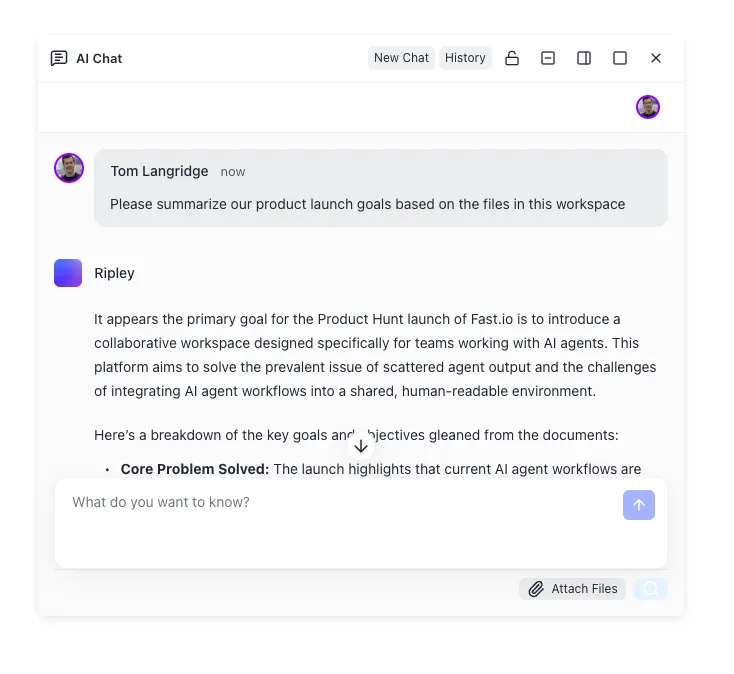


Stop losing agent-generated code between sessions
A workspace with MCP server access, auto-indexing for semantic code search once Intelligence is enabled, and a 14-day Business Trial.
How Fast Mode and Effort Levels Affect Speed and Cost
Claude Code gives you two additional controls to tune the speed-cost-quality tradeoff beyond model selection: fast mode and effort levels.
Fast Mode
Fast mode runs Opus at up to 2.5x higher speed with identical quality. It is not a different model or a downgrade to a smaller model. The underlying Opus stays the same, but the API configuration prioritizes lower latency.
The tradeoff is cost. Fast mode pricing for Opus 4.8 is $10 input / $50 output per million tokens, double the standard Opus rate. Toggle it on with /fast when you're doing rapid iteration or live debugging. Toggle it off for long autonomous tasks where latency matters less than cost.
Fast mode is available on Opus 4.8, Opus 4.7, and Opus 4.6. It does not work with Sonnet or Haiku. On subscription plans, fast mode usage is billed through usage credits and does not count against your plan's included usage.
The opusplan Strategy
The opusplan alias provides a hybrid approach. Opus handles the planning phase, where architecture, reasoning, and design decisions happen. Claude Code then automatically switches to Sonnet for execution, where it writes the actual code. You get Opus-quality thinking where it matters most and Sonnet-speed implementation where throughput wins.
Set it with /model opusplan or launch with claude --model opusplan. This approach often keeps monthly costs closer to the Sonnet tier while preserving Opus reasoning for the steps that benefit from it.
Effort Levels
Effort levels control how much reasoning the model applies per step. Lower effort means faster, cheaper responses for straightforward tasks. Higher effort means deeper thinking for hard problems.
Available levels depend on the model:
- Opus 4.8: low, medium, high, xhigh, max
- Sonnet 4.6: low, medium, high, max
- Haiku 4.5: does not support effort levels
The default is high for both Opus 4.8 and Sonnet 4.6. Anthropic recommends xhigh for coding and agentic work on Opus 4.8. Change it with /effort or launch with claude --effort xhigh.
Combining a lower effort level with a more capable model can outperform a less capable model at full effort. Opus at low effort handles simple completions faster than Sonnet at high effort, while Sonnet at high often beats Haiku on reasoning-heavy tasks regardless of Haiku's effort setting.
Cost Comparison Per Million Output Tokens
Output tokens drive most of the cost in coding workflows because models generate more text than they receive, especially during code generation.
- Haiku 4.5: $5 per million output tokens
- Sonnet 4.6: $15 per million output tokens
- Opus 4.8 (standard): $25 per million output tokens
- Opus 4.8 (fast mode): $50 per million output tokens
Prompt caching reduces input costs by up to 90%, and the Batch API cuts all costs by 50% for non-interactive workloads. Both features work across all three models. For teams processing large codebases in batch, combining Haiku with the Batch API brings output costs down to $2.50 per million tokens.

Storing Agent Output in a Shared Workspace
Model selection matters less if your coding agent's output vanishes between sessions. Code generation agents produce files, logs, and artifacts that need to persist and be accessible to your team.
The Persistence Problem
Most developers start with local file storage, which works until you need to hand off agent output to a teammate or access it from another machine. Cloud storage like Amazon S3 or Google Drive adds persistence but requires custom integration with no built-in code search or agent-specific tooling.
Workspace Options for Coding Agents
Several approaches work depending on your setup:
- Local filesystem: Simple but isolated. Agent output lives and dies on one machine.
- Git repositories: Good for code artifacts, clunky for non-code outputs like design docs or test reports.
- S3 or cloud object storage: Persistent and shareable, but no semantic search and no agent-native API.
- Fast.io: Workspaces designed for agents and humans to share the same files. Plans include storage, monthly AI credits, and multiple workspaces, and monthly plans start with a Business Trial of up to 14 days (card required).
What makes an intelligent workspace practical for coding agents:
- MCP server access: Connect any Claude model through the Streamable HTTP endpoint at
/mcp. Your agent reads, writes, and organizes files through a consolidated MCP toolset. - Intelligence Mode: Enable it on a workspace and every file gets auto-indexed for semantic search. Ask questions about your codebase and get answers with citations pointing to specific files and passages.
- Ownership transfer: An agent builds a workspace, populates it with generated code and documentation, then transfers ownership to a human. The agent retains admin access for future updates.
- File versioning: Every change is tracked. Roll back to any previous version without git-level complexity for non-code artifacts like API specs, test reports, and architecture docs.
For teams running Claude Code across multiple developers, a shared workspace becomes the coordination layer where agent-generated code, test results, and review notes stay visible to both humans and other agents. See the MCP documentation for the full tool surface, or read fast.io/llms.txt for agent onboarding. Start a 14-day Business Trial at fast.io/pricing.
Sources
References used to verify factual claims in this guide.
-
Opus 4.8 scores 88.6% on SWE-bench Verified Sonnet 4.6 scores 79.6% on SWE-bench Verified Haiku 4.5 scores 73.3% on SWE-bench Verified Opus 4.8 scores 69.2% on SWE-bench Pro
-
Opus 4.8 pricing is $5 input / $25 output per million tokens
-
Fast mode pricing for Opus 4.8 is $10/$50 per million tokens
Frequently Asked Questions
Which Claude model is best for coding?
Sonnet 4.6 is the best default for most coding work. It scores 79.6% on SWE-bench Verified, costs $3/$15 per million tokens, and responds fast enough for interactive development. Switch to Opus 4.8 for multi-file refactoring, complex debugging, or security review. Use Haiku 4.5 for documentation, type annotations, and bulk edits where speed and cost matter more than reasoning depth.
Is Claude Opus better than Sonnet for programming?
Opus 4.8 outscores Sonnet 4.6 on coding benchmarks (88.6% vs 79.6% on SWE-bench Verified) and handles complex reasoning tasks better. But Sonnet is faster and 40% cheaper per token. For routine code generation, test writing, and single-file changes, Sonnet delivers comparable results at lower cost. Opus earns its premium on architecture decisions, cross-file refactoring, and security audits.
Should I use Claude Haiku for coding?
Yes, for the right tasks. Haiku 4.5 scores 73.3% on SWE-bench Verified, strong enough for documentation, boilerplate generation, type annotations, and quick lookups. At $1/$5 per million tokens, it costs one-fifth of Opus. Avoid it for debugging complex issues or multi-file refactoring, where the quality gap becomes noticeable.
What is fast mode in Claude Code?
Fast mode runs Claude Opus at up to 2.5x higher speed without changing the model or reducing quality. It uses the same Opus model with a different API configuration that prioritizes lower latency. Fast mode costs $10/$50 per million tokens on Opus 4.8, double the standard rate. Toggle it with /fast in Claude Code. It works on Opus 4.8, 4.7, and 4.6 but not on Sonnet or Haiku.
What does opusplan do in Claude Code?
The opusplan model alias uses Opus during plan mode for reasoning and architecture decisions, then automatically switches to Sonnet for code execution. You get Opus-quality thinking where it matters most and Sonnet-speed implementation where throughput wins. Set it with /model opusplan or launch with claude --model opusplan.
How do I switch models in Claude Code?
Type /model to open the interactive picker, or type /model sonnet to switch directly. You can also launch with claude --model opus or set the ANTHROPIC_MODEL environment variable. Your choice saves as the default for future sessions unless you press s in the picker for a session-only switch.
What are effort levels in Claude Code?
Effort levels control how much reasoning the model applies per step. Options range from low (fast, cheap, less thorough) through high (the default) to max (deepest reasoning, highest cost). Opus 4.8 supports low, medium, high, xhigh, and max. Sonnet 4.6 supports low, medium, high, and max. Change the level with /effort or launch with claude --effort xhigh. Anthropic recommends xhigh for coding work on Opus 4.8.
Related Resources

Stop losing agent-generated code between sessions
A workspace with MCP server access, auto-indexing for semantic code search once Intelligence is enabled, and a 14-day Business Trial.