GitHub Copilot vs Cursor: AI Coding Tools Compared
Selecting between a plugin that extends your current IDE and a dedicated editor built for AI-native features represents a major shift in software development. This guide compares GitHub Copilot and Cursor across autocomplete models, codebase indexing, and multi-file editing capabilities, explaining how developers can combine their features and collaborate in shared team workspaces.


Why Editor Architecture Matters: Plugins vs. Standalone IDEs
Choosing between a plugin that extends an existing development environment and a dedicated editor built around AI-native features represents a major shift in how developers write code. The choice is not just about autocomplete speed. It is about whether your editor has a local semantic understanding of your entire repository, allowing it to act as an agent that modifies multiple files and self-corrects errors.
GitHub Copilot operates on an extension model. It is a plugin that installs directly into Visual Studio Code, JetBrains IDEs, Visual Studio, and Neovim. This model offers high flexibility. Developers keep their existing configurations, themes, keyboard shortcuts, and custom extensions. The plugin handles code completions and chat panels by sending editor state and queries to GitHub's cloud servers. It acts as an assistant within an environment you already own.
Cursor represents a native IDE approach. It is a standalone editor built as a fork of Visual Studio Code. Because the creators of Cursor fork the editor itself, they bypass the API limitations that restrict standard plugins. Features like inline code modifications, the codebase chat panel, and multi-file editing canvases are not sidebars or overlays. They are integrated directly into the editor's window manager, tab controls, and file tree.
The trade-off between these two architectures is clear. The plugin model is highly portable, letting you maintain a consistent AI coding experience across JetBrains at work and VS Code at home. The native IDE model requires migrating to a new editor, but it provides a cohesive experience where the AI interacts with the interface on a deeper level. Choosing between them depends on whether you prefer the comfort of your existing setup or the capabilities of an AI-first workspace.
GitHub Copilot supports VS Code, JetBrains, and Visual Studio IDEs, providing a unified developer experience across multiple platforms [GitHub Copilot Documentation 2026]. Many developers use this extension to augment their workflow without changing editors, while others adopt Cursor for its codebase indexing features.
Related guides
- Top OpenClaw Tools for Coding AgentsOpenClaw tools give coding agents the libraries and access they need to write software. With AI now handling about 45%...
- Cline vs. Cursor vs. Claude Code: Best Coding Agents ComparedAn in-depth comparison of Cline, Cursor, and Claude Code coding agents. Choosing the right tool depends on your team's...
- Cline vs Cursor vs Copilot: Choosing the Right AI Developer Tool (2026)Only 29% of professional developers trust AI code output to be accurate, according to the 2025 Stack Overflow Developer...
- GitHub Copilot Review: Is the Coding Assistant Still Worth It in 2026?Evaluating GitHub Copilot in 2026 requires looking past simple autocomplete to analyze its usage-based credit pricing...
- GitLab Duo vs GitHub Copilot Agent Mode: Platform vs IDE AI CodingSelecting the right AI coding tool requires understanding the divide between local editor autonomy and platform-wide...
- Trending GitHub Copilot Tools & Ecosystem IntegrationsA look at trending GitHub Copilot tools, custom instructions, and Model Context Protocol setups. We explain how...
More on this subject: GitHub Copilot (137 guides)
How Autocomplete Dynamics Differ in GitHub Copilot vs Cursor
The everyday coding experience is shaped by inline autocomplete suggestions. Both tools offer autocomplete, but they use different models and interaction designs.
GitHub Copilot Autocomplete is the industry standard for fast, inline suggestions. As you type in the editor, Copilot analyzes the current file, open tabs, and immediate context to predict the next few lines of code. It is highly optimized for speed and reliability, delivering completions in milliseconds. This makes it useful for generating boilerplate, completing repetitive patterns, and writing standard function definitions.
Cursor Tab, which was formerly known as Copilot++, takes a different approach to inline completions. Instead of just suggesting code ahead of your cursor, Cursor Tab predicts edits. It analyzes your typing patterns and codebase style to suggest changes to existing code. It can predict where you will edit next, modify multiple lines simultaneously, and automatically position your cursor at the next edit location. For example, if you rename a parameter in a function definition, Cursor Tab can predict that you need to rename it in the function body and will suggest that edit as a single completion, even navigating your cursor to the correct line when you press tab.
While GitHub Copilot excels at raw speed and fits into any editor, Cursor Tab is designed to edit code as you modify it. Developers who write a lot of boilerplate code may prefer the speed of Copilot, while those who spend their time refactoring and editing existing files will benefit from the edit-prediction models of Cursor Tab.
Comparing Multi-File Code Generation: Cursor Composer vs. Copilot Edits
As projects grow, code changes rarely stay confined to a single file. Adding a database field, updating an API endpoint, or refactoring a service requires modifying multiple files simultaneously.
Cursor Composer, accessed via command-I, is a multi-file editing canvas that operates in Normal or Agent mode. In Normal mode, you describe a task, and the editor proposes diffs across multiple files that you can review and accept file-by-file. In Agent mode, the composer operates autonomously. The agent can create new files, delete files, read codebase index files, and run commands in your local terminal. If the agent runs tests and encounters a compiler or linter error, it reads the terminal output and self-corrects the code in a loop until it builds successfully. This self-healing capability is highly effective for large refactorings, but it requires granting the agent broad access to your system.
GitHub Copilot Edits, available in Visual Studio Code, offers a similar multi-file editing interface. It uses a concept called the Working Set. You explicitly add files to the Working Set by dragging them into the panel or using the hash symbol in your prompt. Copilot Edits then modifies only the files in this set. Diffs are displayed directly in the editor, allowing you to review changes in-place before accepting them. The workflow is supervised, keeping you in control of the file system and preventing the AI from executing terminal commands without your permission.
The difference in multi-file editing is about autonomy versus control. Cursor's Agent mode is highly autonomous, running test loops to fix its own bugs. GitHub Copilot Edits is a supervised tool, keeping you as the gatekeeper for every file write and command execution. It allows you to select which models power the edits, including Claude 3.5 Sonnet and Gemini 1.5 Pro [GitHub Copilot Documentation 2026].


Coordinate Your AI Agents and Code Assets in One Place
Equip your development team with shared workspaces that auto-index files on arrival. Connect Cursor, VS Code, and custom agent tools to a single workspace via our consolidated MCP server. Try our Starter plan with a 14-day free trial, credit card required.
What Powers Codebase Indexing: Local Semantic Search vs. Cloud Heuristics
Providing an AI tool with the correct context is the key to getting accurate code generation. If the model does not know about your helper classes, database schemas, or utility functions, it will generate code that does not fit your project.
Cursor handles context by building a local vector index of your repository. When you open a project, Cursor indexes your files locally. This allows you to use the codebase symbol to ask repository-wide questions in the chat panel or composer. The semantic search engine retrieves code snippets based on meaning, rather than just matching keyword strings. You can also use specific modifiers to inject files, folders, or web search results directly into the conversation context. This makes Cursor highly effective at answering architectural questions about large, unfamiliar codebases.
GitHub Copilot uses workspace search heuristics and cloud-based indexing. When you use the workspace symbol in Copilot Chat, it searches your local files to find relevant code snippets. If you use Copilot Enterprise or Business, the indexing connects directly to GitHub.com. This enables Copilot to search across your organization's repositories, pull requests, issues, and discussion threads. It brings organization-wide knowledge into your IDE, making it easy to reference existing PRs or historical issues without leaving your editor.
This split means Cursor optimizes for deep, local repository semantic understanding, while GitHub Copilot links with the broader GitHub platform to connect your code to team issues and organization repositories.
Sharing Workspace Context: Running Copilot in Cursor and Collaborating via Fast.io
Many developers choose to combine the strengths of both tools. Since Cursor is a fork of VS Code, you can install the official GitHub Copilot extension inside the Cursor editor. To set this up, install the extension from the marketplace, sign in to your GitHub account, and then disable Cursor Tab in the Cursor settings to prevent overlapping completions. This hybrid setup gives you Copilot's fast autocomplete while retaining Cursor's codebase indexing and Composer features.
As team members adopt different editors, coordinating codebase files, reference documents, and API schemas becomes critical. In a team where some developers prefer VS Code with Copilot and others use Cursor, sharing project context is essential for collaboration.
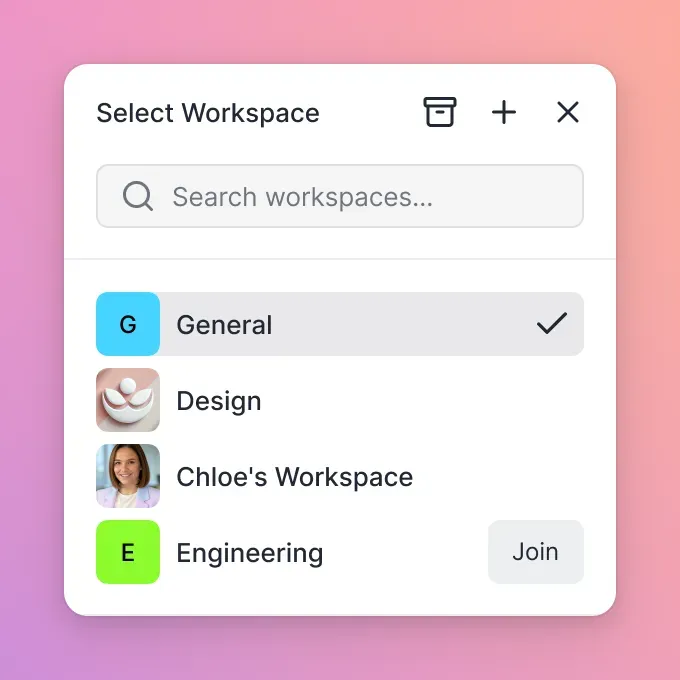
Fast.io provides a shared, intelligent workspace layer that serves as a central repository for developer teams and their AI agents. Teams use Fast.io to centralize code reference files, API documentation, design specifications, and database schemas. Files can be imported directly from cloud storage providers like Google Drive, Dropbox, OneDrive, and Box, or pulled from public URLs.
Once files are stored in Fast.io, several features support the developer workflow:
- Intelligence Mode: When enabled, files are indexed automatically on arrival. This enables semantic search, auto-summarization, and RAG chat. Developers and agents can query the workspace to find references or summarize project requirements.
- Model Context Protocol (MCP) Server: Fast.io exposes action-based MCP tooling via Streamable HTTP at
/mcpor legacy SSE at/sseendpoints. This allows local developer agents, whether running in Cursor, Cline, or VS Code, to query the shared workspace context programmatically. - Version History and Audit Log: Every file update is tracked in a version history and recorded in a detailed activity log. This ensures that concurrent edits by developers and autonomous agents remain transparent and auditable.
- Collaborative Notes: Real-time co-editing allows developers and AI agents to collaborate on system documentation, release notes, and deployment plans in the same workspace.
- Metadata Views: Teams can turn raw project files into a queryable database by defining natural language schemas. AI extracts fields (supporting Text, Integer, Boolean, URL, and Date types) from PDFs, spreadsheets, and scanned documents, populating a spreadsheet that developers can query via MCP, linking to the Metadata Views page.
Orgs start with a 14-day free trial, which requires a credit card. Paid subscriptions include Starter ($9.99/month), Business ($49.99/month), and Enterprise ($199.99/month). An agent can set up a workspace, configure permissions, and transfer ownership to a human admin when the setup is complete. By serving as a shared context store, Fast.io ensures that developers using Cursor and Copilot always work from the same source of truth.
For teams deploying agentic workflows, the unified workspace serves as the persistent storage layer where developer agents store code artifacts, read schemas, and communicate with humans. Developers can check the agent storage resources and the onboarding documentation to configure their environment.
Sources
References used to verify factual claims in this guide.
-
GitHub Copilot supports VS Code, JetBrains, and Visual Studio IDEs
-
GitHub Copilot lets developers choose between models from multiple vendors rather than a single fixed model.
-
Fast.io paid subscriptions include Starter ($9.99/month), Business ($49.99/month), and Enterprise ($199.99/month)
Frequently Asked Questions
Can I use GitHub Copilot in Cursor?
Yes. Because Cursor is a fork of Visual Studio Code, you can install the official GitHub Copilot extension from the extensions marketplace. To avoid overlapping completions, you should disable Cursor Tab in Cursor's settings.
Is Cursor better than GitHub Copilot?
It depends on your workflow. Cursor is better for multi-file refactoring, codebase-wide agentic tasks, and developers who want an AI-first editor. GitHub Copilot is better if you want to keep your existing editor, work across JetBrains or Neovim, or access deep GitHub platform integrations.
Does Cursor use GPT-4?
Yes. Cursor supports multiple models, including GPT-4o, Claude 3.5 Sonnet, and Gemini 1.5 Pro. You can choose which model powers Cursor Tab, Chat, and Composer, or connect your own API key to pay for models directly.
How do teams collaborate when developers use different AI editors?
Teams can use a shared Fast.io workspace to centralize project files, documentation, and metadata. Fast.io auto-indexes files for semantic search and exposes an MCP server. Developers using Cursor, VS Code, or other IDEs can connect their local AI agents to the same workspace context via MCP.
Related Resources

Coordinate Your AI Agents and Code Assets in One Place
Equip your development team with shared workspaces that auto-index files on arrival. Connect Cursor, VS Code, and custom agent tools to a single workspace via our consolidated MCP server. Try our Starter plan with a 14-day free trial, credit card required.