How to Use AI Agents for Inventory Management
Guide to agent inventory management: Stockouts cost retailers an estimated $1.2 trillion a year, but traditional spreadsheets can't keep up with modern demand. AI agents track inventory autonomously with shared workspaces, predicting needs more accurately. This guide explains how to deploy agents to automate your supply chain.

Why Traditional Inventory Management Fails
For decades, inventory management relied on static spreadsheets and manual counts. This reactive approach leaves businesses vulnerable to sudden demand spikes and supply chain disruptions. In a world of same-day delivery, human-speed inventory tracking is a liability. The cost of this inefficiency is staggering. According to the Food Institute, out-of-stocks and inventory distortion cost retailers approximately $1.77 trillion annually. These losses come not just from missed sales, but from the rush shipping and operational chaos required to fix mistakes. Manual systems fail because they look backward. They tell you what you had yesterday, not what you need tomorrow. They cannot process the thousands of variables, weather, trends, shipping delays, that influence demand in real-time.
Helpful references: Fastio Workspaces, Fastio Collaboration, and Fastio AI.

Related guides
- How to Build AI Agents for Batch ProcessingBatch processing lets AI agents handle repetitive work across thousands of files without you having to watch over them....
- How to Use AI Agents for Quality ControlAI agents handle quality control by automating inspections with computer vision and anomaly detection. They check...
- Best AI Dropshipping Tools in 2026The global dropshipping market reached $543 billion in 2026. Sellers who automate product research and fulfillment with...
- AWS Strands Agents: Build AI Agents with Amazon's Agent FrameworkAWS Strands Agents is Amazon's open-source Python framework for building AI agents that use tools, maintain memory, and...
- How to Implement Feedback Loops in Multi-Agent WorkspacesDeploying autonomous AI agents without validation leads to compounding errors. Implementing a structured feedback loop...
- How to Build a Closed Loop System for AI AgentsDeploying autonomous AI agents in an open loop manner often leads to compounding errors. Implementing a closed loop...
More on this subject: AI Agents: General Guides (190 guides)
What Are AI Inventory Agents?
AI agents track inventory autonomously with shared workspaces, acting as digital employees that work around the clock. Unlike passive software that records data, autonomous agents actively monitor stock, predict shortages, and can even place orders.
Core capabilities of inventory agents:
- Predictive Analysis: Forecasting demand based on historical data and external trends.
- Autonomous Action: Drafting purchase orders or alerting managers before stock runs out.
- Visual Inspection: Using computer vision to verify stock levels from camera feeds.
- Multi-Agent Coordination: Collaborating with supplier agents to negotiate restocking.
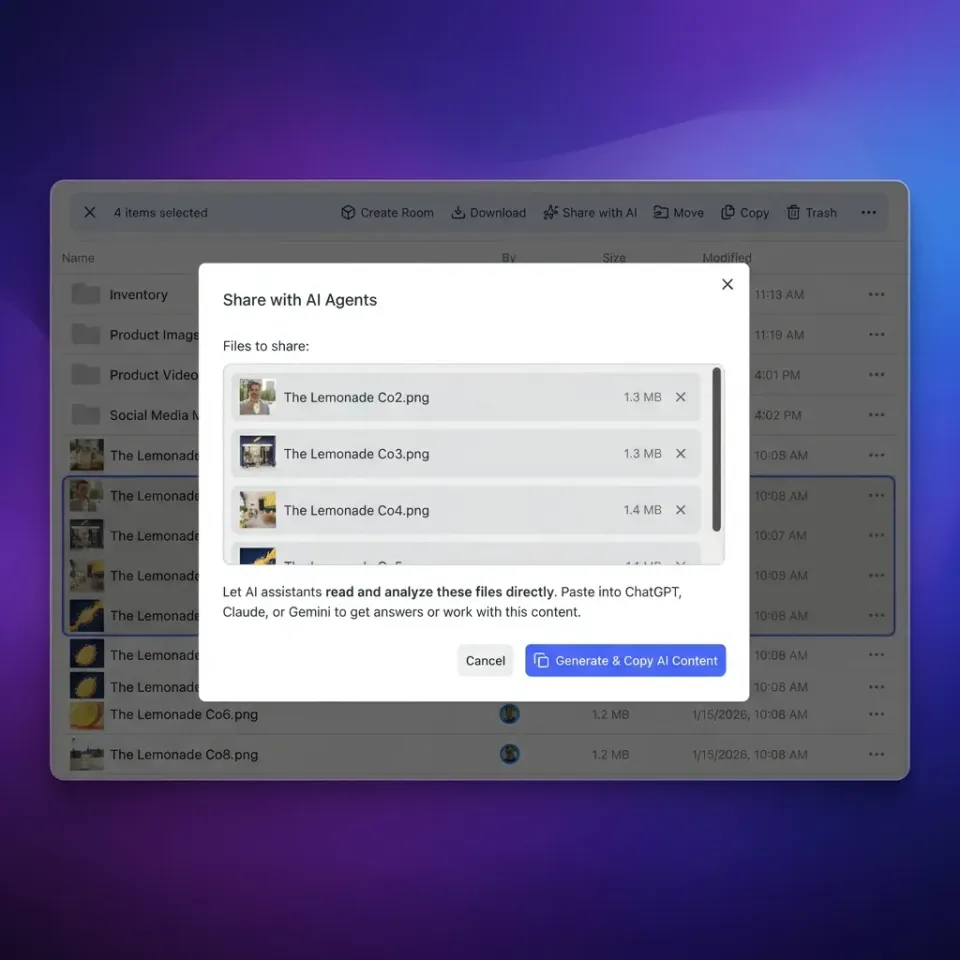
In the Fastio ecosystem, these agents live in your shared workspaces. They analyze files, read invoices, and update spreadsheets just like a human team member, but with the speed and precision of software.


Stop Losing Revenue to Stockouts
Deploy autonomous agents to monitor your inventory 24/7. Start a 14-day trial of Fastio's intelligent workspaces. Built for agent inventory management workflows.
Key Benefits of Agentic Inventory
Switching from manual tracking to AI agents delivers immediate operational improvements. The primary advantage is precision. According to MoldStud, AI-driven tools can improve stock accuracy, virtually eliminating the guesswork that leads to overstocking.
1. Predictive Accuracy
Agents don't just track current stock; they predict future needs. By analyzing sales velocity and lead times, they identify potential stockouts weeks before they happen.
2. Autonomous Reordering
Agents can draft purchase orders for your review. When inventory hits a reorder point, the agent generates the paperwork, checks the budget, and prepares the email to the supplier.
3. Reduced Carrying Costs
By optimizing stock levels, businesses reduce the capital tied up in excess inventory. Agents ensure you have exactly what you need, lowering storage fees and waste.
How to Build an Inventory Agent System
Implementing AI agents for inventory doesn't require rebuilding your entire tech stack. You can start by integrating agents into your existing file-based workflows.
Step 1: Centralize Your Data
Move your inventory spreadsheets, invoices, and supplier contracts into a shared workspace. Fastio automatically indexes these files, making them readable by AI agents.
Step 2: Define the Agent's Role
Use a tool like OpenClaw or a custom MCP server to give your agent specific instructions. For example: "Monitor the 'Daily Sales' CSV and alert me if 'Units' for any SKU drops below 50."
Step 3: Connect to External Sources
Give your agent access to real-time data feeds. This could be your Shopify API for sales data or a supplier's portal for lead times.
Step 4: Enable Autonomous Actions
Start with "human-in-the-loop" workflows. Let the agent draft a reorder email for you to approve. Once you trust its accuracy, you can allow it to send standard orders automatically.

The Future: Multi-Agent Supply Chains
The next frontier is multi-agent collaboration. In this model, your internal inventory agent talks directly to your supplier's sales agent. Imagine your agent detects a surge in demand for a specific product. Instead of just alerting you, it pings the supplier's agent to check real-time availability and negotiate a rush delivery. This negotiation happens in milliseconds, securing stock before your competitors even know there's a shortage. Fastio facilitates this by providing the secure, shared storage layer where these agents exchange documents, POs, invoices, and shipping manifests, ensuring a transparent audit trail for every automated decision.
Define clear tool contracts and fallback behavior so agents fail safely when dependencies are unavailable. This improves reliability in production workflows.
Sources
References used to verify factual claims in this guide.
-
Inventory distortion is projected to cost retailers $1.77 trillion worldwide; out-of-stocks account for $1.2 trillion
Frequently Asked Questions
What is an AI inventory agent?
An AI inventory agent is an autonomous software program that monitors stock levels, predicts demand, and executes inventory tasks like reordering without constant human supervision.
How accurate are AI inventory predictions?
AI inventory systems can achieve high stock accuracy by analyzing vast amounts of historical and real-time data, outperforming manual forecasting methods.
Can AI agents place orders automatically?
Yes, AI agents can be configured to draft and send purchase orders. Most businesses start with a human-approval step and move to full automation for routine restocking once trust is established.
Do I need a new ERP to use AI agents?
No. Agents can work with your existing files and spreadsheets if they are accessible in a connected workspace like Fastio, overlaying intelligence on your current data.
Related Resources

Stop Losing Revenue to Stockouts
Deploy autonomous agents to monitor your inventory 24/7. Start a 14-day trial of Fastio's intelligent workspaces. Built for agent inventory management workflows.