How to Use AI Agents for Quality Control
AI agents handle quality control by automating inspections with computer vision and anomaly detection. They check products on assembly lines and in warehouses, finding defects faster than people. Teams speed up inspections and get better accuracy. This guide covers steps to build them plus workspaces for human-agent teams.

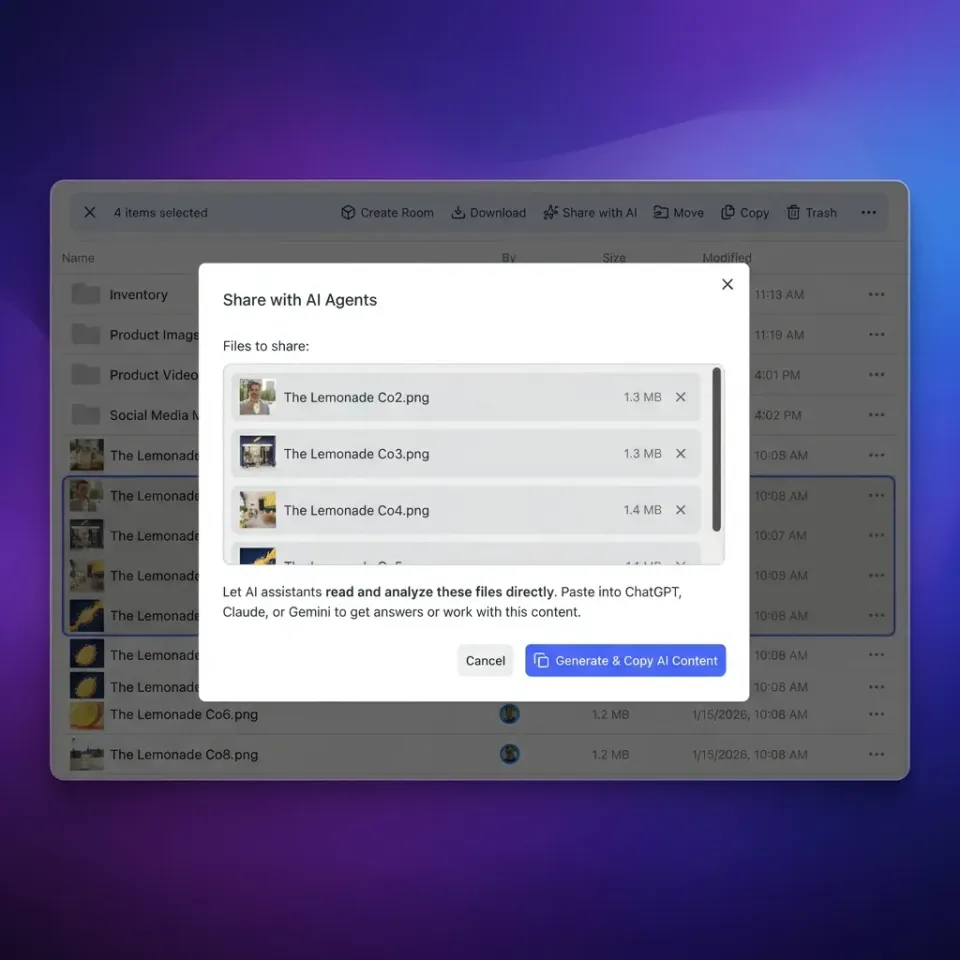
What Are AI Agents for Quality Control?
Quality control AI agents automate inspections using computer vision and anomaly detection. They scan images or video streams from cameras positioned along production lines, identifying defects like scratches, misalignments, dimensional errors, color variations, or surface imperfections. Unlike simple rule-based scripts, these agents use machine learning models that improve over time as they process more data. The agents run continuously on manufacturing floors, processing video feeds in real time and logging every inspection result. When a defect exceeds the confidence threshold, they trigger alerts that stop the production line or notify quality engineers immediately. This creates a feedback loop where the system learns from both successful detections and false positives, constantly refining its accuracy. Consider a beverage bottling line. A quality control agent watches the conveyor using high-resolution cameras, comparing each filled bottle against a digital reference template. Bottles with incorrect fill levels, misaligned labels, or damaged caps get flagged instantly. The agent logs the timestamp, captures the image with bounding boxes showing the defect location, and routes this evidence to the quality team for review. Meanwhile, acceptable bottles continue through the line without interruption. Fastio workspaces provide the collaborative layer where AI agents and human quality teams work together. Agents upload inspection images, defect reports, and statistical summaries directly through the consolidated MCP toolset available in the platform. Quality engineers then add contextual notes, review or dispute the AI's findings, and build a growing knowledge base. This shared workspace approach means everyone, human and agent, operates from the same data, reducing the context switching that kills productivity in fragmented tool environments.
Helpful references: Fastio Workspaces, Fastio Collaboration, and Fastio AI.

Related guides
- How to Build AI Agents for Batch ProcessingBatch processing lets AI agents handle repetitive work across thousands of files without you having to watch over them....
- Best AI Dropshipping Tools in 2026The global dropshipping market reached $543 billion in 2026. Sellers who automate product research and fulfillment with...
- AWS Strands Agents: Build AI Agents with Amazon's Agent FrameworkAWS Strands Agents is Amazon's open-source Python framework for building AI agents that use tools, maintain memory, and...
- How to Implement Feedback Loops in Multi-Agent WorkspacesDeploying autonomous AI agents without validation leads to compounding errors. Implementing a structured feedback loop...
- How to Build a Closed Loop System for AI AgentsDeploying autonomous AI agents in an open loop manner often leads to compounding errors. Implementing a closed loop...
- How to Build an AI Agent for Ecommerce OperationsAI agents can automate 40-60% of routine ecommerce operations, from inventory forecasting to order routing and customer...
More on this subject: AI Agents: General Guides (190 guides)
Why Use Quality Control AI Agents?
Manual quality inspections have fundamental limitations that impact product consistency and cost efficiency. Human inspectors experience fatigue after long shifts, missing subtle defects that are obvious at the start of their shift. They cannot maintain consistent attention for hours, and their detection rates vary based on time of day, lighting conditions, and individual perception differences. Studies show that inspection accuracy can drop noticeably in the final hours of a shift compared to the beginning. AI agents solve this by maintaining consistent performance regardless of time or duration. A single quality control agent can process thousands of items per shift, every shift, without fatigue. They detect defects at the pixel level, fine surface scratches, small dimensional variations, or color shifts invisible to the untrained eye. This level of consistency builds reliable data for process improvement that human inspectors cannot match. The business case is compelling. MarketsandMarkets projects the AI-powered visual inspection market will grow from $33 billion in 2025 to $102 billion by 2032, representing a 17.5% compound annual growth rate. Early adopters report reducing defect escape rates while simultaneously cutting inspection labor costs. The return on investment typically lands within months, making the technology accessible even for mid-sized manufacturers. Beyond speed and accuracy, quality control agents generate structured data that humans can analyze. Every detection gets logged with confidence scores, image captures, and timestamps. This creates an audit trail for regulatory compliance, enables root cause analysis when defect patterns emerge, and feeds continuous improvement initiatives. Rather than catching problems after they happen, agents help identify trends that prevent defects from occurring in the first place. The collaboration model works best when agents handle the routine inspections at full speed while humans focus on edge cases, systemic improvements, and final approval of borderline items. This division of labor uses the strengths of both: the consistency and speed of AI with the contextual judgment and problem-solving ability of experienced quality engineers.



Give Your AI Agents Persistent Storage
Fastio Business Trial: collaborative workspaces with a consolidated MCP toolset. Build collaborative QC agents now. Built for agent quality control workflows.
Steps to Build an AI Agent for Quality Control
Building a production-ready quality control AI agent requires careful planning and systematic execution. Follow these steps to create a system that delivers reliable results.
Step 1: Collect and prepare training data. Success starts with quality data. Gather a diverse dataset representing your production line under normal operating conditions. Capture thousands of images of acceptable products with variations in lighting, angles, backgrounds, and time of day. Then deliberately introduce defects, scratches, dents, misalignments, wrong colors, size deviations, surface imperfections, to build a comprehensive defect library. Plan for many labeled images per defect type, though more complex products may require more. Use annotation tools like LabelStudio or CVAT to draw bounding boxes around defects and classify their types. Include edge cases: reflections that look like cracks, shadows that mimic dents, partial defects that might escape notice.
Step 2: Select and fine-tune your model. Choose an architecture matching your latency and accuracy requirements. YOLOv8 or YOLOv9 excel at real-time object detection on assembly lines, processing video in real time on modern edge devices. If you lack labeled defect examples, anomaly detection models like PatchCore or CLIP-based approaches identify unusual patterns without explicit defect training. Fine-tune using Ultralytics for YOLO or Hugging Face Transformers for other architectures. Train for multiple epochs with a held-out validation split, targeting mean average precision above 0.85. Export to ONNX format for cross-platform deployment.
Step 3: Connect cameras and data streams. Integrate your manufacturing cameras into the agent pipeline. Most industrial cameras output via RTSP or MJPEG protocols. Use OpenCV or FFmpeg for stable video ingestion, handling connection drops gracefully. Decide on deployment architecture: edge devices like NVIDIA Jetson AGX offer low latency, perfect for inline inspection. Cloud deployment on AWS EC2 GPU instances handles higher throughput but introduces network latency. Test thoroughly under production conditions, factory networks have electromagnetic interference, and camera connections must maintain high availability.
Step 4: Configure alerts and human notification workflows. Design a notification system that matches your quality requirements. Set confidence thresholds: detections above a high cutoff trigger immediate line stops, those from 0.8 up to that cutoff go to human review queues, and those below 0.8 are logged for analysis. Route alerts through multiple channels, Slack for quick notifications, email for documented incidents, SMS for critical defects outside business hours. Fastio activity polling integrates directly: when agents detect defects, they upload flagged images to shared workspaces where quality engineers review them immediately. This works alongside industrial control systems using Modbus or OPC UA to stop production lines automatically for severe defects.
Step 5: Build continuous improvement workflows. Structure your data pipeline for learning. Log every prediction with input frames, confidence scores, timestamps, and metadata as JSON files in Fastio workspaces. Quality engineers review flagged images through the web interface, adding comments that pin to specific frames. When humans disagree with agent decisions, export that feedback for labeling and retraining. Fastio's Intelligence Mode with built-in RAG lets you query naturally: "Show me all false negatives from second shift last week" and get sourced results. This accelerates iteration cycles dramatically.
Step 6: Pilot, validate, and scale. Run a controlled pilot on one assembly line for two weeks. Track key metrics: false positive rate, detection latency (target under 100ms), recall, and inspector time saved compared to manual baseline. Use Fastio activity logs or Prometheus dashboards to visualize performance. Establish a rollback plan before scaling, if detection quality drops, you need to revert quickly. Schedule weekly model retrains as new products launch and quarterly full retrains as your product mix evolves. A/B test model versions in production to validate improvements before full deployment.
Tools for Agentic QC
LangChain or CrewAI for agent flows. OpenCV for vision. Fastio's consolidated MCP toolset handles files across agent workflows.
Collaborative Agent Workspaces for QC Teams
Quality control breaks down when agents and humans work in separate tool ecosystems. AI agents produce detailed inspection reports, but the humans making final decisions often lack context. They cannot see what the agent saw, cannot question its reasoning, and cannot efficiently review its recommendations. This gap creates bottlenecks, delays, and reduces the value of your AI investment. Fastio solves this by creating shared workspaces where AI agents and human quality teams operate in the same environment. Quality control agents upload inspection images, defect classifications, confidence scores, and statistical summaries directly to workspaces using the REST API or the consolidated MCP toolset. No file transfer workarounds, no switching between systems, no lost context. The collaboration workflow becomes natural. Agents process inspection images and upload flagged items to a shared workspace. Quality engineers receive notifications, open the workspace, and review the agent's findings alongside the captured images. They add notes directly to specific frames, review the agent's classification, or flag it as a false positive. This feedback loop trains the agent to improve while giving humans complete visibility into AI decision-making. Intelligence Mode transforms how teams search their quality data. Instead of manually scanning through thousands of inspection images, quality managers ask questions naturally: "Show me all defects from line three from last week" or "Find inspections where the confidence was below 0.85." The built-in RAG system indexes all uploaded content, returning sourced answers with citations. This eliminates the data silos that plague most quality control operations. For teams building agentic QC systems, Fastio provides enterprise-grade capabilities without enterprise costs. The 14-day Business Trial allows teams to run pilot programs and prove ROI before scaling. Advisory file locks let agents signal in-progress writes before updating files, while granular permissions and version history ensure all revisions are safely preserved. Ownership transfer lets development teams hand off completed QC systems to operations teams while retaining admin access for maintenance. All this works with any LLM through direct MCP connections.

Real-World Examples of AI QC Agents
AI quality control agents have moved beyond pilots into production across multiple industries. These examples show how different sectors apply the technology to solve specific problems.
Electronics manufacturing. Printed circuit board assembly lines use AI agents to inspect solder joints in real time. One automotive electronics supplier reduced defect escape rates after deploying agents that catch cold solder joints, misaligned components, and tombstoned parts before they reach customers. The agents process high-resolution images of every board, comparing against reference designs and flagging anomalies within milliseconds.
Automotive production. Body shops apply AI agents to weld quality inspection. Modern cars have a large number of spot welds per vehicle body, and human inspectors cannot check every one consistently. Agents using ultrasonic sensors and computer vision verify weld strength and position to micron-level precision, catching defects before they compromise vehicle safety. One major automaker reports broader weld inspection coverage with AI assistance.
Food and beverage processing. Canned goods producers use AI agents to detect dents, labeling errors, and seal defects at full production speed. The agents inspect both the can exterior and verify fill levels using weight sensors integrated with vision checks. Contaminated products get rejected instantly, reducing recall risk .
Pharmaceutical manufacturing. Pill inspection agents verify tablet quality, checking for chipped pills, color variations, and incorrect imprint codes. They also inspect blister pack seals and vial closures. Regulated environments require complete audit trails, AI agents generate detailed logs of every inspection that satisfy FDA 21 CFR Part 11 requirements for electronic records.
Textile and apparel. Fabric inspection agents scan rolls of material for defects like holes, snags, color inconsistencies, and weaving errors. Early detection prevents thousands of meters of defective fabric from reaching cutting rooms, saving substantial material costs. Fastio workspaces store the high-resolution images these agents generate without the storage management headaches of local infrastructure. Teams access inspection history, compare defect trends across time periods, and maintain archives for compliance purposes, all within the same collaborative environment where agents work.
Challenges and Solutions in Agentic QC
Implementing AI quality control brings specific challenges that differ from traditional automation projects. Understanding these obstacles helps you plan effective solutions.
Variable lighting conditions. Factory environments have changing light from windows, overhead fixtures, and equipment lights. Shadows shift throughout the day and across seasons. Solution: include synthetic variations in your training data, use consistent lighting enclosures where possible, and train models on images captured during all shifts and seasons. Data augmentation during training, adding brightness variations, shadow simulations, and color shifts, builds robustness.
Rare defect detection. Some defect types occur only rarely. Getting enough examples for training becomes nearly impossible. Solution: use anomaly detection approaches that learn what "normal" looks like and flag anything unusual. Implement active learning where the agent flags low-confidence detections for human labeling, building your defect library incrementally. This creates a virtuous cycle where real production data improves your model continuously.
Integration complexity. Connecting AI systems to existing manufacturing execution systems, programmable logic controllers, and quality management databases creates technical challenges. Solution: use standardized APIs and protocols. Fastio's MCP tools and activity feeds provide flexible integration points without custom code. REST APIs work with any modern system, and activity polling enables downstream systems to react automatically.
Cost management. GPU compute for real-time inference adds operational expense, especially at high throughput. Solution: optimize model size for edge deployment on cost-effective hardware like NVIDIA Jetson rather than expensive cloud GPU instances. Start with the 14-day Business Trial for development and testing, then scale with Starter, Business, or Enterprise plans as you prove ROI.
Model drift and maintenance. Products change, new variants launch, and your model degrades as the production environment evolves. Solution: schedule regular retraining cycles, weekly for active learning, quarterly for full retrains. Monitor detection rates continuously; a sudden drop signals a distribution shift requiring attention. Keep human-in-the-loop review active for borderline cases to catch degradation early. Start with a pilot at one station on one line. Run it for sufficient time to collect meaningful data, then evaluate performance objectively. Use those results to build the business case for expansion. This measured approach reduces risk while generating evidence that builds organizational confidence in AI-powered quality control.
Sources
References used to verify factual claims in this guide.
-
AI inspection market USD 33.07B in 2025 to USD 102.42B by 2032 at 17.5% CAGR
Frequently Asked Questions
What are AI agents for quality control?
AI agents for quality control are software programs that use computer vision and machine learning to inspect products for defects on production lines continuously. They process images or video from cameras, compare them against reference standards, identify anomalies like scratches, misalignments, or dimensional errors, and alert human teams when problems are found.
How do quality control AI agents work?
Quality control AI agents process camera feeds in real time, comparing each image against trained models and flagging deviations. They assign confidence scores, log results with timestamps, and can trigger production line stops. The agents improve through feedback loops where humans confirm or dispute their decisions.
Can AI agents collaborate with humans in QC?
Yes. Modern quality control workflows pair AI agents with human inspectors for optimal results. AI handles high-volume routine inspections consistently, while humans review edge cases, review borderline decisions, and focus on systemic improvements. Platforms like Fastio provide collaborative workspaces where agents upload inspection findings and humans add contextual notes, creating a shared environment for continuous improvement.
What is the growth of the QC AI market?
The AI inspection market is projected to grow from $33 billion in 2025 to $102 billion by 2032 at a 17.5% CAGR, according to MarketsandMarkets. This growth is driven by increasing automation demands, labor shortages, and the proven ROI of AI-powered inspection systems across manufacturing sectors.
How do you implement AI QC agents?
Implementing AI QC agents involves six key steps: collect diverse training data, select and fine-tune models like YOLOv8, integrate cameras, configure alerts, establish logging for improvement, then pilot and scale.
What accuracy can AI quality control agents achieve?
Well-trained AI quality control agents can achieve high accuracy in detecting specific defect types. Accuracy depends on training data quality, model selection, and how well the system handles environmental variations. Most production systems set targets for both recall and false positive rate.
How much does AI quality control cost to implement?
Implementation costs vary widely based on scale and complexity. Entry-level systems using edge devices like NVIDIA Jetson can start for a few thousand dollars in hardware. Cloud-based solutions add compute costs. Many manufacturers achieve ROI within months through labor savings and reduced defect escape costs. A 14-day Business Trial on platforms like Fastio enables pilot programs to test agent workflows.
What industries use AI for quality control?
AI quality control is used across electronics manufacturing, automotive production, food and beverage processing, pharmaceuticals, textiles, metal fabrication, and plastic injection molding. Any industry with repetitive manufacturing processes and quality requirements can benefit from automated inspection.
Related Resources

Give Your AI Agents Persistent Storage
Fastio Business Trial: collaborative workspaces with a consolidated MCP toolset. Build collaborative QC agents now. Built for agent quality control workflows.