How to Build a Closed Loop System for AI Agents
Deploying autonomous AI agents in an open loop manner often leads to compounding errors. Implementing a closed loop system with automated evaluation layers and structured critique files enables self correction. This guide explains how to design a four step feedback loop using shared workspaces, version history, and MCP integrations.


Why open loop execution fails in AI automation
Two coding agents pointed at the same directory will execute tasks in isolation, write over each other's changes, and declare success without verifying if the application builds. The issue is not the intelligence of the underlying language model, but the lack of a feedback loop that evaluates the output against the target state before completing the run. Without a verification mechanism, agents operate in an open loop manner, executing commands blindly and passing errors down the pipeline.
Open loop systems pass input to an agent, execute a tool call, and immediately declare the task complete. If a python script writes incorrect JSON to a file, the agent has no way of knowing it failed unless an external control loop catches the error and feeds it back into the prompt. In multi agent workflows, these errors compound. A research agent outputs a draft report with missing citations, and a writer agent immediately uses that draft to generate the final copy, locking the mistakes in place.
Building a closed loop system turns this process into an iterative loop. By using a shared directory as a coordination layer, developers can write validation tests that run after every agent write. You can build these systems using popular frameworks like Claude Code, Codex, Cursor, Gemini, OpenClaw, CrewAI, LangGraph, or AutoGen. These tools can interact with files in shared directories using the Fast.io API or the Model Context Protocol.
To see how these concepts fit into an agentic architecture, developers often use a dedicated agent storage workspace that combines file persistence with automatic vector indexing. This layout provides the storage substrate needed to persist intermediate run logs and validation results across multiple agent sessions.
Related guides
- How to Implement Feedback Loops in Multi-Agent WorkspacesDeploying autonomous AI agents without validation leads to compounding errors. Implementing a structured feedback loop...
- How to Build AI Agents for Batch ProcessingBatch processing lets AI agents handle repetitive work across thousands of files without you having to watch over them....
- AWS Strands Agents: Build AI Agents with Amazon's Agent FrameworkAWS Strands Agents is Amazon's open-source Python framework for building AI agents that use tools, maintain memory, and...
- How to Build an AI Agent for Ecommerce OperationsAI agents can automate 40-60% of routine ecommerce operations, from inventory forecasting to order routing and customer...
- How to Build Browser Automation AI Agents That Actually WorkBrowser automation AI agents navigate websites, fill forms, extract data, and complete multi-step web tasks without...
- How to Build AI Agent AIOps SystemsAI agent AIOps applies autonomous AI agents to IT operations, enabling end-to-end automation from monitoring to...
More on this subject: AI Agents: General Guides (190 guides)
What is a closed loop control system for modern LLMs?
A closed loop system for AI agents is an execution architecture where the agent's output is evaluated against a target state, and the resulting feedback is fed back into the agent's prompt or logic to self-correct. This design is adapted from classic engineering principles. Closed loop controllers have been standard in automation since the mid-20th century, regulating physical systems like cruise control or home thermostats by measuring the error between a target speed or temperature and the actual state [Wikipedia].
In the context of language models, the sensor is replaced by an evaluation layer, and the physical actuator is replaced by the agent's tool execution. The Reflexion paper reports that adding a verbal self-reflection step lifted GPT-4's pass@1 on HumanEval from 80% to 91% [arXiv:2303.11366]. The mechanism transfers: the agent reads its own failure and retries with that failure in context. By measuring the difference between the current file state and the desired goal, the system calculates an error signal in the form of a structured critique.
The closed loop AI agent reads this critique and runs again, adjusting its actions until the output meets the success criteria. This self correcting logic is critical when agents perform complex data processing, file editing, or multi agent handoffs. Without this control loop, developers have no guarantee that agent generated artifacts are safe for production deployment.
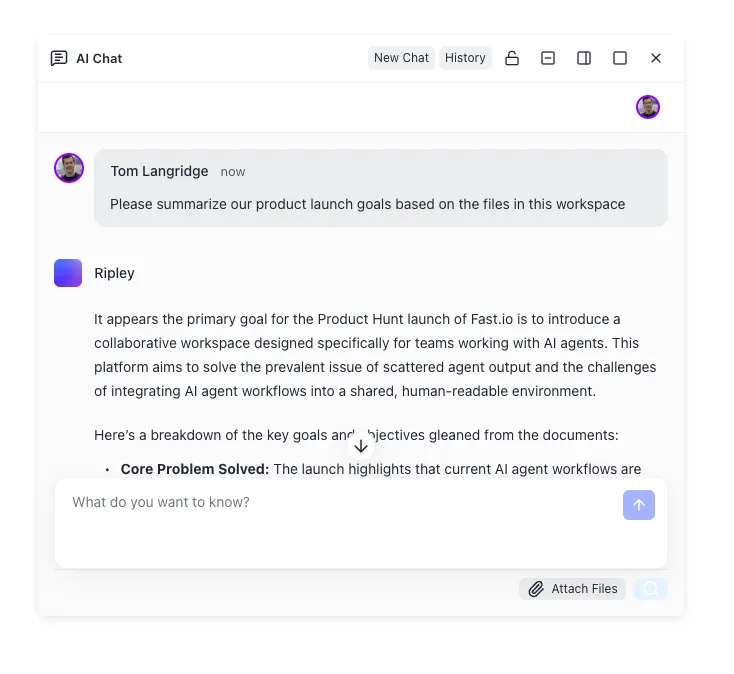
The four steps of closed loop agent execution
To build a reliable closed loop system, developers must organize the interaction between the executing agent and the evaluation layer into a repeatable flow. An agentic closed loop runs as a structured four step execution flow in a shared workspace:
- Think: The agent analyzes the task, formulates a plan, and defines the target success state.
- Act: The agent executes its tools, performing actions such as writing files or querying APIs in the workspace.
- Evaluate: An automated evaluator or secondary model checks the output against the target state.
- Learn: The system generates a structured critique of any errors, feeds this feedback back to the agent, and triggers a retry.
By enforcing this structure, developers prevent agents from proceeding with faulty data. If a writer agent generates a markdown file with broken links, the evaluator catches the issues, writes a critique list to the workspace, and prompts the agent to fix the specific links.
Here is a visual map of the closed loop system architecture:
graph TD
    A[1. Think: Define Target State] --> B[2. Act: Execute Tool Actions]
    B --> C[3. Evaluate: Analyze Output Files]
    C -->|Output Matches Target| D[Complete Task & Handoff]
    C -->|Output Has Errors| E[4. Learn: Generate Critique File]
    E --> B
Implementing programmatic and model based evaluation layers
The heart of any closed loop system is the evaluation layer. Evaluation typically falls into two categories: programmatic validation and model based review. Programmatic validation is fast and cheap, checking for syntax correctness, file schemas, or compiling status. Model based review uses a secondary language model to judge subjective metrics like tone, clarity, or logical flow.
Here is a Python code example demonstrating how to implement a basic closed loop validation wrapper for an agent that generates structured JSON:
import json
import openai

def closed_loop_agent(prompt, schema_definition, max_retries=3):
    client = openai.OpenAI()
    system_prompt = f"Generate JSON matching this schema: {schema_definition}"
    messages = [
        {"role": "system", "content": system_prompt},
        {"role": "user", "content": prompt}
    ]

    for attempt in range(max_retries):
        #[Step 2] Act: Generate output
        response = client.chat.completions.create(
            model="gpt-4o",
            messages=messages
        )
        content = response.choices[0].message.content

        #[Step 3] Evaluate: Parse and validate JSON
        try:
            parsed_data = json.loads(content)
            #[Step 3.5] Run custom validation checks
            if "status" not in parsed_data:
                raise ValueError("Missing required key: status")
            print("Validation passed on attempt", attempt + 1)
            return parsed_data
        except (json.JSONDecodeError, ValueError) as err:
            #[Step 4] Learn: Generate feedback and retry
            feedback = f"Validation failed: {str(err)}. Correct the JSON."
            print(f"Attempt {attempt + 1} failed. Feedback: {feedback}")
            messages.append({"role": "assistant", "content": content})
            messages.append({"role": "user", "content": feedback})

    raise RuntimeError("Agent failed to produce valid output within retry limit")
This simple control loop ensures that the agent will not return corrupted data to the rest of the application. If validation fails, the structured critique guides the agent to make the necessary corrections.


Coordinate closed loop agents on Fast.io
Create shared workspaces with per file versioning, structured Metadata Views, and a dedicated MCP server for your agent teams. Start your 14-day free trial today.
Coordinating multi agent handoffs in shared workspaces
When building complex systems with multiple agents, local file storage or generic cloud storage drives can create coordination bottlenecks. Traditional tools like Google Drive or Dropbox are designed for human file sharing, lacking real time event notifications and agent friendly interfaces. AWS S3 offers event hooks but requires complex configuration and has no native co-editing capabilities for human-agent collaboration.
To manage multi agent workflows, developers can use Fast.io as a shared substrate. Fast.io provides org owned workspaces where agents and humans collaborate. You can connect your agentic frameworks directly to Fast.io using the Model Context Protocol. The Fast.io MCP server supports streamable HTTP at /mcp and legacy Server-Sent Events at /sse. Developers can refer to mcp.fast.io/skill.md for documentation, and review the agent setup guides at https://fast.io/llms.txt to align their system prompts.
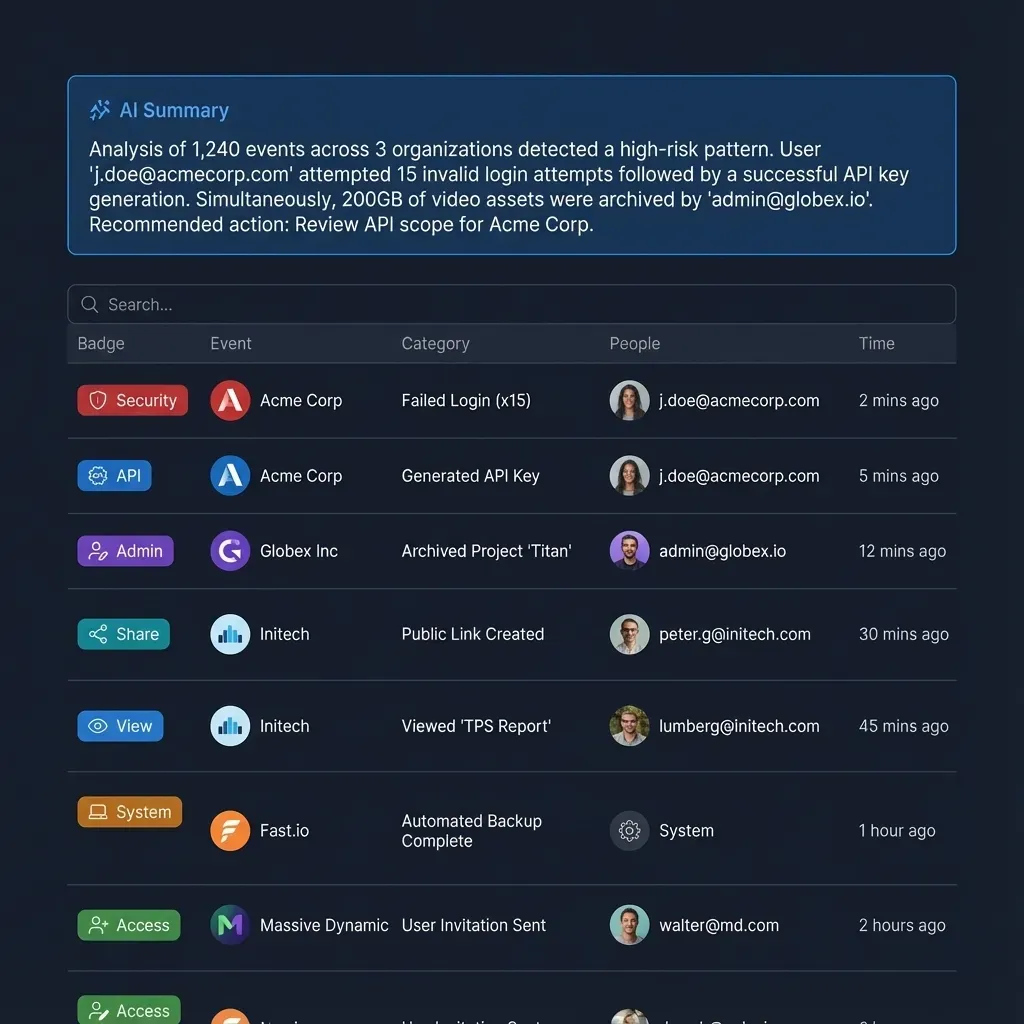
Inside a shared workspace, you can structure folders to enforce execution boundaries, such as /raw_data/, /critiques/, and /production/. When an agent writes to /raw_data/, a validator agent watching the workspace events feed picks up the new file. If validation passes, the validator moves the file to /production/. Fast.io preserves a complete per-file version history, allowing you to track agent updates and rollback to previous states. Real time events are tracked in a detailed activity log, providing an auditable trail of all actions.
For extracting structured data, developers can configure Metadata Views (learn more at /product/document-data-extraction/). Metadata Views automatically extract structured schemas from PDFs, spreadsheets, or images in your workspace without complex OCR rules. Agents can query these Metadata Views via the MCP server to check if files are ready for processing, establishing a reliable data pipeline.

Managing execution limits and feedback fatigue in production
Closed loop agent systems are powerful, but they present unique operational risks in production. The two most common failure modes are infinite loops and feedback fatigue, where an agent repeatedly fails validation, consuming tokens and increasing API costs.
To prevent infinite loops, developers must enforce strict retry limits. Setting a hard cap of three to five validation attempts prevents runaway agent executions. If the agent fails to converge on a valid output within the limit, the system should halt execution and hand off the task to a human teammate. Fast.io supports ownership transfer, allowing an agent to create a workspace, run initial data extraction, and hand off ownership to a human supervisor while retaining administrative access.
Human agents can monitor the realtime activity feed or Collaborative Notes to inspect failed runs, edit documents directly alongside agents, and resolve validation blocks. Monitoring credit consumption is also essential. Fast.io operates on simple subscription plans with clear pricing: Starter $9.99/mo, Business $49.99/mo, and Enterprise $199.99/mo. Monthly plans start with a trial of up to 14 days (credit card required); annual plans have no trial. Enforcing spending limits on your LLM provider and monitoring workspace activity prevents runaway agents from exhausting your monthly API quota. Users can review pricing structures at /pricing/ to align execution budgets.
Sources
References used to verify factual claims in this guide.
-
Closed loop controllers have been standard in automation since the mid-20th century.
-
The Reflexion paper reports that adding a verbal self-reflection step lifted GPT-4 pass@1 on HumanEval from 80% to 91%.
-
Fast.io subscription plans have clear pricing: Starter $9.99/mo, Business $49.99/mo, and Enterprise $199.99/mo. Monthly plans start with a trial of up to 14 days (credit card required); annual plans have no trial.
Frequently Asked Questions
What is a closed loop system in AI?
A closed loop system in AI is an execution model where the agent's output is evaluated against a target state. The resulting feedback or critique is fed back into the agent's prompt or logic, allowing the model to self-correct and refine its output before completing the task.
How do you implement a feedback loop for LLMs?
To implement an LLM feedback loop, configure an executing agent to write files to a shared directory. A validator agent or programmatic script checks the file against a schema or set of rules, writes any errors to a critique document, and prompts the executing agent to read the critique and update the file.
What is the difference between open loop and closed loop agents?
Open loop agents execute commands once and output results without verification, allowing mistakes to compound. Closed loop agents measure their output against a target state and iterate based on feedback. The Reflexion paper reports this self-correcting cycle lifting GPT-4's pass@1 on HumanEval from 80% to 91%.
Related Resources

Coordinate closed loop agents on Fast.io
Create shared workspaces with per file versioning, structured Metadata Views, and a dedicated MCP server for your agent teams. Start your 14-day free trial today.