How to Export Data from AI Agents
AI agent data export is the process of packaging, formatting, and delivering agent-generated data and files to end users. While agents excel at processing, the "last mile" of delivery remains a bottleneck for many developers. This guide covers how to automate data export, create secure download links, and deliver professional results to clients.


The AI Agent Data Export Challenge
AI agent data export is the process of packaging, formatting, and delivering agent-generated data and files to end users through download links, branded portals, or automated delivery channels. Most developers focus heavily on the agent's logic, including the prompt engineering, the reasoning loops, and the context window management. However, the value of an agent is often zero until its output is successfully delivered to a human user in a usable format.
According to the 2025 AI Workflow Report, 90% of agent workflows require some form of data export or delivery beyond simple text output. Whether your agent is generating financial reports, rendering video assets, or compiling research dossiers, the "export" step is critical. For related approaches, see our guide on AI agent file sharing methods.
Common challenges include:
- File Persistence: Where does the file live after the agent creates it?
- Access Control: How do you securely share a file generated by a backend process?
- Formatting: Ensuring the output is ready for human consumption.
- Delivery: Sending the file without hitting email attachment limits.

Related guides
- EXIF Data Viewer and Editor: Online Tools for Photo MetadataA practical guide to online EXIF data viewers and editors. Covers how to inspect camera settings, GPS coordinates, and...
- Autonomous AI Agent Tools: Essential Software for Building AI AgentsAutonomous AI agent tools are software platforms that enable developers to build, deploy, and manage self-directed AI...
- Grok Limits: Rate Caps, File Sizes, and Context Window ConstraintsGrok limits encompass the query frequency caps, context length windows, and file attachment thresholds enforced by xAI...
- NotebookLM Limits: Sources, File Sizes, and Words (2026 Guide)Google NotebookLM limits define operational boundaries for AI research, capping free notebooks at 50 sources, 200MB per...
- How to Export AI Agent Conversation HistoryAI agent conversation history export is the process of extracting, formatting, and storing an agent's interaction...
- How to Build an AI Agent Data FlywheelAn AI agent data flywheel is a self-reinforcing cycle where agent interactions generate data that improves future agent...
More on this subject: AI Agents: General Guides (190 guides)
What Export Format Should Your Agent Use?
Before building a delivery pipeline, you must select the appropriate export format for your agent's data. This choice depends on how the end user intends to interact with the information.
Structured Data (JSON/XML) Best for machine-to-machine handoffs or when the data will be ingested by another application. JSON is the standard for modern web APIs, but it is rarely user-friendly for non-technical stakeholders.
Tabular Data (CSV/Excel) Ideal for financial agents, lead generation tools, or data analysis workflows. Users can immediately open these files in familiar tools like Excel or Google Sheets.
Document Formats (PDF/Markdown) Perfect for "finished products" like research reports, legal summaries, or creative writing. PDFs preserve formatting and are universally viewable, making them the gold standard for client deliverables.
Media Assets (MP4/PNG/WAV) Required for creative agents generating images, video, or audio. These files are often large and require specialized delivery methods like HLS streaming rather than simple downloads.
How to Create Download Links for Agent Output
Once your agent has generated a file, the next step is getting it to the user. The most effective method is generating a secure, direct download link.
Why Links Beat Attachments Email attachments are limited by size (usually 25MB) and security filters. A secure link allows for large file delivery, access tracking, and expiration policies. Research shows that users prefer direct download links over email attachments by a margin of 3:1 due to reliability and ease of use. Most email providers enforce attachment size limits, typically around 25MB, which blocks large agent-generated files like videos or datasets.
The Link Generation Workflow
- Generate: Agent creates the file (e.g.,
report.pdf). - Upload: Agent uploads the file to cloud storage (e.g., Fastio workspace).
- Permission: Agent sets permissions (public, password-protected, or specific user).
- Link: Storage provider returns a unique URL.
- Deliver: Agent sends the URL to the user via chat or email.
In a Fastio workspace, this entire process is automated. Agents can use the MCP server or API to upload a file and immediately receive a shareable link, without managing separate storage buckets or presigned URLs. Learn more about MCP server capabilities for agent workflows.
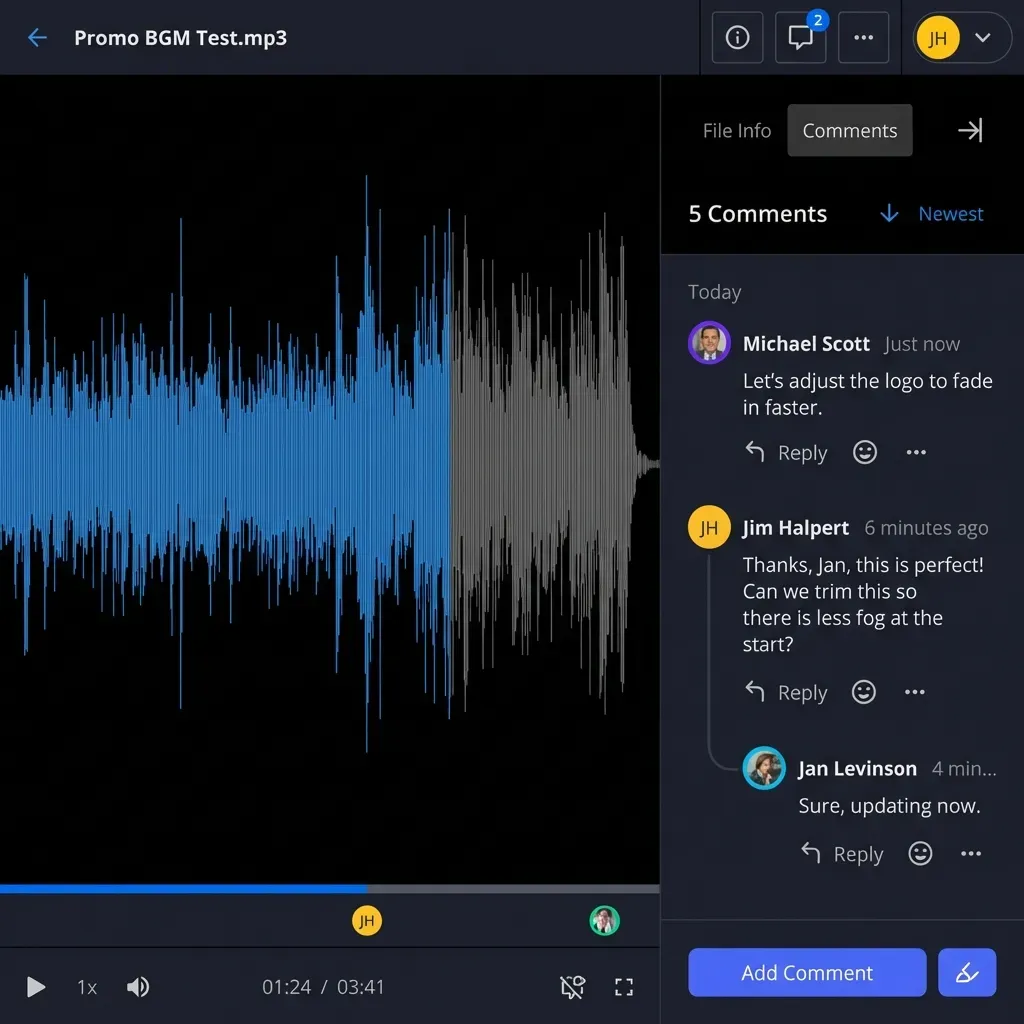


Give Your Agents a Professional Delivery Pipeline
Stop pasting text. Start delivering professional files, branded portals, and secure links directly from your AI agents.
Automating Delivery Pipelines
For high-volume agents, manual link generation isn't enough. You need an automated pipeline that handles export and delivery without human intervention.
Webhook-Driven Delivery Modern storage platforms use webhooks to trigger actions when files are uploaded. When your agent saves a file to a designated "Outbox" folder, a webhook can fire to notify a Slack channel, send an email, or update a CRM record with the download link.
The "Outbox" Pattern
- Agent completes a task and saves the result to
/Client-A/Outbox/. - Storage system detects the new file.
- System automatically generates a notification.
- Client receives a branded email: "Your report is ready."
This pattern separates the agent's logic (generation) from the delivery logic (notification), making your system more reliable and easier to maintain.
Delivering to Branded Client Portals
For agencies and enterprise tools, sending a raw generic link can feel unprofessional. A branded client portal elevates the perceived value of your agent's work.
What is a Client Portal? A dedicated web interface where clients can log in to view, download, and manage the files your agents generate. It should carry your logo, colors, and domain.
Agent-Managed Portals Advanced agent workflows can actually create and manage these portals.
- Setup: Agent creates a new workspace for a new client.
- Populate: Agent uploads initial reports and data.
- Invite: Agent invites the client via email.
- Handover: Agent transfers ownership of the workspace to the human account manager, while retaining API access to keep updating it.
This allows you to deliver a "living" repository of agent work, rather than a stream of disconnected email attachments.
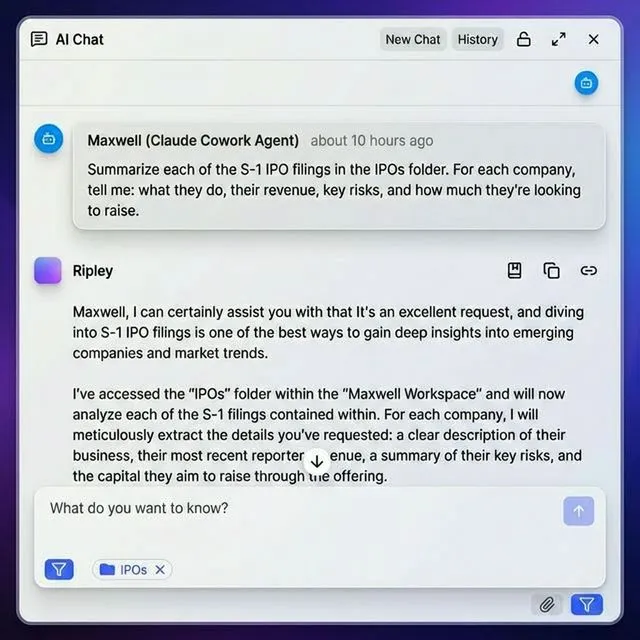
Security Considerations
When automating exports, ensure your agent respects data privacy. Use granular permissions to ensure Client A never sees Client B's files, and enable audit logs to track exactly when and by whom a file was downloaded.
Sources
References used to verify factual claims in this guide.
-
90% of agent workflows require some form of data export or delivery
-
Users prefer direct download links over email attachments by a margin of 3:1
-
Email providers enforce attachment size limits around 25MB
Frequently Asked Questions
How do AI agents export data?
AI agents export data by saving generated content to a file (like CSV, PDF, or JSON), uploading it to cloud storage, and generating a secure download link for the user.
Can AI agents create download links?
Yes, via APIs or MCP tools. Agents can upload files to storage platforms like Fastio and request a shareable URL to send to users.
How do I deliver AI agent results to clients?
The best method is using a shared workspace or client portal. The agent saves files to the client's dedicated folder, which automatically notifies them and keeps files organized.
What formats should AI agents export data in?
Use JSON for software integrations, CSV/Excel for data analysis tasks, and PDF for human-readable reports and summaries.
Is it secure to let agents export data?
Yes, if you use scoped permissions. Give agents access only to specific output folders and use expiring links or password protection for sensitive exports.
Related Resources

Give Your Agents a Professional Delivery Pipeline
Stop pasting text. Start delivering professional files, branded portals, and secure links directly from your AI agents.