7 Best Vidyard Alternatives for Business Video in 2026
Vidyard is a video hosting platform focused on sales enablement and personalized video outreach. Teams looking for alternatives often want better creative workflow tools, simpler pricing, or fewer restrictions on video length and storage. This guide compares seven Vidyard alternatives based on specific use cases, from async communication to client review workflows.

Why Teams Switch From Vidyard
Vidyard has built a strong reputation for sales video, but its focus on outbound prospecting leaves gaps for other use cases.
Sales-first design: Vidyard prioritizes one-to-one sales videos, email integration, and CRM tracking. Marketing teams, creative agencies, and production houses often find themselves working around features they don't need.
Pricing scales with seats: Vidyard's per-user pricing can grow quickly. A 25-person team on the Pro plan pays more than smaller teams, even if most users just need to view and comment on videos.
Limited creative workflows: Frame-accurate commenting, version control, and client portals aren't Vidyard's focus. Teams managing video production or client review often need stronger, more specialized tools. A Vidyard alternative is a business video hosting platform that offers different strengths: some focus on async communication, others on marketing analytics, and some on collaborative video production.
Helpful references: Fastio Workspaces, Fastio Collaboration, and Fastio AI.
Related guides
- 7 Best Vimeo Alternatives for Professional Video Hosting (2026)Creative teams are looking for Vimeo alternatives as pricing models shift and upload limits restrict high-volume...
- Best WeVideo Alternatives for Video Editing and CollaborationA WeVideo alternative is a cloud-based video editing or collaboration platform that offers different features, pricing,...
- Wiredrive Alternatives: Best Options for Video Production TeamsA Wiredrive alternative is a media sharing platform that provides video review, client presentation, and asset...
- Best Loom Alternatives for Video Messaging and File SharingLoom changed how teams communicate with async video, but it has limitations around video quality, file storage, and...
- 7 Best Video Hosting Platforms for Business in 2026Video hosting platforms are cloud services that store, organize, and deliver video content to viewers. This guide...
- 7 Best Filestage Alternatives for Review and Approval in 2026Filestage is a review and approval platform that enables teams to collect feedback on creative assets through...
More on this subject: Team Collaboration (125 guides)
How to Choose the Right Alternative
Before comparing platforms, identify what you actually need. Most Vidyard alternatives specialize in one of four areas:
Async Communication
If you use
Vidyard for quick screen recordings and internal updates, look for tools like Loom that prioritize speed and sharing.
Sales Video
If personalized outreach matters, consider Sendspark,
Dubb, or BombBomb. These platforms focus on CRM integration and engagement tracking.
Marketing Video
For lead generation,
Wistia leads with email capture, heatmaps, and SEO-friendly embeds.
Creative Production
For client review, large file handling, and collaborative workflows, Fastio and Frame.io specialize in production team needs. The right choice depends on which workflow drives your video strategy.
7 Best Vidyard Alternatives Compared
Here's a breakdown of the top Vidyard alternatives, with pricing and use case guidance:
1. Fastio: Best for Creative Teams and Client Review
Fastio takes a different approach than Vidyard. Instead of focusing on sales outreach, it serves creative teams who need to share, review, and deliver video content to clients.
What Sets It Apart
HLS streaming: Videos stream using adaptive bitrate technology, the same approach Netflix uses. Viewers get instant playback without buffering, even on slower connections. Vidyard uses progressive download, which means viewers wait for buffering before watching.
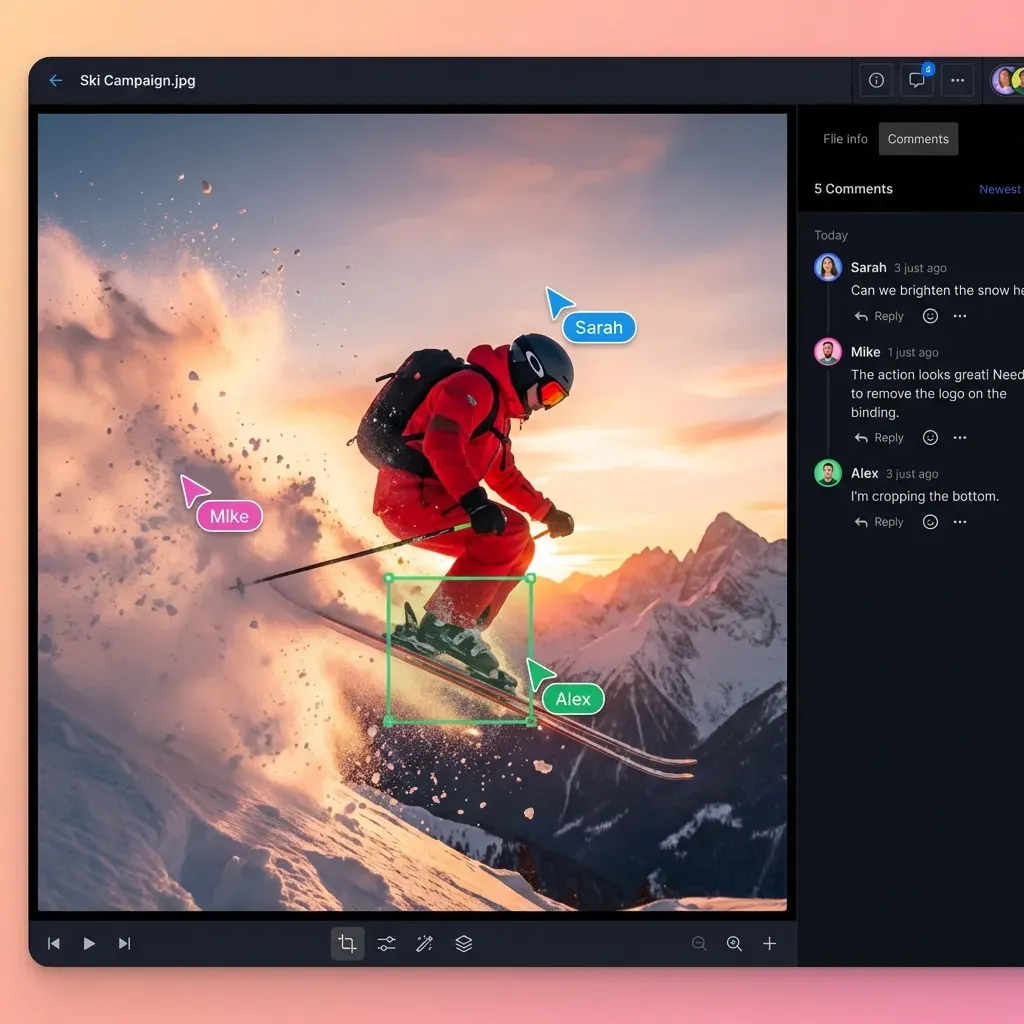
Frame-accurate comments: Pin feedback to specific frames in a video timeline. Directors, editors, and clients can mark exact moments with notes. This precision matters for production work where "around the 2-minute mark" isn't specific enough.
Branded client portals: Create white-label delivery pages with your logo, colors, and domain. Clients see your brand, not a third-party platform. Vidyard's portals are designed for sales, not client delivery.
Seats included in the plan: Each plan includes a fixed number of seats (5 on Starter, 20 on Business, 50 on Enterprise), so you are not billed per user.
Where Vidyard Wins
Vidyard's CRM integrations are deeper. If you need HubSpot or Salesforce tracking for sales outreach, Vidyard has more native connections.
Pricing
Fastio plans start at $9.99 a month for Starter (3 seats, 250 GB), with a 14-day trial. Business is $49.99 a month (10 seats, 5 TB) and Enterprise is $199.99 a month (30 seats, 25 TB).


Collaborate on Files with Your Team
Fastio combines HLS streaming, frame-accurate comments, and branded client portals in one platform. Plans start at $9.99 a month with seats included.
2. Loom: Best for Quick Async Videos
Loom has become the default for quick screen recordings. Click record, share a link, done.
What It Does Well
Speed: Recording to sharing takes seconds. The browser extension captures your screen and camera, uploads automatically, and generates a shareable link before you've closed the tab.
AI features: Loom removes filler words, generates titles, and creates transcripts automatically. Editing is minimal because the AI handles cleanup.
Integration breadth: Loom embeds in Slack, Notion, Gmail, and most productivity tools. Recipients don't need accounts to watch.
Where It Falls Short
Loom caps video length on free plans (5 minutes) and limits storage. For high-volume video production or long-form content, you'll hit limits quickly. The platform focuses on informal communication, not polished deliverables. No frame-accurate commenting, limited branding options, and basic analytics compared to marketing-focused tools.
Pricing
Free plan available. Business plans are priced per user per month with unlimited recording length; see the vendor's pricing page.
3. Wistia: Best for Video Marketing
Wistia is built for marketing teams who measure video performance and capture leads.
What It Does Well
Lead capture: Add email gates, CTAs, and forms directly in videos. Marketing teams can require email entry before viewing or add conversion opportunities at any timestamp.
Engagement analytics: Heatmaps show exactly where viewers rewatch, skip, or drop off. Individual viewer tracking connects engagement data to your CRM contacts.
SEO-friendly embeds: Wistia's player is designed to help videos rank in search. Schema markup, fast loading, and mobile optimization are built in.
Where It Falls Short
Wistia limits the number of videos on lower plans. Storage restrictions can force upgrades quickly for teams with large libraries. The platform focuses entirely on marketing. Production teams needing review workflows or creative agencies delivering to clients will find the feature set incomplete.
Pricing
Free plan with 10 videos. Plus plan includes 20 videos (see vendor pricing). Scale and higher tiers remove video limits.
4. Vimeo: Best for General Video Hosting
Vimeo serves the widest range of use cases, from personal portfolios to enterprise video libraries.
What It Does Well
Privacy controls: Domain restriction, password protection, and private links keep videos secure. For internal training or paid content, Vimeo offers more access control options than YouTube.
Video quality: Vimeo's encoding produces excellent results. High bitrate support and 4K delivery make it popular with filmmakers and creative professionals.
Review pages: Vimeo Review allows timestamped comments for client feedback, though it's less strong than dedicated review tools.
Where It Falls Short
Weekly upload limits on lower plans restrict high-volume workflows. Production houses sharing dailies or raw footage often exceed caps. Vimeo tries to serve everyone, which means features for any specific use case are less developed than specialized tools. Marketing teams get less than Wistia, production teams get less than Frame.io.
Pricing
Plus and Pro tiers add more storage and features; see the vendor's pricing page. Business and Premium tiers unlock higher limits.
5. Sendspark: Best for Personalized Sales Videos
Sendspark specializes in personalized video outreach at scale, using AI to customize videos for individual recipients.
What It Does Well
AI personalization: Record once, personalize for many. Sendspark uses AI voice cloning to insert recipient names and dynamic backgrounds into videos without re-recording.
Bulk sending: Send personalized videos to hundreds of prospects through email campaigns. Each recipient sees a video that appears custom-made for them.
Landing pages: Create branded video landing pages without design work. Templates make it easy to deploy professional-looking pages quickly.
Where It Falls Short
Sendspark focuses narrowly on outbound sales. Teams needing internal communication, client review, or marketing analytics will find the platform limited. The AI personalization, while impressive, can feel artificial to some recipients. Testing is essential to find the right balance.
Pricing
Solo plans are available on the vendor's pricing page. Team plans run $79-499/month depending on features and sending volume.
6. Dubb: Best for Sales Automation
Dubb combines video hosting with marketing automation, aiming to be an all-in-one sales video platform.
What It Does Well
CRM integration: Native connections to Salesforce, HubSpot, and other CRMs track video engagement alongside deal data. Sales teams see which prospects watched which videos.
Automated follow-ups: Trigger email sequences based on video engagement. If a prospect watches 80% of your demo, they automatically receive a follow-up.
Landing pages: Built-in page builder creates video-focused landing pages with CTAs, booking links, and contact forms.
Where It Falls Short
The all-in-one approach means individual features are less polished than dedicated tools. Analytics aren't as deep as Wistia's, and the recording experience isn't as smooth as Loom's. Setup complexity is higher. Teams wanting a simple record-and-share workflow may find Dubb overwhelming.
Pricing
Free plan available with limitations. Pro plans are available on the vendor's pricing page. Enterprise pricing is custom.
7. Hippo Video: Best for Enterprise Sales Teams
Hippo Video targets enterprise sales teams with personalized video campaigns and detailed engagement tracking.
What It Does Well
Personalization at scale: Create video templates that automatically insert prospect-specific details. Merge fields pull from CRM data to customize each video.
Sales workflows: Built for the sales process, with features like video voicemails, email integration, and deal-stage tracking.
Viewer intelligence: See exactly how each prospect engages with your videos. Track which sections they rewatched and where they dropped off.
Where It Falls Short
Enterprise focus means higher prices and more complexity than simpler alternatives. Small teams may find the platform overkill. Creative and marketing use cases aren't supported. The platform is designed exclusively for B2B sales.
Pricing
Paid plans are priced per user per month; see the vendor's pricing page. Enterprise pricing varies based on features and volume.
Making the Switch
Migrating from Vidyard requires planning around two factors: video library size and integration dependencies.
Video Migration
Most Vidyard alternatives support bulk import through links or file upload. Export your Vidyard library, then batch import to your new platform. Expect some manual work tagging and organizing content after migration. Keep Vidyard active during transition. Old embed codes and links will break when you cancel, so update embedded videos on your website and in email templates before switching.
Integration Updates
If you've built Vidyard into your sales workflow, map out every integration. CRM connections, email platform triggers, and analytics dashboards all need reconfiguration. Some alternatives offer migration assistance for enterprise customers. Ask about transition support when evaluating platforms. For creative teams, the switch is simpler. Upload your video library, invite collaborators, and start using the new platform for new projects. Older videos can migrate gradually.
Sources
References used to verify factual claims in this guide.
-
A 25-person team on the Pro plan pays more than smaller teams, even if most users just need to view and comment on videos.
-
Hippo Video for sales teams with personalized campaigns.
-
Precision matters for production work where around the 2-minute mark isn't specific enough.
-
Loom caps video length on free plans (5 minutes) and limits storage.
-
Wistia free plan with 10 videos. Wistia Plus plan starts with 20 videos.
-
Vimeo high bitrate support and 4K delivery popular with filmmakers and creative professionals.
-
Sendspark team plans run $79-499/month depending on features and sending volume.
-
Dubb prospect watches 80% of demo automatically receive follow-up.
Frequently Asked Questions
Is Vidyard free?
Vidyard offers a free plan with limited features. You can record and share videos with basic analytics. Paid plans are priced per user per month for Pro features including CRM integration and advanced tracking; see the vendor's pricing page. Enterprise plans with full customization require custom pricing.
What is better than Vidyard?
The best Vidyard alternative depends on your use case. For async communication, Loom offers faster recording and sharing. For marketing, Wistia provides better lead capture and analytics. For creative teams and client review, Fastio delivers HLS streaming and frame-accurate commenting. For sales automation, Dubb and Sendspark offer deeper CRM integration.
What is Vidyard used for?
Vidyard is a business video platform focused on sales enablement. Teams use it to create personalized prospect videos, embed videos in sales emails, track viewer engagement, and integrate video data with CRM systems. It's particularly popular for one-to-one sales outreach and video prospecting campaigns.
Can I migrate my videos from Vidyard to another platform?
Yes. Most Vidyard alternatives support video import through file upload or URL. Export your videos from Vidyard, then bulk upload to your new platform. Keep Vidyard active during migration since canceling will break existing embed codes and shared links. Update embedded videos on your website before completing the switch.
Which Vidyard alternative is best for creative teams?
Fastio is the best Vidyard alternative for creative teams. It offers HLS streaming for smooth playback, frame-accurate commenting for precise feedback, branded client portals for professional delivery, and plans that include seats instead of charging per user. Vidyard focuses on sales outreach, while Fastio focuses on production and review workflows.
Related Resources

Collaborate on Files with Your Team
Fastio combines HLS streaming, frame-accurate comments, and branded client portals in one platform. Plans start at $9.99 a month with seats included.