Top OpenClaw Workflows for AI Sales Call Coaching and Analysis
Seventy-three percent of sales managers spend fewer than 30 minutes per rep per week on coaching, yet reps coached weekly hit quota at rates 29 points higher than those coached quarterly. OpenClaw workflows close that gap by automating the post-call review pipeline, from transcription through coaching feedback delivery, so managers spend their limited time on actual coaching rather than manual call review.


Why Post-Call Coaching Breaks at Scale
According to the 2026 State of Sales Coaching report from MySalesCoach, 73% of front-line sales managers spend fewer than 30 minutes per rep per week on coaching. Reps coached weekly hit quota at 76%, compared to 47% for those coached quarterly or less. That 29-point gap is not driven by a lack of coaching skill. It is a time problem.
The bottleneck is call review. Most managers know what good coaching looks like. They cannot listen to 40 calls per week, identify the moments that matter, and turn each one into actionable feedback. When the average manager now oversees roughly 12 direct reports (up from 10.9 in 2024), the math stops working. Manual review of a single 45-minute sales call takes 20-30 minutes of focused attention, and that is before writing up notes or scheduling a coaching conversation.
OpenClaw workflows address this by chaining transcription, analysis, and feedback delivery into an automated pipeline that runs after every call. The agent handles the time-consuming extraction work. Managers spend their limited coaching minutes reviewing structured reports and having focused conversations with reps instead of scrubbing through audio.
This guide walks through the five core workflows that compose a complete post-call coaching pipeline: recording capture, transcription, analysis, CRM sync, and persistent storage for coaching records.
Related guides
- Is Clay a CRM? How to Connect Clay to Your Sales WorkflowsClay is not a CRM, but a GTM database layer (Audiences) that integrates with CRM platforms like HubSpot and Salesforce....
- The Clay Tool: A Comprehensive Guide to No-Code GTM WorkflowsWhile traditional B2B databases yield low match rates, the Clay tool sequences data waterfalls across multiple...
- 5 OpenClaw Workflows for Sales Outreach and Prospecting AutomationSales reps spend just 30% of their time on actual selling, with 15% consumed by prospect research alone. OpenClaw...
- Best OpenClaw Workflows for AI Image Generation PipelinesOpenClaw 2026.4.5 turned agents into image producers. The native image_generate tool supports 10 providers out of the...
- Best OpenClaw Workflows for Nonprofit OrganizationsOpenClaw workflows help nonprofit organizations scale their impact by automating donor outreach, grant research, and...
- Best OpenClaw Workflows for Account ExecutivesOpenClaw workflows automate routine sales tasks, allowing account executives to focus on closing deals. This...
More on this subject: OpenClaw Workflows and Integrations (69 guides)
How to Capture and Transcribe Sales Recordings
Every coaching pipeline starts with audio. OpenClaw connects to call recordings through automation hooks triggers from platforms like Zoom, Teams, or Google Meet, or through file watchers that detect new recordings in a shared directory.
For transcription, the audio-transcribe skill on ClawHub runs OpenAI's Whisper model locally inside a Docker container. Audio never leaves your infrastructure, which matters when sales conversations include pricing, contract terms, and competitive positioning. The skill accepts MP3, M4A, OGG, WAV, and WEBM formats and outputs timestamped transcript segments.
Alternatives exist at every price point:
- openai-whisper-api sends audio to OpenAI's hosted Whisper endpoint, trading data locality for simpler setup and faster processing on long calls.
- elevenlabs-cli provides speech-to-text alongside voice cloning and text-to-speech for teams already using ElevenLabs.
- faster-whisper, a community skill on GitHub, adds speaker diarization. This identifies who said what during the call, which is essential for coaching because you need to separate the rep's talk time from the prospect's.
Choosing between local and cloud transcription comes down to two factors. Local Whisper (audio-transcribe) keeps data on-premises but requires GPU or fast CPU hardware, and a 45-minute call takes 3-8 minutes to process depending on model size. Cloud options process faster but send audio to a third-party server. Check your organization's data handling policies before routing sales recordings through external APIs.
The output from any of these skills is a plain text or JSON transcript with timestamps, ready for the next stage of the pipeline.
How to Extract Coaching Insights from Transcripts
With a transcript ready, OpenClaw sends it to a language model (Claude, GPT-4, Gemini, or a local model) with a structured analysis prompt. The agent extracts several categories of insight from each call.
Call Summary and Action Items
The most immediate output is a concise summary: what was discussed, what needs to happen next, and who owns each action item. The agent also flags prospect pain points raised during the conversation, buying signals and objections, and any competitive products the prospect referenced.
Talk Ratio and Behavior Metrics
Using a diarized transcript, the agent calculates the rep-to-prospect talk ratio. Sales research consistently shows that top performers listen more than they talk, typically maintaining a 40:60 or 30:70 split. The agent flags calls where the rep dominated the conversation and highlights specific segments where they missed opportunities to ask follow-up questions or let the prospect elaborate.
Coaching Feedback
This is where OpenClaw pipelines go beyond what commercial tools provide out of the box. Because OpenClaw uses general-purpose language models, you can customize the coaching criteria to match your sales methodology. Whether your team follows MEDDIC, Challenger, SPIN, or a homegrown framework, the analysis prompt adapts to score reps against the specific behaviors you care about.
The coaching output typically includes:
- What the rep did well, with timestamps for positive reinforcement
- Specific moments worth reviewing together
- Areas for improvement with actionable suggestions
- A recommended deal stage based on conversation signals
For a 10-person sales team processing roughly 500 monthly calls, MarketBetter estimates this approach costs around $600 per year in API and infrastructure fees, compared to approximately $14,000 for a commercial conversation intelligence platform. You sacrifice native conversation search, mobile apps, and compliance certifications, but you retain the core value: structured coaching insights generated automatically after every call.
CRM Sync and Deal Intelligence
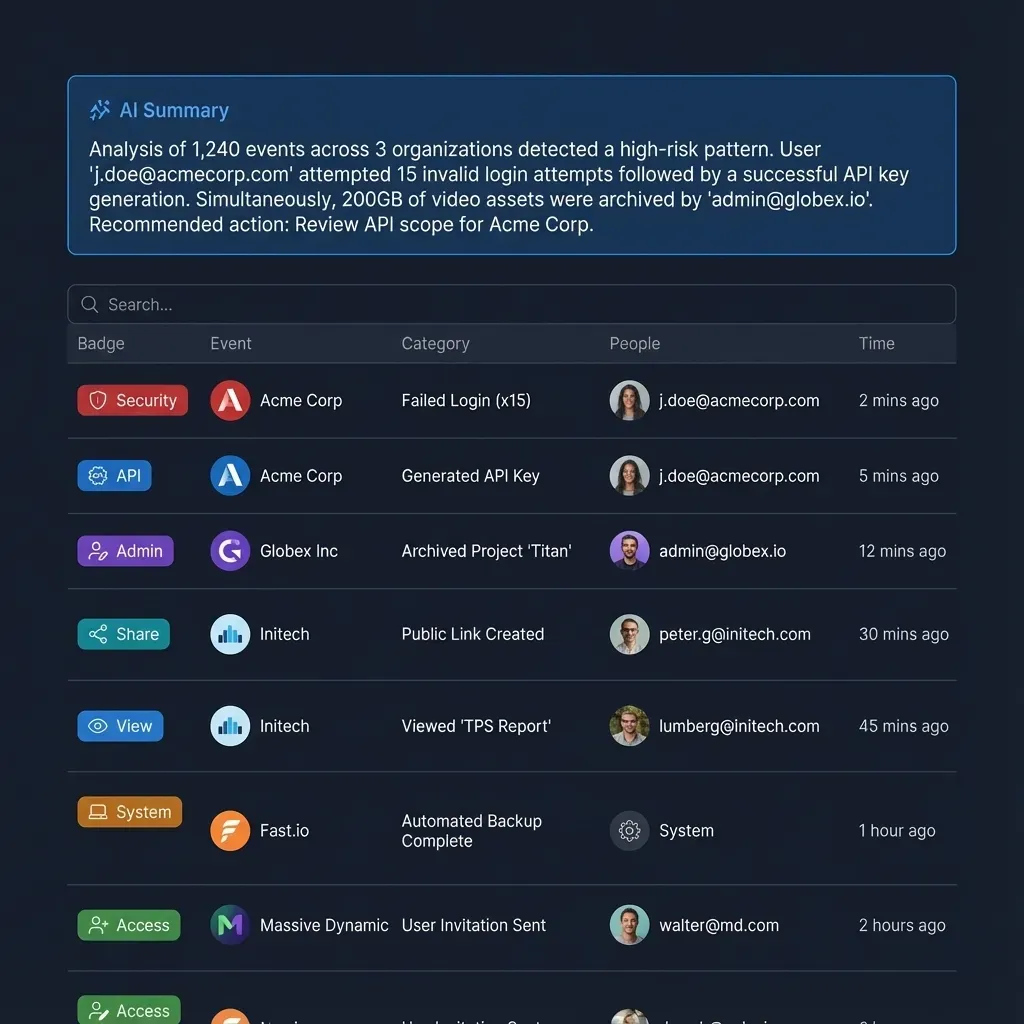
Analysis output that stays in a text file does not change rep behavior. It needs to reach the systems your team already works in. The claw-crm skill on ClawHub connects OpenClaw to HubSpot and Salesforce through their REST APIs, with community-built variants available for Pipedrive, Close, and Notion-based CRMs.
After each analyzed call, the agent can:
- Create or update a call activity record with the summary and action items
- Adjust the deal stage based on conversation signals, with a human approval gate for changes above a configurable threshold
- Tag the contact record with topics discussed during the call
- Flag stalled deals where the prospect raised unresolved objections
For team visibility, a Slack skill integration delivers a formatted summary to your sales channel. Managers get near-instant visibility into the day's calls without opening the CRM or waiting for a weekly pipeline review.
Win/Loss Pattern Analysis
The pipeline's value compounds over time. As your CRM accumulates hundreds of analyzed calls tied to closed deals, OpenClaw can run periodic reviews across that data. The agent identifies:
- Which objection-handling approaches correlate with wins
- What talk patterns appear most frequently in lost deals
- Which competitors come up and how reps currently position against them
- How deal velocity shifts based on early-call behaviors
This produces a coaching playbook specific to your product, your market, and your team's selling motion. No off-the-shelf tool generates this because it requires your historical call data analyzed through your own coaching framework.


Give your coaching pipeline a persistent home
Fastio provides MCP access for OpenClaw and Intelligence Mode that turns transcripts into a searchable knowledge base once enabled.
Storing and Searching Coaching Records
Call transcripts, coaching reports, and deal analyses accumulate fast. A 10-person team generates roughly 500 call records per month, and those records become more valuable over time as training data for pattern analysis and onboarding material for new reps.
Local storage works for a single user but breaks down when managers, reps, and the coaching agent all need access to the same repository. S3 or Google Drive handle the persistence side but treat coaching data as opaque files. You can store a transcript, but you cannot ask "show me calls where the prospect mentioned budget constraints last quarter" without building a separate search index.
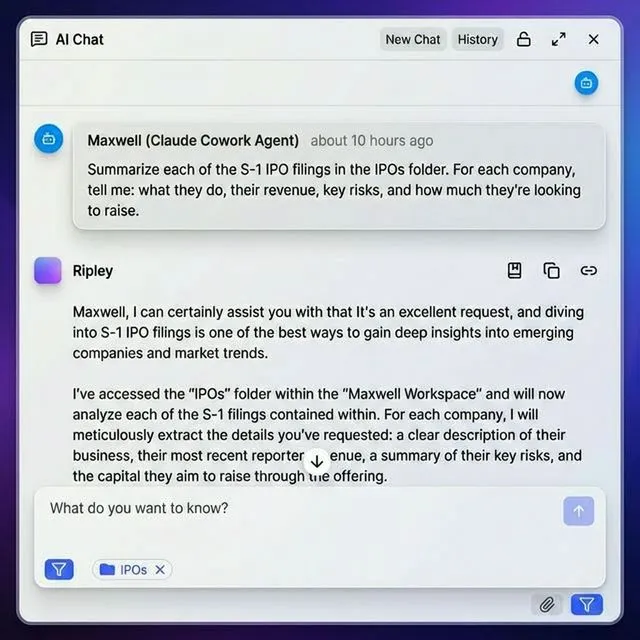
Fastio takes a workspace-based approach. Transcripts and coaching reports uploaded to a Fastio workspace are indexed and searchable once Intelligence is enabled for the workspace, turning them into a knowledge base with citation-backed answers. A manager can query across hundreds of transcripts in natural language without building or maintaining a vector database.
A 14-day Business Trial is available to test workspaces (credit card required; see pricing). One workspace can hold all transcripts while another contains coaching templates and methodology docs. Agents access files through the Fastio MCP server with a consolidated MCP toolset, so the coaching agent reads and writes files through the same interface it uses for every other workspace operation.
Audit trails track every file the agent creates or modifies, which matters when coaching records factor into performance reviews. When output is ready for a manager's review, ownership transfer lets the agent hand off the workspace while retaining admin access for future pipeline runs.
Which Workflow to Build First
You do not need all five workflows running on day one. Start with the one that addresses your team's most acute bottleneck.
If call review is the bottleneck: Begin with transcription and summary generation. Even without coaching analysis or CRM sync, getting an accurate summary after every call saves managers 15-20 minutes of manual review per recording.
If CRM data quality is the problem: Start with the CRM sync workflow. Reps who manually log calls often capture only a fraction of the relevant conversation details. Automated logging from analyzed transcripts gives managers reliable pipeline data for forecasting and deal review.
If coaching consistency is the gap: Jump straight to the analysis workflow. Configure the analysis prompt around your sales methodology and run a pilot with three or four reps. Iterate on the coaching criteria based on manager feedback before expanding the rollout.
The workflows are modular by design. Each stage produces output the next one consumes, so you add stages incrementally. Transcription feeds analysis. Analysis feeds CRM sync. CRM data feeds win/loss pattern reviews. Each addition compounds the value of what you already built.
One practical note: start with cloud transcription (openai-whisper-api) during the pilot phase. The setup is simpler, and you can evaluate whether the pipeline delivers value before investing in local Whisper infrastructure. Move to the audio-transcribe skill once you have validated the workflow and want the privacy or cost advantages of on-premises processing.
Sources
References used to verify factual claims in this guide.
-
73% of front-line sales managers spend fewer than 30 minutes per rep per week on coaching Reps coached weekly hit quota at 76%, compared to 47% for those coached quarterly or less
-
Average manager oversees roughly 12 direct reports, up from 10.9 in 2024
-
Approximately $600 per year for a DIY pipeline versus $14,000 for enterprise conversation intelligence
Frequently Asked Questions
Can OpenClaw analyze sales calls?
OpenClaw does not natively process audio, but it orchestrates a pipeline that does. You pair a transcription skill (audio-transcribe for local Whisper, or openai-whisper-api for cloud processing) with a language model to analyze the resulting transcript. The agent extracts summaries, action items, coaching feedback, and deal stage recommendations from each call.
How do you use AI for sales coaching?
Set up an automated post-call pipeline. After each sales call, the recording is transcribed, analyzed for talk ratio and methodology-specific coaching criteria, and the insights are delivered to the manager and synced to the CRM. The manager reviews structured coaching notes instead of listening to full recordings, which typically reduces review time from 30 minutes to under 5 minutes per call.
What OpenClaw skills transcribe and review calls?
The audio-transcribe skill runs Whisper locally in Docker for private, offline transcription. The openai-whisper-api skill uses OpenAI's cloud endpoint for faster processing. The faster-whisper community skill adds speaker diarization to identify who said what. After transcription, any connected language model handles the analysis and coaching feedback generation.
How much does an OpenClaw coaching pipeline cost compared to Gong or Chorus?
MarketBetter estimates roughly $600 per year for a 10-person team processing 500 monthly calls, compared to approximately $14,000 per year for enterprise conversation intelligence platforms. The trade-off is that you sacrifice native conversation search, mobile apps, and compliance certifications, but you keep full control of your data and coaching criteria.
Does this pipeline work with HubSpot and Salesforce?
Yes. The claw-crm skill on ClawHub connects OpenClaw to both HubSpot and Salesforce through their REST APIs. Community-built variants exist for Pipedrive, Close, and Notion-based CRMs. The agent creates call activity records, updates deal stages with configurable approval gates, and tags contacts with topics discussed during each call.
Related Resources

Give your coaching pipeline a persistent home
Fastio provides MCP access for OpenClaw and Intelligence Mode that turns transcripts into a searchable knowledge base once enabled.