Top 7 OpenClaw Tools for Multi-Channel Chatbot Deployment
OpenClaw's Gateway routes one AI agent across WhatsApp, Telegram, Slack, Discord, and a dozen more messaging platforms through a single process, but most deployments only connect one channel. These seven tools and skills cover the full multi-channel stack, from the Gateway control plane and platform-specific channel plugins to multi-agent orchestration and persistent file storage for chatbot outputs.


Why Most OpenClaw Deployments Only Use One Channel
OpenClaw crossed 375,000 GitHub stars by May 2026, making it the fastest-growing open-source project in GitHub history. But browse any OpenClaw tutorial and you will find the same pattern: install the agent, connect Telegram, done. The Gateway sitting behind that Telegram connection can route a single agent across WhatsApp, Telegram, Slack, Discord, Signal, iMessage, Microsoft Teams, Google Chat, and more simultaneously.
Multi-channel deployment does not mean running three separate bots. It means one Gateway process receives messages from different platforms and routes them into the same agent core, maintaining context across channels. A customer asks a question on WhatsApp, follows up on Slack, and the agent treats it as one conversation.
The key technical challenge is identity. Your WhatsApp phone number, Telegram username, Discord handle, and Slack profile are separate identifiers. OpenClaw's identity binding system maps these into a single user record so the agent maintains one conversation thread per person regardless of which channel they use.
Here is a quick overview of the seven tools covered in this guide:
- OpenClaw Gateway: Core routing engine for all connected channels
- Telegram Channel Skill: Most popular channel connector, 145,000+ ClawHub installs
- WhatsApp Channel Plugin: Enterprise messaging via Baileys WebSocket
- Slack and Discord Plugins: Workplace and community channels
- Agent Team Orchestration: Multi-agent routing across channels
- Composio: 1,000+ external service integrations for chatbot actions
- Fast.io Workspaces: Persistent file storage with built-in search for chatbot outputs
Related guides
- Claude Code Teams: Multi-Agent Orchestration GuideClaude Code agent teams split complex coding tasks across multiple independent AI sessions. Each teammate gets its own...
- How to Set Up Claude Flow for Multi-Agent Code OrchestrationClaude Flow passed 710,000 lifetime npm downloads by mid-2026, making it the most-installed community orchestrator for...
- Top 7 OpenClaw Tools for Agent Swarm OrchestrationGartner tracked a 1,445% surge in enterprise interest in multi-agent systems between Q1 2024 and Q2 2025. OpenClaw's...
- Top OpenClaw Tools for Graphic DesignersGraphic designers use top OpenClaw tools to handle routine tasks like resizing files and generating palettes. These...
- Best OpenClaw Tools for Indie HackersGuide to openclaw tools indie hackers: OpenClaw tools give solo developers an automated team to handle code and...
- Best OpenClaw Tools for Legal Teams: Top 7 IntegrationsLegal teams use autonomous agents to handle repetitive tasks, and early adopters report significant efficiency gains....
More on this subject: OpenClaw Tools (101 guides)
How We Evaluated
We scored each tool on five criteria specific to multi-channel deployment:
- Channel coverage: How many messaging platforms does it support or extend?
- Setup time: Can you get from zero to a working chatbot in under 15 minutes?
- Cross-channel consistency: Does it maintain context and identity across platforms?
- Composability: Does it work alongside other OpenClaw skills without conflicts?
- Production readiness: Is it reliable enough for always-on chatbot deployments?
All tools listed except Fast.io are free or have a free tier; Fast.io is paid, and its monthly plans start with a 14-day Business Trial. We excluded other paid-only solutions and skills with fewer than 1,000 ClawHub downloads where applicable.
7 OpenClaw Tools for Multi-Channel Deployment
1. OpenClaw Gateway
The Gateway is the unified control plane that makes multi-channel deployment possible. Every message from every connected platform passes through a single process that normalizes inputs, routes them to the agent core, and sends responses back through the originating channel.
Key strengths:
- Routes messages across WhatsApp, Telegram, Slack, Discord, Signal, iMessage, Microsoft Teams, Google Chat, Matrix, and more through one process
- Normalizes platform-specific message formats so the agent handles text, images, audio, and documents uniformly
- Includes per-chat routing with allowlists, mention requirements, and bot-loop protection to prevent paired bots from entering infinite reply cycles
Limitations:
- Media support varies by channel (text works everywhere, but reactions and rich media differ per platform)
- Self-hosted only, so uptime depends on your own infrastructure
Best for: Any OpenClaw chatbot that needs to reach users on more than one messaging platform.
Pricing: Free and open source.
2. Telegram Channel Skill
The most-installed channel skill on ClawHub with 145,000+ downloads. Telegram offers the fastest path from installation to a live chatbot. Create a bot token through BotFather and the agent starts responding within minutes.
Key strengths:
- Five-minute setup from bot token to live chatbot
- Supports text, voice notes, images, and file sharing out of the box
- Markdown syntax in agent responses converts to formatted Telegram messages automatically
Limitations:
- Telegram Bot API rate limits can affect high-traffic deployments
- Inline keyboards and custom reply markups require additional configuration beyond the base skill
Best for: Developers who want the quickest proof-of-concept for a deployed OpenClaw chatbot.
Pricing: Free and open source. Telegram Bot API is free.
3. WhatsApp Channel Plugin
WhatsApp connects OpenClaw to the world's largest messaging platform through the Baileys WebSocket library. Unlike Telegram's simple token-based auth, WhatsApp uses QR code pairing and maintains session state on disk.
Key strengths:
- Reaches WhatsApp's user base without a separate WhatsApp Business API subscription
- Uses install-on-demand plugin loading, so the Gateway only activates the WhatsApp module when the channel is configured
- Session state persists across Gateway restarts through local disk storage
Limitations:
- QR code pairing requires initial physical access to a phone with WhatsApp installed
- WhatsApp enforces stricter rate limits and message formatting rules than most other channels
Best for: Customer-facing chatbot deployments where WhatsApp is the primary communication channel in your market.
Pricing: Free and open source.
4. Slack and Discord Channel Plugins
Slack and Discord serve different audiences (workplace teams vs. online communities) but share a similar integration model. Both use token-based authentication and support multi-channel routing within their respective platforms.
Key strengths:
- Slack integrates at the workspace level with granular Bot Token scopes for reading history, writing messages, and managing reactions
- Discord supports servers, channels, and direct messages through the Discord Bot API with configurable intents
- Both handle group conversations natively, with Slack routing multi-person DMs as group conversations that follow your group policies
Limitations:
- Slack requires creating an app in the Slack API portal and configuring specific OAuth scopes before the channel works
- Discord's Privileged Gateway Intents (Message Content) must be enabled manually in the Developer Portal
Best for: Teams that want their OpenClaw chatbot accessible where people already work (Slack) or gather (Discord).
Pricing: Free and open source. Both platform APIs are free for standard bot usage.
5. Agent Team Orchestration
This ClawHub skill enables multi-agent routing, where specialized sub-agents handle different query types across all connected channels. Instead of asking one model to handle billing, technical support, and product questions, you define distinct agent roles with explicit handoff protocols.
Key strengths:
- Defines agent roles declaratively with task lifecycle tracking and handoff protocols between agents
- Supports three routing patterns: Manager + Specialists for complex domains, Pipeline for sequential tasks, and Parallel Pool for high-volume identical work
- Works within OpenClaw's native workspace isolation model, where each agent gets its own configuration, memory, and credentials
Limitations:
- Adds latency when routing between agents, which affects real-time chat responsiveness
- Requires understanding OpenClaw's agent binding and workspace isolation model before configuration pays off
Best for: Enterprise chatbot deployments where a single agent cannot cover all domains.
Pricing: Free and open source.
6. Composio
Composio provides unified access to over 1,000 external services through a single integration framework. For multi-channel chatbots, this means the agent can take action (create tickets, send emails, update CRMs, check order status) regardless of which messaging platform the request came from.
Key strengths:
- Handles OAuth authentication flows automatically across 1,000+ services including GitHub, Gmail, Stripe, HubSpot, and Salesforce
- Supports multi-tenant applications where different chatbot users connect their own service accounts
- Pre-built integrations cover the most common chatbot actions without requiring custom API connector code
Limitations:
- The large number of available tools can confuse the LLM if you do not scope which integrations are active for your deployment
- Some integrations require Composio's hosted service, adding an external dependency
Best for: Chatbots that need to take action across multiple external services, not just respond to questions.
Pricing: Free tier available. Paid plans for higher usage.
7. Fast.io Workspaces
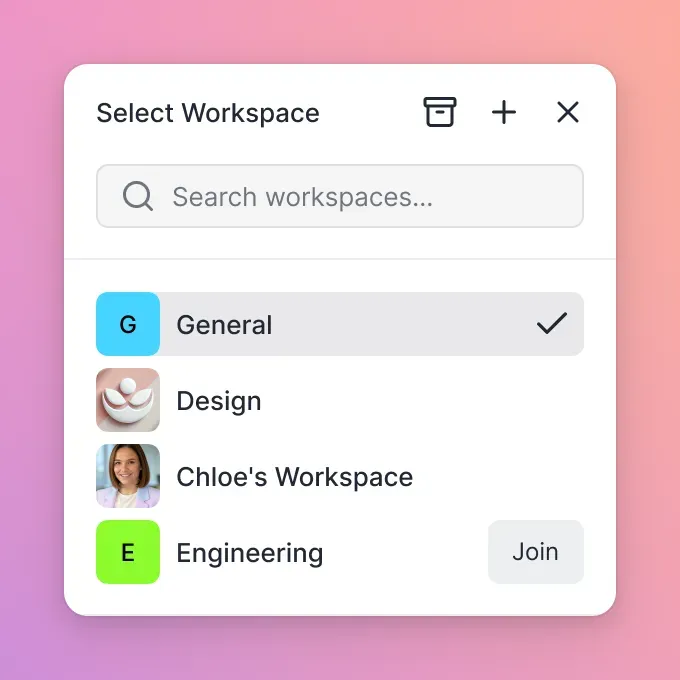
Production chatbots generate files that need to live somewhere: conversation logs, uploaded documents from users, generated reports, and exported data. Fast.io provides persistent workspaces where chatbot agents store and retrieve files across sessions and channels.
Key strengths:
- 14-day Business Trial (requires credit card) with full workspace and MCP capabilities
- Built-in Intelligence Mode indexes stored files for semantic search and citation-backed chat, so the chatbot can answer questions about uploaded documents without a separate vector database
- Ownership transfer lets a chatbot agent build a workspace and hand it off to a human when the conversation resolves
Limitations:
- Adds an external dependency to the chatbot stack
- Requires connecting through the MCP server or API, which adds integration work
Best for: Multi-channel deployments where users send file attachments and the chatbot needs to store, search, and retrieve them across sessions.
Pricing: 14-day Business Trial (requires credit card). Paid plans start at $9.99/mo (Starter, 250 GB).



Store and search your chatbot's files across every channel
Persistent workspace with built-in RAG search, MCP server access, and ownership transfer from agent to human.
Picking Your Stack by Channel Count
Your tool selection depends on which channels your users actually use and how complex your chatbot's domain is.
Single-channel proof of concept: Start with the Gateway and the Telegram Channel Skill. You will have a working chatbot in under 10 minutes. Add a memory skill from ClawHub (like Self-Improving Agent) to retain context across sessions.
Two to three channel deployment: Add WhatsApp and Slack plugins. Configure identity binding in your configuration file to map users across platforms so the agent recognizes a customer whether they message on WhatsApp or Slack.
Enterprise multi-agent deployment: Layer in Agent Team Orchestration to split queries across specialized sub-agents. Connect Composio for external service access. Use Fast.io for persistent file storage and document retrieval with built-in RAG search.
One security note worth repeating: a 2026 audit found that 13.4% of ClawHub skills had critical security issues. Review the SKILL.md file and any associated scripts before installing third-party skills, especially channel plugins that handle authentication tokens and user messages.
Deployment Sequence
The general sequence for multi-channel chatbot deployment with OpenClaw:
- Install OpenClaw and run the onboarding wizard to configure your Gateway
- Connect your first channel (Telegram is fastest, Discord is close behind)
- Test basic conversations to verify the agent responds correctly on your chosen channel
- Add additional channels one at a time, configuring identity bindings as you go
- Install Agent Team Orchestration from ClawHub if you need multi-agent routing
- Connect Composio for external service integrations
- Set up a Fast.io workspace for file persistence (the 14-day Business Trial covers testing and early deployment)
All channel plugins install through ClawHub. Check the OpenClaw channel documentation for current setup guides and platform-specific requirements.
Sources
References used to verify factual claims in this guide.
-
OpenClaw crossed 375,000 GitHub stars by May 2026
-
Telegram Channel Skill has 145,000+ installs on ClawHub
-
13.4% of ClawHub skills had critical security issues in a 2026 audit
-
Composio provides access to over 1,000 external services
-
ClawHub hosts over 13,000 published skills
Frequently Asked Questions
How do I deploy an OpenClaw chatbot on multiple channels?
Install OpenClaw and configure the Gateway, which serves as the unified control plane for all messaging platforms. Add channel plugins one at a time through ClawHub. Each channel requires its own authentication: a BotFather token for Telegram, QR code pairing for WhatsApp, and OAuth for Slack. Once configured, the same agent instance responds across all connected channels through a single Gateway process. Configure identity bindings to map users across platforms so the agent recognizes them regardless of which channel they use.
What messaging platforms does OpenClaw support?
OpenClaw supports WhatsApp, Telegram, Slack, Discord, Signal, iMessage, Microsoft Teams, Google Chat, Matrix, LINE, Mattermost, IRC, and more through its Gateway and plugin system. Channel plugins load on demand, so you only activate the platforms you need. Text messaging works across all channels. Media support for images, audio, documents, and reactions varies by platform.
Can one OpenClaw agent run on WhatsApp and Slack simultaneously?
Yes. The OpenClaw Gateway routes messages from all connected channels through a single agent process. Configure WhatsApp (via Baileys WebSocket with QR pairing) and Slack (via Bot Token OAuth) in the same configuration file, restart the Gateway, and the agent handles both channels at once. Memory, skills, and behavior are shared across channels. Identity binding maps a user's WhatsApp number to their Slack profile so the agent treats them as one person across platforms.
What is OpenClaw multi-agent orchestration?
Multi-agent orchestration coordinates multiple independent OpenClaw agents, each with its own workspace, memory, and skills, to handle complex tasks cooperatively. The Agent Team Orchestration skill supports three patterns: Manager + Specialists (a coordinator delegates to domain-specific agents), Pipeline (sequential handoffs between agents), and Parallel Pool (multiple agents processing identical work simultaneously). Agents communicate through shared file state, message channels, direct HTTP calls, or task queues.
How do I store files from multi-channel chatbot conversations?
Local storage works during development but breaks when you deploy across channels or need to hand off bot output to a human team. Fast.io provides persistent workspaces where your OpenClaw chatbot can store uploaded documents, generated reports, and conversation artifacts. Workspaces include semantic search once Intelligence is enabled. Fast.io offers a 14-day Business Trial (credit card required). Connect through the remote MCP server at https://mcp.fast.io/mcp/tools or the REST API.
Related Resources

Store and search your chatbot's files across every channel
Persistent workspace with built-in RAG search, MCP server access, and ownership transfer from agent to human.