8 Best OpenClaw Tools for AI Cartoon and Caricature Generation
The keyword "ai cartoon generator" draws 4,400 monthly US searches, yet every top-ranking guide compares standalone apps. None show how to produce cartoons and caricatures through an AI agent that keeps character style consistent across a batch. This guide ranks eight OpenClaw skills and tools by cartoon quality and output format flexibility, from photo-to-cartoon avatar converters to multi-model batch pipelines.

Why Run Cartoon Generation Through an Agent
The keyword "ai cartoon generator" draws 4,400 monthly US searches, according to DataForSEO keyword tracking data. Every result on the first page compares standalone applications: Midjourney, DALL-E, Viggle, DomoAI. You open a separate tool, write a prompt, download the output, and paste it wherever you need it.
That loop breaks down when you need consistency. A children's book with the same character across 20 illustrations. A marketing campaign with matching caricatures of your entire leadership team. An editorial series where the cartoon style stays recognizable from one piece to the next. Standalone apps treat each generation as a fresh session with no memory of what came before.
OpenClaw skills change that workflow. Your agent calls the generation API inside the conversation where you already defined the character brief, so it can reference earlier outputs, adjust prompts based on what worked, and batch-produce a cohesive set without manual re-prompting. Skills can also chain operations: generate a cartoon, refine the style, upscale the result, remove the background, and save the final file to a shared workspace in one thread.
The eight skills and tools below fill a gap that standalone cartoon generator lists do not cover. Each is available through ClawHub or built into OpenClaw itself.
Related guides
- Best n8n Tools for AI Agents: Top 10 Nodes for 2026n8n changed AI automation with its visual workflow builder. We rank the best nodes and integrations for building...
- Best Tools for CrewAI Agents: Top Picks for 2026CrewAI agents need good tools to be useful. The framework handles coordination, but external integrations let agents...
- Best OpenClaw Tools for AI Vector and SVG Illustration GenerationMost AI image generators output raster formats, leaving designers to manually trace paths or accept bloated SVG files...
- 7 Best OpenClaw Tools for AI 3D Model GenerationOpenClaw's skill registry includes several tools that search, download, and generate 3D models in printable formats....
- 9 Best OpenClaw Tools for AI Art Generation and Creative IllustrationOver 80 million AI images are generated daily, but most creators still toggle between standalone apps and their AI...
- Best OpenClaw Tools for AI Icon and Symbol GenerationClawHub lists over 5,400 curated skills, yet finding the right one for icon and symbol work means sorting through...
More on this subject: OpenClaw Tools (101 guides)
How We Evaluated These Tools
We tested cartoon and caricature skills across five criteria:
- Cartoon style range: Can the skill produce Western cartoons, editorial caricatures, Pixar-style 3D, anime-influenced illustration, and flat vector art, or is it locked to one aesthetic?
- Output formats: Does it generate PNG, SVG, WebP, or other formats that fit different production pipelines?
- Photo-to-cartoon conversion: Can it take a real photo and produce a recognizable caricature or cartoon version, not just generate from text?
- Batch and consistency: Does the skill support generating multiple images in one run while maintaining style coherence?
- Cost efficiency: What does each cartoon generation cost, and is there a free tier or trial?
Every skill listed below is verified in the awesome-openclaw-skills catalog on GitHub or in the official OpenClaw image generation documentation.
Top 8 OpenClaw Cartoon and Caricature Tools at a Glance
- AI Avatar Generation (each::sense): Photo-to-cartoon avatar conversion with Pixar, anime, and caricature styles
- Recraft: Professional vector and raster cartoon art with batch processing and background removal
- Creaa AI: 13+ models including Seedream 4.5 and Nano Banana 2 with auto-model selection
- Afame: Editorial cartoon illustrations via OpenAI Images API
- SeaArt AI: Photo-to-cartoon style transfer with canvas extension and retouching
- OpenAI Image Gen: Batch gallery generation with structured prompts and HTML preview
- EachLabs Image Generation: 60+ AI models including Flux, GPT Image, Gemini, and Imagen
- Built-in image_generate: Zero-install cartoon generation with 11 provider backends and reference image support
The first four skills focus specifically on cartoon, illustration, or avatar workflows. The last four are general-purpose generators that handle cartoon output well when you steer the prompt or supply a style reference.



Persist your cartoon assets in one shared workspace
Persistent workspace storage with MCP access for direct agent uploads. Start your 14-day Business Trial today, card required.
Dedicated Cartoon and Avatar Skills
Four skills in the OpenClaw ecosystem target cartoon, caricature, or avatar generation directly.
1. AI Avatar Generation
AI Avatar Generation converts photos into cartoon or illustrated avatars using each::sense technology. Upload a headshot and the skill produces a stylized version: Pixar-style 3D with exaggerated features and big expressive eyes, flat 2D cartoon, anime-influenced illustration, or caricature with amplified facial proportions.
Key strengths:
- Converts real photos into cartoon avatars while preserving the subject's likeness
- Supports multiple cartoon styles (Pixar, anime, caricature, flat illustration) from the same input
- Works from both photos and text descriptions for maximum flexibility
Limitations:
Output is tuned for portraits and headshots. Full-body cartoon scenes or complex backgrounds require a different tool.
Best for: Teams creating cartoon team pages, social media avatars, or editorial caricatures of real people.
2. Recraft
Recraft brings professional design tool capabilities into OpenClaw conversations. Run /recraft to activate the skill, and your agent gains access to the full Recraft API for generating cartoon illustrations in both raster and vector formats.
Key strengths:
- Generates both SVG vector and PNG raster cartoon art, the only skill in this list that produces editable vector output
- Includes post-processing tools: background removal, vectorization of raster images, and resolution upscaling
- Batch processing for producing multiple cartoon variations in one run
- Recraft AI supports raster and vector output formats for cartoon assets, giving designers flexibility between web and print workflows
Limitations:
The Recraft skill is free to install, but API usage is billed per request. Costs vary by operation type (generation, editing, vectorization, batch jobs).
Best for: Designers who need cartoon assets in both vector and raster formats for logos, icons, editorial illustrations, or print-ready artwork.
3. Creaa AI
Creaa AI is an OpenClaw skill with access to 13+ image generation models, including Seedream 4.5, Nano Banana 2, Nano Banana Pro, GPT Image 1.5, and Z-Image Turbo. The skill can auto-select the best model based on your prompt, or you can specify one directly.
Key strengths:
- Model variety lets you compare cartoon output across different AI architectures in one session
- Auto-selection reduces decision fatigue: describe what you want and the agent picks the model
- Text-to-image generation produces varied artistic output including cartoon and illustration styles
Limitations:
Cartoon quality varies by model. Nano Banana 2 and Seedream 4.5 handle stylized output better than some alternatives in the lineup. You may need to experiment to find the right model for your specific cartoon aesthetic.
Best for: Creators who want to test multiple AI models for cartoon output without installing separate skills for each one.
4. Afame
Afame generates creative illustrations through the OpenAI Images API. Unlike general image generators that default to photorealism, Afame is oriented toward artistic output: editorial illustrations, stylized portraits, concept art, and decorative graphics. For cartoon work, that bias toward illustrated styles means less prompt engineering to get non-photorealistic results.
Key strengths:
- Illustration-first output reduces the "make it look like a cartoon" prompt gymnastics common with photorealistic-default generators
- Handles editorial cartoon styles well, from magazine-style spot illustrations to character concepts
- Connects to OpenAI's image models, which support both realistic and stylized generation
Limitations:
Single-model access through OpenAI only. If you need Flux, Stable Diffusion, or other model families, use Creaa AI or EachLabs instead.
Best for: Content teams that need original cartoon illustrations for articles, presentations, or social posts without switching to a standalone design app.
General-Purpose Skills for Cartoon Output
These four tools were built for broad image generation but handle cartoon and caricature work well when prompted correctly or given a style reference.
5. SeaArt AI
SeaArt AI is a free, open-source OpenClaw skill that brings SeaArt's image generation and editing models to your agent. Its strength for cartoon work is style transfer: upload an existing photo and ask the skill to restyle it as a cartoon, anime, or illustration.
Key strengths:
- Photo-to-cartoon style transfer converts real images into cartoon versions
- Editing tools (background removal, canvas extension, detail retouching) let you refine cartoon output without leaving the conversation
- Prompt-level style control: specify "cartoon," "anime," "cinematic," or other aesthetics directly
Limitations:
Credits consumed per image request through your SeaArt account. The free skill installation does not include free generation credits.
Best for: Projects that start from existing photos or artwork and need cartoon-style restyling, like turning product photos into illustrated versions or converting team headshots into cartoon portraits.
6. OpenAI Image Gen
OpenAI Image Gen is a batch-focused skill that generates multiple images from structured prompts using the OpenAI Images API. It produces PNG outputs, writes a prompts.json file mapping prompts to generated files, and builds an HTML gallery with thumbnails for easy review.
Key strengths:
- Built for batch generation: produce a set of cartoon illustrations from a list of structured prompts in one run
- Gallery output (index.html with thumbnails) makes it easy to review and compare cartoon variations
- Configurable parameters for image size, quality, model selection, and output directory
Limitations:
Requires OPENAI_API_KEY in the environment. Output quality depends entirely on prompt engineering, and the skill does not include cartoon-specific presets or style references.
Best for: Teams producing cartoon asset libraries, batch character sheets, or illustration sets where you need dozens of images from a structured prompt list.
7. EachLabs Image Generation
EachLabs Image Generation provides access to 60+ AI models through a single skill, including Flux, GPT Image, Gemini, Imagen, and Seedream families. The breadth of model access makes it practical for comparing cartoon styles across architectures.
Key strengths:
- Largest model selection of any single OpenClaw skill, with 60+ models across major AI providers
- Includes the same each::sense technology that powers the AI Avatar Generation skill, so cartoon avatar output is built in
- Supports text-to-image with style specifications (cartoon, 3D, realistic, anime) across all models
Limitations:
Model quality for cartoon output is uneven. Not every model in the catalog produces clean stylized results. Front-facing or slight-angle photos work best for avatar conversion, and higher-resolution input yields better caricature detail.
Best for: Developers and power users who want maximum flexibility to switch between AI models for cartoon generation without installing multiple separate skills.
8. OpenClaw Built-in image_generate
OpenClaw ships with a built-in image_generate tool that requires no skill installation. It connects to 11 providers: OpenAI, Google Gemini, fal (including Krea 2), DeepInfra, OpenRouter, Microsoft Foundry MAI, MiniMax, xAI (Grok), ComfyUI, LiteLLM, and Vydra.
Key strengths:
- Zero setup required beyond an API key for your chosen provider
- Reference image support: attach up to 5 style reference images (OpenAI, Google, xAI) to guide cartoon aesthetic consistency across a batch
- Creativity controls through fal's Krea 2 model (raw, low, medium, high settings) let you dial stylization levels
- Output in PNG, JPEG, or WebP with quality and size controls
Limitations:
No cartoon-specific presets or style templates. You write the prompts yourself. The tool auto-detects available providers based on configured API keys, so your available models depend on which services you have set up.
Best for: Users who want cartoon generation without installing any skills, or who already have API keys for multiple providers and want a unified interface.
Storing and Sharing Cartoon Assets Across Projects
Generating cartoons is half the workflow. The other half is organizing, versioning, and sharing the output, especially when you are producing batches of character illustrations or building a cartoon asset library over time.
Local file systems fill up fast when you are testing multiple models and styles. Cloud storage like Google Drive or Dropbox works for manual uploads, but those services do not expose MCP endpoints for direct agent writes.
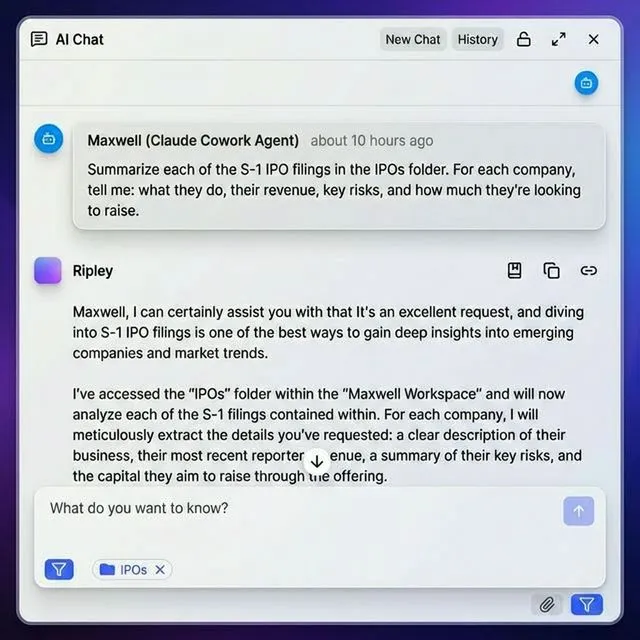
Fast.io provides a workspace where agents store generated files directly through the MCP server. Your OpenClaw agent generates a cartoon, uploads it to a shared workspace, and your team reviews, comments, and downloads from the same place. Once Intelligence is enabled for the workspace, uploaded images are indexed automatically for semantic search, so you can later ask "find the blue cartoon character with glasses" instead of scrolling through folders.
For cartoon and caricature projects, a practical workflow looks like this:
- Generate cartoon assets through any of the skills above
- Agent uploads results to a Fast.io workspace via MCP
- Team reviews output in the browser and leaves anchored comments
- Agent picks up feedback and regenerates with adjusted prompts
- Final assets get shared through branded Send links for client delivery
Fast.io offers a 14-day Business Trial, card required; see /pricing/. Paid plans start at $9.99/mo for 250 GB of storage and 3 seats. Alternatives like S3 or R2 give you raw storage without the built-in commenting and AI search layer that speeds up creative asset workflows.
Sources
References used to verify factual claims in this guide.
-
ai cartoon generator draws 4,400 monthly US searches
-
Recraft AI supports raster and vector output formats for cartoon assets
-
OpenClaw image_generate tool supports 11 providers including OpenAI, Google Gemini, fal, DeepInfra, OpenRouter, Microsoft Foundry MAI, MiniMax, xAI, ComfyUI, LiteLLM, and Vydra
-
Creaa AI skill provides access to 13+ image generation models
Frequently Asked Questions
What is the best OpenClaw skill for cartoon art?
It depends on your starting point. For converting photos into cartoon avatars, AI Avatar Generation using each::sense technology is the most direct option. For professional vector and raster cartoon illustrations, Recraft gives you SVG output and batch processing. For testing multiple AI models in one session, Creaa AI offers 13+ models with auto-selection.
Can OpenClaw generate caricatures from photos?
Yes. The AI Avatar Generation skill converts photos into caricatures by amplifying facial features while preserving the subject's likeness. SeaArt AI also handles photo-to-cartoon style transfer. For the built-in image_generate tool, you can attach a photo as a style reference and prompt for caricature output through OpenAI, Google, or xAI providers.
How do I create cartoon characters with AI in OpenClaw?
Install a cartoon-capable skill like Recraft, Creaa AI, or Afame from ClawHub. Describe the character in your prompt, including style details like 'flat 2D cartoon,' 'Pixar-style 3D,' or 'editorial caricature.' For consistency across multiple characters, use reference images through the built-in image_generate tool or Recraft's batch processing to maintain the same aesthetic across outputs.
Do OpenClaw cartoon skills produce vector output?
Recraft is the primary skill that generates SVG vector output alongside PNG raster images. Most other skills, including Creaa AI, Afame, and the built-in image_generate tool, produce raster formats only (PNG, JPEG, WebP). If you need scalable vector cartoon art for logos or print, Recraft is the strongest option in the current OpenClaw ecosystem.
What does it cost to generate cartoons through OpenClaw?
Skill installation is free for all tools listed here. Generation costs depend on the underlying API provider. OpenAI, Recraft, SeaArt, and EachLabs each bill per request at their own rates. The built-in image_generate tool passes through your chosen provider's API pricing with no markup. For budget-conscious testing, Creaa AI's Z-Image Turbo and fal's Krea 2 models through the built-in tool offer lower per-image costs than premium options.
Related Resources

Persist your cartoon assets in one shared workspace
Persistent workspace storage with MCP access for direct agent uploads. Start your 14-day Business Trial today, card required.